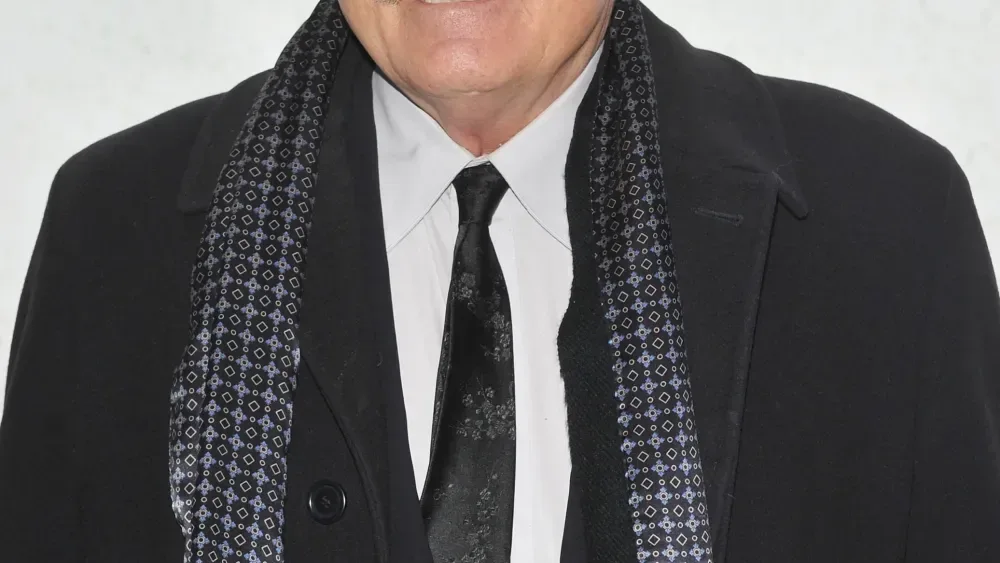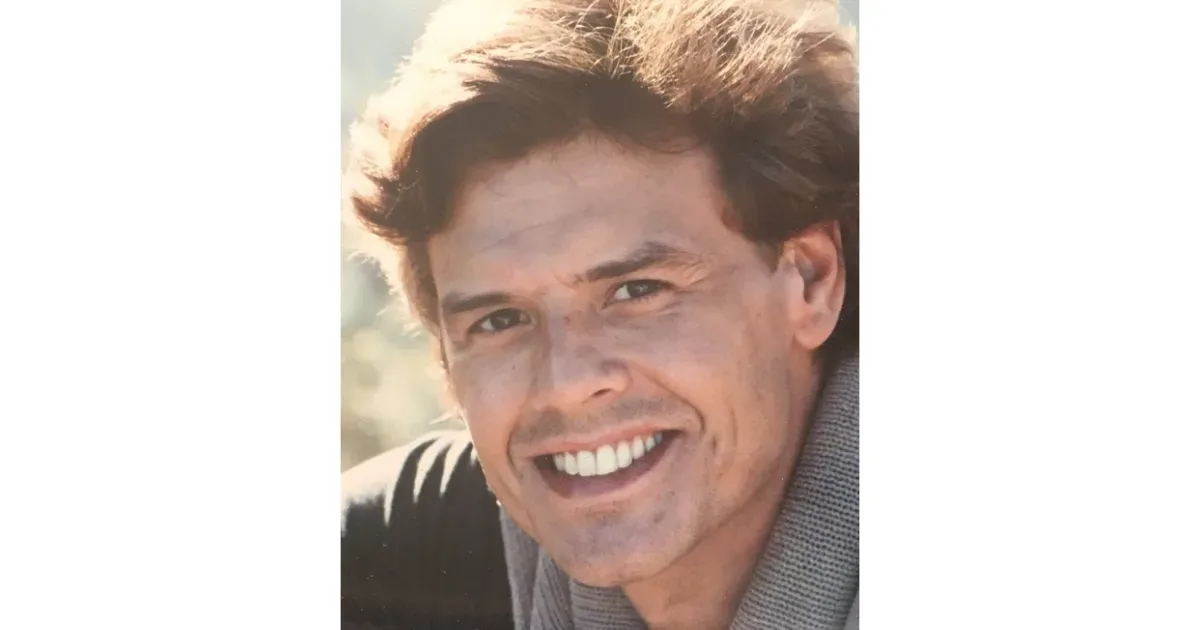
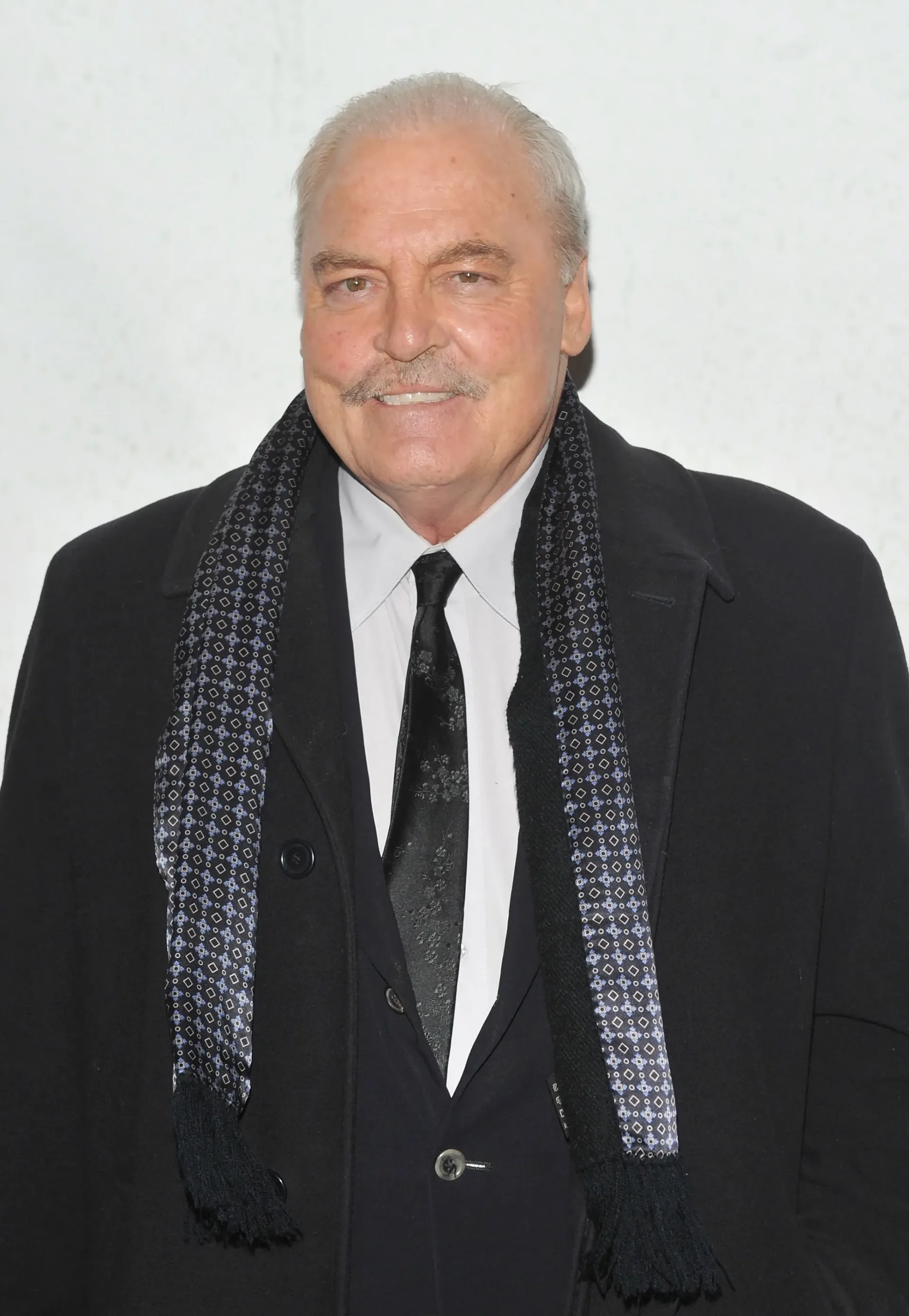
Stacy Keach, the actor whose resonant voice, imposing presence and range carried him from experimental theater to noir television, major films and late-career character work, has died at 85.
Keach died Tuesday at his family home in Magdalenka, Poland, following a long battle with a serious heart condition and heart failure. His wife, Małgosia Tomassi, confirmed the news and remembered him as the heart of their family as well as an actor admired around the world.
For many television viewers, Keach will remain inseparable from private investigator Mike Hammer. For film audiences, he is enduringly associated with John Huston’s Fat City, the 1972 boxing drama in which he played an aging fighter still reaching for a comeback. But those touchstone roles only indicate the breadth of a career that began onstage, included substantial Shakespeare work and continued into his eighties across dramas, comedies, animation and high-profile feature films.
The hard-edged voice behind Mike Hammer
Keach’s best-known television identity arrived with The New Mike Hammer, the CBS series that ran from 1984 through 1987. He played the title detective with the blunt force and weathered conviction required by the material, while also narrating the series in character. That vocal component mattered: the voice was not an accessory to the performance, but part of how the series presented Hammer’s worldview.
He returned to the role in the 1989 television movie Mike Hammer: Murder Takes All and again for the syndicated Mike Hammer, Private Eye, which ran from 1997 to 1998. Across those incarnations, Keach became a defining screen face of the fictional investigator.
His time on the original series was interrupted by a deeply difficult personal chapter. Keach was arrested at London’s Heathrow Airport in 1984 for cocaine possession, pleaded guilty and served six months at Reading Prison. Because he also supplied Hammer’s narration, impressionist Rich Little filled in as narrator during his imprisonment. In a 2014 television interview, Keach described prison as the low point of his life and said a friendship with a priest there led to his conversion to Roman Catholicism.
That period did not end his work as an actor. In 1988, he earned an Emmy nomination for outstanding lead actor in a miniseries or special for portraying the title author in Ernest Hemingway. It was a role that underlined an important fact about Keach’s career: even when popular memory centered on the trench-coat detective, his repertoire was far wider than one franchise.
From the theater to the screen
Born Walter Stacy Keach Jr. in Savannah, Georgia, Keach came from an acting family. His mother, Mary Cain, was an actress, and his father, Stacy Keach Sr., worked as an actor, drama teacher and theater director. His younger brother, James Keach, later became a director and producer.
Related coverage includes Stacy Keach, ‘Fat City’ and ‘Mike Hammer’ Star, Dies at 85.
Keach was class president at Van Nuys High School before graduating from UC Berkeley in 1963. He went on to earn a graduate degree from the Yale School of Drama and was a Fulbright Scholar at the London Academy of Music and Dramatic Art. That training fed a stage career that was not merely an early proving ground before Hollywood; theater remained a central part of his professional identity for decades.
He made his Broadway debut in Georg Büchner’s Danton’s Death in 1965. He subsequently appeared in The Country Wife, Bertolt Brecht’s The Caucasian Chalk Circle, and a 1968 production of King Lear as Edmund. In 1969, he received a Tony nomination for playing Buffalo Bill in Arthur Kopit’s Indians.
Off Broadway, Keach won his first Obie Award in 1966 for the title role in Barbara Garson’s anti-war satire MacBird!. An Obie is an honor recognizing Off-Broadway and Off-Off-Broadway theater, where productions can often be more adventurous in scale and subject matter than their Broadway counterparts. He won a second Obie after playing the title role in Hamlet in 1972, having appeared in another production of the play in 1964.
His classical work included Falstaff in Henry IV Parts I and II and James Tyrone Jr. in Eugene O’Neill’s Long Day’s Journey Into Night. He also worked in a national touring production of the Cy Coleman musical Barnum in the early 1980s. Later, he returned to major theater roles as King Lear at the Goodman Theatre in 2006, Merlin in a semi-staged Camelot with the New York Philharmonic in 2008, and Richard M. Nixon in the U.S. touring production of Frost/Nixon in 2008 and 2009.
During the latter engagement, Keach suffered a series of strokes in March 2009. He recovered sufficiently to play King Lear again in Washington, D.C., that summer. In 2010, he received a Helen Hayes Award for his King Lear performance with the Shakespeare Theatre Company. He was also a founding member of L.A. Theatre Works.
‘Fat City’ and a formidable filmography
Keach’s early screen work moved quickly between television, literary adaptations and unconventional films. He made his television debut in a 1964 episode of Channing, then appeared in television versions of Shakespeare’s The Winter’s Tale and Macbeth. His feature-film debut came in 1968 with The Heart Is a Lonely Hunter, adapted from Carson McCullers’ novel.
In Robert Altman’s Brewster McCloud in 1970, he played a crippled millionaire. The following year, he took the title role in the Western Doc, playing Doc Holliday opposite Faye Dunaway. In 1972 alone, he appeared in The New Centurions with George C. Scott and Jane Alexander, supported John Huston’s The Life and Times of Judge Roy Bean, and delivered one of the defining performances of his career in Huston’s Fat City.
In Fat City, Keach portrayed the over-the-hill boxer hoping to fight his way back, while Jeff Bridges played a younger boxer on the rise. The premise is simple, but its dramatic weight rests on the contrast between a future opening up and one that may already be narrowing. Keach’s role called for bruised ambition rather than polished heroism, and it remains a useful entry point for anyone trying to understand why his reputation extended well beyond television fame.
His filmography also took in the stoner-comedy landmark Up in Smoke in 1978, William Peter Blatty’s cult favorite The Ninth Configuration in 1980, and Walter Hill’s The Long Riders, in which Keach and James Keach played Frank and Jesse James. He later appeared in That Championship Season alongside Bruce Dern, Robert Mitchum, Martin Sheen and Paul Sorvino.
Later movie credits included John Sayles’ Honeydripper, Oliver Stone’s W., The Bourne Legacy, Alexander Payne’s Nebraska and Sin City: A Dame to Kill For. His final role was in 2025’s Jay Kelly, playing the father of George Clooney’s title character. Keach’s career therefore stretched from a 1968 screen debut to a final credit nearly six decades later.
A working actor across television’s changing eras
Keach’s television résumé makes the scale of that longevity especially clear. In addition to Mike Hammer and Ernest Hemingway, he held recurring roles on ER, Titus, Ray Donovan and Blue Bloods, where he played Cardinal Kevin Kearns. He appeared on Two and a Half Men, Man With a Plan and The Blacklist, as well as guest-starring in series ranging from Will & Grace and 30 Rock to Brooklyn Nine-Nine, Law & Order: Special Victims Unit and NCIS: New Orleans.
He also had a recurring voice role on The Simpsons and narrated American Greed. Narration is sometimes treated as a separate lane from acting, but Keach’s career illustrates the overlap: a narrator shapes tone, guides attention and gives a program its emotional texture. His voice was particularly suited to authority, menace, dry humor and hard-won weariness, qualities that made it as identifiable as his on-camera presence.
That adaptability is part of why Keach’s passing reaches across several kinds of audience memory. One person may know him as Hammer; another through Fat City, Shakespeare, American Greed or a memorable guest spot in a favorite sitcom or procedural. His long career is also a reminder that screen legacies are rarely contained in a single role. They build through repeat encounters: a distinctive delivery, an unexpected comic turn, an imposing supporting character, a theatrical performance recognized by peers.
The broader entertainment landscape continues to be shaped by performers who can move among stage, film, television and voice work. Recent screen coverage, including news of Denzel Washington’s upcoming film project, reflects how theatrical pedigree and film careers can remain intertwined across generations. Keach’s body of work offers a particularly expansive version of that path: formally trained, rooted in theater, yet always willing to meet popular television and genre material on its own terms.
Remembering Stacy Keach
Keach is survived by Tomassi, whom he married in 1986; their son, Shannon; their daughter, Karolina; and his brother James Keach. His career leaves a considerable catalogue, but its through line is more immediate than a list of credits: an actor with the technique for Shakespeare, the force for noir, the vulnerability for a fading boxer and the unmistakable voice to bind it all together.