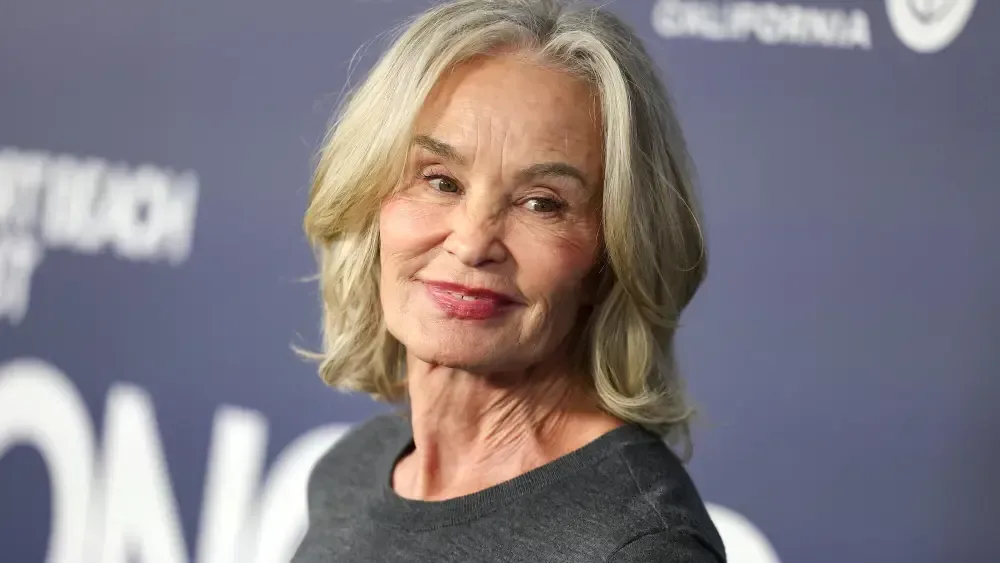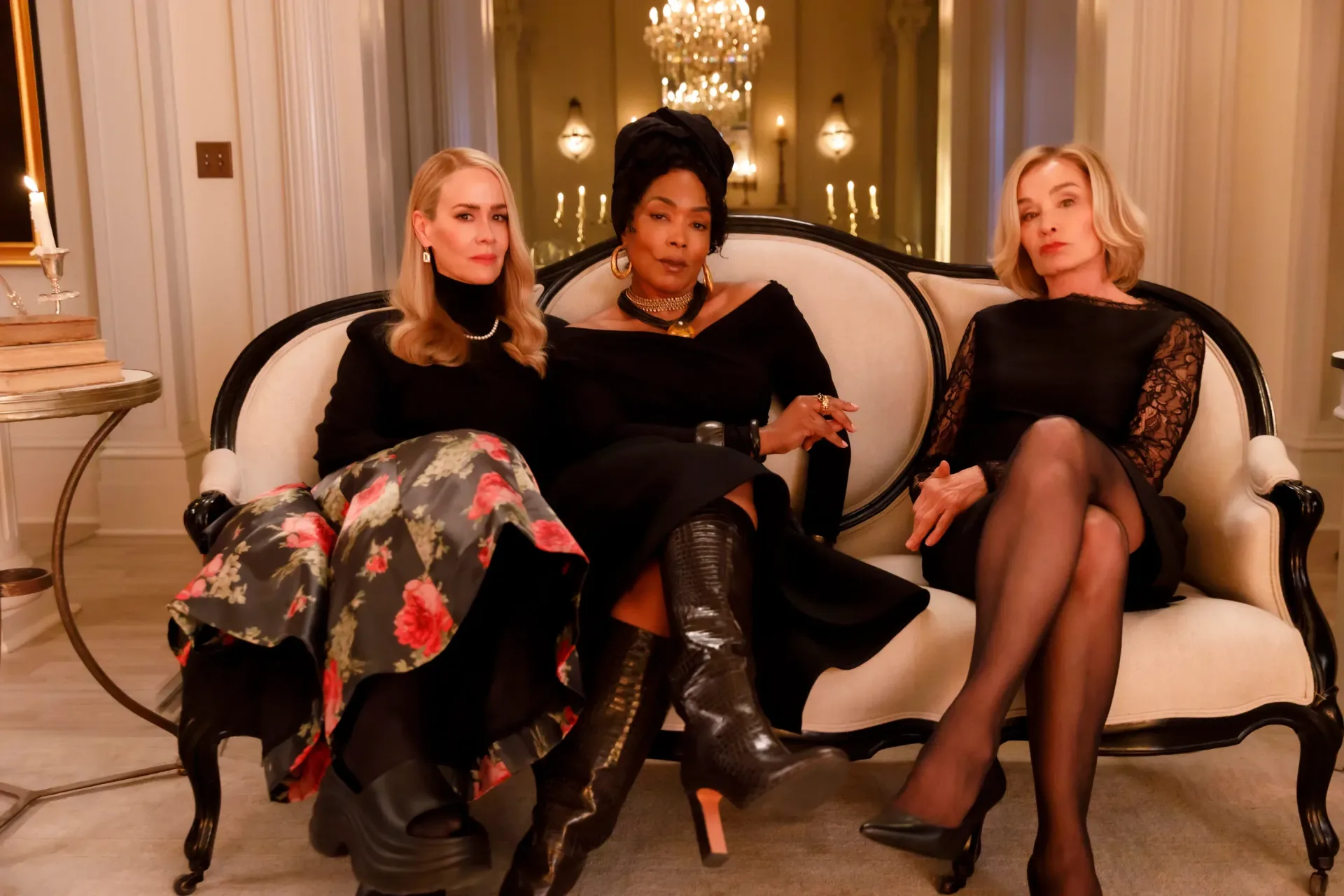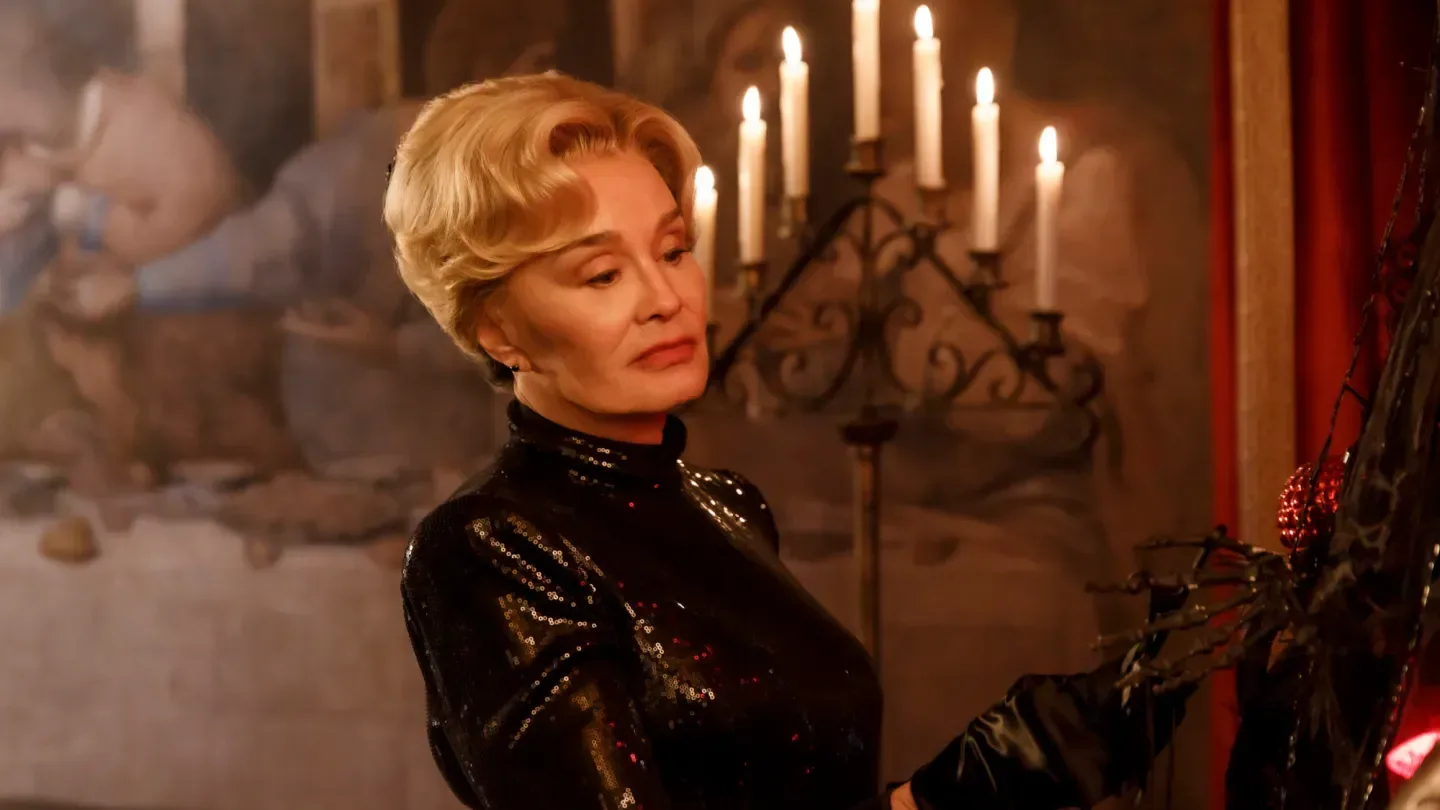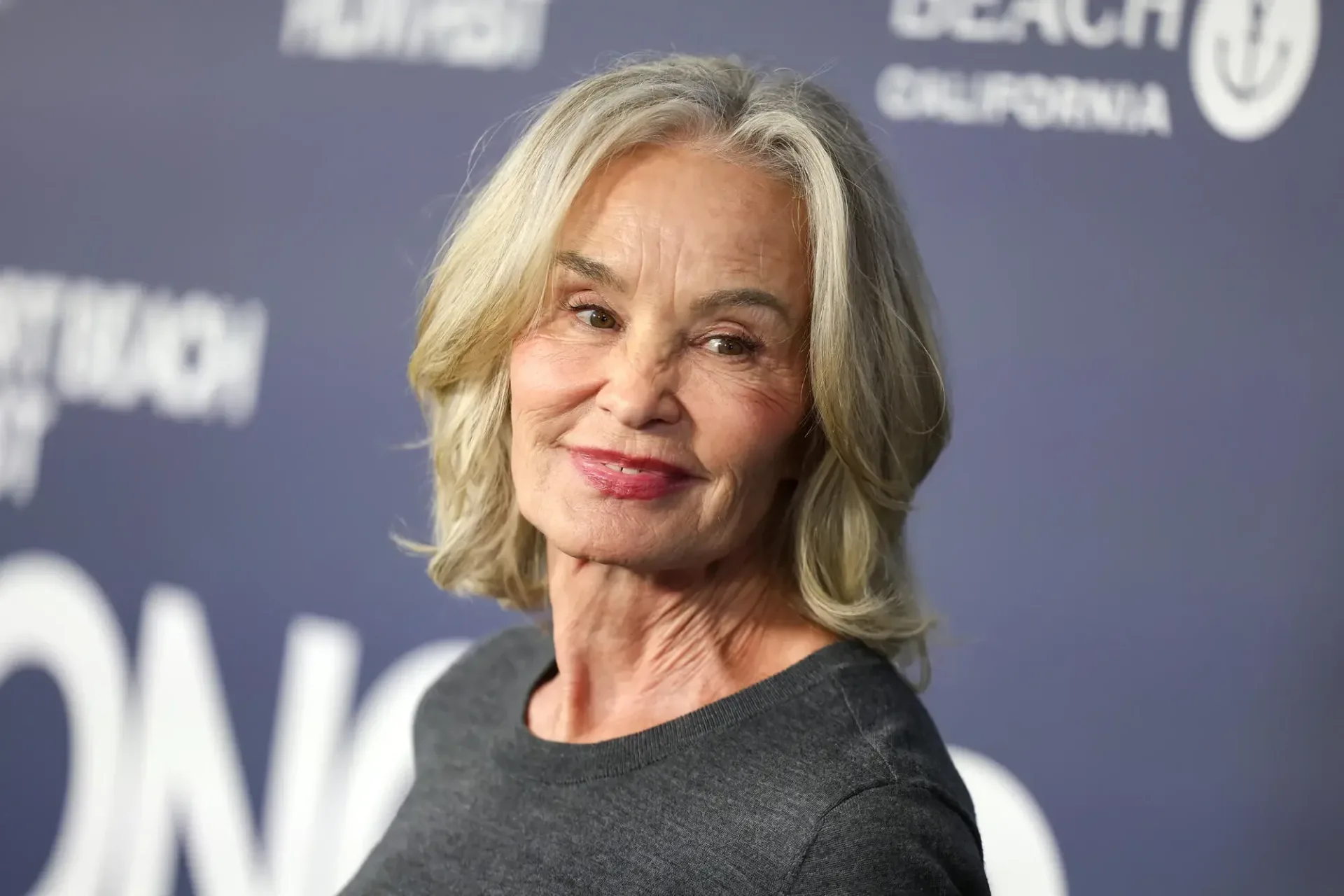
Jessica Lange says she may be close to stepping away from acting, framing her recent work as a potentially fitting endpoint to a career that has moved between acclaimed film performances, stage work and major television roles.
The 77-year-old actor returned this year in the film adaptation of Long Day’s Journey into Night and on television in American Horror Story 13. But when asked what she still hoped to do as an actor, Lange said she felt she was “coming to an end.” Her wording matters: this is not a formal retirement announcement or a confirmed final-credit notice. It is, instead, a candid indication that she sees the finish line approaching.
“Maybe it’s not a bad way to end, that last film being Long Day’s Journey Into Night and playing Mary Tyrone,” Lange said.
She also noted that a small number of projects have remained in development for a long time and may or may not ultimately happen. That leaves the door open, however narrowly, for another role. The practical distinction is important for audiences: Lange has expressed a feeling about the trajectory of her career, not an absolute promise that she will never act again.
Why Mary Tyrone makes sense as a possible farewell
Lange’s reference to Mary Tyrone gives her comments a particularly resonant shape. Long Day’s Journey into Night is the Eugene O’Neill drama for which she won a Tony Award in 2016. The screen adaptation opened in theaters in September, although it was filmed in 2022. In other words, the film’s release is recent, but the performance belongs to a project she completed years earlier.
That gap illustrates a basic reality of screen work. A film’s production date and its public release date can be separated by years as projects move through post-production, distribution and theatrical planning. For someone contemplating retirement, that means a “last released film” may not necessarily be the last performance shot. In Lange’s case, the supplied record identifies the 2022 shoot and the September opening, but does not establish whether she has filmed anything else that has not been released.
There is a creative logic to viewing Mary Tyrone as a possible capstone. Lange had already earned major stage recognition for playing the part, then returned to it for the film adaptation. It is a role connected to one of the central themes in her remarks: the value of meaningful material rather than acting simply to add another credit.
That concern also sits behind her observation that it does not seem easy to make the kinds of films that interest her. Lange did not name a specific studio, project or industry change, so it would be speculation to treat the comment as a verdict on any one company or trend. What is clear is her stated priority: whether the work available is the kind of work she wants to make.
Related coverage includes Jessica Lange Says Her Acting Career May Be Nearing Its End.
A career defined by range, not volume
Lange began acting with her 1976 feature-film debut in King Kong, which brought her the Golden Globe’s new-star-of-the-year honor. The decades that followed produced a record of awards recognition across distinct mediums, an unusually useful measure of her range without reducing the career to trophies alone.
- She has received 16 Golden Globe nominations and won four Golden Globes in total, including the new-star award tied to King Kong.
- She earned six Academy Award nominations, winning best supporting actress for Tootsie and best actress for Blue Sky.
- She won the Tony Award for Long Day’s Journey into Night in 2016.
- She has received nine Emmy nominations and won three times: for Grey Gardens, American Horror Story: Murder House and American Horror Story: Coven.
The Oscar wins demonstrate the different lanes Lange has occupied in film: supporting actress recognition for Tootsie and lead actress recognition for Blue Sky. Her Tony connects her to theater, while the Emmy wins show a long-running impact in television movies, miniseries and anthology television.
American Horror Story is especially notable within that television record. An anthology series changes its story and characters across installments, allowing a performer to return without merely repeating the same role. Lange won Emmys for Murder House and Coven, then returned this year for American Horror Story 13. That makes the new appearance more than a routine television credit; it reconnects her with a franchise that contains two of her three Emmy-winning performances.
For readers interested in the increasingly busy overlap between screen acting and game-adjacent storytelling, the wider entertainment calendar also includes projects such as the newly teased Death Stranding Isolations series. Lange’s career, however, remains a reminder that television’s appeal can also lie in actor-centered dramatic roles, not solely franchise expansion.
Slowing down is not the same as disappearing
Lange’s output has already become more selective in recent years. Over the past decade, she has starred in only two other films: 2016’s Wild Oats and 2022’s Marlowe. The Long Day’s Journey into Night film was shot in the same year as Marlowe, even though its theatrical arrival came later.
That chronology helps explain why retirement talk should be read with care. A quieter release schedule can reflect a deliberate preference for fewer parts, the extended timetable of filmmaking, or both. It does not by itself tell audiences whether an actor has stopped working. Lange’s own remarks supply the relevant context: she still has a couple of long-developing possibilities, but she is not certain they will get made.
Her comments on legacy are similarly modest. Asked how she would like to be remembered, Lange said she hoped it would be “for some good parts,” “some good films,” and for being “an honest actor.” She described herself as lucky to have been able to act for decades, while acknowledging the difficulties of juggling family, career and location work.
“Honest actor” is not a technical award category; it is Lange’s own description of what she values in the work. In this context, it points away from longevity as an end in itself and toward the credibility of individual performances. That is consistent with the way she speaks about a possible conclusion: not as a tally of achievements, but as a question of whether the available role is worth doing.
What remains uncertain
Several details remain open. Lange has not identified the projects that have been in the works, and there is no confirmation that either will proceed. She has not announced a specific retirement date. Nor has she said categorically that Long Day’s Journey into Night is her final film.
What audiences can say now is simpler and more precise. Lange has indicated that retirement may be near. She views Mary Tyrone as a role that could serve as a satisfying final screen performance. And she remains grateful for a career that began with King Kong in 1976 and accumulated major recognition in film, theater and television along the way.
If another long-gestating project reaches the screen, it would not contradict what Lange said. It would fit the uncertainty she explicitly acknowledged. If it does not, Long Day’s Journey into Night and her return to American Horror Story will stand as the latest known work from an actor who has made selectivity part of the story of her later career.