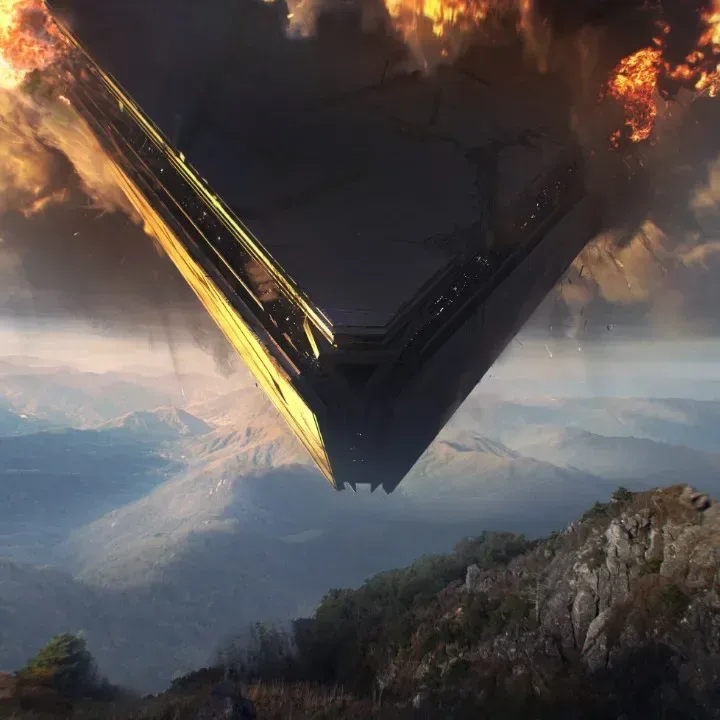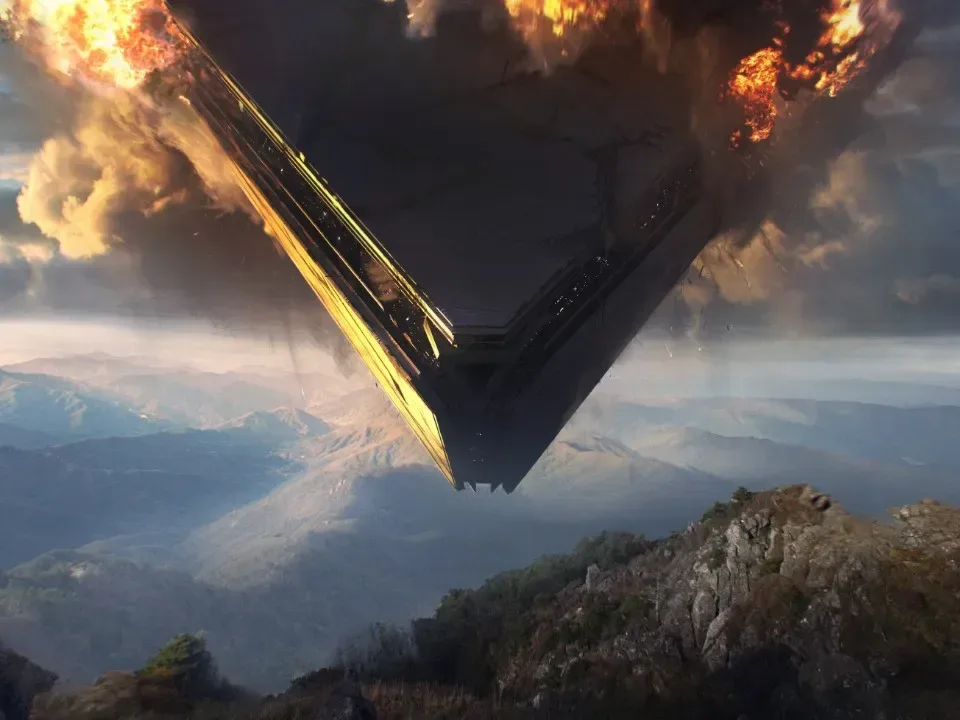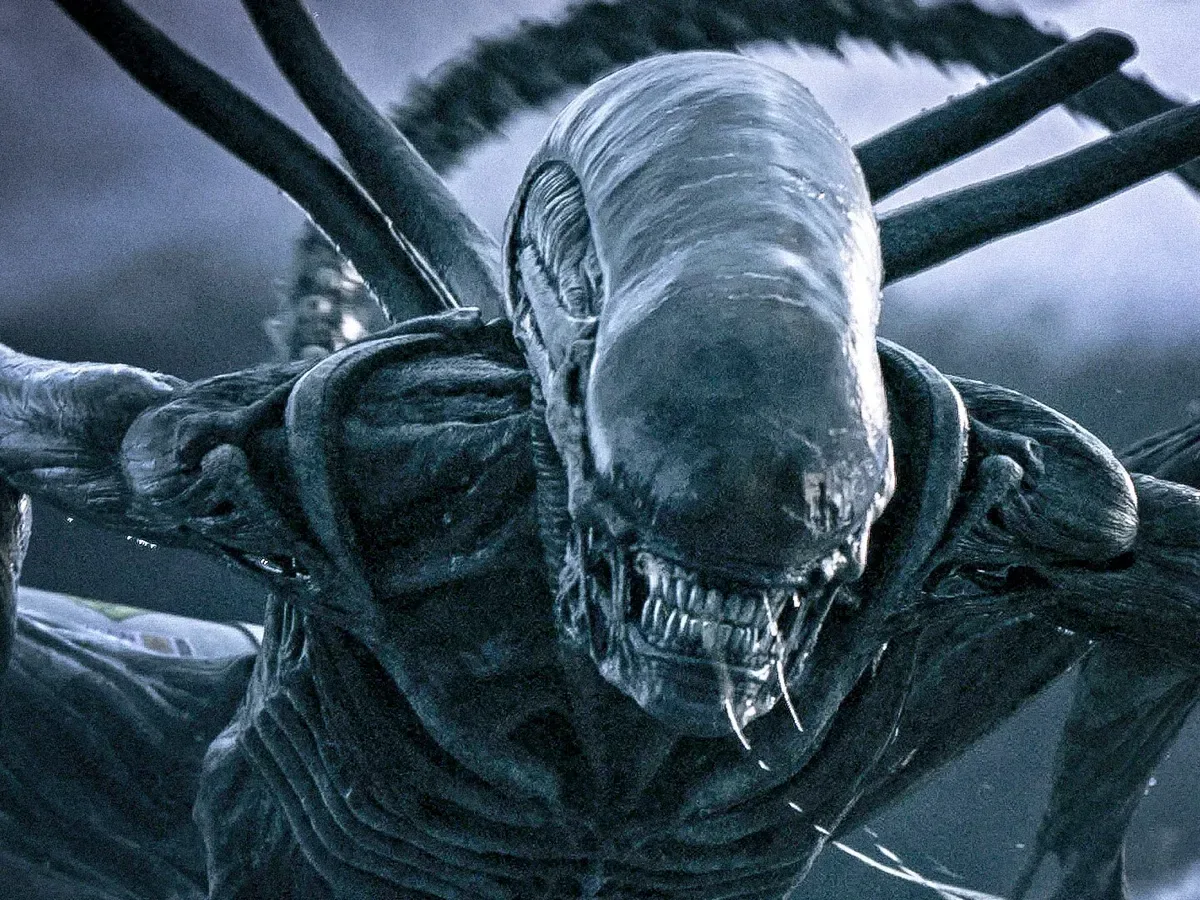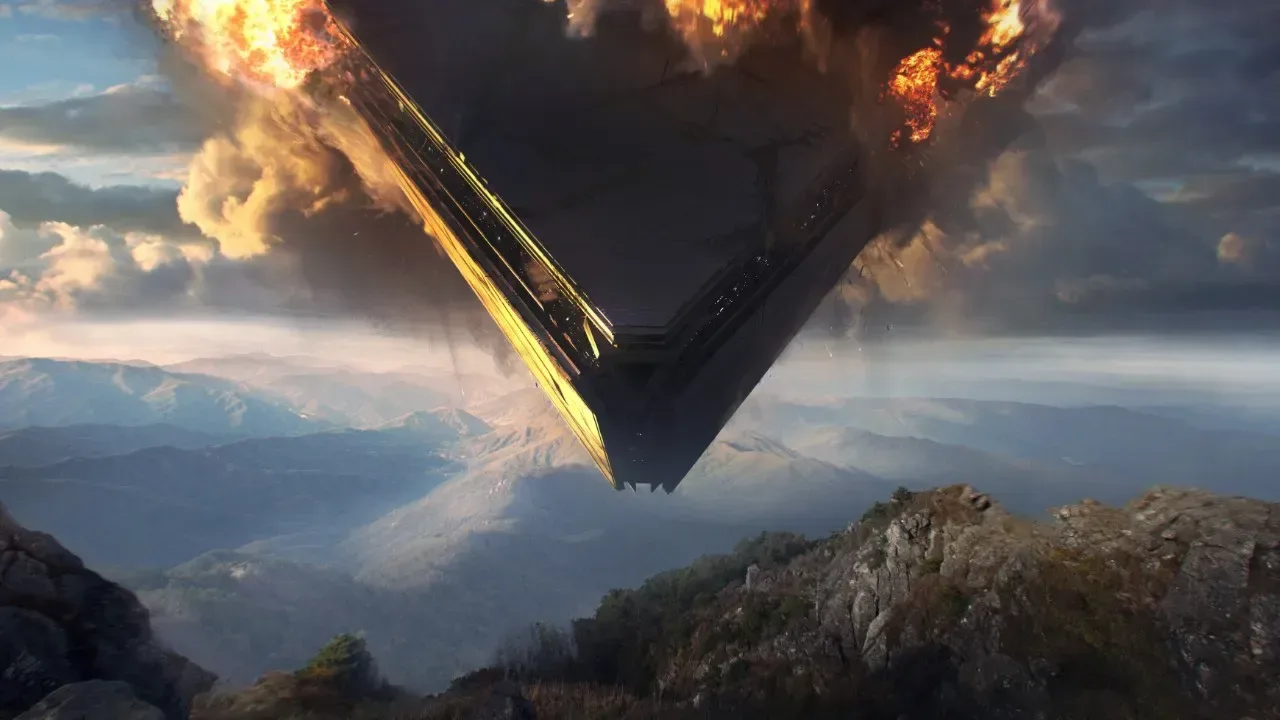
Hope, the new science-fiction action film from director Na Hong-jin, has put its extraterrestrial invaders in the spotlight through a fresh set of concept-art images. Created by Parallax Studios, the artwork focuses on the creatures whose arrival turns the quiet setting of Hope Harbor into a survival problem of distinctly non-local proportions.
The premise begins with an alien crash landing in the woods outside the seemingly peaceful hamlet. That would already be a fairly disruptive item for a local police blotter. But the threat does not stay contained: multiple types and classifications of otherworldly creatures are loose in and around the town. The people expected to deal with the crisis include Hope Harbor’s police chief, a female sergeant who comes armed, and a loose coalition of hunters.
Rather than framing the creatures as a single, uniform horde, the newly shown designs point to a broader alien ecosystem. That detail matters for a film built around a rural community facing an escalating incursion. A town can prepare for one monster, at least in the abstract; an assortment of unknown species is another matter entirely. The concept art emphasizes malformed, unfamiliar designs, establishing the intruders as a major visual component of Hope’s action-thriller machinery.
A small town with a very large problem
Hope Harbor supplies the film with an intentionally compact arena: forests, mountainsides, and narrow town streets become the spaces where the conflict unfolds. The crash site lies outside town in the forest, but the danger clearly reaches beyond the trees. That geographical progression gives the premise a useful sense of compression. The wilderness offers room for the extraterrestrials to emerge and move unseen, while the hamlet’s main streets create tighter conditions once residents and creatures occupy the same space.
Na Hong-jin is known for The Wailing, and Hope carries a genre blend that is more expansive than a straightforward invasion story. It has been described as an action-comedy-thriller, combining creature chaos with a mystery-oriented structure. The plot reportedly opens with an extended climax, then moves backward to unpack the events behind it before building toward another major payoff. That is a deliberately unusual architecture for a monster movie, where the traditional pattern is often discovery first, escalation second, and catastrophe last.
By beginning amid the fallout, Hope appears positioned to make its audience ask not only what the visitors are, but how the town got pushed so far beyond ordinary emergency procedures. The concept art therefore has a role beyond simple creature presentation. It gives the audience a look at the shapes behind the mystery while preserving the unanswered questions surrounding their arrival, their differences, and the extent of the danger they pose.
Parallax Studios’ alien designs set the tone
Creature concept art is often the first place a sci-fi film makes its intended texture unmistakable. In Hope’s case, the designs are not presented as sleek, cleanly engineered visitors from a pristine future. Their malformed quality is central to the imagery. That makes the intruders feel less like distant spacefaring tourists and more like an intrusion that does not fit the familiar natural world around Hope Harbor.
The stated presence of different classes and species also suggests that the visuals will need to communicate variety without turning the threat into a generic swarm. Individual silhouettes, movement possibilities, and perceived levels of danger can all help establish why the chief, sergeant, and hunters cannot rely on a single response. The released artwork offers a look at that visual premise, though it does not spell out a full hierarchy or individual creature capabilities.
That restraint is worth noting. Concept art can promise scale and imagination, but it is not the same thing as a complete explanation of the film’s lore. What is clear is the basic setup: an alien crash, multiple creatures, a small town, and a human response team assembled from local authority and hunting experience. Everything else belongs to the movie’s mystery and its reverse-unspooling story structure.
The cast brings an international ensemble to Hope Harbor
Hope’s cast includes Hwang Jung-min, Zo In-sung, Hoyeon, Taylor Russell, Cameron Britton, Alicia Vikander, and Michael Fassbender. It is a notably broad ensemble for a Korean-language genre film, pairing Korean performers with actors recognized across English-language film and television.
The available details do not assign every actor to a particular character, so it is best not to map names onto the chief, sergeant, hunters, or specific town residents. Still, the premise naturally calls for an ensemble approach. Hope Harbor is not described as a setting in which one isolated protagonist discovers a threat and handles it alone. It is a community under pressure, with several people forced into an improvised defensive effort.
That distinction helps separate Hope from a purely military or laboratory-centered alien narrative. The response is local and practical: policing, firearms, tracking, terrain knowledge, and a group of people attempting to stop a menace that arrived without warning. The action is said to include low-to-the-ground vehicle and horseback sequences, making the town and its surrounding landscape more than background decoration. Roads, trails, hillsides, and confined streets all seem set to become part of the chase.
Critical response highlights the film’s structure and action
Hope premiered at the 2026 Cannes Film Festival, where it received a 9/10 review. The assessment praised the film’s sensory intensity, its odd but inviting construction, and the way its creature work supports a collision between cultural unease and nature. It also highlighted the energy of the vehicle and horseback action.
A high score at a major festival does not answer every question a prospective viewer may have—especially for a film that blends comedy, thriller elements, creature horror, and action—but it does establish that Hope arrived with a strong early critical reception. The combination of a retrospective narrative structure and a creature-heavy rural siege is an ambitious one. The premise needs the action to land, the town to feel lived in, and the mystery to remain compelling even when its aftermath is shown early. The positive festival response indicates those elements were received as mutually reinforcing rather than competing ideas.
For audiences thinking ahead to eventual home viewing, a theatrical rollout remains separate from any streaming plan; no streaming availability is established here. Those looking generally at home-screen hardware can also check this Fire TV Stick HD deal overview, though Hope itself is currently defined by its cinema release.
A wide U.S. release for a Korean-language film
Hope opened in approximately 1,500 U.S. theaters on September 9. That footprint makes it the widest domestic theatrical release for a Korean-language film since Parasite, the Academy Award-winning film. The distinction is significant because it places Hope’s rollout in a larger theatrical context, not merely as a specialized genre engagement or a limited art-house opening.
The release scale also fits the film’s broad ingredients: creature spectacle, chase-oriented action, a recognizable international cast, and a director with an established genre reputation. Yet the heart of its story remains unusually specific. An idyllic hamlet is disrupted by an event in the nearby forest, and the people tasked with protecting it have to confront a threat whose number and nature exceed what their ordinary roles prepared them for.
The new artwork makes that mismatch visible. Hope Harbor may be small, but the alien problem is not—and the film’s creatures look designed to ensure nobody mistakes this for a routine callout.