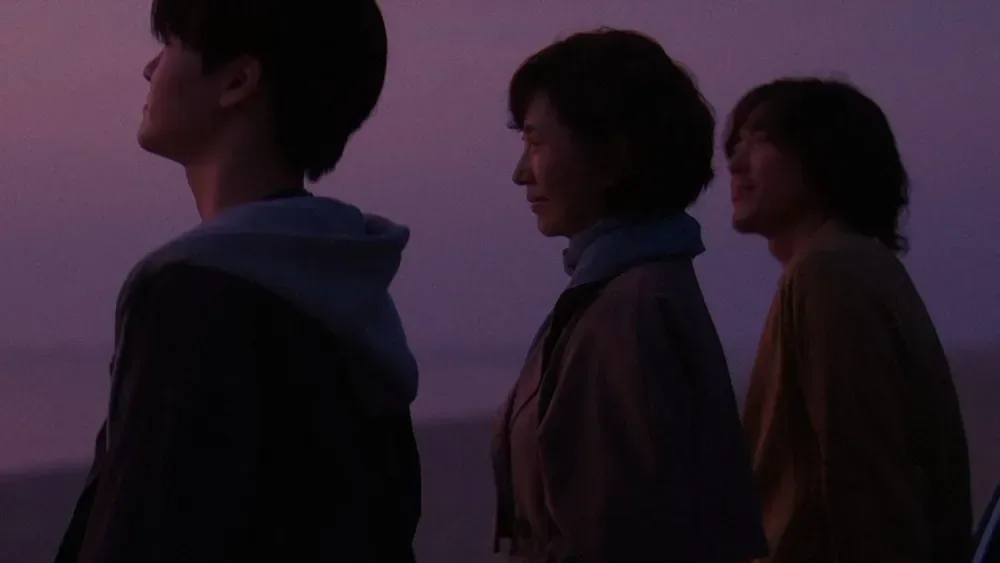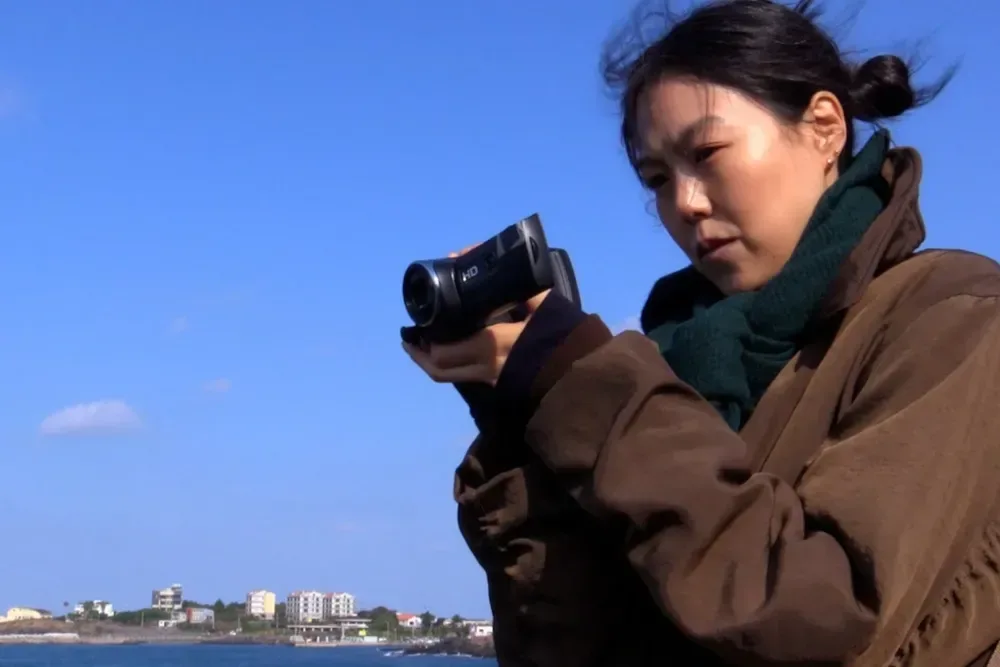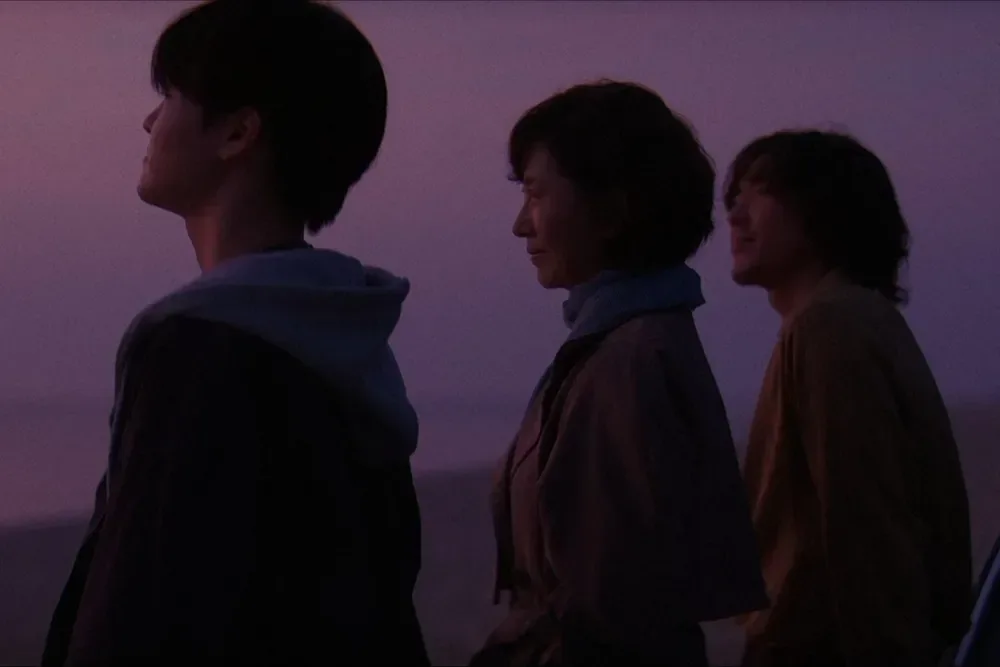
Two Korean films are extending their paths to international audiences through a fresh set of distribution agreements: Hong Sangsoo’s Nowhere to Lay My Eyes and Kim Jin-yu’s Journey There, which features Justin H. Min.
The deals matter because a festival invitation or prize can bring attention, but a territory sale is what assigns a local distributor the rights to bring a film to viewers in a particular market. That may eventually mean theatrical screenings, festival programming, home viewing, or another release route selected by that distributor. A completed sale is not, however, the same thing as a confirmed public release date. No rollout dates, ticketing details, streaming platforms or home-video plans have been specified in these agreements.
‘Nowhere to Lay My Eyes’ expands its reach
Nowhere to Lay My Eyes, Hong Sangsoo’s 35th feature, has added France, Japan, Argentina and Portugal to its distribution map. Carlotta Films acquired the French rights, Mimosa Films acquired Japan, Kligger took Argentina, and The Stone and the Plot acquired Portugal.
Those agreements build on previously reported rights sales covering North America, Austria, China, Spain, Taiwan and the United Kingdom. The earlier buyers are The Cinema Guild for North America, Filmgarten for Austria, Hugoeast for China, Atalante for Spain, Cola Films for Taiwan and the Institute of Contemporary Arts for the U.K.
For audiences, the key takeaway is geographic rather than immediate: the film now has distribution partners across a growing collection of markets. Rights are typically negotiated country by country, or region by region, meaning that a film’s journey from a festival premiere to local screens can vary widely. One distributor may favor cinemas and repertory venues, while another may construct a release around cultural programming, limited engagements or later digital availability. The announced deals do not establish which model will be used in each territory.
The film arrives with substantial festival recognition. At the 79th Locarno Film Festival, it received awards for best direction, best performance and the Ecumenical Jury Prize. The latter is a festival honor awarded by an ecumenical jury, generally recognizing work that engages seriously with human, ethical or spiritual concerns; it is distinct from a standard box-office or popular-audience measure.
Hong reunites with Kim Minhee, whose credits include By the Stream, and Kwon Haehyo, known for What Does That Nature Say to You. The feature is also Hong’s first collaboration with Choi Myeonggil, whose work includes the television series Durian’s Affair. Jeonwonsa Film Co. produced the film.
At 35 features, Hong’s filmography supplies useful context for why the new sales are notable: this is not an isolated festival title seeking its first foothold abroad, but a new entry from an established filmmaker that has already translated its Locarno recognition into a broad group of territorial arrangements. The deals do not indicate total audience size or commercial performance, but they do show that multiple distributors have committed to handling the film locally.
What the new ‘Journey There’ deals cover
Journey There has secured rights sales for Taiwan, Japan, Israel and Mongolia. Andrews Film acquired the Taiwanese rights, KDDI Corporation acquired Japan, Lev Cinema acquired Israel and Izagur Media acquired Mongolia. Kairos Distribution acquired inflight rights.
Inflight rights are separate from territorial theatrical or consumer home-entertainment rights. In practical terms, they concern exhibition on aircraft entertainment systems rather than a public cinema run or a subscription streaming catalog. Their inclusion underlines how a film can be licensed across several distinct viewing environments, each with its own buyer and terms.
The drama centers on a middle-aged widow who is preparing for her own journey after moving into a new apartment, only to find herself pulled into unexpected relationships there. Its premise places the focus on transition, community and the changing shape of a person’s daily life, rather than presenting the title as a conventional travel narrative.
Min’s involvement is an additional point of interest for viewers familiar with his work in Kogonada’s After Yang, as well as Beef and The Umbrella Academy. Journey There is identified as the first Korean production to star Min. The available information does not specify the scale of his role, so it would be premature to characterize him as the film’s lead based on the announced sales alone.
The movie is Kim Jin-yu’s second feature. Kim’s first feature, Bori, won two awards at the 24th Schlingel International Film Festival. Journey There was produced by Pado, Kim’s own company, and was released in Korea on Oct. 28.
Its profile has also been shaped by festival invitations, including selections for the Moscow International Film Festival, New York Asian Film Festival, Paris Korean Film Festival and London Korean Film Festival. Invitations and distribution agreements accomplish different things. A festival invitation creates an event-based screening opportunity and can introduce a film to critics, programmers, buyers and audiences; a sale gives a particular company responsibility for exploiting the licensed rights in its market. Neither fact alone confirms when people outside Korea will be able to watch the film.
Why territory sales are worth watching
International sales can look like a list of company names and countries, yet they provide a concrete snapshot of which films are being positioned for cross-border circulation. They are especially relevant for viewers who follow Korean cinema beyond the titles already guaranteed a simultaneous global launch. A drama may build its overseas profile market by market, as distributors decide where it fits in their lineups and how they want to present it.
That process also helps explain why an awards record and a release calendar should not be conflated. Nowhere to Lay My Eyes has three Locarno prizes and a lengthy set of buyers, but that does not automatically make it available in every territory those companies cover today. Likewise, Journey There has a Korean release and several international partners, but viewers in Taiwan, Japan, Israel and Mongolia will need to watch for plans from the relevant rights holders.
For the wider screen business, regional distribution remains an important complement to the production side of filmmaking. Policy choices affecting where projects are made can shape the industry’s economics, while sales arrangements determine part of how finished work moves between audiences; California’s debate over expanding film tax credits illustrates the production-side pressure in a separate but related corner of the business. California’s proposed changes to its film-tax-credit approach are a reminder that production and distribution are connected stages, even though they answer different questions.
A broader Finecut slate heading to AFM
The sales company is also taking additional Korean projects to AFM. Its lineup includes the animated Long Long Night, which is scheduled to screen for buyers in an English-dubbed version for the first time. The film has already received invitations from Toronto, Busan and Sitges.
Also included are Dora, selected for Cannes’ Directors’ Fortnight and Busan’s Gala Presentation section, and Wi-Fi Love in the Palace, described as a period fantasy romance starring Kim Young-hoon of K-pop group The Boyz.
Buyer screenings are industry-facing presentations rather than public release announcements. They give potential distributors an opportunity to evaluate a title for acquisition. In that context, the English-dubbed presentation of Long Long Night signals an attempt to make the animated film accessible to a wider set of prospective partners, but it does not confirm a finished English-language public release.
For now, the clearest practical status is straightforward. Nowhere to Lay My Eyes has gained new distribution representation in France, Japan, Argentina and Portugal on top of its earlier international sales. Journey There has gained representation in Taiwan, Japan, Israel and Mongolia, plus an inflight deal, after its Korean release. Both films have meaningful festival credentials, but local availability will depend on the release plans still to come from their respective distributors.