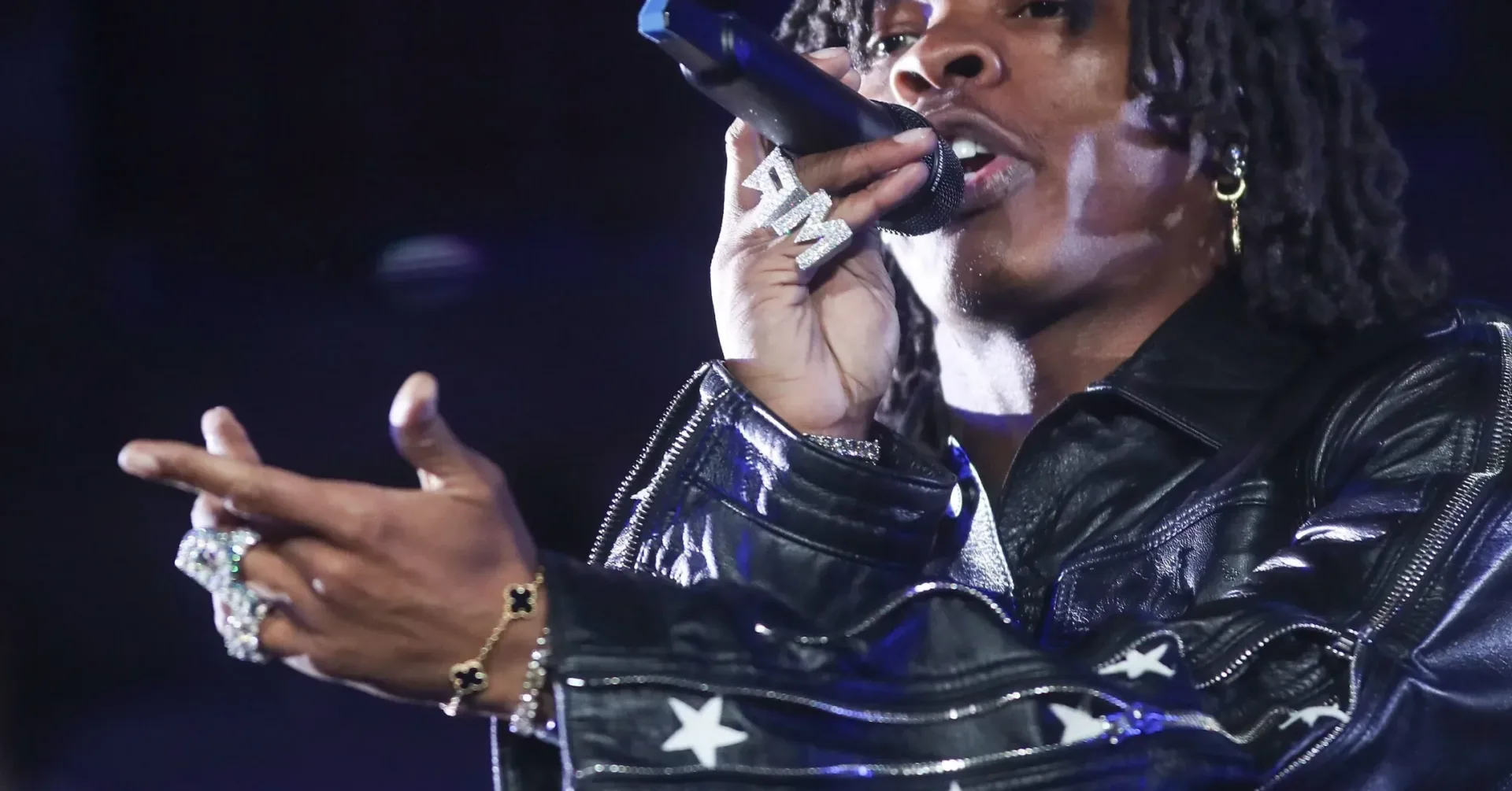
Gunna brought Wunna Run Club to Florida A&M University’s homecoming 5K, joining students, alumni and Tallahassee-area participants for the fifth annual run/walk at Bragg Memorial Stadium. The Atlanta rapper used the campus gathering to make a simple case for looking after physical health while pursuing academic goals.
“Y’all are smart, y’all in school, but you also gotta watch your health; wellness is major,” Gunna said during the event.
That message is central to Wunna Run Club, the initiative Gunna created to encourage people to begin healthier routines or continue habits they have already built. At FAMU, the club became part of a homecoming tradition rather than a standalone celebrity appearance: a community event with students at its center and an existing 5K structure for people who wanted to run or walk.
Walmart sponsored the homecoming event. Footage from the university showed Gunna wearing a bright green shirt featuring FAMU and Walmart branding. The setting included tents, refreshments, a microphone presentation under a green canopy and the stadium seating behind the assembled crowd.
A 5K that makes room for different starting points
A 5K is a road-race distance of five kilometres, roughly 3.1 miles. But the format does not demand that everyone approach it as a race. FAMU’s event was described as a run/walk, an important distinction for a wellness gathering built around participation. Someone can cover the same course at a competitive pace, at an easy jog or by walking.
That flexibility fits the stated purpose of Wunna Run Club. The organization is not framed solely around elite running performance; it is meant to give fans and communities a place to start healthier habits or stay consistent with ones already in place. For students managing coursework, schedules and the broader rush of homecoming week, an event that accommodates multiple fitness levels can lower the barrier to taking part.
There is evidence of that broad approach in the project’s earlier New York event. FAMU noted that the first Wunna Run 5K, held at Prospect Park in Brooklyn, brought out more than 1,000 participants across differing experience levels. That turnout does not establish what every future event will look like, but it does show the initiative has previously attracted a substantial and varied crowd.
The FAMU stop extends that model to a historically Black university during one of its most public and communal weeks of the year. Homecoming creates a rare overlap of current students, graduates and local residents. Bringing a wellness activity into that space turns a morning 5K into a shared campus occasion, rather than treating health as a private task to be completed alone.
Related coverage includes Gunna Brings Wunna Run Club to FAMU Homecoming 5K.
The scholarship commitment gives the visit a practical dimension
The run followed a previously announced partnership between Walmart and Wunna Run Club that committed $10,000 in scholarships for FAMU students. Five students whose majors include a health-related component are set to receive $2,000 each toward their education.
The details matter. The support is directed to five named recipients in scope, not presented as an undefined pool of money, and it is tied to fields with a health-related element. The available information does not identify the individual students or specify their majors, so it would be premature to infer particular programs or career paths. What is clear is the per-student amount and the combined commitment.
FAMU student government vice president and student homecoming committee chair Caitlin Smith highlighted why direct assistance can matter. She said support with college costs can reduce pressure, particularly for students attending from outside the state, and described the value of help that makes school more affordable.
That makes the pairing of a 5K and scholarship funding more coherent than a simple event sponsorship. The run focuses on wellness habits and community participation. The scholarships address an educational expense that students may be actively navigating. Neither piece solves every challenge around student health or college affordability, but together they connect the wellness message to a concrete resource for a small group of eligible students.
Wellness, without reducing it to a slogan
“Wellness” can be an imprecise word. In this instance, its clearest meaning comes from the activity itself: movement, routine-building and gathering people around a walk or run. Gunna’s remarks also explicitly place health alongside school performance, rather than setting the two in opposition.
That is a useful framing for a campus event. Academic achievement is often visible through grades, deadlines and graduation milestones; maintaining a sustainable routine can be less visible. A run club does not need to promise dramatic transformation to be valuable. Its more grounded function is to create a reason to show up, move with other people and make healthy behavior feel social rather than isolating.
For people who want to bring that spirit into their own routine, the practical takeaway is less about copying a particular pace than choosing an achievable one:
- Use a walk-run format if continuous running is not comfortable.
- Set a repeatable time for activity rather than chasing an ambitious distance immediately.
- Invite a friend, classmate or family member to add accountability and company.
- Focus on consistency and comfort instead of treating every outing as a competition.
Those are general ways to approach a community run, not a substitute for individualized medical guidance. The event itself makes the broader point: accessible participation is compatible with a 5K setting. People need not arrive as experienced runners to belong at a run/walk.
Why the FAMU setting is significant
FAMU’s homecoming 5K already had five annual editions behind it, so Wunna Run Club joined an ongoing campus tradition. That context separates the visit from an event created entirely around a guest appearance. The university, its students and its homecoming calendar supplied the foundation; the club, Gunna and Walmart added visibility, a wellness message and scholarship support.
The most meaningful measure of this kind of appearance is not simply that a recognizable artist attended. It is whether the surrounding program gives participants something usable after the crowd disperses. Here, the available evidence points to two such elements: an entry point for healthier habits through a run/walk community, and $2,000 awards for each of five students in health-related studies.
For readers following the wider crossover between entertainment, fitness communities and consumer technology, our look at the Fitbit Air and Whoop MG explores a different side of wellness: how screenless trackers handle data, battery life and subscriptions. FAMU’s 5K illustrates the people-first side of the same broad conversation—making movement visible, communal and easier to begin.
At Bragg Memorial Stadium, the message remained direct. School matters, and so does health. By appearing at the FAMU homecoming run/walk and linking Wunna Run Club to a scholarship partnership, Gunna’s visit put that message in front of the students and community members already gathered to move together.