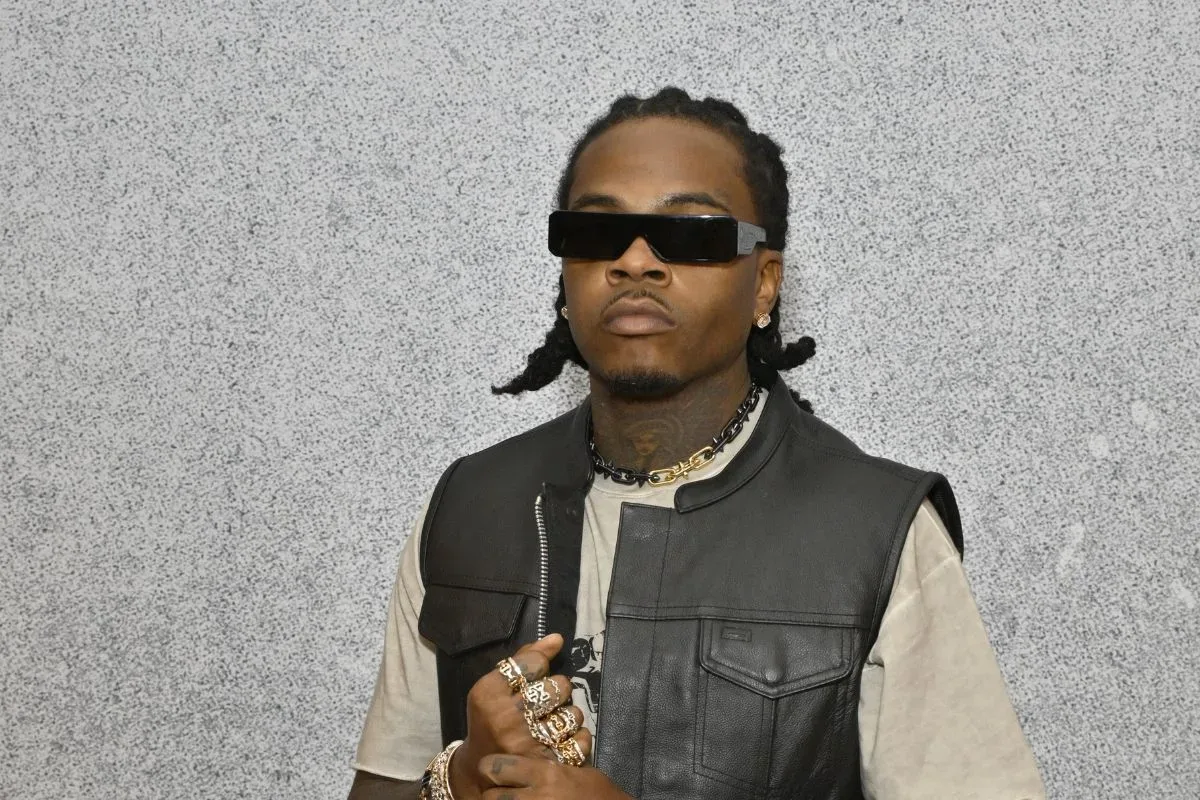
Gunna received a proclamation from the City of South Fulton during the Wunna Run Club 5K in Atlanta, a civic honor that recognized community work reaching beyond his music career. Mayor Carmalitha Gumbs presented the proclamation at the event, held along the Beltline route from Westside to Southside Trail.
The run brought together 1,600 runners, joggers and walkers across a range of experience levels. Its fundraising purpose was equally central: proceeds were directed to Gunna’s Great Giveaway nonprofit, which supports families in the Atlanta area.
That combination gives the occasion more weight than a celebrity appearance at a fitness event. A 5K is a race distance of roughly 3.1 miles, but it is also one of the most accessible formats for a community run. By welcoming walkers as well as runners, the Wunna Run Club event made participation possible without assuming that everyone was training for a competitive result. The city’s recognition focused on the broader public-facing work built around that participation.
A proclamation tied to local service
A municipal proclamation is a formal statement of recognition from a city. It does not function like a law or a court ruling; its purpose is ceremonial and civic, marking a person, event or contribution that city leadership wants to acknowledge publicly.
In presenting the proclamation, Gumbs emphasized Gunna’s impact on families and children in South Fulton, including through difficult periods in his life. The timing also came shortly before Gunna Day, a recognition first established by the city in 2021 to honor his community service and positive influence on young people.
His work that year included opening Drip Closet and the Goodr Grocery Store at Ronald E. McNair Middle School, his former school. The initiatives supplied students and their families with free food, clothing, shoes and other essentials. That history helps explain why the 5K’s charitable design matters: the event’s fundraising was connected to an existing focus on material support for local families, rather than being presented as a standalone fitness campaign.
The new proclamation therefore recognizes two linked ideas. One is visible local service, including programs serving students and families. The other is the ability to use a growing public platform to create an event with a charitable destination for its proceeds.
How running became part of the Wunna identity
Running became a more prominent part of Gunna’s public story after a turbulent legal period. In December 2022, he entered an Alford plea to a racketeering charge in the YSL RICO case. An Alford plea is a legal plea in which a defendant maintains innocence while accepting that prosecutors have sufficient evidence that could lead to a conviction.
He received a five-year prison sentence, with one year commuted to time served and the remaining four years suspended, allowing him to leave custody. The legal history is relevant context, but it should not be mistaken for the whole account of the Wunna Run Club. The current recognition is specifically attached to community programming, charity and fitness activity.
Gunna has described taking up trail running near his Arizona home as a way to clear his head during that period. Over time, he connected running with a larger personal routine based on consistency and focus. He has said that fitness and music now work together in his life rather than functioning as separate pursuits.
“I’m in a good space, a good mental space right now. It’s not just because of the music. It’s because of the discipline. It’s because of the journey. I feel like it goes together now. Can’t do one or the other. Fitness and music go together for me.”
His reported schedule includes full-body strength training, boxing and running five or six days per week. Those are distinct forms of exercise with different demands: strength training develops force and muscular capacity, boxing combines conditioning with technical movement, and running emphasizes sustained aerobic work. Together, they point to a routine built around repeated practice rather than a single transformation story.
From Atlanta route to wider run-club network
The Wunna Run movement has expanded beyond Atlanta, with events held in Brooklyn, Toronto, Washington, D.C., Miami, London, Johannesburg, Houston and Los Angeles. Under Armour is an official sponsor of the initiative.
That geographic range is significant because it turns a personal fitness practice into a recognizable community format. Run clubs can offer a low-barrier reason for people to move together, especially when an event accommodates jogging and walking rather than treating pace as the only measure of participation. In this case, the Atlanta gathering paired that social format with direct support for the Great Giveaway nonprofit.
The Wunna Run Club’s spread also changes how Gunna’s fitness work can be understood. It is no longer only an artist discussing workouts or sharing an individual routine. The movement has organized public events in multiple cities, while the South Fulton 5K demonstrates a local application of that larger network: participation, charitable proceeds and city recognition all meeting in one event.
For Atlanta-area families, the practical point is straightforward. The 5K directed proceeds to a nonprofit intended to support them. For participants, the event offered an entry point regardless of whether they arrived as trained runners, casual joggers or walkers. And for South Fulton, the proclamation offered official acknowledgement of the service associated with Gunna’s efforts.
Why the recognition carries a different message than a music accolade
Music honors typically measure recording, performance or cultural influence. This proclamation is tied instead to civic contribution. That distinction matters because it places the focus on who benefits from the work: families, students, young people and people able to join a community event that raises money for a nonprofit.
The surrounding story also illustrates why discipline is more than a motivational buzzword in this context. Gunna has connected it to a regular training routine, while the Wunna Run Club has turned that individual commitment into scheduled gatherings in cities around the world. The South Fulton event adds an additional layer by channeling proceeds toward assistance for Atlanta-area families.
There is a temptation to flatten high-profile comeback narratives into a simple before-and-after arc. The clearer reading is more concrete. Gunna’s legal case remains part of his recent public history. Separately, he has built a fitness practice involving running, boxing and strength work; founded or supported community-focused programs at his former middle school; and now hosted a 5K attended by 1,600 people that raised funds for his nonprofit. The city proclamation acknowledges those community-facing actions.
For a wider view of how major rap figures discuss the value of creative direction and evolution, read Jay-Z’s call for rap’s next wave to take creative risks.
South Fulton’s decision to honor Gunna at the Wunna Run Club 5K ultimately puts the emphasis on participation and follow-through. The event had a specific route, a defined charitable recipient and a sizable turnout. The proclamation recognizes a public figure whose work in Atlanta has included providing essentials to students and families, and whose fitness initiative has become a way to gather people around movement and community support.