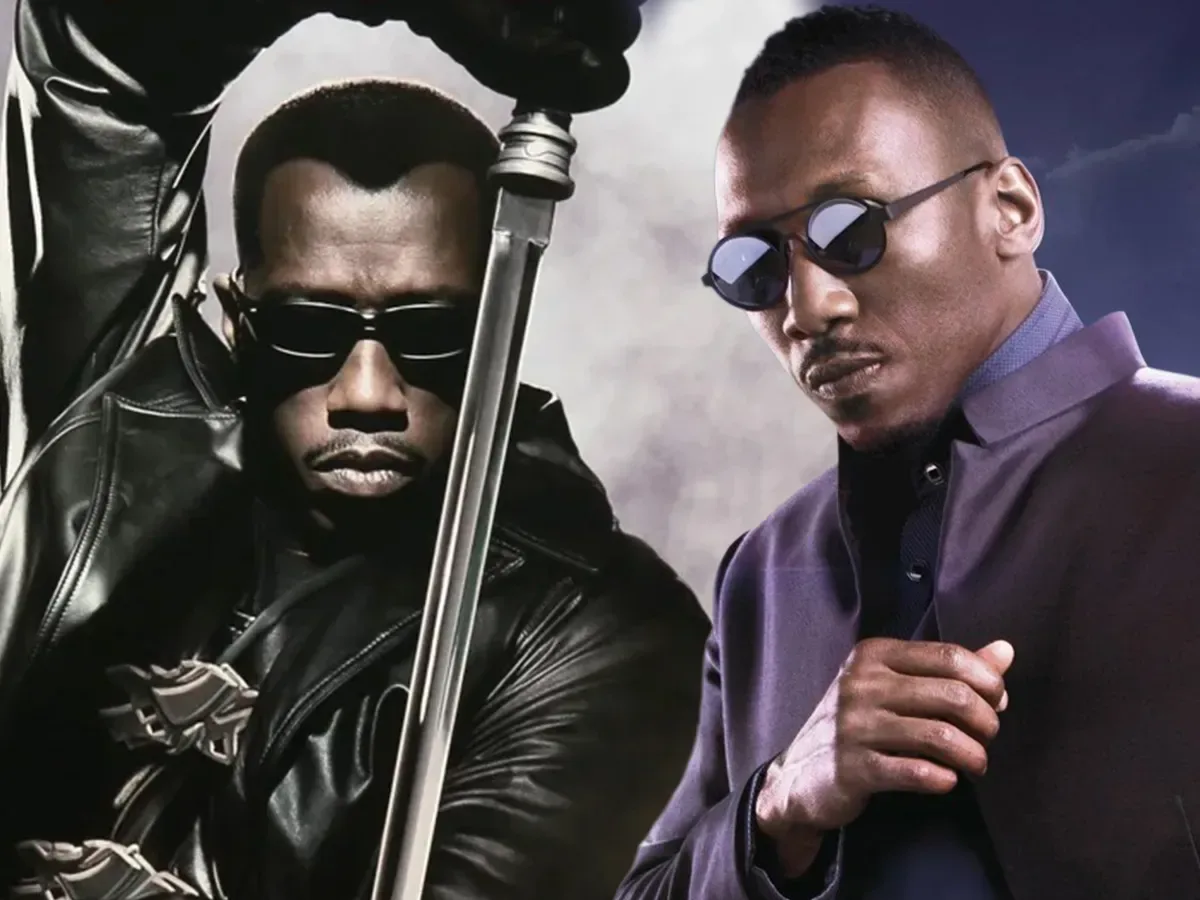
Guillermo del Toro’s account of making Blade 2 frames Wesley Snipes’ version of the vampire hunter as more than a casting choice. In del Toro’s view, Snipes supplied a large part of what audiences recognized as Blade: an imposing physical presence, a precise understanding of the character, and a movie-star quality that registered as soon as the camera rolled.
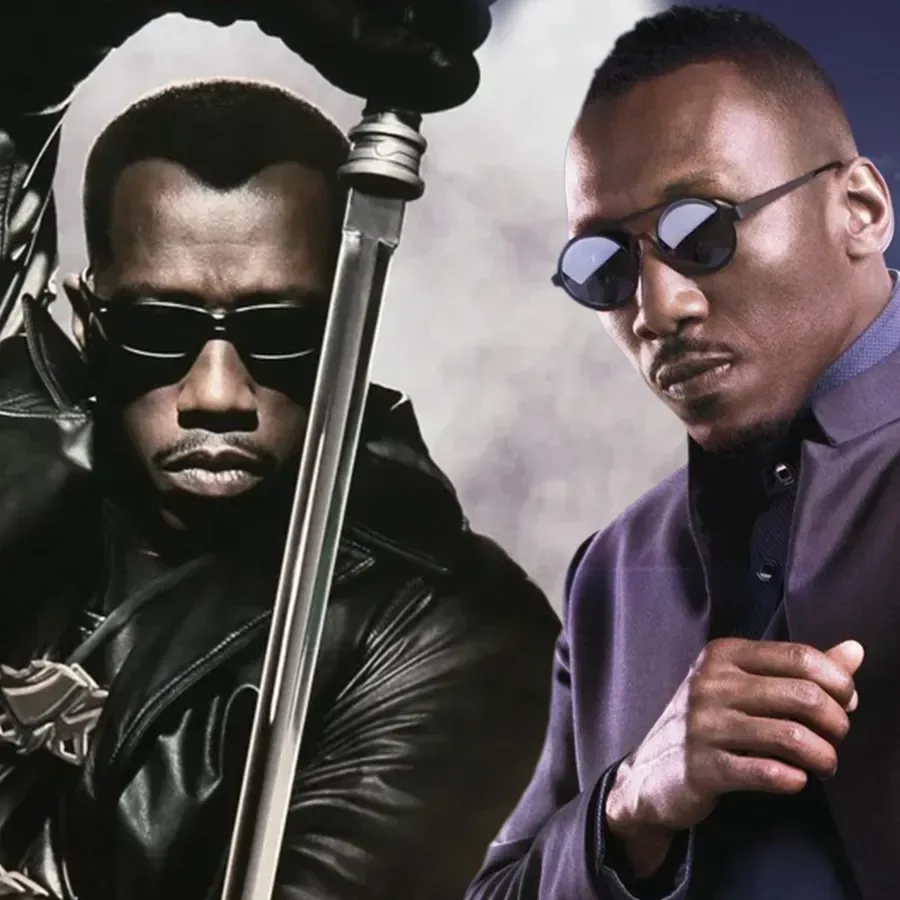
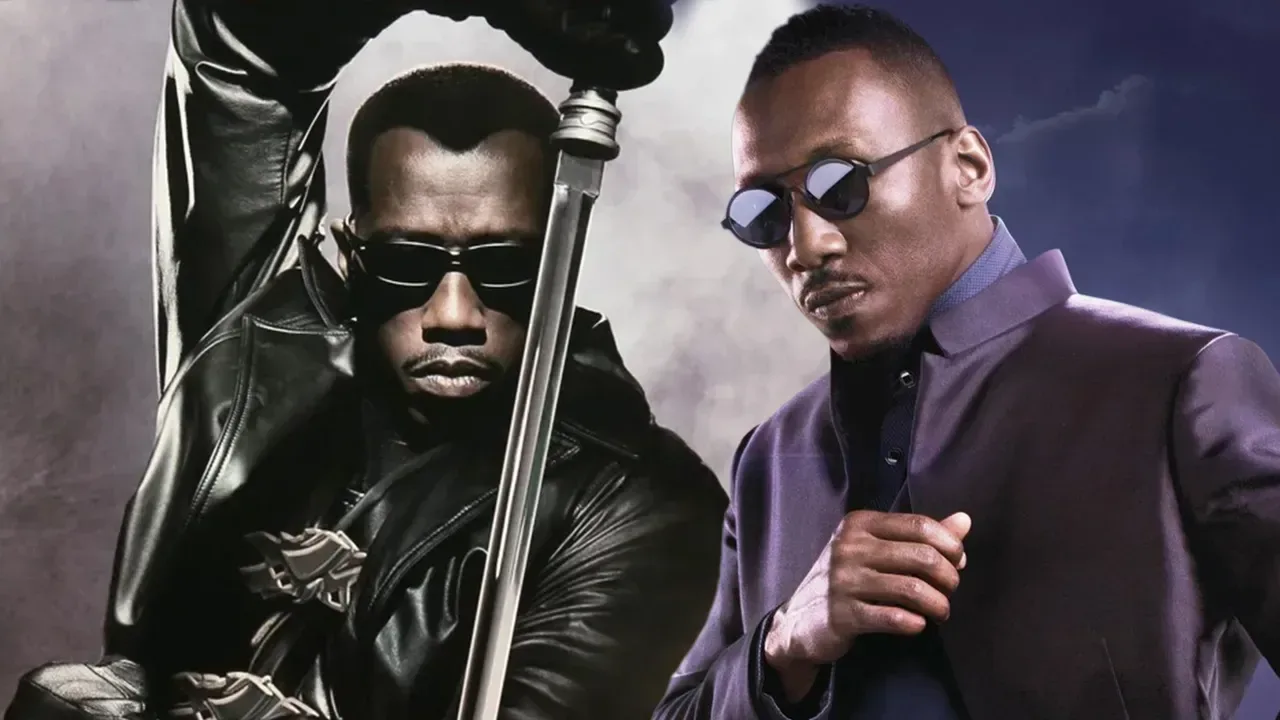
That perspective has fresh relevance following the cancellation of Marvel Studios’ planned Blade reboot starring Mahershala Ali. The project was first announced in 2019, encountered repeated setbacks, and ultimately did not move forward. Del Toro, who directed the second Snipes-led film, did not present a definitive production-side explanation for the reboot’s failure. Instead, he argued from a creative angle: Blade is an unusually actor-dependent character, and Snipes’ contribution set a daunting standard.
Del Toro initially put Snipes’ share of Blade’s essential identity at “50%,” before joking that it might really be “100%.” The joke carries a serious point. A familiar comic-book name, costume, or arsenal does not necessarily recreate the specific attitude of a screen character. Blade’s image was built around restraint as much as spectacle: a man who seemed dangerous before he drew anything.
“Blade is the weapon”
The clearest example came from a prop discussion during Blade 2. Del Toro showed Snipes a specially designed gun with a blade at the front. Snipes liked the object but rejected it for Blade. His reasoning, as del Toro recalls it, was simple: “Blade is the weapon.”
That exchange illustrates a useful distinction in action-character design. Props can communicate ability, world-building, and visual flair, but they can also shift the audience’s focus away from the performer. Snipes’ objection was that too many gadgets would make Blade feel defined by equipment in the manner of a heavily accessorized superhero. For him, the danger needed to originate with the character himself.
It is a concise creative rule, but it helps explain why the role has remained so closely associated with Snipes. Blade can use weapons, but the weapons are extensions of a figure who is already the scene’s main threat. Del Toro said Snipes immediately understood that balance, and that the actor’s physicality gave him a natural comic-book silhouette in motion.
The observation does not mean a future actor could never play Blade successfully. It does mean that a reboot has a particular problem to solve beyond casting someone capable of action choreography. It must decide which qualities are specific to the character on the page, which were constructed by the original films, and which came from Snipes alone. Those categories overlap, but they are not interchangeable.
Del Toro’s filmmaking answer: study, then change
Del Toro also stressed that the actor is only one side of the equation. The other is the filmmaker’s articulation of the material: how movement, shots, cuts, lighting, and props turn an actor’s performance into a coherent screen identity.
Before directing Blade 2, del Toro studied footage from Stephen Norrington’s first Blade film. He said he had several moving boxes of dailies on VHS and used them to understand Norrington’s camera approach. Dailies are the unedited footage reviewed during production, often allowing filmmakers to study performances and coverage before the finished edit exists.
Del Toro described Norrington’s camera formations as unconventional, including a low-positioned camera with a longer lens facing a high-positioned camera with a wide lens. A long lens generally narrows the field of view and can visually compress distance, while a wide lens captures more of the scene and can emphasize spatial depth. Putting cameras at sharply different heights and with contrasting lenses creates options that can make the same action feel more aggressive, distorted, or kinetically unstable once edited.
Importantly, del Toro did not describe his preparation as imitation. He studied the first film to understand its visual grammar, then chose to approach it differently. That is a practical lesson for sequel-making. Continuity is not simply repeating recognizable shots; it can mean understanding why a prior film’s choices worked and building a new variation that still serves the same character.
A 13-camera sequence built for the edit
One Blade 2 setup took that philosophy to an extreme. Del Toro said it used 13 cameras working simultaneously, with their movements timed so that one camera would cross another at a precise moment for the planned cut. He described the arrangement as a ballet and said he was effectively cutting the scene before it was shot.
That approach is often called previsualizing the edit: mapping the rhythm and transitions of a sequence during planning rather than discovering every decision later in the editing room. It requires meticulous coordination, because each camera’s path, framing, actor movement, and timing must support the intended transition. Done well, it can give action a deliberate sense of momentum. Done poorly, more cameras merely create more footage and more confusion.
Del Toro’s description also pushes back against the idea that action cinema is automatically chaotic. Even a sequence that feels frantic to viewers can be rooted in exact choreography. The physical performance remains vital, but the image of Blade landing, turning, or attacking is shaped by lenses, placement, movement, and the timing of the cut.
Why the first Blade mattered to del Toro
Del Toro was emphatic about Norrington’s first Blade as a turning point for comic-book films. He contrasted it with the polished wholesomeness he associated with Richard Donner’s Superman and the stylized eccentricity of Tim Burton’s Batman. For del Toro, Blade introduced a harsher, edgier attitude that widened the range of what the genre could look and feel like.
He went further, suggesting that the first film’s impact can be felt in later comic-book and action cinema, naming The Matrix and X-Men as films he does not think arrive in the same way without Norrington’s Blade. That is del Toro’s personal historical assessment, not a claim of direct causation. But it clarifies what he thinks the movie accomplished: it demonstrated that a comic-book adaptation could be cool, violent, stylized, and driven by an adult antihero rather than presenting a cleaner version of heroism.
His remarks are especially notable because he presents Blade 2 as an inheritance. The first film established a template; his sequel expanded it with his own visual and creature-focused sensibilities. Snipes, in this reading, was the throughline that made evolution possible without losing the character at the center.
The reboot’s difficult legacy
The canceled Ali project underscores how hard it can be to revive a property whose prior screen identity is so tightly fused with one performer and one era of filmmaking. Ali reportedly trained in multiple martial arts for years for the part and sustained a knee injury, but the film never reached completion. He later said he did not know why it failed to happen and agreed with Kevin Feige’s assessment that the outcome was a major professional failure.
None of that establishes a single reason for the cancellation. Del Toro’s comments should be read as creative analysis rather than an inside account of the reboot’s development. His argument is that the first task for any new Blade would be identifying what cannot be replaced by surface-level iconography: the sense that the lead actor, not the gear, is the weapon.
Snipes did return as Blade in Deadpool & Wolverine, though there is no indication here that he is set for another standalone Blade film. For now, the more substantial takeaway is del Toro’s unusually specific explanation of how character, performance, and filmmaking choices combined in the earlier movies.
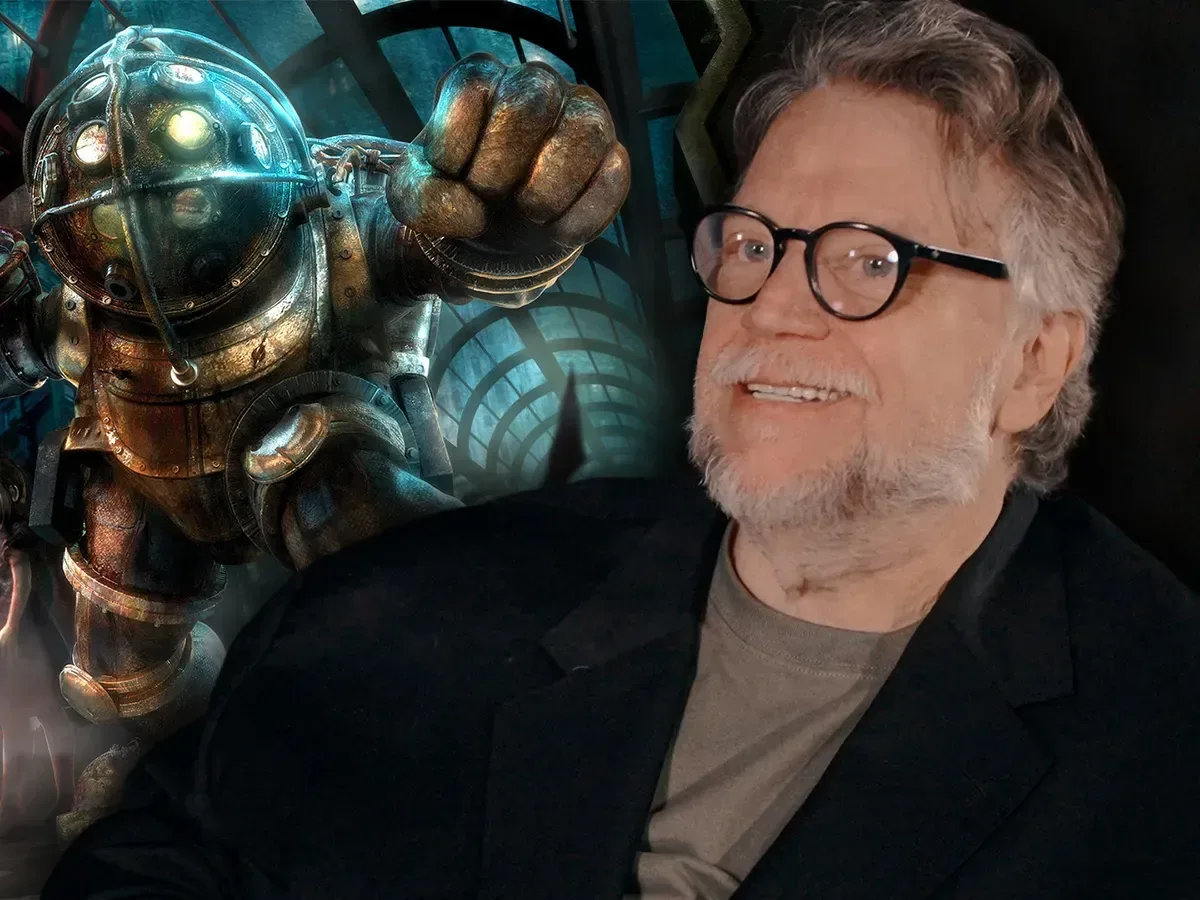
Del Toro has also spoken elsewhere about the difficult process of trying to move a video-game adaptation forward; see his comments on the stalled BioShock film discussions. In both cases, the throughline is not that a recognizable property automatically makes a project easy. A strong adaptation needs a clear interpretation, and for Blade, del Toro believes Snipes’ interpretation remains the benchmark.
The Red Bull story, and a needed reality check
Del Toro also recalled Blade 2 and Pacific Rim as two of his most enjoyable shoots. His memory of the former came with a spectacularly unhealthy detail: he said he was consuming around 40 cans of Red Bull a day after encountering the drink while working in Europe, then handing cases out to extras. He nicknamed it his “cocaine movie” to describe his manic energy.
The anecdote is amusing as a portrait of an energized production, but it is not a practice to emulate. Del Toro himself said a doctor later told him not to consume more than four cans, a vast reduction from what he described during filming. The filmmaking insight worth retaining is the planned intensity of the work, not the energy-drink intake.