Greg Daniels’ long run in television comedy can be mapped through a remarkable list of titles: The Simpsons, King of the Hill, The Office, Parks and Recreation, Upload, Space Force, and now The Paper. But the more useful way to read that career is as a continuing argument for character comedy: jokes work best when they reveal people, emotional turns land harder when they are not mechanically announced, and a large ensemble gets richer when it has time to become a world.
That approach is being recognized on September 10, when Daniels receives a star on the Hollywood Walk of Fame. The ceremony is scheduled for 11:30 a.m. PT at 6357 Hollywood Blvd. For a writer whose early Los Angeles years included walks along that very boulevard to look for the names of heroes, the placement has an appropriately strange, full-circle quality. Daniels has said he expects to be on a block near Bob Newhart and John Belushi.
The honor also recognizes a body of work deeply connected to Los Angeles production, even when the fictional locations were elsewhere. Van Nuys stood in for Scranton, Pennsylvania, on The Office. Pasadena and nearby areas became Pawnee, Indiana, for Parks and Recreation. Locations around the Valley, downtown Los Angeles, and the Los Angeles Times offices have doubled for Toledo, Ohio, in The Paper. The recurring crews and familiar production environment have given Daniels a continuity behind the scenes that mirrors the long-term creative relationships visible in his shows.
Comedy as a reason to get together
Daniels has described writing comedy as his preferred form of social invitation. Rather than treating collaboration as separate from life, he has pursued it as one of life’s best parts. That mindset helps explain a career built around writers’ rooms, partnerships, and people who return in new roles on later series.
Early on, Daniels sought an opportunity to learn from Larry David’s process on Seinfeld. Given a short phone window, he pitched roughly 11 episode premises. One idea, based on an incident involving his father on a New York street when Daniels was young, became Season 3’s “The Parking Space.” The sale brought him into the writing process for three drafts and offered an up-close education in the construction of the show.
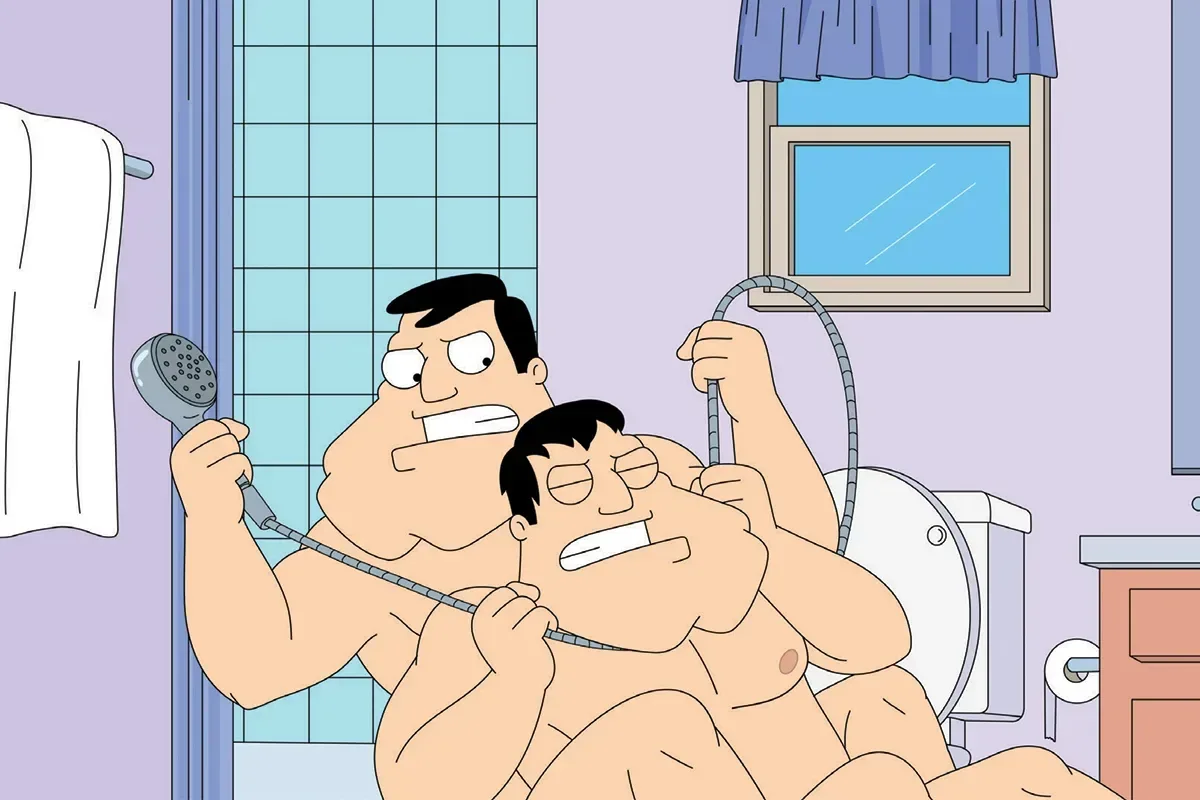
That credit assisted Daniels in his next major goal: joining The Simpsons, where he wanted to work in the orbit of James L. Brooks. During his 1993-1998 tenure, he wrote episodes including “Homer and Apu,” “Bart Sells His Soul,” and “Lisa’s Wedding.” “Homer and Apu” earned him an Emmy nomination for the song “Who Needs the Kwik-E-Mart?,” while “Lisa’s Wedding” won an Emmy for animated program.
Those credits followed earlier work with Conan O’Brien. The pair’s first post-Harvard job was on HBO’s Not Necessarily the News from 1985 through 1987, a show that turned current events and news-program conventions into comedy. Daniels later worked on Fox’s short-lived The Wilton North Report from 1987 to 1988, including a rare brief on-camera appearance. He was then a writer on Saturday Night Live from 1987 to 1990, working among performers including Dana Carvey and alongside Robert Smigel. It was also where he met Susanne Daniels, who would go on to become a longtime television executive.
The emotional engine under the joke
Daniels’ major creative pivot after The Simpsons came with King of the Hill, co-created with Mike Judge. Judge was already widely known for Beavis and Butt-Head, but the new animated series deliberately did not attempt to replicate the louder, more overtly cartoonish model of The Simpsons. Instead, it made room for a grounded Texas family, their friends, their stubbornness, and the quiet feelings that frequently exist beneath a seemingly minor problem.
The series originally ran from 1997 to 2010 and returned in 2025, now airing through Hulu. Daniels has identified King of the Hill as central to developing his preference for emotional stories that remain partly concealed under the plot for most of an episode. In other words, the audience may initially believe it is watching Hank worry about a practical nuisance or Peggy pursue a proudly misguided objective, only to discover that the episode has been navigating a more personal concern all along.
That distinction matters because conventional sitcom sentiment can feel scheduled: a hug appears, a soft lesson is delivered, and a closing gag promptly tells the audience to stop taking any of it too seriously. Daniels’ preference is for the feeling to emerge as something earned by character behavior. The comedy does not disappear to make way for drama; it is the route by which the drama is uncovered.
Saladin Patterson, showrunner of the current King of the Hill revival, has praised Daniels’ intelligence, humor, curiosity, and enthusiasm for solving creative problems. Those are especially useful leadership traits on an ensemble show, where a tiny argument about a scene can determine whether a character feels recognizably human or merely functional.
Why The Office could be simple and intricate at once
Daniels’ best-known adaptation began with admiration for the U.K. version of The Office. He met creators Ricky Gervais and Stephen Merchant initially to understand how they had made their series, not necessarily because an American remake was the fixed destination. The project was at one point considered as a possible HBO fit, but it ultimately landed at NBC and ran from 2005 through 2013.
The American The Office became a multigenerational streaming favorite, with younger audiences continuing to find it long after its original broadcast run. Its durability is partly about recognizable workplace frustration, but the mockumentary construction gave the show an unusually flexible storytelling device. Characters could manage their image in confessional interviews, contradict what the camera had just witnessed, or be caught behaving differently when they seemed to forget they were being filmed.
That structure is more complicated than the show’s modest paper-company setting first suggests. It lets viewers compare the self a character presents with the self revealed under pressure. A glance into the lens can be a joke, a plea for solidarity, an admission of guilt, or all three at once. The format allowed performers and writers to layer interiority into short scenes without stopping the story for a conventional explanation.
Daniels and Mike Schur later transformed what had begun as an assignment to develop an Office spinoff into Parks and Recreation, which aired from 2009 to 2015. Its public-sector setting was designed as a counterpart to Dunder Mifflin’s private business world, and its overall mood became warmer and less bittersweet. Pawnee was not simply a workplace but an entire civic ecosystem, an example of how Daniels’ productions grow through the interplay of recurring characters rather than just a central premise.
The legacy also rests in the people who learned and advanced through those rooms. Schur went on to co-create Brooklyn Nine-Nine and The Good Place. Mindy Kaling performed in The Office while writing more scripts for the series than anyone else, then created projects including The Mindy Project and Never Have I Ever. Alumni also include Gene Stupnitsky, Lee Eisenberg, Justin Spitzer, Paul Lieberstein, Jennifer Celotta, B.J. Novak, and Randall Einhorn.
Kaling has credited Daniels’ patience and teacherly approach with helping her develop her voice and learn showrunning. Lieberstein has pointed to his influence on writers’ understanding of character, dialogue, scenes, and story architecture, as well as his ability to recognize unconventional performers. The point is not simply that Daniels has worked with many talented people; it is that his shows have repeatedly created room for them to become more than their first job titles.
The Paper, shorter seasons, and the ensemble challenge
The Paper, co-created by Daniels and Michael Koman, returns to the same fictional universe as The Office. It follows a documentary crew covering a struggling Toledo newspaper and its new editor, Ned Sampson, played by Domhnall Gleeson, as he tries to revive the publication. The connection is more specific than a familiar camera style: the premise retains the documentary framework that made the earlier series distinctive, with paper serving as the deliberately pun-friendly connective material.
Daniels has expressed enthusiasm for the show’s collection of actors and the daily work of building scenes with them. Yet its 10-episode Peacock seasons underline a major shift from the broadcast era. The Office produced as many as 28 half-hour episodes in a season. More episodes meant more time for a background employee to become a favorite, for a seemingly trivial feud to acquire history, or for an emotional thread to pay off after viewers had spent months with the characters.
For character comedy, episode count is not merely a volume metric. It is an opportunity metric. Daniels has noted that a larger order would create more room for ensemble stories and for strong material that otherwise has to be cut. Streaming audiences may rediscover classic shows with a remote in hand—perhaps even one changed by Apple TV Remote updates in iOS 27—but the production conditions that made expansive network seasons possible are no longer the standard.
His later credits show an interest in testing that core character-comedy philosophy against different genres. Upload, which ran on Prime Video from 2020 to 2025, developed an idea Daniels had carried for decades, including a period when he wrote it as a book during the 2008 writers’ strike. Its visual-effects-heavy digital afterlife made for a more cinematic and expensive undertaking, but also gave him space for a live-action world where cartoon-like things could happen.
Space Force, the 2020-2022 Netflix comedy that reunited Daniels with Steve Carell, faced a different problem. The series intended to be character comedy rather than a declaration of political allegiance, but its subject arrived during a fiercely polarized period. Daniels has reflected that this left some viewers wanting sharper targeting while others worried about being targeted at all.
Across all of these settings—Springfield, Arlen, Scranton, Pawnee, a digital afterlife, a government space initiative, and Toledo—the throughline remains unusually steady. Daniels returns to people attempting to preserve dignity, solve a problem, impress a colleague, or deny an obvious feeling. The joke gets the viewer into the scene. The character is why the scene stays memorable.