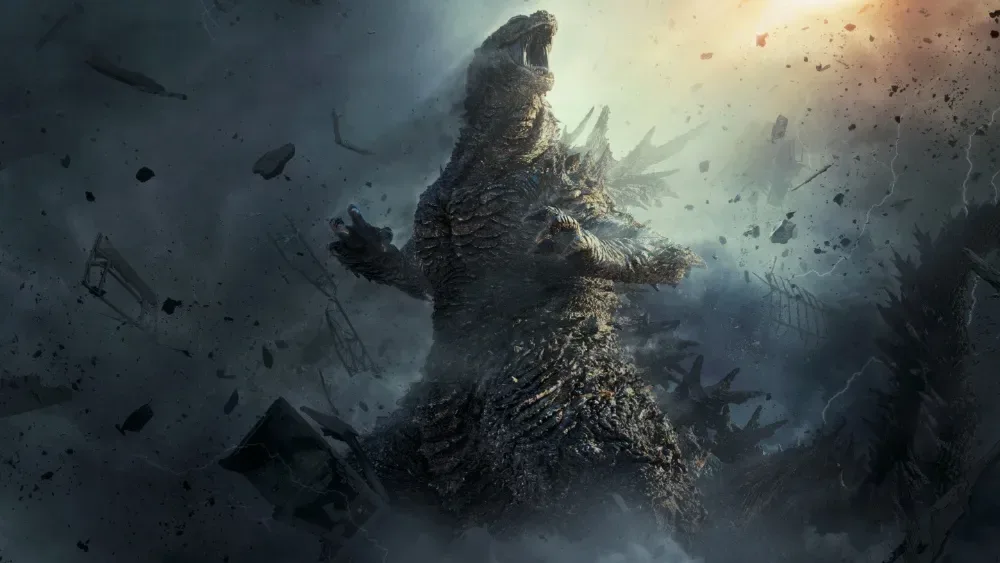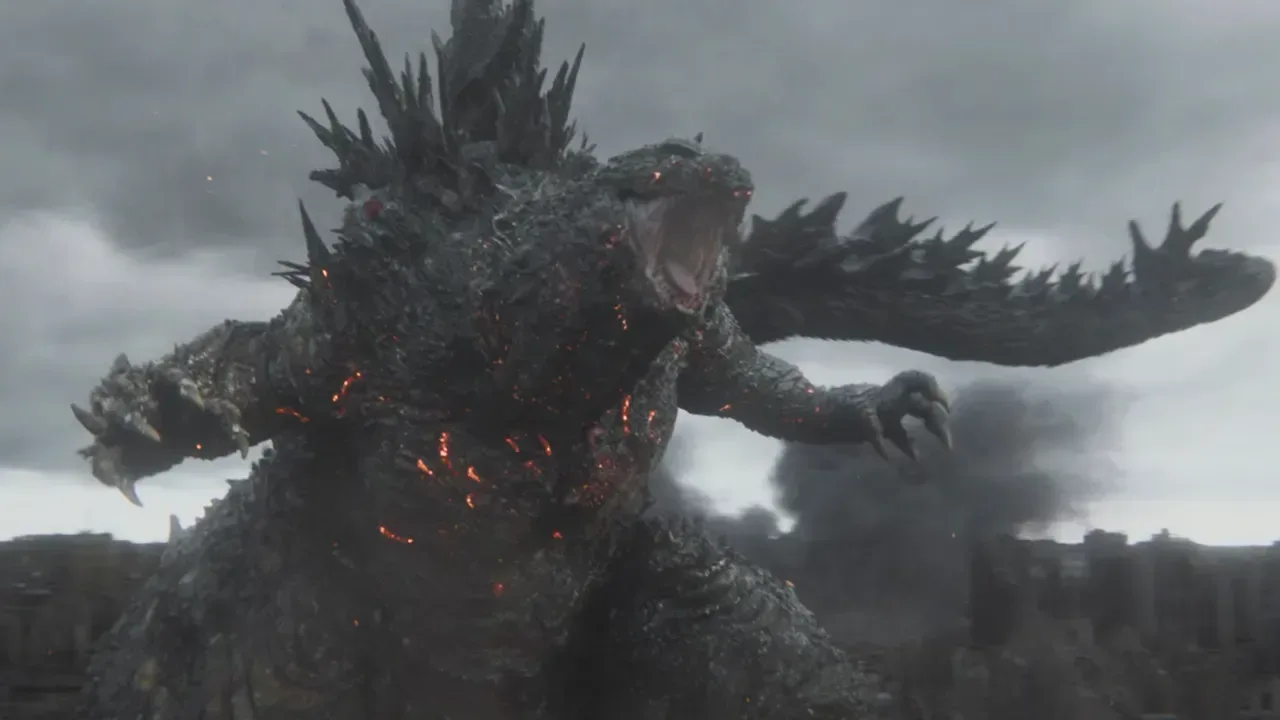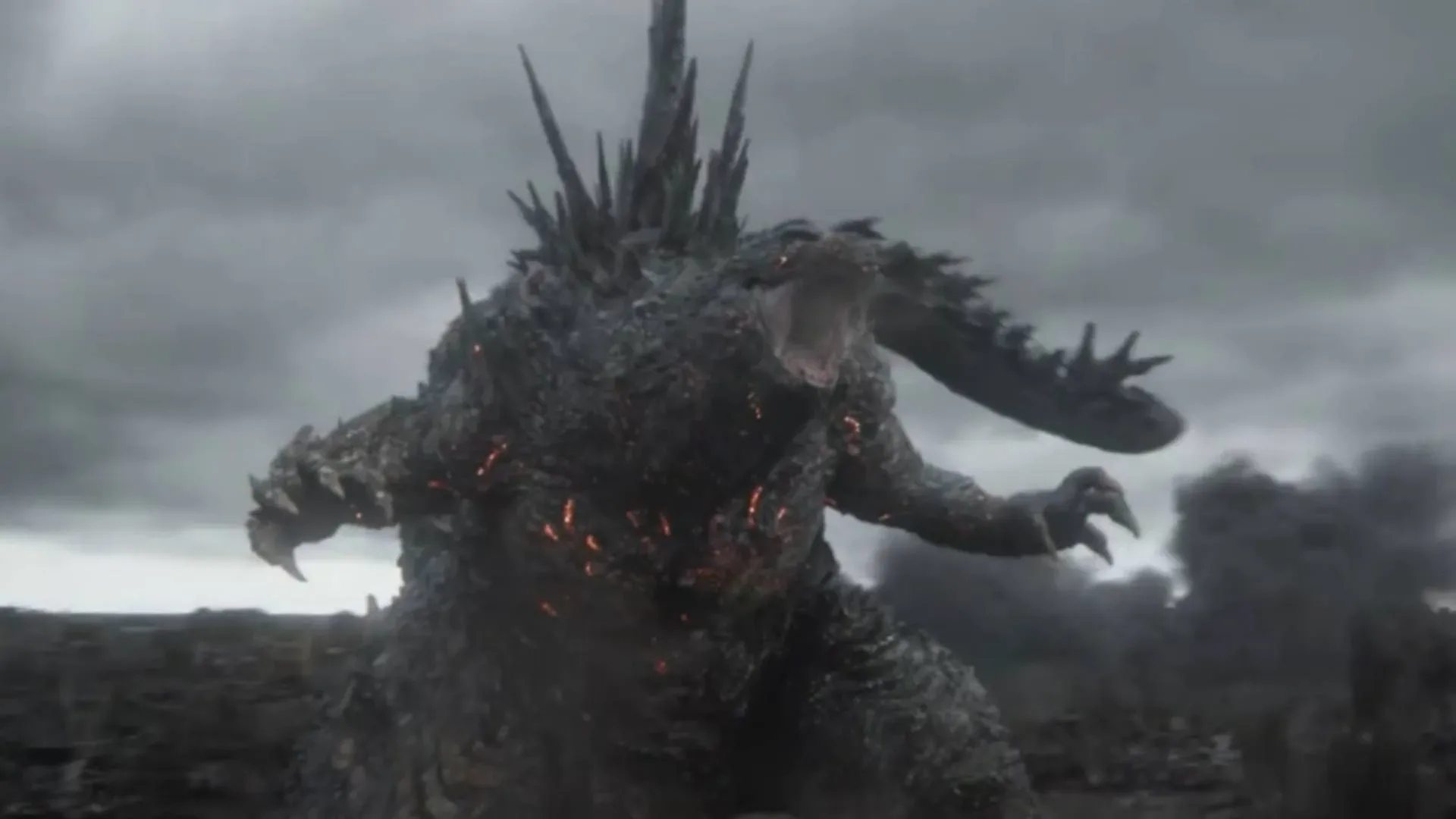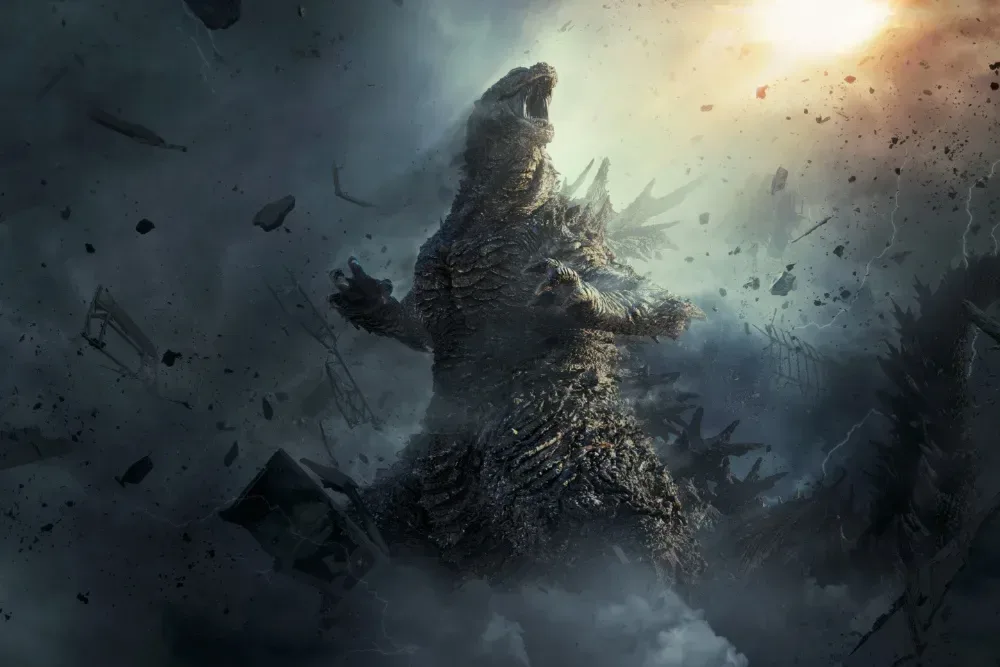
Godzilla was never likely to stay down quietly, and Godzilla Minus Zero is making that point immediately. A newly released trailer for the next chapter following Godzilla Minus One confirms that the monster was not completely destroyed. It also points toward a new campaign to eliminate the kaiju, with familiar survivors and a widened supporting cast facing the consequences.
The sequel reunites filmmaker Yamazaki Takashi with the world of his Oscar-winning Godzilla Minus One, but it does not simply reset the destruction. Its story moves forward to 1949, two years after the previous film, when Japan is still dealing with the enormous task of rebuilding. The Shikishima family remains at the heart of the setting, only now the fragile sense of calm they have managed to find is threatened by another disaster.
That timeline is crucial to what makes this particular Godzilla continuity distinct. The threat is not arriving in a vacuum. The country has already endured devastation, and the people confronting the new emergency have memories, losses and hard-won experience from the first attack. The trailer’s glimpse at a fresh extermination operation suggests that humanity’s response will be a major part of the film’s drama as well as its spectacle.
A monster problem that was never fully solved
The trailer establishes the key danger plainly: Godzilla survived. That revelation changes the stakes for a story set in a nation trying to recover from catastrophe. The monster is no longer an unknown terror in the abstract; it is a returning nightmare whose earlier assault has shaped the lives of everyone still standing.
Rather than shifting away from the postwar foundation of Godzilla Minus One, Godzilla Minus Zero remains rooted in it. Japan’s reconstruction provides the human frame for the creature feature: buildings and communities can be restored, but that does not erase the fear or the material damage left behind. A renewed kaiju-extermination effort therefore reads as both a military and civic necessity, with the pressure falling on people already stretched by recovery.
Yamazaki is back as director, and the sequel is expected to feature more extensive effects work than its predecessor. That signals a larger technical undertaking, though the available story details continue to emphasize character and the post-World War II setting rather than reducing the film to a destruction reel. The balance between large-scale effects and personal stakes was central to the earlier movie’s identity, and the known setup for the sequel keeps that tension alive.
New roles join returning faces
Several actors have been added to the ensemble, each attached to a named role that helps sketch the institutional and scientific response around the next crisis. Nagasawa Masami joins as Makoto Aoyama, a weather forecaster assigned to the Disaster Response Bureau. That job title places Aoyama close to the machinery of national emergency planning, an especially intriguing spot when a giant creature can turn the environment itself into a battlefield.
Kunimura Jun has been cast as Dr. Ogata. Maehara Ko will portray Akira Hagiwara, identified as the assistant to Professor Murakami, a character played by Tanaka Min. The addition of both Dr. Ogata and Professor Murakami signals that the film’s human response will include scientific perspectives, although no further details have been provided about their methods, responsibilities or relationship to the new operation.
Iida Motosuke returns as Akio Itagaki, the Toyo Balloon section chief who helped with the effort against Godzilla in Godzilla Minus One. His return provides a direct connection to the earlier resistance, preserving the sense that this sequel concerns a community that has learned from an impossible fight rather than an entirely new group beginning from scratch.
Misuhashi Kenji, Okuno Eita and Inowaki Kai are also among the newly announced additions. They join an ensemble that includes previously revealed returning and new cast members. The trailer itself mixes those old and new faces around the renewed threat, reinforcing the idea of a continuing story that is broadening its view of postwar Japan without abandoning the people who carried the first film.
1949 and the weight of rebuilding
Setting the sequel in 1949 leaves only a two-year gap from the events of Godzilla Minus One. In story terms, that is enough time for the immediate shock to become reconstruction, but not enough time for the trauma to feel remote. The official setup describes Japan as having spent those two years struggling to rebuild from the earlier devastation. Just as the country begins to approach a delicate peace, the fresh threat emerges.
That “fragile peace” is more than a convenient disaster-movie starting gun. It gives the monster’s return a specific emotional shape. Any new destruction risks taking away not just lives and structures, but also the painstaking progress made after the first crisis. For the Shikishima family, the danger is personal; for the broader community, it is a threat to a recovery that has barely started to take hold.
It also makes the extermination operation seen in the trailer more meaningful. The people organizing it are not merely reacting to an attack. They are trying to prevent history from repeating itself while operating in a nation still rebuilding its resources and confidence. Exactly how that operation works has not been detailed, but its presence promises another conflict built around collective action as well as Godzilla’s raw destructive force.
For viewers following film and animation news beyond monster cinema, Joking Joystick has also looked at another character-driven project in this story on the animated New York comedy Dang!. Godzilla Minus Zero, however, is operating on a very different scale: a historical disaster setting in which survival, family and national recovery are all tied to the return of one iconic creature.
Made for Imax from the ground up
Godzilla Minus Zero was shot entirely in Japan and carries the Filmed for Imax designation, making it the first domestic production to do so. The film used digital cameras that Imax has certified for high-definition capture, while its imagery and sound have been calibrated specifically for Imax theaters.
The designation is notable for a production whose premise calls for imposing scale, but it should not be mistaken for a plot detail or a promise of any particular scene. What is clear is that the filmmakers have built the presentation with Imax auditoriums in mind, covering both the visual and audio sides of the theatrical experience. Coupled with the stated increase in effects work, that makes the format a fitting part of the sequel’s technical profile.
Still, the known material does not present Imax as the entire story. The trailer’s attention to returning characters, new personnel and a country caught between reconstruction and relapse suggests that Yamazaki’s follow-up intends to make the size of Godzilla matter because of whom the monster endangers. A giant creature is inherently cinematic; a society trying not to lose everything twice gives the spectacle a sharper purpose.
Premiere and release schedule
The film will have its world premiere on September 26 as the Spotlight Gala selection at the 64th New York Film Festival. It then opens in Japan on November 3, where it will also serve as the centerpiece gala selection of the Tokyo International Film Festival.
North American audiences are scheduled to get a wide release on November 6. The rollout places the world premiere ahead of both the Japanese opening and the North American theatrical launch, giving Godzilla Minus Zero a prominent festival start before it reaches its wider audience.
- September 26: World premiere at the 64th New York Film Festival as a Spotlight Gala selection.
- November 3: Japanese opening, alongside its role as centerpiece gala at the Tokyo International Film Festival.
- November 6: Wide North American release.
With Godzilla confirmed to have endured, the new cast now identified and an Imax-oriented production set for release, Godzilla Minus Zero is taking shape as a direct continuation rather than a disconnected follow-up. Its 1949 setting, the return of the Shikishima family and a new effort to stop the kaiju all point to a sequel interested in what comes after survival: the difficult, unfinished work of rebuilding when the monster has not truly gone away.