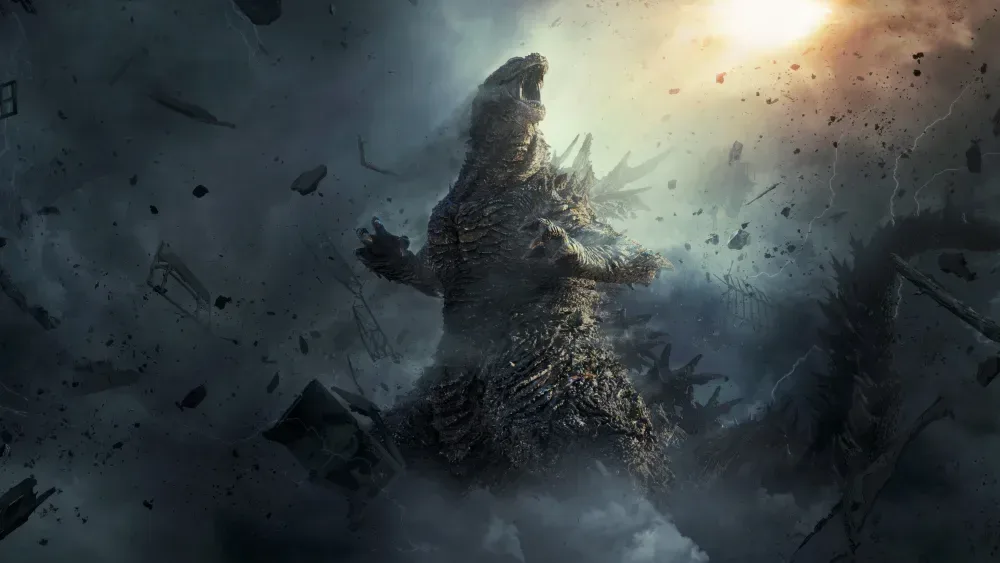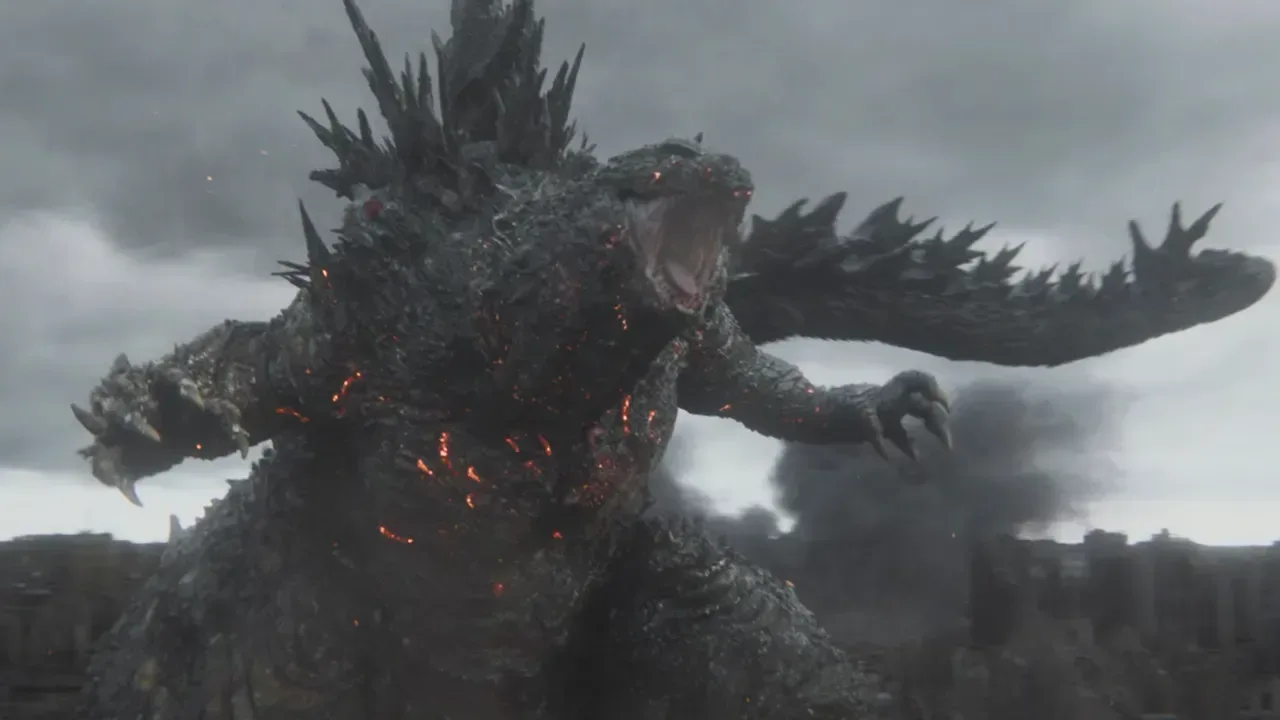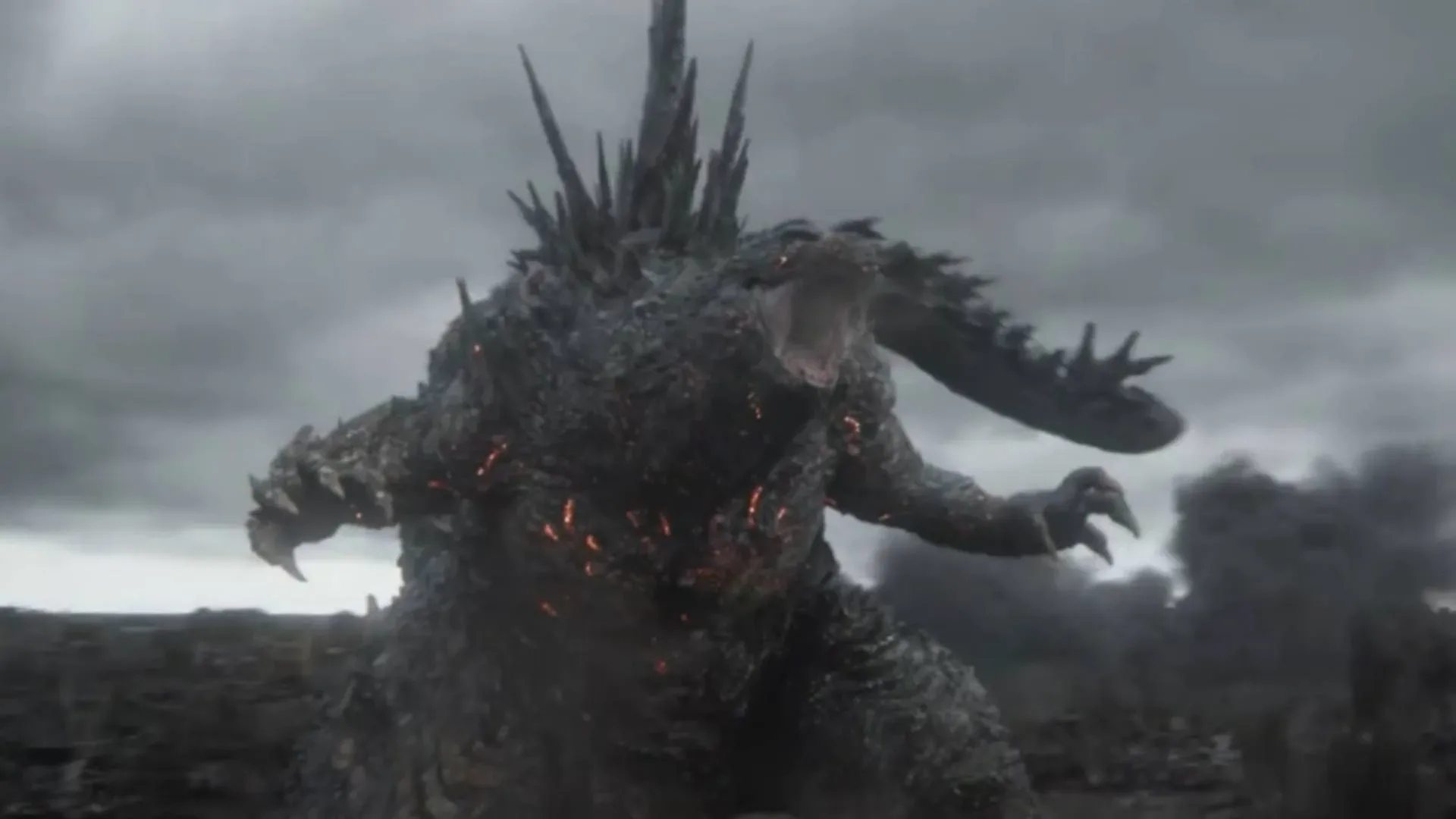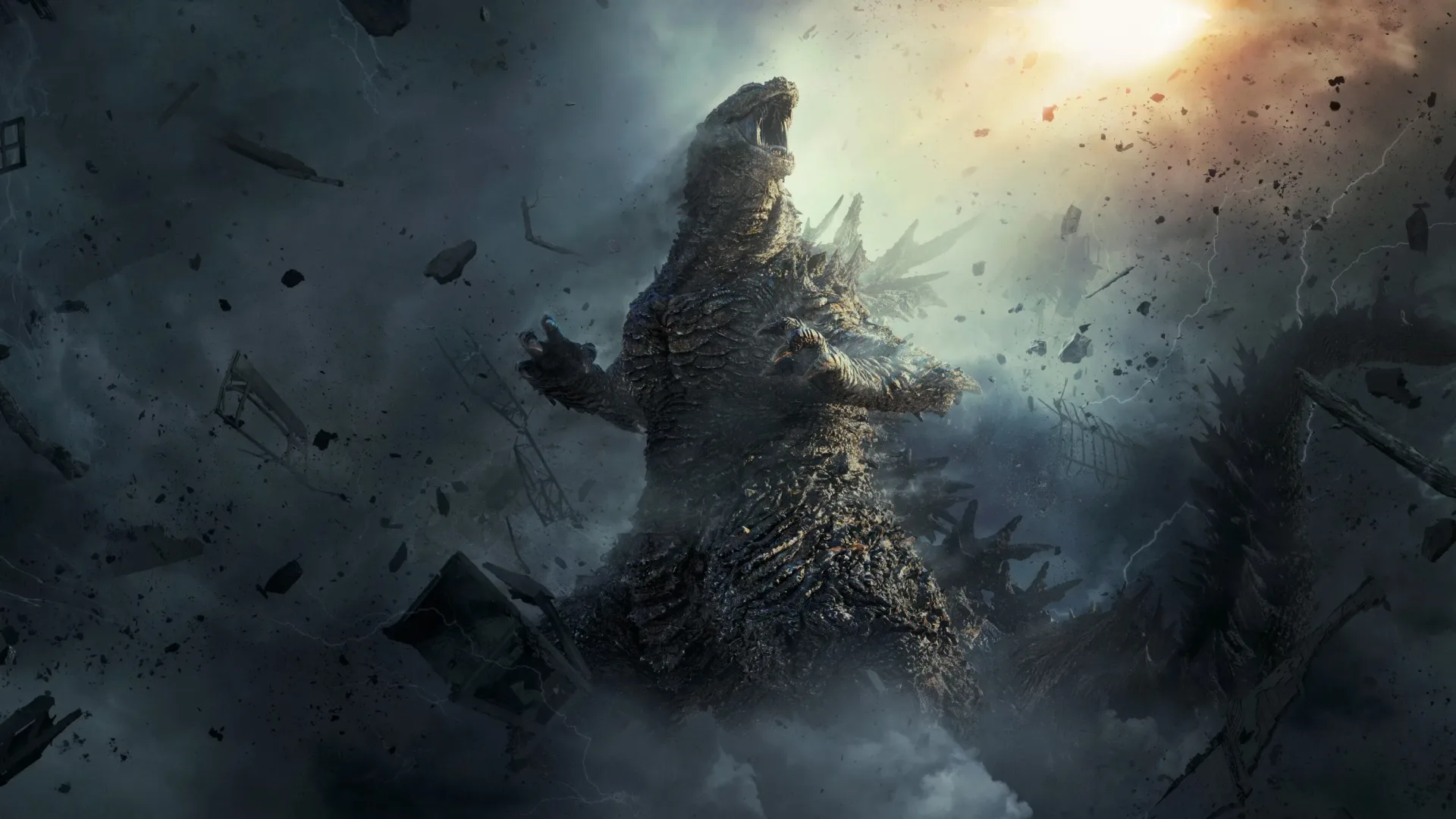
Godzilla Minus Zero has screened for press at the New York Film Festival, and the early response points to a sequel attempting to make its monster mayhem bigger without leaving the human story behind. Takashi Yamazaki returns after 2023’s Godzilla Minus One, with Ryunosuke Kamiki and Minami Hamabe again starring as the story returns to the Shikishima family.
The central theme in the first wave of reactions is scale: larger Godzilla imagery, major destruction-driven action and monster confrontations described in especially emphatic terms. Yet the same early notices repeatedly highlight emotional stakes, quiet scenes and a family-centered narrative. That combination matters. A Godzilla movie can be technically impressive and still feel remote; the praise here suggests Minus Zero is trying to make its spectacle land because there are people and relationships at its center, rather than treating them as mere pauses between collapses.
The film is scheduled to begin its rollout in Japan on November 3, followed by a U.S. theatrical opening on November 6.
What the first reactions are saying
Reaction posts from the screening are overwhelmingly positive, although it is important to keep the distinction clear: these are immediate impressions from a limited early audience, not a full critical consensus and not an indication of how wider moviegoers will respond.
One response called the film an epic achievement that elevates the King of the Monsters while preserving a human and emotional grounding. Another described Yamazaki’s follow-up as a strong successor that balances a family-led plot with thrilling sequences and enormous creature clashes. The quieter material was also singled out as effective, a notable compliment for a sequel being sold partly on escalation.
Other early reactions characterize the film as a major accomplishment in kaiju filmmaking and emphasize an emotional impact alongside the spectacle. Kaiju is the Japanese term commonly used for giant-monster fiction; in practical moviegoing terms, it signals that the creature itself is not a side attraction but the defining dramatic and visual force of the production. For a Godzilla installment, praise in that area is expected. The more revealing part of the response is the repeated suggestion that the film makes room for intimate stakes amid the chaos.
That does not establish whether every piece of the sequel works, nor does it tell audiences exactly how its story develops. It does, however, establish the broad early picture: reviewers at the screening saw a film designed to be enormous on the big screen, with its biggest set pieces tied to a continuing family narrative rather than an entirely disconnected new cast or setting.
A sequel built on a significant predecessor
Godzilla Minus One was a substantial success for Yamazaki and Toho. It earned $116 million worldwide, becoming the highest-grossing Japanese Godzilla film, and won the Academy Award for Best Visual Effects. Those accomplishments make the new film’s technical ambitions and the return of its creative leadership less surprising, but they also raise expectations considerably.
Related coverage includes ‘Godzilla Minus Zero’ First Reactions Praise Yamazaki’s Bigger, Emotional Sequel.
The Best Visual Effects win is particularly relevant to how audiences may approach Minus Zero. Visual effects, often shortened to VFX, encompass the digitally created or altered imagery used to place monsters, destruction, environments and other elements on screen. In a Godzilla film, convincing VFX is not just about making the creature look sharp in a still image. It is about weight, sound, scale, movement, interaction with locations and the sense that the people on screen are caught in the same physical crisis as the monster.
Early praise for the new film’s visuals therefore has a high bar behind it. The reactions specifically celebrate its action, scale and presentation while also suggesting that Godzilla looks and sounds especially grand. Those are subjective assessments, but they align with a sequel position that is plainly not content to repeat its predecessor at the same size.
The project is the 38th Godzilla film in the franchise and the 34th produced by Toho, the Japanese company that created the series. Long-running franchises can use big numbering as a reminder of durability, but it also highlights the challenge faced by any new chapter: it must give established fans familiar pleasures while finding a reason to exist beyond repetition. The early comments point to three apparent answers—continuation, escalation and emotional continuity.
1949, the Shikishima family and a move toward New York
The official setup places Godzilla Minus Zero in 1949, two years after the events of Godzilla Minus One. Rather than resetting the premise, the sequel continues with the Shikishima family facing a new calamity. Kamiki and Hamabe’s presence reinforces that this is a direct continuation with returning human leads.
That decision has practical storytelling value. A direct sequel can start with characters who have shared history and a world already changed by prior events. It does not need to spend its entire opening convincing viewers why the threat matters. The trade-off, of course, is that the film inherits the emotional expectations created by the earlier story. If the returning characters are central, their choices and vulnerabilities have to remain meaningful even as the scale grows.
Godzilla is also said to be bigger than before and to head to New York City, framing the film as a global action story. The New York setting is a major shift in scope on paper, but the available information does not say how much of the movie takes place there, when the move occurs, or how the story connects that city to the family at its center. Those details are worth leaving open until the film reaches theaters.
What is clear is that a New York rampage gives the sequel a globally recognizable arena for its largest imagery. It also supports the early description of the movie as larger in ambition without requiring the film to abandon its Japanese production identity or its returning characters.
IMAX shooting and the theatrical case for scale
Godzilla Minus Zero marks the first time a Japanese feature has been shot for IMAX screens. That phrasing is specific. It means the production was made with IMAX exhibition in mind, rather than simply being converted or presented on large-format screens after the fact.
IMAX is a premium large-format cinema system associated with a larger presentation and, depending on the venue and production, expanded image presentation. The precise experience can vary by theater, so audiences should not assume every screen offers the same result. Still, a movie designed for IMAX signals a deliberate emphasis on theatrical scale—especially relevant for a film where a gigantic creature, city-scale destruction and wide action geography are central to the premise.
The film’s early reception makes that emphasis sound purposeful rather than decorative. When reactions repeatedly mention visuals, scale and sound, IMAX becomes more than a format label: it is part of the apparent creative pitch. A home release may ultimately let more people see the movie, but the known production details make a theatrical viewing seem particularly aligned with the filmmakers’ aims.
The R-rated action claim needs careful reading
The early reporting describes Godzilla Minus Zero as featuring the first R-rated action set pieces in the franchise. That is a striking milestone for a series associated with blockbuster monster destruction, and it suggests the action may pursue a more intense register than many viewers expect from Godzilla.
However, the available information does not provide a detailed content breakdown, a full ratings explanation or particulars about those sequences. It would be a mistake to turn a brief description into assumptions about the movie’s overall tone, plot or exact level of violence. The useful takeaway for prospective viewers is narrower: this chapter is being positioned as pushing the franchise’s action into R-rated territory, while early reactions still stress its family-focused emotional material.
That mixture may be the film’s key balancing act. Escalation alone is easy to advertise; making escalation feel dramatically necessary is harder. The early praise suggests Yamazaki’s sequel could be aiming to give viewers both the destructive grandeur expected from Godzilla and a continuing story with personal stakes.
What audiences can reasonably take away now
With only first reactions available, expectations should stay measured. Festival reactions can capture excitement in the immediate aftermath of a screening, and they do not replace a broader body of reviews or individual viewing. They also cannot answer personal questions about pacing, characterization, intensity or whether the sequel’s larger international scope will appeal to everyone.
Still, there is a coherent early case for anticipation. The same director is returning after a commercially and critically successful predecessor; the Shikishima family’s story continues; Godzilla is entering a broader arena in New York; and the film has been shot for IMAX screens. On top of that, the initial responses are praising both spectacle and feeling rather than treating one as compensation for the other.
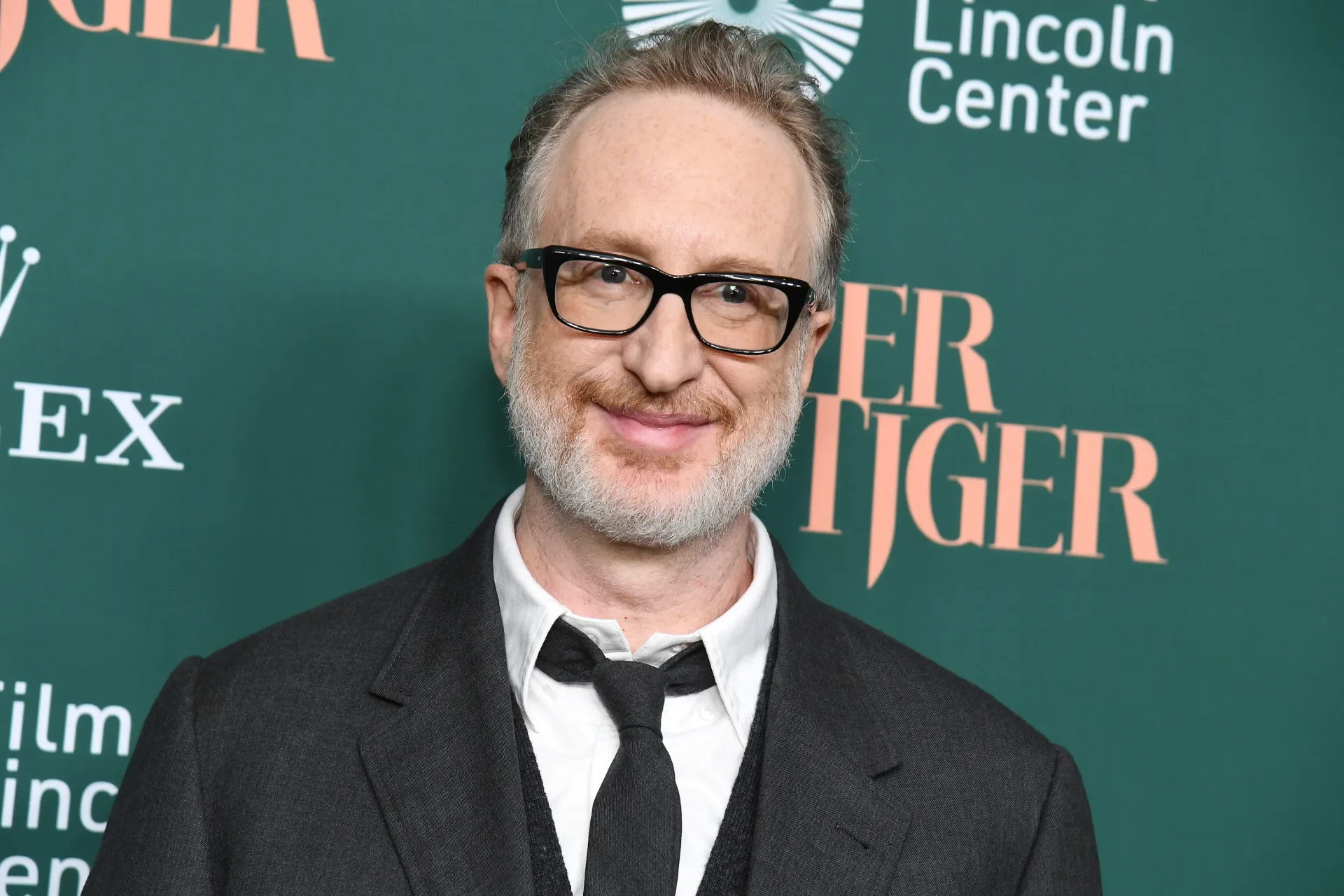
For movie fans tracking other current genre and dramatic releases, James Gray’s Paper Tiger offers a very different example of film discussion centered on human fragility. Godzilla Minus Zero, by contrast, appears set to test how much human-scale emotion can survive when the King of the Monsters gets even larger.
For now, the known facts are straightforward: Yamazaki’s follow-up arrives in Japan on November 3 and in U.S. theaters on November 6, it reunites Kamiki and Hamabe, and it expands the Shikishima family’s story into a new calamity with Godzilla bound for New York. The early reviews are enthusiastic; the fuller verdict will have to wait until audiences can see the movie themselves.