Godzilla Minus Zero is built around a deceptively simple target: getting back to zero. For director, writer and visual-effects supervisor Takashi Yamazaki, that means something close to an ordinary life for the Shikishima family—a fragile neutrality reached after the events of Godzilla Minus One, then shattered by another disaster.
The sequel is set in 1949, two years after the previous film, and follows the family as it confronts a new calamity. Yamazaki has returned both as director and VFX supervisor, with Ryunosuke Kamiki and Minami Hamabe starring. It is the 38th Godzilla film overall, Toho’s 34th entry in the franchise, and the first Japanese feature filmed for IMAX screens.
Those are imposing franchise landmarks. Yet Yamazaki’s description of the production points toward a more focused ambition than simply making every monster encounter louder. His key creative principle is that the human story and the kaiju story must continually affect each other. A person’s choices alter the monster conflict; the monster’s response reshapes the people’s choices. The result, in theory, is spectacle that is not functioning as an interruption from the drama, but as the pressure that drives it.
What “Minus Zero” means
The title is not presented as a promise of numerical escalation. Yamazaki describes “zero” as neutrality: a stable, ordinary existence that is unusually difficult for these characters to hold onto. The family had achieved something resembling that state after Godzilla Minus One, only to face a tragedy that pulls them apart.
For more context, explore Five Google Messages Settings to Tame for a Quieter, Less Cluttered Android Inbox.
He also connects the title to a mathematical idea: the distinction involved in placing a negative sign before zero and the notion of approaching zero. In the film’s emotional context, the phrase describes people struggling their way back to a livable normality after catastrophe.
That is an important framing device for a Godzilla story. The monsters are not merely a pretext for destruction or a separate action track that waits for the dramatic scenes to finish. They embody the conditions that make “ordinary” life hard to reach. Yamazaki’s stated aim is immersion through mutual consequence: if the kaiju scenes can change the terms of the family drama, and the family drama can shape how viewers read the kaiju scenes, then the scale has a narrative job beyond looking expensive.
The largest shot begins with a modestly sized Godzilla
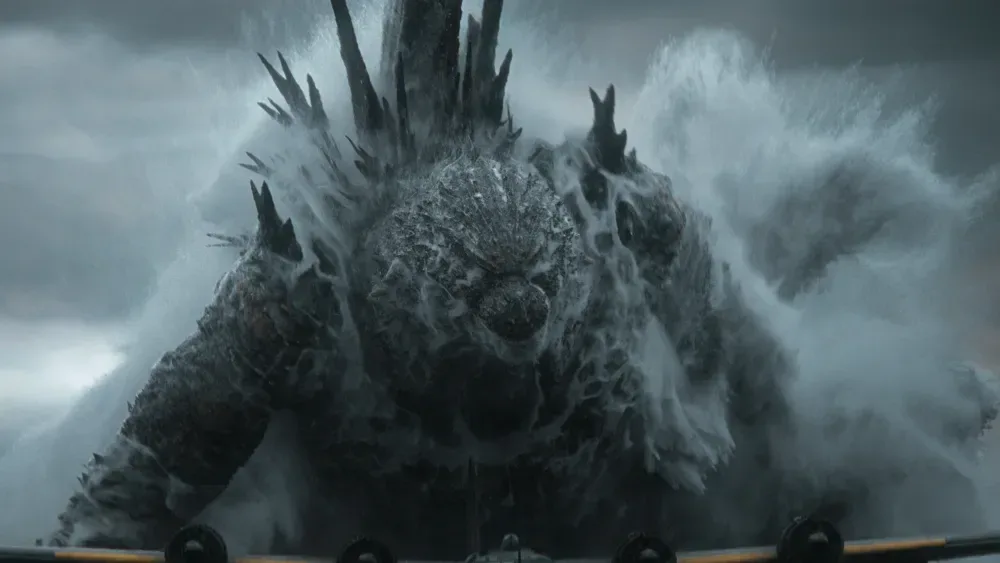
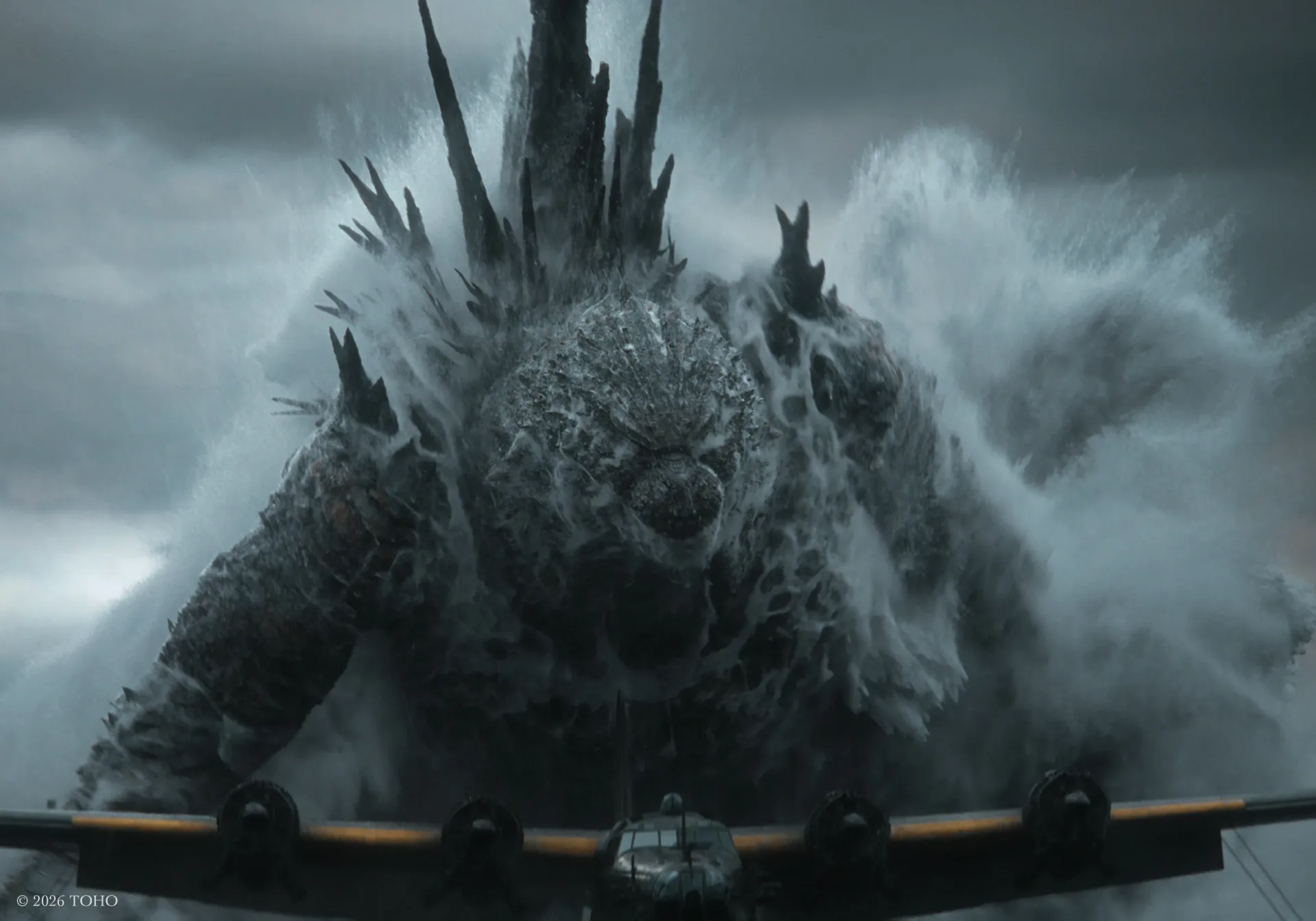
One of the film’s major VFX set pieces puts the technique behind that philosophy into unusually clear view. Godzilla rises from the ocean while a seaplane attempts to take off toward the camera. Yamazaki says the screenplay’s instruction was essentially direct—Godzilla emerges from the sea and chases the plane—but the final construction became much more deliberate through his storyboards.
He chose a long-lens visual treatment for the moment. In cinematography, a long lens has a narrow angle of view and can make distant objects appear visually closer together. This is often described as compression: the space between foreground and background appears reduced. It does not physically enlarge an object, but it can alter the viewer’s sense of scale, speed and danger inside the composition.
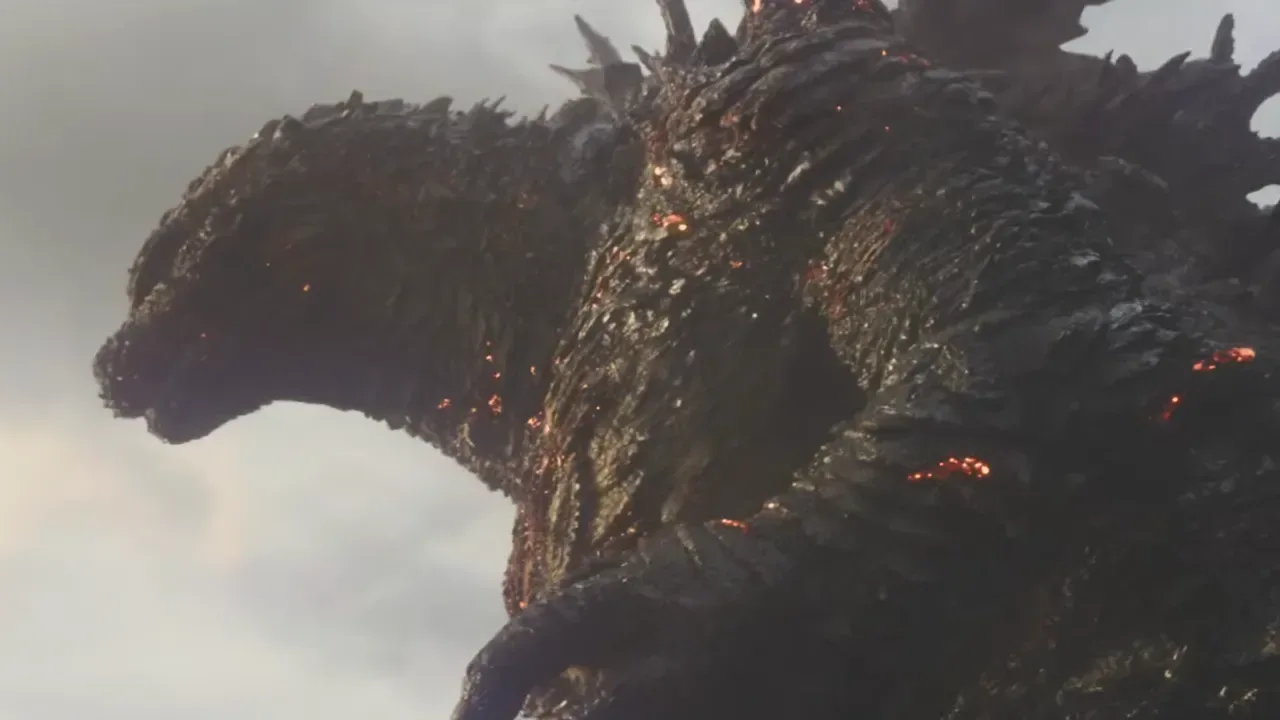
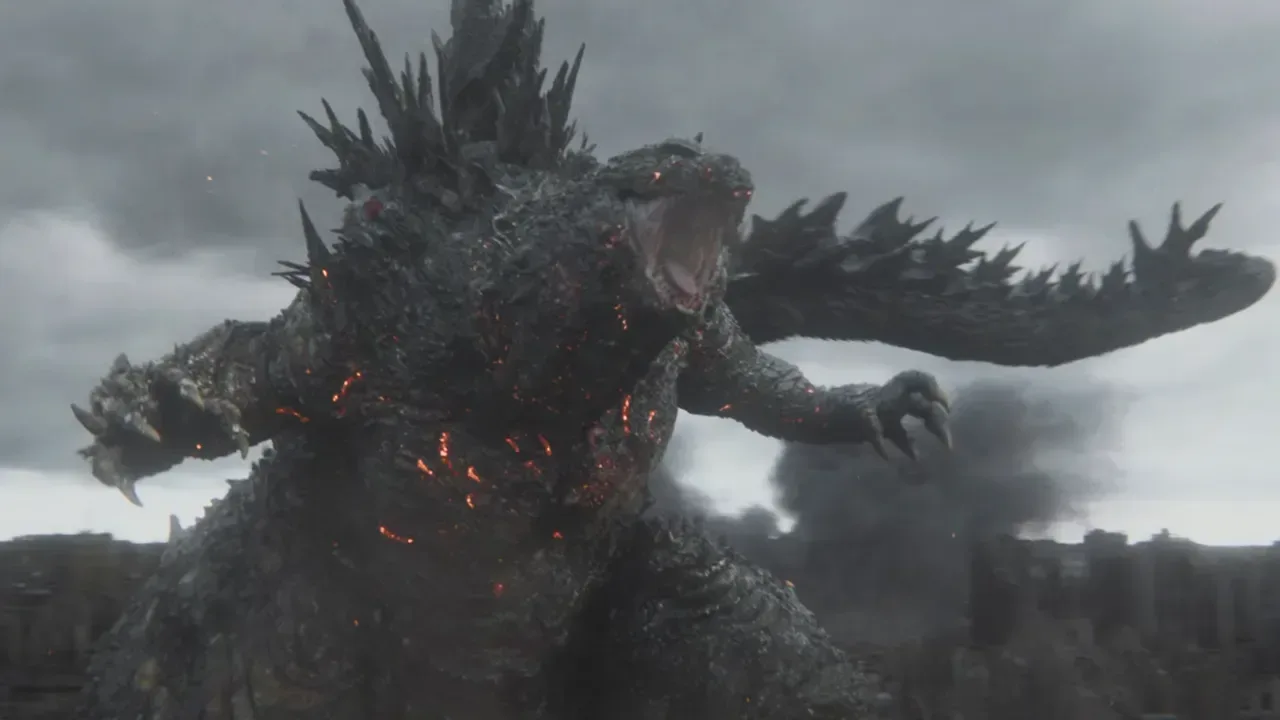
That choice matters because this version of Godzilla stands 50.1 meters, or 164 feet, tall. Yamazaki notes that, compared with versions across the wider film series, this is a smaller Godzilla. Rather than treating that measurement as a limit, the production used lens language to create a more overwhelming impression. With the seaplane moving toward the camera and Godzilla’s water disturbance behind it, the compressed perspective makes the gap feel terrifyingly tight.
The visual logic is especially effective for a pursuit: the plane needs open water and distance to escape, while the long-lens image makes the pursuing threat feel as if it is swallowing that distance. The waves themselves become part of the attack. They are not generic ocean texture in the background; they show Godzilla forcing up through the water and trying to reach the aircraft. If it can mount the plane, Yamazaki’s staging makes the stakes immediately understandable.
He identifies it as the first full frontal view of Godzilla emerging from the sea, which made it crucial to establish the creature as a threat. The shot required substantial rendering time and computing resources for its water work, with the production reportedly devoting roughly 2 billion water particles to the sequence. In VFX terms, particles are small simulated elements used to represent phenomena such as spray, mist, foam and debris. A huge number of them does not automatically make an image convincing, but water requires density, momentum and interaction to feel dangerous at this scale. Here, the point is not simply to show a monster standing in water; it is to make the water communicate the monster’s movement and mass.
Storyboards, sets and drones shape the terror
Yamazaki’s role as storyboard artist is central to the way he talks about the film’s effects. Storyboards are a sequence of planned images that map framing, movement and action before or during production. For a VFX-heavy film, they can help define exactly what needs to be built physically, what needs to be captured by the camera, and what must be completed digitally.
The director’s favorite completed sequence involves King Ghidorah’s gravity beam. As shown in the trailer, a mother and baby inside a house are levitated before falling. Yamazaki calls it a difficult shot to plan, but explains that the team did not approach it as a purely digital problem. They built a set section with a slight tilt, filmed around it using drones, then expanded the image with visual effects.
That hybrid workflow is revealing. The practical set supplies a real environment for the camera to navigate, while the VFX work adds the impossible elements and completes the illusion. The angled construction helps create disorientation and instability before the gravity-beam concept is fully realized onscreen. Meanwhile, the drones can move around the set in a way that supports the strange spatial condition of people being lifted from the ground.
Yamazaki emphasizes the sequence’s violence and fear, not just the mechanics of Ghidorah’s power. That distinction fits the broader approach he describes. The gravity beam tells the audience what the creature can do, certainly, but it also conveys what it feels like for civilians to endure an attack whose physical rules they cannot control.
King Ghidorah brings a childhood wish full circle
King Ghidorah has a very personal place in Yamazaki’s relationship with Godzilla. He grew up in Matsumoto City and remembers eagerly going to see Ghidorah, the Three-Headed Monster, because it was the first time a kaiju had appeared in his hometown. His younger self expected to see the creature wreak havoc there. Instead, Ghidorah flew over Matsumoto Castle and moved on, leaving him disappointed.
That old disappointment has become creative fuel. Yamazaki has said that bringing Ghidorah to Matsumoto City and letting the monster devastate it realizes the Godzilla film he wanted to see as a child. It is a specific kind of fan-service—not a reference inserted only for recognition, but a filmmaker revisiting a childhood expectation and finally putting it on screen. His affection for Ghidorah’s design also makes the character a natural fit for an installment concerned with extraordinary terror disrupting ordinary people.
The choice illustrates why a long-running franchise can remain elastic. A new installment can carry its own family story while allowing a director to express an intimate, place-specific connection to decades of monster cinema. Matsumoto is not being used as an interchangeable miniature cityscape in Yamazaki’s account; it is the place that made him want a different ending to a moviegoing memory.
Performance remains the other half of the scale equation
The film’s emotional layer also depends on Akiko, played by Sae Nagatani. During Godzilla Minus One, Nagatani was 2 years old. Yamazaki recalls that the crew would move quickly when she became upset or cranky, bringing in cameras and actors to capture those moments.
She is now 5, and Yamazaki says she can understand scene explanations and provide the reactions the production seeks without extensive direction. He describes the result as authentic. The difference speaks to a practical production reality: a child performer’s growing ability to understand circumstances can change how a director prepares an emotional scene. It also supports the intended balance of the sequel. A giant creature rising from the sea may supply the frame-filling image, but a child’s response to danger gives the destruction a human scale.
An acclaimed VFX filmmaker keeps the workload connected
Yamazaki’s dual position behind the camera and in the effects department is especially notable following Godzilla Minus One’s Academy Award for visual effects. The win made him the first director to receive that VFX honor since Stanley Kubrick won for 1968’s 2001: A Space Odyssey. Yamazaki has described the recognition as a shock, particularly because the earlier film was made for Japan’s domestic market, and said it opened new possibilities in his career.
For Godzilla Minus Zero, the value of his overlapping roles is visible in the details he has highlighted: storyboarding a lens decision designed to make a 164-foot Godzilla feel impossibly large; deciding which water shot deserves heavy rendering investment; constructing a tilted set for a gravity-beam attack; and keeping the Shikishima family’s grief and resilience connected to the monsters’ actions.
None of that guarantees the sequel’s emotional impact by itself. But it establishes a coherent design goal. The creatures should not feel detached from the people, and the visual effects should not be treated as a separate showreel running alongside the story. Yamazaki is aiming for a film where Godzilla’s emergence, Ghidorah’s violence and the family’s attempt to return to zero all occupy the same dramatic space.
And while he stopped short of confirming a third chapter, Yamazaki did invite audiences to stay excited for the possibility of another installment. For now, Godzilla Minus Zero appears to be using its massive imagery in service of a smaller but enduring desire: the chance to rebuild a normal life after the world has made normal feel unreachable.