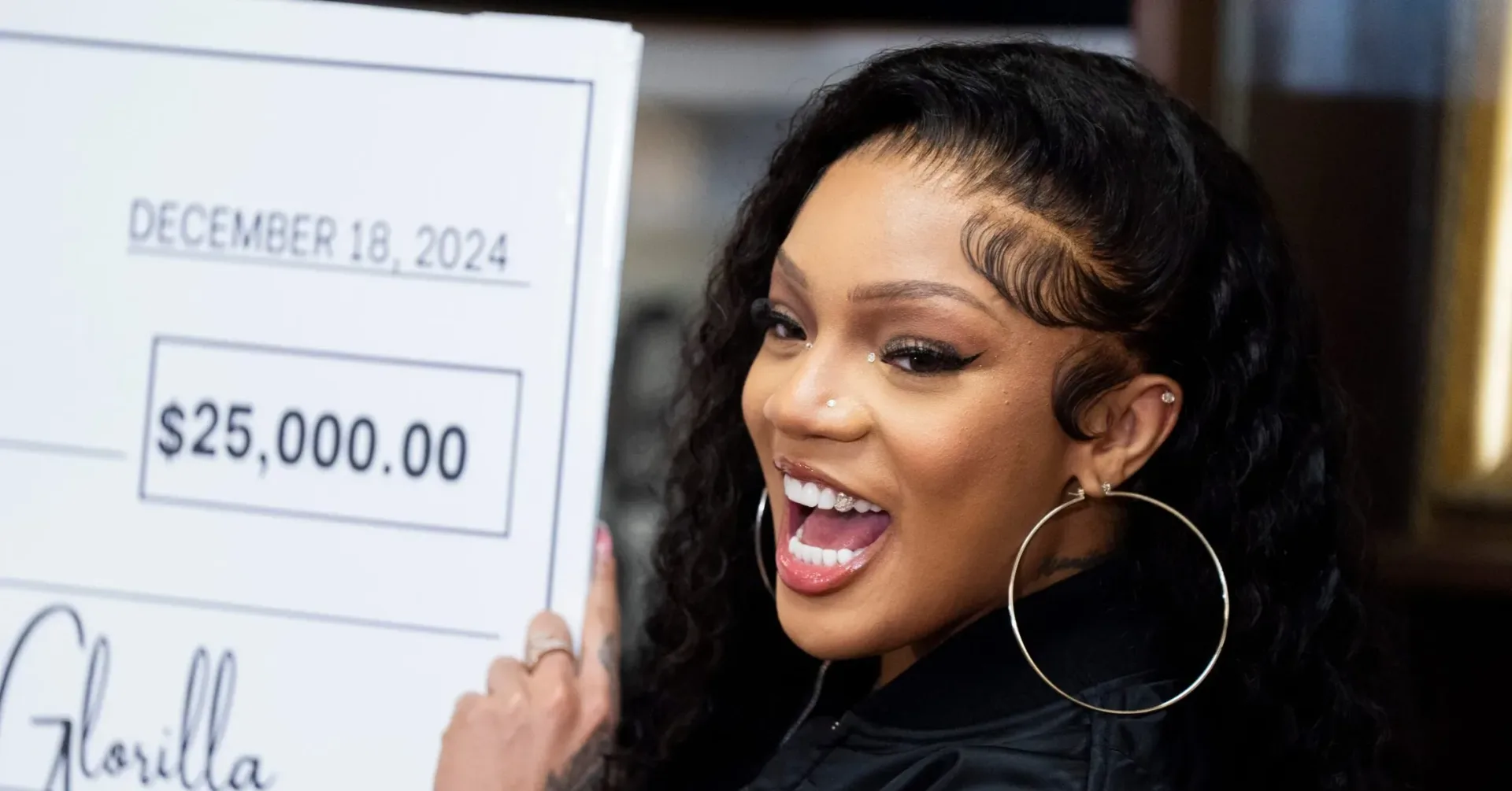
GloRilla is not softening her stance on the upcoming Sexyy Red collaboration “Jiggly Bow Bow.” After a preview of the song appeared on social media, some listeners voiced disappointment and argued that the pairing was not the direction they wanted from GloRilla. Her response made the dividing line plain: she intends to make the music she wants to make, and listeners who are not interested can skip it.
“And I’m kindly saying f*ck y’all, I do what I want,” GloRilla wrote in reply to one critic. “If you don’t like it, don’t listen. I luv you. … God bless.”
The directness matters because the reaction is not simply about whether people enjoy a short preview. It is also about expectations. A pocket of GloRilla’s audience appears to see the collaboration, and the playful energy suggested by its title, as beneath what they believe she should be pursuing. GloRilla’s answer rejects that framing altogether. An artist does not need to treat every release as a referendum on whether a fan-approved career plan is being followed.
“Jiggly Bow Bow” faces loud expectations before release
GloRilla and Sexyy Red are set to release “Jiggly Bow Bow” on Friday. The available preview has already created a vigorous conversation, but it does not establish how the full song will be received. A snippet is a deliberately small piece of a record: it can spotlight a hook, a beat change, a punchline, or an immediately recognizable vocal moment without revealing the complete structure.
That distinction is useful when the online response is especially categorical. A preview may be enough for someone to decide the track is not for them, but it is not enough evidence to determine the full scope of the collaboration or its eventual audience. The record will have to stand on its complete form once it is available.
The scrutiny is heightened by the artists involved. GloRilla and Sexyy Red are both recognizable names, which makes their pairing an easy subject for instant reaction. That kind of visibility can turn a few comments into a larger-seeming dispute, particularly when people share clips, replies, and judgments at high speed. The conversation becomes part of a release’s public rollout before the public has heard the entire song.
What the criticism is really asking for
Some fan criticism is a request for a particular sound, collaborator, or level of seriousness. In this case, the response from dissatisfied listeners appears tied to the idea that GloRilla should avoid this kind of record. That is less a technical judgment about the finished music than a claim about artistic direction.
There is nothing unusual about fans having preferences. Listeners can want a different style from an artist, dislike a collaboration, or decide not to add a song to their rotation. But preference does not create an obligation. GloRilla’s message draws a practical boundary between audience feedback and artist control: fans are free not to listen; she remains free to release the song.
Related coverage includes GloRilla Pushes Back on ‘Jiggly Bow Bow’ Critics Ahead of Sexyy Red Collaboration.
That boundary also leaves room for a simpler explanation of the team-up. Not every single is meant to satisfy the same goal. Music can be confrontational, reflective, technically ambitious, goofy, club-focused, or built around a catchy central idea. A high-energy collaboration does not automatically cancel out other work an artist has made or may make later. Treating one record as a permanent definition of an artist can flatten the choices that a release schedule allows.
Social-media previews turn reactions into part of the rollout
The exchange illustrates a now-familiar release pattern. Artists share an early taste of a song; followers respond immediately; the artist can then respond just as quickly. The distance between a private creative decision and public commentary has narrowed considerably in this format.
For listeners, a preview is a short promotional excerpt rather than the complete release. Its purpose is often to create recognition and conversation before release day. It can also invite strong reactions because it presents only the element most likely to grab attention. That is effective for visibility, though it can make the broader conversation feel more conclusive than the available information warrants.
For an artist, replying can be a way to clarify a position without offering a long explanation. GloRilla’s response was not framed as an attempt to persuade every skeptic. It was a statement of autonomy, delivered with a closing note of affection and “God bless.” The combination of blunt refusal and casual sign-off makes the point: criticism has been seen, but it will not dictate the release.
The same environment can blur an important line. A comment thread can contain sincere music criticism, playful teasing, fan anxiety, and simple attempts to provoke a reply. None necessarily represents a whole fanbase. The available reaction describes pockets of discontent, not a comprehensive verdict on “Jiggly Bow Bow.”
A collaboration does not need unanimous approval to have a purpose
There is an assumption behind some backlash that a collaboration must match an imagined hierarchy of “serious” and “less serious” music. That is a narrow test. Two artists may work together because their styles complement each other, because a song calls for a certain kind of energy, or because making a fun record is itself the point. The supplied preview has prompted reactions, but the full song’s creative case remains to be heard.
Sexyy Red’s music is frequently approached as fun, and the announced pairing has clearly invited a similarly playful reading. Listeners who prefer another lane can choose not to engage. That does not make their preferences meaningless; it simply means their preference and the artists’ decision can coexist.
The early debate is also a reminder that collaboration announcements are often judged through the reputations of both performers before the actual record gets a fair hearing. In practice, a collaborative track needs to answer more grounded questions once released: whether the performers sound suited to the record, whether the parts serve the same idea, and whether the song delivers the energy promised by its preview. Those are questions for Friday, not questions a comment section can settle in advance.
Release-day context will matter
The Friday release window is expected to be crowded, which means “Jiggly Bow Bow” will arrive amid plenty of competing attention. A stacked release day can amplify the need for a memorable hook and a clear identity, while also making instant online discussion less reliable as a measure of long-term reception. People may be reacting to several major releases at once, and early engagement can reflect the volume of the conversation as much as the track itself.
That makes the current focus on controversy understandable but incomplete. The dispute has already given the song an identifiable narrative: some followers object, and GloRilla does not accept the premise that she should change course for them. Once the song is out, the focus can move from the idea of the pairing to the music itself.
For a broader look at hip-hop’s place in community and cultural programming, see the Bed-Stuy Hip-Hop and Books Celebration connected to Nkiru Bookstore.
Until then, the clearest confirmed details are straightforward: GloRilla and Sexyy Red have previewed “Jiggly Bow Bow,” the single is scheduled for Friday, and GloRilla has answered critics without ambiguity. The rest—how the finished song lands, whether it reaches beyond the immediate debate, and how listeners respond after hearing it in full—remains unresolved.