Hollywood has spent more than a century making the unreal look tangible. Its most recognizable addresses already arrive with built-in atmosphere: theatrical facades, legendary dining rooms, an entertainment district where celebrity mythology and public memory overlap. The Ghosts of Hollywood: Nighttime Walking Tour leans directly into that setting, turning a 90-minute walk through landmark territory into a guided encounter with ghost tales, unexplained incidents and the more somber stories associated with old Hollywood.
The route includes the TCL Chinese Theatre, the historic El Capitan Theatre and Musso & Frank Grill. Those are not interchangeable stops. They represent three different ways visitors tend to experience Hollywood: a famous movie palace, a historic theater and a long-running restaurant closely associated with the industry. Placing them on one night-time tour gives the event its central hook: this is less about a single haunted-house attraction than the eerie framing of recognizable places that people may otherwise encounter only as tourist destinations or film-history backdrops.
What the Ghosts of Hollywood tour is built around
The tour’s stated format is straightforward. Guides lead visitors through Hollywood landmarks and recount supernatural stories, reported odd encounters and darker histories connected to the area. The 90-minute running time suggests a compact, location-driven experience rather than a deep historical seminar or a long-form true-crime investigation.
That distinction matters. “Haunted” in this setting is primarily a storytelling lens. It combines local lore, accounts presented as unexplained and histories of tragedy or notoriety. Visitors looking for a factual history of each venue should regard the ghost material as folklore and theatrical context, not as independently verified paranormal evidence. The appeal is in how these narratives change a familiar streetscape after dark: a theater becomes more than a theater, and a restaurant becomes more than a place to eat.
The nighttime format is an important part of the design, too. A ghost tour does not need elaborate constructed sets when the setting can provide the mood. Hollywood’s old landmarks do much of that work themselves, while guides supply the connective narrative. For film fans, that makes the experience an accessible way to revisit places synonymous with movie culture through a Halloween-season perspective.
The landmarks on the route
TCL Chinese Theatre
The TCL Chinese Theatre is one of the tour’s clearest links between Hollywood’s public image and its darker folklore. It is an instantly recognizable entertainment landmark, and it also appears across several other spooky-season offerings in the area. On Ghosts of Hollywood, it is one stop among a set of sites used to explore the district’s paranormal reputation and more troubling past.
Its presence also underscores what distinguishes Hollywood ghost walks from generic fright attractions. The experience is tethered to real, prominent places. The stories are meant to be considered in relation to the buildings and streets visitors can see, rather than delivered inside an invented haunted maze.
El Capitan Theatre
The historic El Capitan Theatre gives the walk another entertainment-world anchor. Its inclusion keeps the route focused on Hollywood’s physical history as well as on stories of supposedly lingering presences. Because the itinerary works through landmark stops rather than one enclosed venue, each location functions as a chapter in a broader neighborhood narrative.
That structure should suit attendees who want an evening activity rooted in the area rather than a conventional sit-down performance. It is also worth remembering that walking tours place the emphasis on listening, observing and moving between sites. People choosing the event should expect the city itself to be part of the presentation.
Musso & Frank Grill
Musso & Frank Grill brings a different texture to the tour. A longstanding gathering place for Hollywood figures, it carries the social side of the district’s mythology. In a ghost-tour context, that history can make the transition from celebrity lore to spectral lore feel natural: places strongly identified with generations of famous visitors tend to accumulate stories, whether they concern remembered patrons, unusual encounters or the broader atmosphere of old Hollywood.
The inclusion of a restaurant alongside theaters is also a useful reminder that Hollywood history is not contained only within studios and premieres. It has been built in public spaces where creative workers, performers and visitors gather. The tour uses that mixture of film culture and local legend to shape its identity.
How it compares with other Hollywood-area spooky walks
Los Angeles has several Halloween-season tours, but their subjects are not identical. Choosing among them is largely a matter of deciding whether the priority is haunted-lore atmosphere, crime history or an adults-only focus on celebrity tragedy.
- Ghosts of Hollywood: Nighttime Walking Tour: A 90-minute landmark walk with the TCL Chinese Theatre, El Capitan Theatre and Musso & Frank Grill among its stops. Its emphasis is on ghost stories, unexplained encounters and the darker stories around major Hollywood addresses.
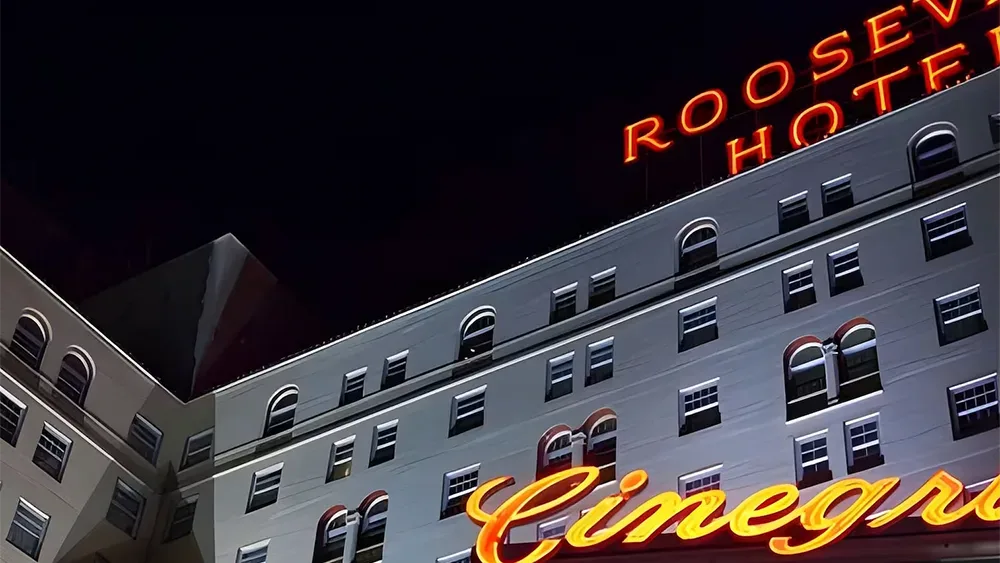
- Haunted Hollywood Walking Tour: Another guided option centered on supernatural stories and tragedies, with locations including the Hollywood Roosevelt Hotel, Magic Castle and TCL Chinese Theatre. This is the closer match for visitors especially interested in Hollywood’s reputation as a haunted entertainment district.
- Sunset Boulevard True Crime and Ghost Stories: A two-hour outing focused on the Sunset Strip’s crime history and supernatural lore. Its subject matter includes Benjamin “Bugsy” Siegel, Charles Manson and the Wonderland Gang, so it is the stronger fit for people seeking true-crime material alongside purported hauntings.
- Los Angeles Tour for Adults Only: The Fame Kills: A 90-minute adults-only tour built around darker legacies, scandals, tragedies and supposed hauntings tied to famous names and sites including the TCL Chinese Theatre, Pantages Theatre and Hollywood Knickerbocker Apartments.
The overlap at the TCL Chinese Theatre is revealing. It is a major Hollywood landmark capable of supporting several kinds of tours, from ghost lore to celebrity tragedy. The differentiator is the narrative frame. Ghosts of Hollywood appears best suited to those who want the route to stay centered on the district’s famous addresses and the uncanny stories attached to them, rather than shifting heavily toward a crime-focused itinerary.
Ghost stories, true crime and the importance of context
Halloween programming often places documented history and supernatural claims side by side. They are not the same category of information. A true-crime tour may recount real murders or notorious figures, while a haunted walk may use reports of apparitions or unexplained phenomena to create atmosphere. Both can be compelling forms of guided storytelling, but attendees get the most from them when they keep the difference clear.
On Ghosts of Hollywood, the relevant language is appropriately cautious: the walk concerns ghost stories and unexplained encounters, not proof that a location is haunted. That leaves room for the central pleasure of the format—being entertained by lore in an evocative setting—without treating every tale as settled fact.
It also helps explain why Hollywood works so effectively for this kind of event. The district’s public identity already relies on stories. Film culture preserves certain buildings as symbols, while visitors arrive with expectations shaped by movies, celebrity history and urban legend. A guided ghost walk heightens those associations. In practical terms, it turns looking at a famous facade into listening for what might have happened there, what people claim they have seen and why that story endured.
Who will get the most from it
The tour should have obvious appeal for film and entertainment-history fans who want Halloween flavor without committing to a large-scale scare attraction. It is also a logical choice for travelers and locals who recognize the locations but want a more narrative way to move through the neighborhood.
It may be less ideal for visitors whose main goal is intense, performer-led scares. The supplied description does not position Ghosts of Hollywood as a haunted house, scare zone or immersive theatrical production. Its core experience is guided walking and storytelling. Those looking for a larger horror-event format may instead be drawn to Universal Studios Hollywood’s Halloween Horror Nights, which includes eight haunted houses, scare zones, live entertainment and the Terror Tram.
Likewise, people primarily interested in a cocktail-forward event have distinct options in the city. The Obscure’s Arts District experience combines mythology, theatrical presentation and mixology across two hours, with six drinks consisting of three house spirits and three original cocktails. The comparison is useful because it clarifies the Ghosts of Hollywood proposition: it is about the places and the walk, not drinks or a staged indoor spectacle.
For game-focused horror fans, Halloween activities can also be a useful reminder that fear works across formats. A tour’s tension comes from place and suggestion; a game can create it through mechanics, pacing and player agency. Readers looking for a digital counterpart to October’s appetite for the macabre can see how another upcoming co-op horror project is approaching that space in this look at LIVING HELL’s open playtest.
Practical expectations before booking
A few basic expectations follow from the event’s format. First, it is a walking tour, so its value lies in the guide’s storytelling and in the relationship between the stories and the surrounding landmarks. It is not described as admission to performances inside the theaters or a meal at Musso & Frank Grill.
Second, the tour lasts 90 minutes. That makes it a relatively contained option for an evening, especially compared with the two-hour Sunset Boulevard true-crime and ghost outing. The supplied details do not establish a specific route order, accessibility arrangements, operating dates, ticket price or age policy. Anyone considering attendance should confirm those particulars directly with the organizer before making plans.
Finally, prospective visitors should choose based on tone. The Hollywood ghost-tour lane is best understood as a mix of neighborhood history, industry mythology and supernatural storytelling. It offers a distinctly local Halloween activity because the landmarks are not props constructed for the season; they are the enduring parts of Hollywood that the stories have grown around.
That is ultimately the hook behind Ghosts of Hollywood. The experience asks participants to view some of the most familiar sites in entertainment through a different genre filter. The TCL Chinese Theatre, El Capitan Theatre and Musso & Frank Grill remain what they are, but for one night-time walk, they also become stages for the unsettling tales that Hollywood has collected around itself.