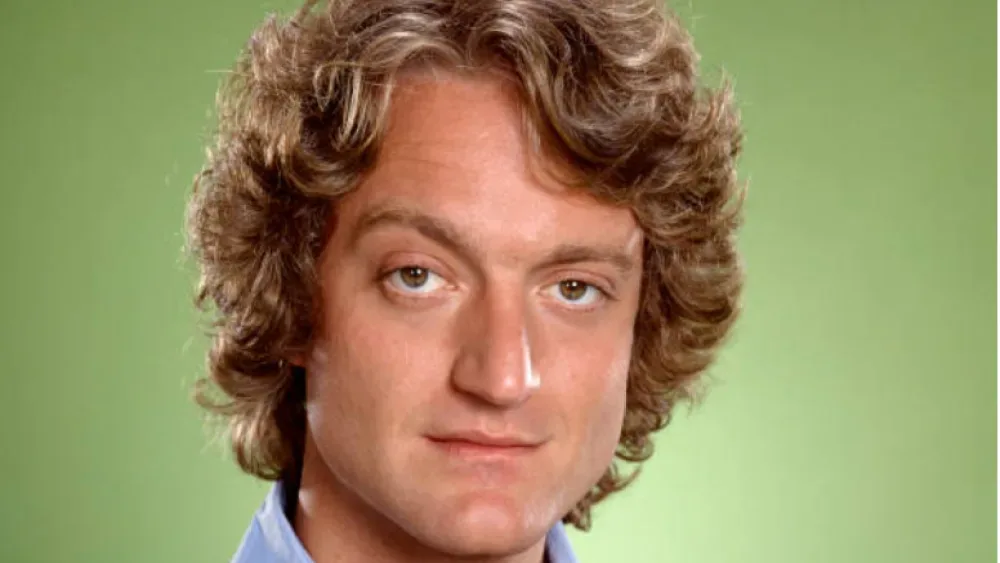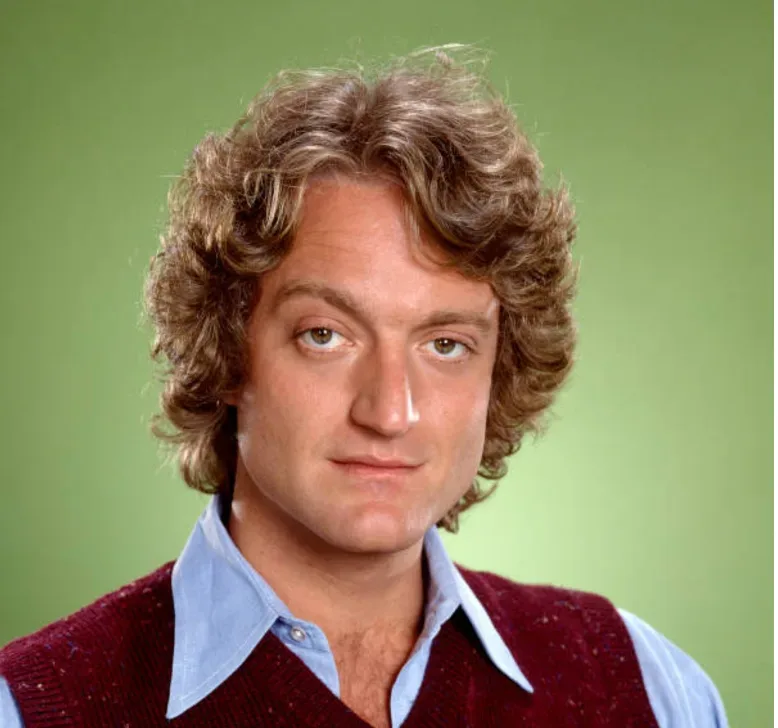
Gerrit Graham, the actor, screenwriter and songwriter whose career moved freely between cult cinema, mainstream television, animation and music, has died at 77. He died Tuesday in Rhinebeck, New York, after dealing with lung disease and other ailments.
It is an unusually broad body of work, even by the standards of a character actor’s career. Graham appeared beside Robert De Niro in early Brian De Palma films, played a memorably exaggerated glam-rock figure in Phantom of the Paradise, surfaced in sitcoms and science-fiction franchises, contributed to Disney projects as a writer, and co-wrote a Grateful Dead song with Bob Weir. The common thread is not a single genre or persona. It is an ability to make an impression in very different creative worlds.
From early De Palma films to an unforgettable cult-musical role
Graham began his film career in De Palma’s Greetings and Hi, Mom!, both of which also featured De Niro. Those early credits placed him in the orbit of a filmmaker with whom he would remain closely associated.
For many genre and cult-film viewers, Graham’s most instantly recognizable screen role may be Beef in De Palma’s Phantom of the Paradise. Beef is a glam rocker introduced in a coffin, a deliberately operatic entrance suitable for a movie built around heightened music-business satire and horror-inflected spectacle. The character’s later fate — being killed in a shower with a plunger — is as outsized as the name suggests.
That kind of role can easily reduce an actor to a single visual memory: the costume, the attitude, the scene everyone recounts. Graham’s career was larger than that. But Beef demonstrates a key quality of his screen work: he could make a stylized character feel like a purposeful part of a film’s strange internal logic. In a movie where subtlety is not the operating system, Graham met the material at its level.
He later played a sleazy used-car salesman in Robert Zemeckis’ Used Cars, another part that leaned into sharp comic characterization. His film credits also included Demon Seed, Pretty Baby, Child’s Play 2 and National Lampoon’s Class Reunion. Taken together, those titles show an actor comfortable moving across horror, comedy, drama and material that later became particularly important to cult-film audiences.
Horror fans who revisit franchise performances may also be interested in the broader genre conversation around the medium; recent debate over horror-comedy and audience expectations in Resident Evil is a reminder that tonal balancing acts remain central to the genre. Graham’s body of work came from a different period, but it likewise includes projects where broad comedy, discomfort and horror sit unusually close together.
A television performer with range beyond one defining part
Graham’s work extended well beyond film. He appeared in episodes of Seinfeld, Laverne and Shirley and The Wonder Years, three shows with very different tones and audiences. He also appeared on both Star Trek: Deep Space Nine and Star Trek: Voyager.
That pair of Star Trek credits is notable not because it establishes a grand franchise-long character arc — no such claim is needed — but because it places Graham in two separate entries of a universe that has often drawn actors with strong technical instincts. Television science fiction commonly asks performers to establish a character swiftly amid unfamiliar terminology, elaborate production design and the expectations of a dedicated audience. Graham’s facility with impressions and accents was a practical strength for a career built around different worlds and personalities.
Impression work and accent work are sometimes treated as mere novelty skills. In practice, they can be essential tools for a supporting actor. They help create a distinct person quickly, clarify a character’s social posture, and give a scene a particular comic rhythm. Graham’s credits suggest someone who could be called on when a production needed a vivid presence rather than a generic one.
Screenwriting and the animation work behind the scenes
Graham was not solely a performer. His screenwriting work included projects connected to The Little Mermaid, Oliver & Company and episodes of The Twilight Zone. He also co-wrote Disney’s adaptation of Prince and The Pauper with his brother, Chris Hubbell.
That part of his career matters because it shifts the focus from the actor visible in a scene to the writer helping shape what every performer has to play. Screenwriting is not one uniform job: animation, anthology television and feature work can demand different structures, tones and production considerations. The supplied credits do not establish the exact scope of Graham’s contribution to each project, so it would be wrong to overstate individual authorship. What they do establish is meaningful creative work across formats that otherwise sit far apart on a résumé.
The animation credits also make Graham’s career feel less easily boxed in. An audience member may remember him as Beef, as a comic guest performer, or as a face from a horror sequel. Another may know projects connected to his writing instead. His work did not require one public identity to do all the lifting.
The Grateful Dead connection: “Victim or The Crime”
Graham also worked as a songwriter and lyricist, most notably with Bob Weir of the Grateful Dead. The pair co-wrote “Victim or The Crime,” recorded by the Grateful Dead for Built To Last. Weir and Rob Wasserman later recorded the song on their 1998 album Live.
For listeners, that credit is especially significant because it links Graham to a band whose songs have long carried lives beyond a single studio release. The available record here is specific: Graham co-wrote one named song with Weir, it appeared on the Grateful Dead’s Built To Last, and it was recorded again by Weir and Wasserman. There is no need to turn that into a larger claim about the totality of his musical output. The documented collaboration is substantial on its own.
It also helps explain why Graham’s career resists a tidy label. He was not simply an actor who happened to have a writing credit, or a writer who made occasional screen appearances. His work crossed the dividing lines between performing, writing and lyric writing. That kind of career can be harder to summarize than a run of starring roles, but it often leaves traces in more places.
Life in Rhinebeck and family
Graham was born in New York City to John and Janet Graham. His family lived in Missouri and Michigan before settling in Chicago. He married Deborah in 1982, and they had two children.
After caring for his mother in California, Graham lived in Rhinebeck for the final 30 years of his life. He also served on the Burger Hill Preservation Society, connecting his later years to local preservation work in the community where he lived.
He is survived by his brother Sam; his sons Jack and Henry and their wives, Talia and Joelle; and four grandchildren: Nolan, Micah, Vera and Joey.
A career that rewards looking past the headline credit
Graham’s death will understandably prompt renewed attention to the loudest, strangest and most quoted moments in his filmography. Beef is the kind of role that endures because it is so visually and tonally specific. Yet the fuller account is richer: early De Palma films with De Niro, Zemeckis comedy, horror and drama features, sitcoms, Star Trek, animation writing, anthology television and a songwriting credit with Weir.
For viewers returning to his work, the useful approach is not to seek a single “essential” Graham performance and stop there. His legacy is better understood as a collection of creative lanes. Some are on camera and deliberately flamboyant; others sit in credits, scripts and songwriters’ listings. Together they show a performer and writer who kept finding room in the odd corners and major intersections of American popular culture.