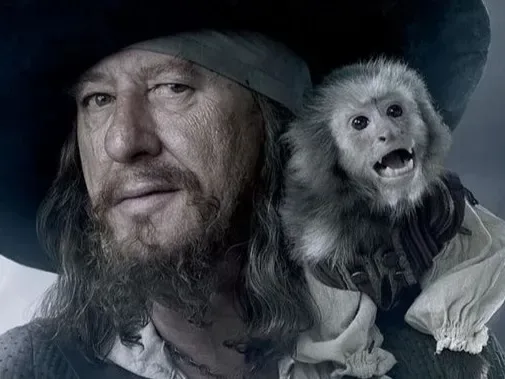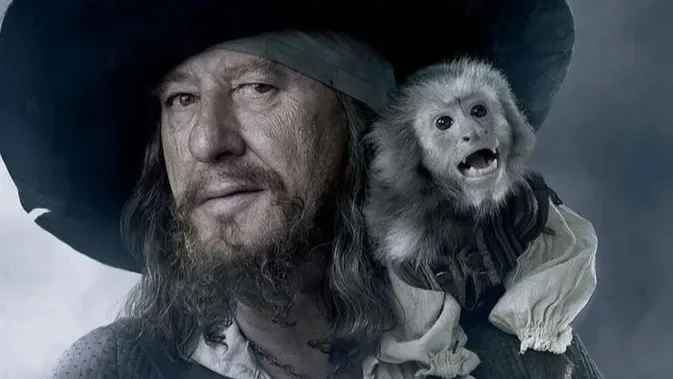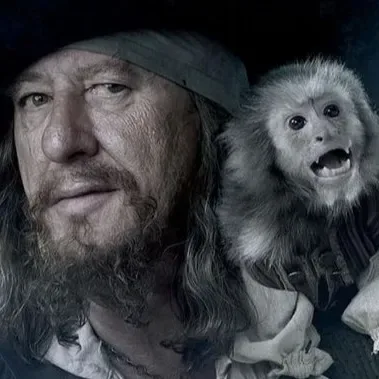
Hector Barbossa may have gone over the edge in Pirates of the Caribbean: Dead Men Tell No Tales, but Geoffrey Rush does not see that as an unbreakable barrier to one more trip through the supernatural side of the franchise. His proposed route back is not a straightforward resurrection, either. It is a ghost story—and, naturally, an excuse for Barbossa to irritate Captain Jack Sparrow one final time.
Rush has said he would be keen to return to Disney’s long-running swashbuckling series, provided the filmmakers find an idea that respects Barbossa’s final act. The character died in the 2016 film after sacrificing himself for his daughter, and Rush’s position is clear: simply reversing that outcome for an easy return would not do justice to the moment.
Instead, he has suggested a spectral appearance inspired by the role of Hamlet’s father in Shakespeare’s Hamlet. In that play, the dead king appears as a ghost whose presence sets the story in motion. For Barbossa, a similar device could allow the character to be part of the action without pretending his sacrifice never happened.
“I sacrificed myself for my daughter, I don’t want it to be too easy and too cheesy that I come back,” Rush said, while adding that he would happily return to “annoy Jack Sparrow for one more go.”
Why Barbossa’s return is more complicated than another pirate curse
The Pirates of the Caribbean films have always made room for the impossible. Curses, undead crews, sea-bound myths and trips beyond death are fundamental parts of their fantasy-adventure machinery. On paper, that makes a return for Barbossa seem entirely plausible.
But there is an important storytelling difference between a world where death can be challenged and a story that treats every farewell as temporary. Barbossa’s exit carried a specific emotional purpose: he gave his life for his daughter. A future film would need to acknowledge that choice, rather than reduce it to a temporary inconvenience caused by sequel logic.
That is why Rush’s ghost idea is more interesting than a simple declaration that Barbossa somehow survived. A ghostly role could preserve the fact of his death while still giving the series access to the character’s most valuable qualities: the dry delivery, the increasingly begrudging rapport with Jack Sparrow, and the sense that Barbossa can turn up with a scheme even when everyone else believes the situation is already impossible.
It could also make the return finite. A brief or purpose-driven appearance would not need to reopen every plot thread around Barbossa’s fate. It could instead give him one unresolved duty, one warning, one inconvenient intervention—or just one last opportunity to disrupt Jack’s day.
Related coverage includes Geoffrey Rush Has a Ghostly Idea for Barbossa's Return in Pirates of the Caribbean 6.
Rush, Depp and McNally are the only actors in all five films
Rush’s place in the series is unusually substantial. He is one of only three performers to appear in all five released Pirates of the Caribbean films, alongside Johnny Depp as Jack Sparrow and Kevin McNally as Gibbs.
That history gives the prospect of a Barbossa appearance a weight beyond ordinary nostalgia. Barbossa began as an adversary to Jack Sparrow, then evolved into one of the franchise’s central recurring forces. The character could be rival, ally, opportunist and reluctant participant in the larger crisis, often changing position without losing the sense that his own interests came first.
For a prospective sixth movie, that kind of established character connection can be useful. A franchise trying to offer “a new take” while retaining some familiar faces has to decide what familiar elements are essential. Returning actors should not merely be visual reminders of earlier entries; they need a reason to be in the new story. Rush’s proposed approach supplies one for Barbossa: he would come back because the rules of the story require his intervention, not because the series is unwilling to let him go.
What is actually known about Pirates 6
There is still considerable uncertainty around the next Pirates of the Caribbean film. A sixth entry has been discussed for a long time, but no confirmed cast list or final character lineup has been established in the information available so far.
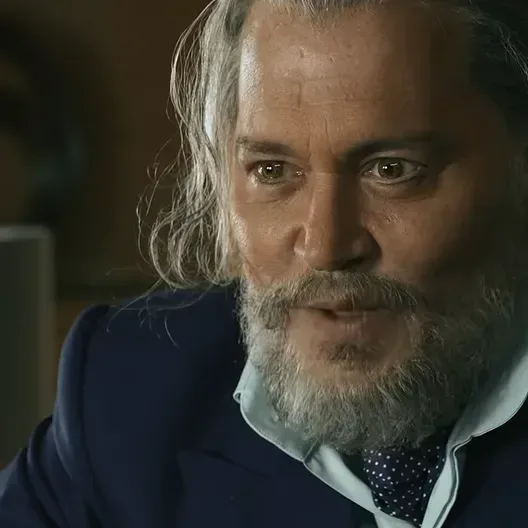
Producer Jerry Bruckheimer has said that he has been talking with Depp about a possible return to the franchise. That matters because Jack Sparrow remains closely identified with the series, though discussions are not the same thing as a confirmed deal or a completed film.
Bruckheimer has also indicated that some earlier Pirates performers could return while the next film attempts a new direction. Orlando Bloom, another major figure from the series, has strongly indicated that he would like to see Depp return. Separately, long-developing plans have placed Margot Robbie at the forefront of a potential Pirates 6, if that project ultimately comes together.
Those pieces should not be treated as a finished map of the movie. They point to several possible directions rather than one locked plan: a project with returning legacy characters, a new lead, or a combination of both. Rush’s comments belong in that same category. They are a performer’s preferred creative idea, not confirmation that Barbossa is in the script.
For readers following other franchise continuation news, the question of balancing a new premise with returning faces also sits at the heart of Game of Thrones: Aegon’s Conquest. In both cases, the practical challenge is not simply whether an established world can continue, but what continuity should be carried forward.
A ghost is not the same thing as a resurrection
Rush’s comparison to Hamlet is useful because it describes a specific dramatic function. A ghost character does not have to resume their old life, reclaim a role in the crew or become a permanent player in the plot. The ghost can be a messenger, an accusation, a source of unfinished business, or an embodiment of a past decision that still affects the living.
Applied to Barbossa, that opens a number of broad possibilities without requiring the film to erase the character’s ending. He could appear to Jack in a supernatural setting. He could warn him about a threat tied to the sea or the afterlife. He could be summoned by another character. Or he could play a smaller part in resolving a problem that only someone with Barbossa’s knowledge, resentments and history with Jack could address.
The key is that any of those possibilities would need “good writing,” as Rush put it. The franchise’s supernatural rules give writers latitude, but latitude is not automatically emotional logic. If a character’s death is meaningful, a return needs to add meaning rather than simply add a recognizable face to a crowded ensemble.
Why the Jack-Barbossa pairing still matters
Jack Sparrow and Hector Barbossa have one of the clearest relationships in the series because neither man is ever entirely safe to trust. They are bound by mutiny, revenge, shifting alliances and mutual frustration. Yet their dynamic also works because each recognizes the other’s survival instincts and talent for escaping a bad situation.
Rush’s desire to “annoy Jack Sparrow” gets at the comic engine of that relationship. Barbossa does not need a grand claim to command or a massive betrayal to make an impact. A well-timed interruption, a withering observation or an unwelcome piece of advice could be enough to restore that old friction.
That makes a ghost cameo particularly practical from a narrative standpoint. It gives the film a way to use the Jack-Barbossa chemistry without needing to undo Barbossa’s entire character arc. If Depp does return and if Rush is invited back, the pair could share a focused scene that recognizes their long history while allowing the wider story to move on.
The fan-letter idea is charming, but the screenplay still needs a purpose
Rush also floated the notion of having fans write in with ideas for what they would like to see. It is an entertaining invitation, especially for a franchise with two decades of audience attachment and a deep catalogue of favorite characters, locations and gags.
Fan enthusiasm can identify what people miss—such as the sharp Jack-and-Barbossa interplay—but it cannot substitute for a coherent reason to bring someone back. The strongest version of Rush’s suggestion is not “Barbossa returns because audiences remember him.” It is “Barbossa returns because the story has found a role only Barbossa can fill.”
For now, that is the right way to view the idea: a thoughtful potential answer to a difficult sequel question, rather than evidence of a finalized comeback. Barbossa’s death does not have to rule out one last appearance. But if he does return, the ghost route offers a way to honor the sacrifice, retain the franchise’s supernatural flavor and let the old pirate get in one more jab at Jack Sparrow.