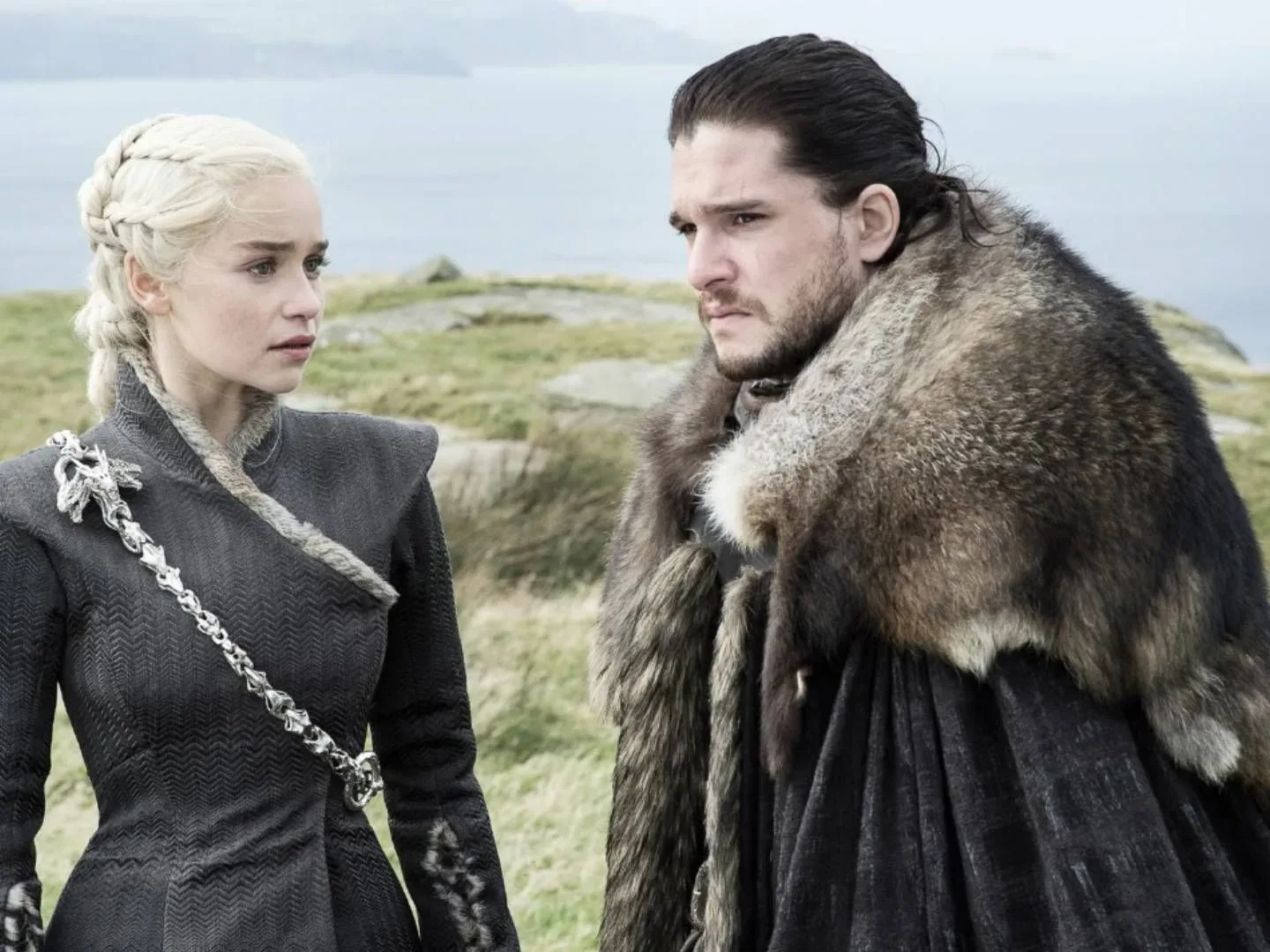
Game of Thrones: Aegon’s Conquest is scheduled to reach theaters on June 1, 2029. Owen Harris will direct the feature, while Bea Willimon is attached as screenwriter. It is an unusually long look ahead for Westeros on the big screen, but the date, title, director and writer establish the core of a project built around one of the setting’s most consequential periods.
The title points squarely to Aegon I Targaryen’s campaign to bring Westeros’s separate kingdoms under one rule. The conquest is foundational history for the wider Game of Thrones setting: Aegon’s victories united the kingdoms for the first time, aided by his sister-wives Rhaenys and Visenya and, crucially, three dragons.
That outline should not be mistaken for a complete plot confirmation. Beyond the title’s clear implication and the central historical premise, no cast, production timetable, character breakdown, or further story specifics have been disclosed. The most useful way to read the news is as a firm creative and calendar marker—not a scene-by-scene preview of what the film will contain.
A founding-era story for Westeros
Aegon’s Conquest offers a different narrative vantage point from stories set under the established political order. Rather than starting with a realm already joined beneath a royal system, its central question is how that system came into being—and what force was required to create it.
The three figures named in the foundational account are Aegon, Rhaenys and Visenya. Their relationship matters to the premise because it places the conquest in the hands of a Targaryen ruling family rather than a lone warrior-king. The dragons matter just as much. In this context, they are not simply creatures for spectacle; they are the overwhelming strategic advantage behind a campaign capable of remaking the political map.
That creates a potentially valuable dramatic tension. “Conquest” is not a neutral word. It describes the consolidation of power, but it also necessarily raises the perspective of the people and kingdoms being brought under that power. The announced title promises the formation of a united Westeros, while the premise itself leaves room for the personal, political and military costs of achieving that unity.
For viewers who know the later eras of the franchise, the setting also carries built-in significance. A story about the first Targaryen ruler of Westeros is inherently about the origins of the throne and dynasty that shape so much of the world’s later history. The film’s opportunity is to make that origin legible on its own terms rather than treating it solely as a checklist of familiar lore.
What House of the Dragon adds to the premise
House of the Dragon introduced an additional motive behind Aegon’s decision to conquer Westeros: a prophetic vision of the Long Night and the belief that only a Targaryen on the throne could prevent an apocalypse.
That detail reframes the conquest in a major way. At the broadest level, it gives Aegon’s campaign a stated purpose beyond expansion and unification. In narrative terms, a prophecy is a prediction or vision that influences present-day decisions. Here, its significance is that it can turn a historical campaign into a choice tied to a feared future catastrophe.
There is a natural tension in that idea. A leader may believe a dire future justifies extraordinary action; the people subjected to that action may not experience it as protection. Whether the movie foregrounds that conflict, and how it interprets the prophecy, remains unknown. Still, the established connection means the film could have thematic links to the Long Night while remaining centered on Aegon’s own era.
It is also worth separating confirmed continuity context from confirmed movie content. The prophecy has been revealed within the franchise’s television storytelling, but no details have been provided about how prominently it will appear in Aegon’s Conquest. It may prove central, peripheral, or simply part of the larger historical backdrop. Until more is announced, any more specific prediction would be speculation.
The creative team so far
Harris arrives with a direct connection to Westeros television, having directed three episodes of A Knight of the Seven Kingdoms. That makes him a familiar creative presence within this wider franchise, even though a theatrical feature presents its own demands of scale, pacing and structure.
A director is responsible for guiding the film’s overall screen execution: performances, visual approach, scene construction and the collaboration that turns a script into a finished feature. The appointment does not reveal the movie’s visual style, but it does provide a concrete answer to a key question about who will steer its adaptation of a vast, dragon-powered historical conflict.
Willimon is writing the screenplay. A screenplay is the working dramatic blueprint for a film, laying out scenes, dialogue, character action and the progression of the story. Her previous work includes writing on Andor. At this stage, no information has been released about the screenplay’s specific structure, which historical beats it will emphasize, or whether it will focus tightly on Aegon, Rhaenys and Visenya or expand widely across Westeros.
The announced pairing nonetheless suggests that the project has moved beyond an abstract franchise possibility. With a release date, a director and a writer publicly attached, Game of Thrones: Aegon’s Conquest now has identifiable anchors even as most production details remain under wraps.
Where it sits in the expanding Westeros slate
The nearer Westeros release is A Knight of the Seven Kingdoms season 2, expected in the first half of 2027. That places the next television chapter well before the 2029 movie, and it also underlines the franchise’s willingness to tell stories from distinct moments in its fictional history.
Showrunner Ira Parker has discussed a possible expansion of A Knight of the Seven Kingdoms beyond three seasons, potentially to four or five. The comments hinge on further Dunk and Egg material, including a fourth book George R.R. Martin is working on. Parker described the possibility of eventually moving toward an older Egg, palace politics, Summerhall and King’s Landing after the early road-story phase.
Those comments are about the potential future of A Knight of the Seven Kingdoms, not a roadmap for Aegon’s Conquest. But together they show a franchise exploring sharply different scales: a story that begins with travelers on the road, and a theatrical feature built around the creation of a realm. That variety may be important. Westeros does not need every installment to use the same kind of conflict, setting or protagonist to feel connected.
There is also continued interest in more Dunk and Egg stories while readers await The Winds of Winter. For fans tracking the broader fantasy-TV landscape beyond Westeros, our look at how a network became a home for fandom television provides another example of how long-running genre audiences follow stories across changing formats and eras.
What audiences can reasonably expect—and what remains open
The safe expectations are straightforward. The film is called Game of Thrones: Aegon’s Conquest; it is set for June 1, 2029; Harris is directing; and Willimon is writing. Its premise is expected to concern Aegon I Targaryen’s conquest of Westeros alongside Rhaenys, Visenya and three dragons.
Everything else needs an asterisk for now. There is no announced cast, no official synopsis beyond the implications of the title and established background, and no disclosed information about the exact span of time covered. There is likewise no confirmed indication of how much of the Long Night prophecy will be incorporated into the movie itself.
That uncertainty is not a flaw in the announcement; it is simply the current state of the project. The June 2029 date gives the production a distant target, while the creative appointments offer the first meaningful sense of its authorship. Until the next update, the clearest appeal is the premise: Westeros before its familiar political order, the Targaryen trio at the center of a continent-changing campaign, and dragons functioning as the power that can make conquest possible.