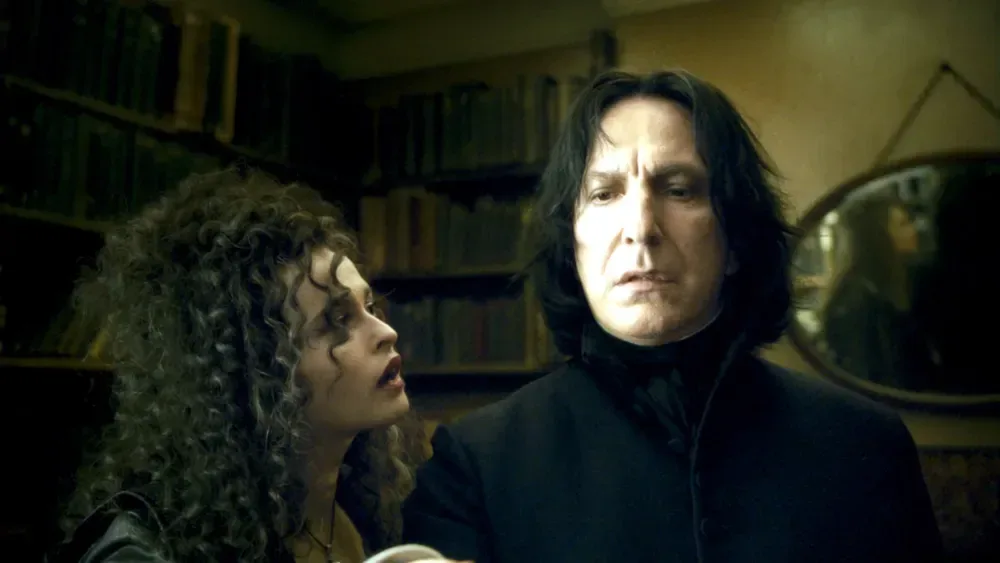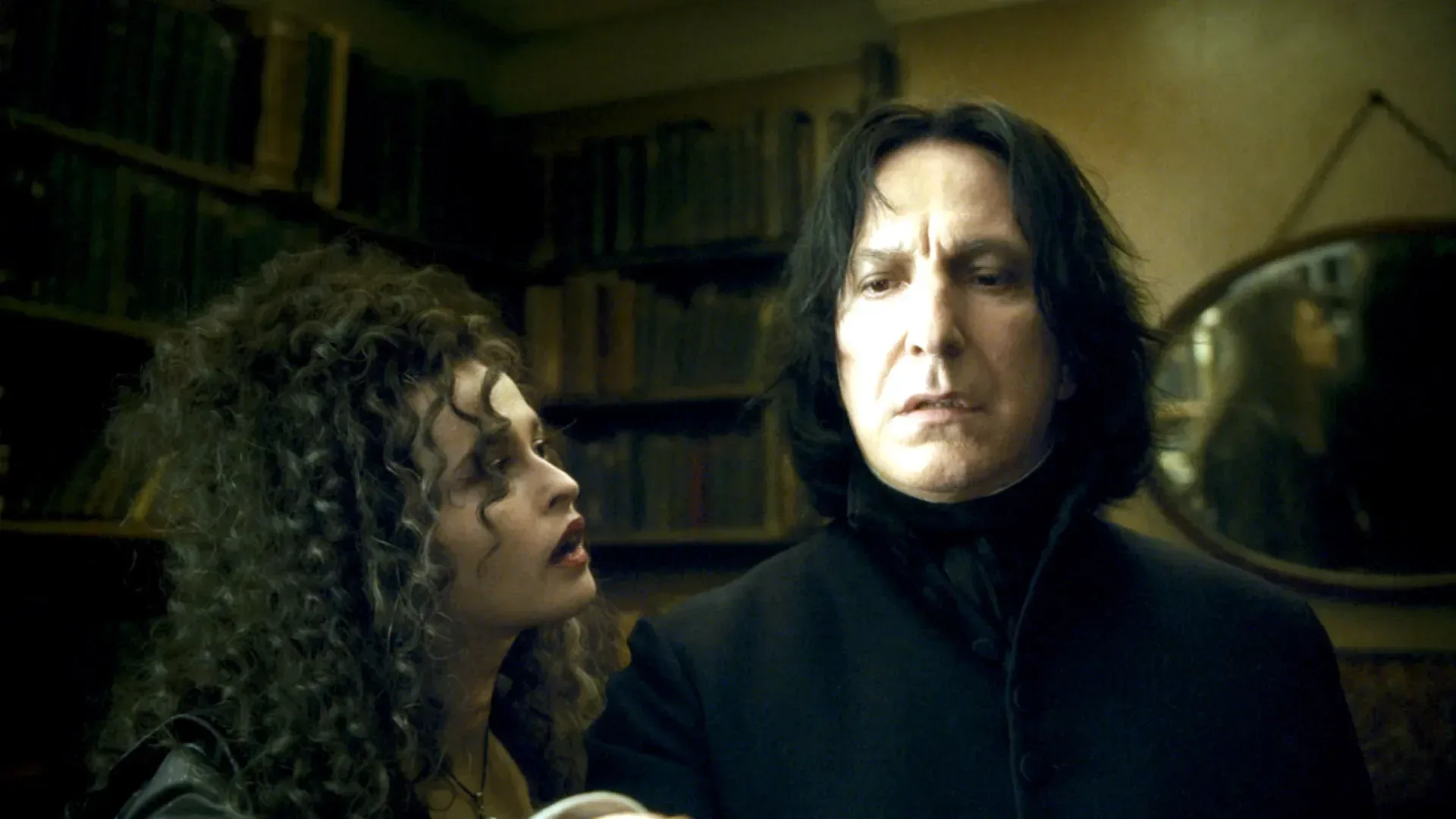
Severus Snape may be one of fantasy cinema’s great practitioners of the withering glare, but Gary Oldman has offered a much warmer memory of the actor beneath the robes. Speaking at the 2026 Toronto International Film Festival, Oldman recalled that Alan Rickman regularly made room for young visitors on the Harry Potter sets, inviting children from schools, hospitals, and his personal circle into a world that could otherwise have felt sealed off behind studio gates.
Oldman, who played Sirius Black in the film series, described Rickman as someone who did not take the unlikely scale of the experience for granted. The actor reportedly brought children around at lunchtime, showed them the production spaces, and introduced them to members of the cast. For visitors who knew Hogwarts as a place of moving staircases, impossible feasts, and dangerous magic, the practical reality of a working film set must still have carried enormous wonder.
It is an especially resonant recollection because Rickman’s best-known role in the franchise required him to project distance, severity, and suspicion. Snape’s treatment of Hogwarts students is central to the character’s intimidating reputation, while the films steadily ask viewers to reconsider what they think they know about him. Rickman’s off-camera generosity, as remembered by Oldman, creates a lovely counterpoint: the man playing one of the school’s least approachable teachers apparently understood exactly how much a glimpse behind the curtain could mean to children.
A performer who wanted to share the magic
Oldman’s account is not simply that Rickman occasionally accommodated a guest. He portrayed it as a regular impulse. Rickman would bring children in from a variety of places and make their visits part of the rhythm of set life. They could tour the surroundings and meet the people creating the films, rather than merely seeing a finished adventure years later in a cinema or at home.
What seems to have mattered most to Rickman, in Oldman’s telling, was the rarity of being allowed into such an imaginative universe every day. He recognized both the privilege of working on the films and the emotional importance the stories held for younger fans. Oldman called him the production’s “cheerleader,” emphasizing that Rickman was fully invested in the project and eager to pass some of that feeling along.
That perspective lands differently from the usual blockbuster-set anecdote. Massive franchise productions are often discussed through release dates, casting mysteries, visual effects, and the daunting mechanics of adapting beloved books. This memory centers a quieter piece of the process: an actor using access to create a small but meaningful encounter for young people who might need a bright day, an exciting tour, or a chance to see fantasy made tangible.
For children arriving from hospitals in particular, a visit to the production could have provided a temporary change of scenery from routines that are rarely easy. Oldman did not describe individual visits or their outcomes, and it would be wrong to invent those details. But the intention he ascribed to Rickman is clear. Rickman knew the setting had value beyond the day’s work and wanted to open it up where he could.
The peculiar joy of seeing a fictional world built for real
The Harry Potter films had an unusual advantage as productions designed around a place that readers had already constructed vividly in their minds. Hogwarts was not just a backdrop; it was the destination. Audiences wanted to know what the Great Hall looked like, how classrooms felt, and whether the enormous spaces of the wizarding world could exist outside the page. A set visit could turn that private imaginative connection into something immediate and physical.
Related coverage includes Gary Oldman Recalls Alan Rickman Sharing the Harry Potter Sets With Children.
There is also a pleasing irony in picturing Rickman as a guide through those spaces. Snape is synonymous with forbidding corridors, sharp corrections, and the sense that a student has been caught doing something they should not. Yet the actor’s reported behavior offered young visitors the reverse: an invitation into the corridors, an opportunity to look around, and a welcoming introduction to the people at work there.
That distinction between character and performer is worth keeping intact. Rickman’s effectiveness as Snape depended on restraint and ambiguity. He gave the character a controlled, often chilly presence while preserving the deeper complications that emerged across the story. Off screen, as Oldman remembers him, he was not preserving an aura of mystery for its own sake. He was helping make an intimidatingly large production feel accessible to people who loved it.
Rickman appeared as Snape in all eight Harry Potter films. Across that long run, the franchise became a shared cultural landmark for a generation of viewers, and its physical production changed as the films, characters, and audience grew. A recurring gesture of welcome from a central cast member therefore carries a different weight than a one-off promotional appearance. It suggests a sustained appreciation for the community gathered around the stories.
Oldman on what the films had to leave behind
Oldman’s remembrance of Rickman arrived alongside his thoughts on the forthcoming HBO television adaptation of the original material. He has said the new version could prove more satisfying because television has more room to explore the wizarding world. The films, he noted, had to omit substantial material even while running close to three hours in some cases.
His observation identifies the permanent challenge of adapting a large, detail-rich fictional series. Film can deliver a concentrated event with iconic performances and defining images, but it must make choices about which plotlines, relationships, detours, and bits of world-building will fit. Television potentially gives the adaptation more breathing space. That does not automatically make one format better than the other; it changes the shape of the storytelling and the kinds of details that can survive the journey from page to screen.
Oldman believes the HBO series will follow the text very closely, even suggesting it may be rendered almost word for word. That is his expectation, not a confirmed episode-by-episode production blueprint. Still, it reflects a common desire among fans of sprawling book series: the hope that a longer format can spend additional time on material that a film cycle necessarily streamlined.
Adaptation questions are hardly exclusive to Hogwarts. Fans of expansive fictional settings routinely debate whether a new screen version should broaden the map, preserve every familiar beat, or confidently reinterpret the material for another medium. Gaming has its own versions of that discussion, including the ongoing interest around a planned animated Diablo series. In each case, the central issue is not merely duration; it is whether a new format can retain the spirit that made audiences care in the first place.
For the existing Harry Potter films, the cast is inseparable from that spirit. Rickman’s Snape, Oldman’s Sirius, and the wider ensemble helped establish a screen identity that remains vivid long after the final film. A new adaptation can pursue greater textual breadth, but the original movies’ emotional footprint will remain tied to the performers who gave their characters singular voices and faces.
Remembering Rickman beyond Snape
Alan Rickman died on January 14, 2016, after cancer. His career reached far beyond the wizarding world, with notable roles in films including Die Hard and Truly Madly Deeply. Yet Snape introduced him to an enormous new audience and positioned him at the center of a franchise whose fans often grew up alongside its releases.
Oldman’s festival recollection adds a humane detail to that legacy. It does not revise Snape into a softer character, nor should it; the role’s tension and contradictions are part of why it endures. Instead, it highlights Rickman’s apparent awareness that the fantasy surrounding the films belonged, in a meaningful sense, to the children watching them. He seems to have viewed the sets not only as his workplace, but as a place worth sharing.
For a franchise built around the invitation to enter a hidden world, that may be the most fitting gesture of all. Rickman played a guardian of secrets on screen. In real life, Oldman remembers him opening the door.