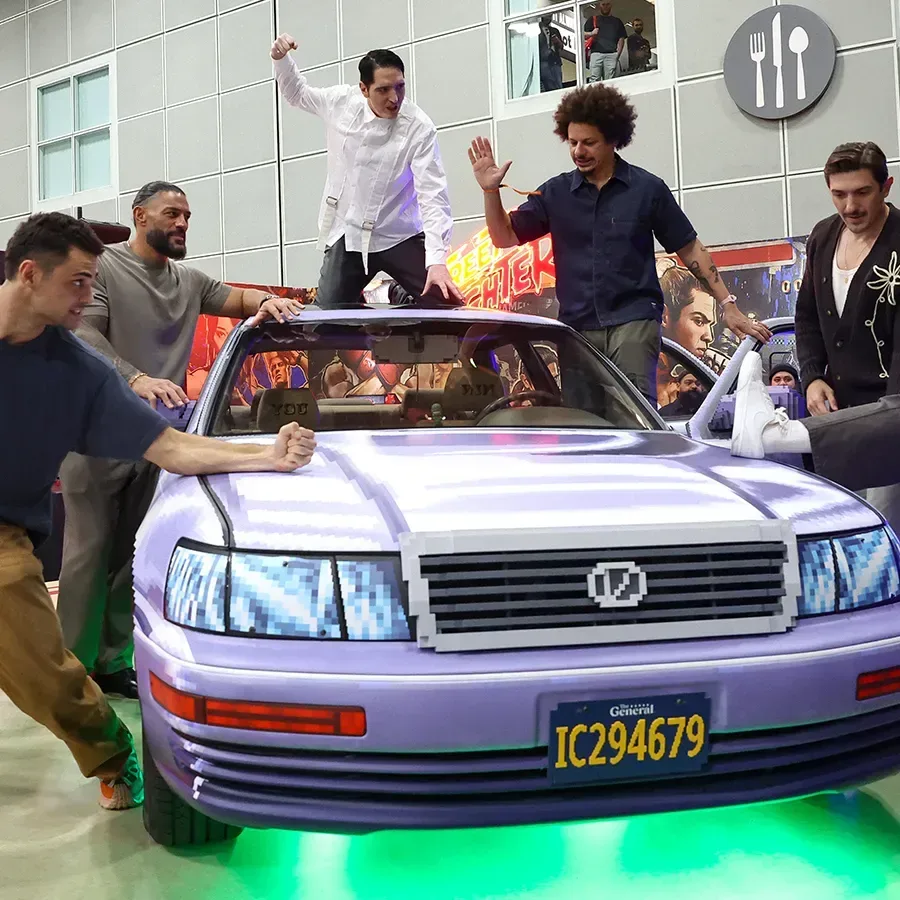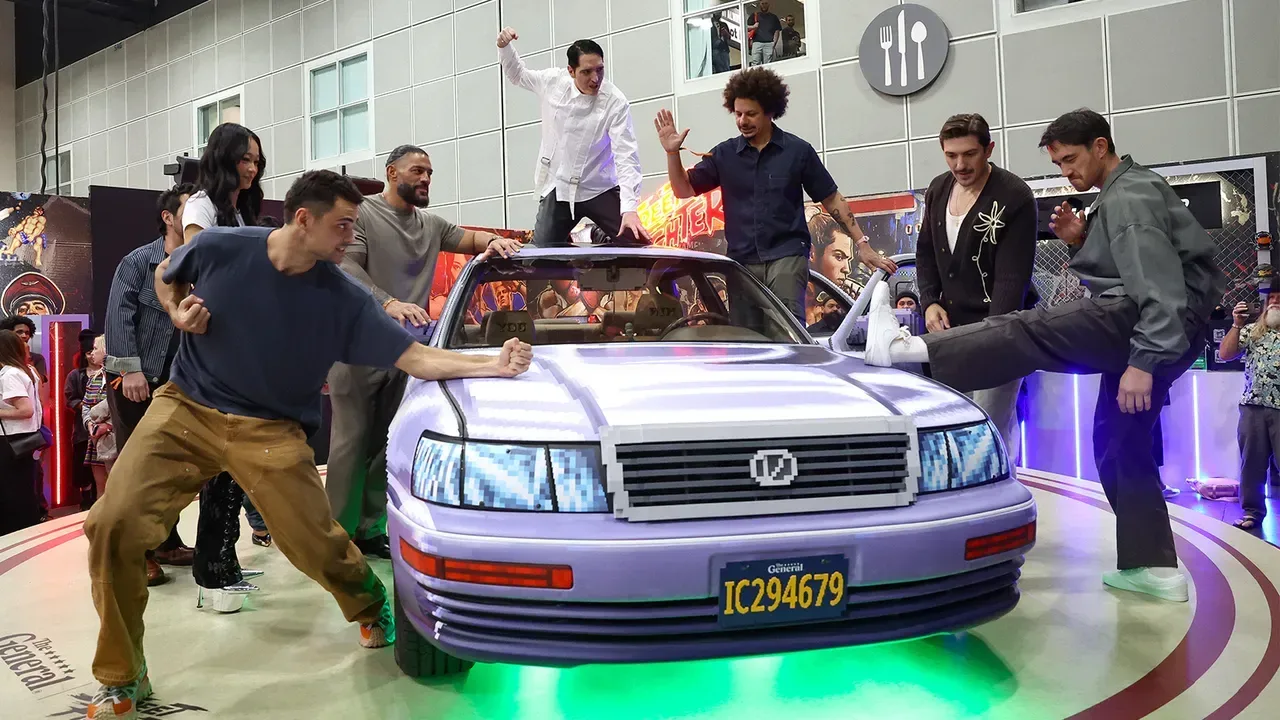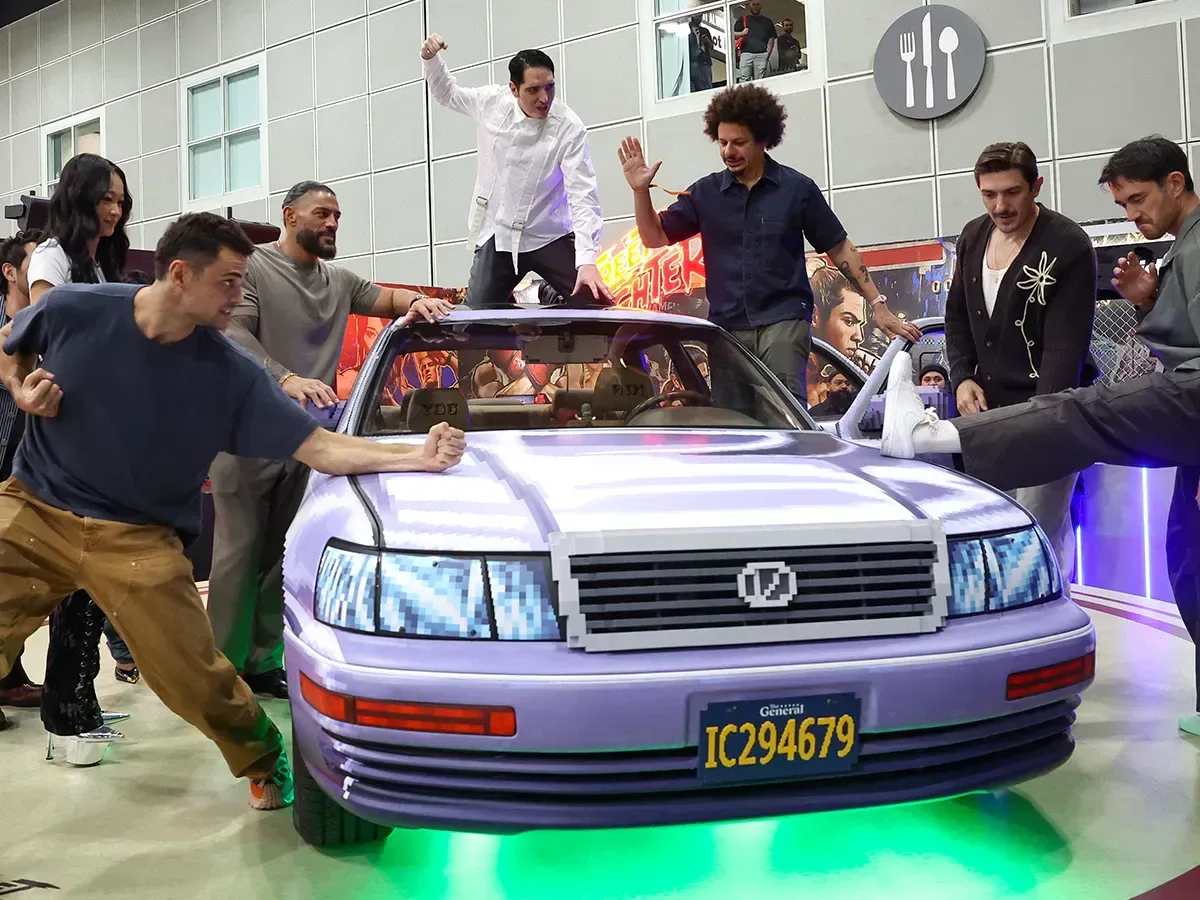
For decades, Street Fighter II has asked a very direct question between its martial-arts matches: can you reduce a parked luxury sedan to scrap before the timer runs out? Now that wonderfully impractical video-game challenge has taken a real-world turn. The General Insurance, Capcom and Vehicle Effects have collaborated on a full-scale recreation of the car associated with the game’s famous bonus stage, and one entrant will have a chance to win it.
The prize is not simply a car with a small logo tucked into a window. It is designed as a physical translation of the pixel-era object players know: a Lexus LS 400-inspired build with a deliberately game-like paint treatment, upgraded audio, “you” and “win” on the two front headrests, and an especially on-theme detail for the seats. A literal coin can be inserted to activate the seat warmers. That is commitment to the arcade bit, and also an unexpectedly specific answer to the age-old problem of chilly glutes.
The sweepstakes entry period begins in October and runs through November 18. Along with the vehicle, the winner is set to receive $25,400.69 in gas money. The .69 is plainly part of the joke, which is appropriate for a promotion built around an activity that, in the game, converts a perfectly respectable-looking sedan into a cloud of points and debris.
The car that made a pause from fighting memorable
The bonus stage car is one of Street Fighter II’s clearest images because it changes the usual rules without abandoning what makes the game work. Rather than facing an opponent, players are put on a short clock and told to attack an inanimate target. Punches and kicks are no longer about reading another player or setting up a combo; they are about output, rhythm and speed. The car becomes a scoreboard with doors, panels and windows.
That basic idea has remained recognizable across the series over the years: a timed intermission that lets fighting-game mechanics become a small spectacle of destruction. It is easy to understand even for somebody who has never learned a special move notation. Hit the car. Hit it faster. Try to leave as little car as possible.
In the original sequence, the engine is the notable thing left behind after the rest of the vehicle has been demolished. The recreation flips the fantasy in a useful way. This time, the car is an actual prize rather than a disposable prop, so the sensible goal for its eventual owner is preservation, not a perfect bonus-stage clear.
That distinction matters. The game’s car exists to be battered by fictional fighters; the real build is a piece of gaming memorabilia that happens to be road-going. Its value is in the recognizable visual gag and the engineering needed to make that gag into a real vehicle, not in testing whether a spinning kick voids the insurance paperwork.
Why the Lexus LS 400 connection fits the joke
The vehicle being recreated is associated with the Lexus LS 400. In enthusiast circles, the LS 400 has a reputation for unusually thorough engineering, and its 4.0-liter V8 is sometimes referred to as a “million-mile engine.” That reputation adds a layer to the old bonus stage: the sedan was not imagined as a flimsy throwaway. It is a substantial-looking machine, which makes the player’s ability to erase it in seconds more absurdly satisfying.
Related coverage includes Street Fighter II's Bonus Stage Car Has Been Rebuilt, and One Fan Can Win It.
Overengineered is an informal term, not a formal rating. It generally means that observers believe a product was built with more robustness, complexity or durability than the minimum required for its original purpose. In this case, the label helps explain the contrast between the LS 400’s real-world image and its video-game fate. A car praised for durability is transformed into a prop whose entire job is to lose every panel to a barrage of kicks.
There is no invitation here to repeat the stage outside a screen. A real car, including this one, is not a bonus-stage target. The special paintwork, sound-system upgrade, customized headrests and coin-operated heated seats are all reasons to treat the vehicle as the unusual collector item it is. The most faithful real-life use may be parking it somewhere safe, letting people take in the references, and resisting the urge to yell “Round one” near the fender.
A screen-to-street build, rather than a loose reference
Vehicle Effects, the Los Angeles company involved in the project, creates custom vehicles and has work featured in film and television. That specialty is a natural fit for this kind of object. Recreating a pixel-art icon at full scale requires choices that a game sprite never has to make: how the design wraps around actual body panels, how a stylized finish reads from different angles, and how to retain the joke once the vehicle is viewed as a physical object rather than a few dozen animated pixels.
The details described for the giveaway suggest the team understood that the car’s identity is more than its silhouette. The “you win” language on the headrests makes the interior part of the reference instead of treating it as ordinary cabin space. The coin-activated warmers turn a routine comfort feature into an arcade allusion. The upgraded sound system adds another functional element while keeping the car from feeling like a static showpiece alone.
Those choices also illustrate why video-game memorabilia can be compelling when it is made for the physical world. The best adaptations do not merely print a character or logo onto a generic product. They identify the interaction or visual language people remember and translate it into the new medium. Here, the interaction is not punching metal—thankfully—but the familiar arcade act of inserting a coin, while the exterior preserves the deliberately pixelated presentation.
Street Fighter’s movie moment arrives close behind
The timing also places the build alongside a new screen version of the franchise. The Street Fighter movie is due in theaters on October 16, 2026. Trailer footage has shown Noah Centineo’s Ken Masters punching and kicking a car while a crowd watches, directly echoing the kind of destruction the bonus stage made famous.
The film is also set to include animated segments focused on Ryu and Ken’s history with their master Gouken and Akuma. That creates an interesting split in how the property is being presented: its lore and relationships receive animated treatment, while one of its most immediately readable gaming images—a fighter pulverizing a car—appears in live action. The giveaway vehicle lands in the middle of those two approaches. It is a real object that deliberately keeps a pixel-art sensibility.
For fans interested in the broader history of games moving from their original form into new projects, this sits comfortably beside work that preserves and revisits older play styles, such as the new Amiga and Mega Drive 68000 ports of 1986’s Wonder Boy. The methods are entirely different—one is software built for classic hardware, the other is a custom full-size car—but both depend on a clear understanding of what audiences remember.
What prospective entrants should keep in mind
The central facts are straightforward: entry is open from October until November 18, and the prize package includes the recreated car and $25,400.69 in gas money. Anyone considering entry should consult the official sweepstakes terms for eligibility, entry requirements, prize conditions and any relevant limitations. Those practical details are important for any vehicle prize, particularly one that blends a functioning automobile with a highly distinctive fan-focused presentation.
The bigger appeal, though, is less practical than cultural. The bonus-stage car is an example of how a brief diversion can become a durable symbol. It was not the main competitive match, a final boss or a plot revelation. It was a timer, a car and permission to go completely overboard. More than 30 years on, that has proved memorable enough to support a movie reference, a bespoke real-world build and a sweepstakes prize large enough to include a conspicuously precise fuel allowance.
Just do the sensible thing if the car ends up in your driveway: admire it, drive it responsibly if its terms and condition allow, insert the coin when the weather turns cold, and let the virtual fighters handle the demolition.