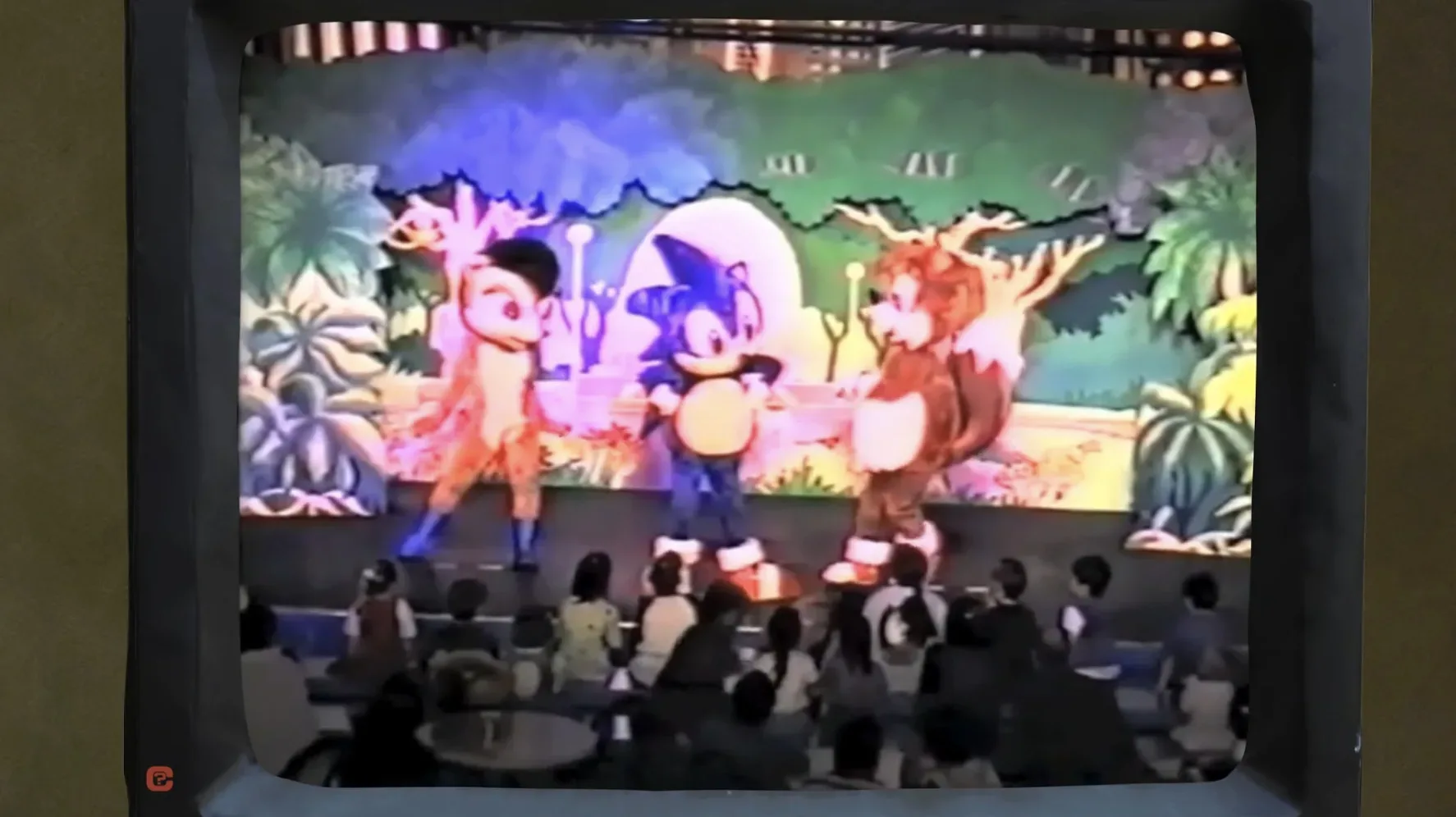
A piece of Sonic history that seemed destined to remain a rumor from an extinct indoor theme park has resurfaced. Sonic Live in Sydney, a roughly 25-minute stage production performed at Sega World Sydney in 1997 and 1998, has been recovered in recorded form after being regarded as lost.
That makes the discovery more interesting than its deliberately—or perhaps accidentally—chaotic title suggests. Sega World Sydney operated from 1997 until 2000, and its attractions existed at a point where games companies were experimenting with physical destinations, character statues and live entertainment alongside the games themselves. Once those venues close, materials made specifically for them can become unusually hard to trace. They were not always sold, formally archived or preserved with the care applied to a retail game release.
In this case, efforts to investigate abandoned Sonic statues connected to the park helped lead to a different surviving artifact: a recording of the production itself. The statues could not be recovered from Australian junkyards, but the show has escaped the same fate—at least in audiovisual form.
What was Sonic Live in Sydney?
The production appears to have been an attraction-sized Sonic adventure rather than a conventional theatrical event: a compact, family-facing live show built around familiar characters, musical numbers and moments intended to involve the audience. It ran at Sega World Sydney from 1997 to 1998, after which a puppet show took its place.
That short run helps explain why it fell out of view. A venue show can vanish much more completely than a television episode or game cartridge. There may be no commercial release, no public performance archive and no obvious reason for visitors to retain a copy. Even when people remember an attraction, they may remember only fragments: a costume, a line, a queue, a statue or the peculiar sensation of seeing a digital mascot trying to function in three-dimensional entertainment.
The resurfaced recording documents the entire, very specific package: Sonic, broad comedy, songs, attempts at American-style character voices, and local flavor that includes a plot point involving UGG boots. It is a reminder that character entertainment is often tailored to the place and moment in which it is staged. A Sonic attraction in Sydney did not need to resemble every other Sonic adaptation to serve its purpose; it needed to give park guests something immediate, colorful and recognizable.
A time capsule, including the uncomfortable parts
Not every recovered artifact deserves uncomplicated celebration. The show includes material that has aged badly, including fatphobic humor. Its late plot movement also has Dr. Robotnik attempting to woo Princess Sally, an especially uncomfortable premise given that this version of Sally is associated with the Sonic the Hedgehog animated series commonly known as Sonic SatAM, where she is depicted as around 16.
Those details should not be smoothed over in the name of nostalgia. Preservation and endorsement are different things. A recovered recording can have historical value because it accurately shows what an audience was offered at the time, including creative decisions that viewers now find misguided or unpleasant. In fact, leaving that context intact is one of the most useful things preservation can do: it gives audiences evidence rather than a cleaned-up memory of the era.
Related coverage includes Lost Sega World Sydney Sonic Stage Show Recording Resurfaces After Decades.
There is still room for the kind of affectionate disbelief that old park entertainment often inspires. The show’s period-specific style, thinly heard crowd interaction and exaggerated performances are part of what makes it compelling. But “so bad it is charming” should not become an excuse to disregard the elements that plainly have not held up.
Why a recording matters when the venue is gone
Sega World Sydney closed more than two decades ago. The physical site is gone as a living entertainment space, and the Sonic statues connected to it were reportedly found deteriorating in junkyards. That reality gives the recording a significance beyond novelty. It is evidence of how Sonic was presented outside consoles and television during the late 1990s, and of what a Sega-branded destination tried to offer its visitors.
Ephemera is the useful word here. It refers to material created for temporary or limited use—things like flyers, programs, tickets, signage, promotional material and venue-specific performances. A stage show may be even more fragile than a printed handout because the performance disappears the moment the run ends unless somebody captures it. A recording preserves the words, pacing, costumes, songs and staging in a way a written recollection cannot.
It also clarifies why game-history preservation is broader than saving software. The games remain central, but a cultural footprint includes the advertising, retail spaces, events, merchandise and themed destinations built around them. A lost regional show may tell us little about how a Sonic game plays, yet it can tell us a great deal about how the character was marketed, localized and physically experienced by fans.
Physical objects and recordings serve different preservation roles. A restored statue communicates scale and design in a way video cannot; a recorded performance captures sound, timing and narrative in a way a surviving statue cannot. Losing the statues is unfortunate. Finding the recording is still a major recovery because it protects a category of artifact that is otherwise exceptionally vulnerable.
Sonic’s many versions meet a park-stage format
The show also reflects the long-running flexibility of Sonic as a character. Sonic has appeared across games, cartoons, comics and promotional media, and each format imposes different needs. A game gives players movement and control. Animation can sustain elaborate worlds and action. A live venue show must communicate quickly to a constantly changing audience, often including children who may know the mascot but not the continuity.
That helps explain the reliance on musical numbers, broadly readable comedy and direct calls for audience participation. These are practical live-show tools. They establish energy, give performers transitions and provide obvious moments for a crowd to react. Whether the audience response was actually subdued or simply obscured by the recording’s audio quality, the intent is apparent: this was an attraction designed to make Sonic feel present in the room.
Princess Sally’s appearance further points to an adaptation landscape that was less neatly separated than modern franchise audiences might expect. The character’s connection to the Sonic SatAM version of the series places the play within a particular branch of Sonic media rather than an abstract, all-purpose Sonic setting. That does not make the Robotnik storyline work, but it does make the show a useful snapshot of which character ideas were circulating around the franchise at the time.
One notable production detail is Sonic’s voice performance, delivered by a Black woman with a substantial stage background. That choice becomes part of the artifact’s appeal because it counters any assumption that character voices at a theme-park-style attraction were necessarily anonymous or disposable work. A venue production can be goofy, low-budget-looking and historically important all at once; those qualities do not cancel one another out.
Recovery is not the same as restoration
Finding a recording is a huge first step, but it is not the same thing as fully restoring a production. The available account notes that the audio may make it difficult to judge audience participation. That limitation matters. Audio and video condition can shape what future viewers think happened in a room: an enthusiastic reaction can sound muted, a costume can be difficult to identify, and a joke’s rhythm can be distorted by recording quality.
For viewers, the sensible approach is to treat the recording as invaluable evidence with boundaries. It can establish that the show existed, document its plot and performance style, and preserve its unusual local details. It cannot necessarily answer every question about the original sound mix, full staging conditions or the response from a typical crowd. That is not a flaw in the discovery; it is simply the nature of rescued media.
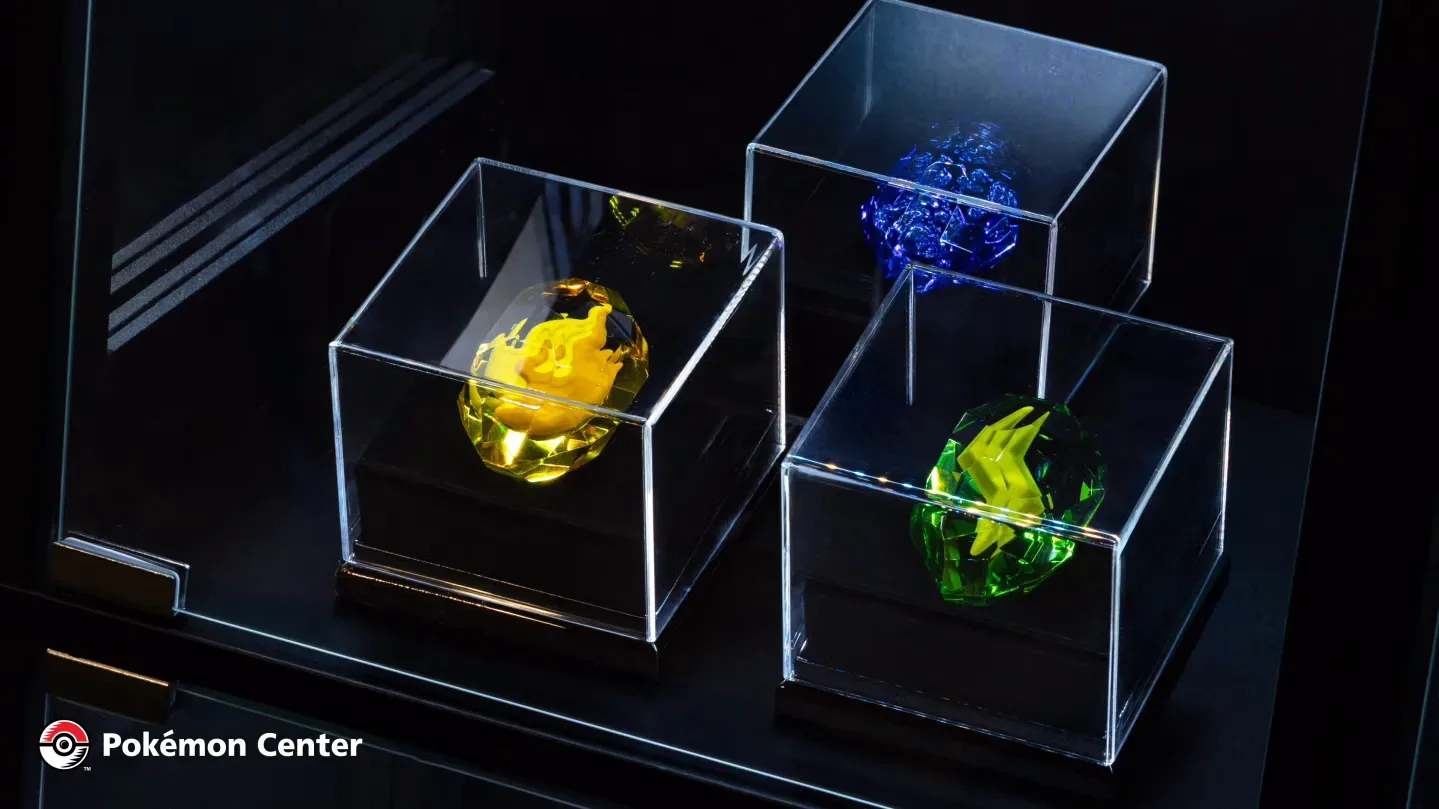
For collectors and preservation-minded fans, the case is a useful reminder that a gaming artifact does not have to be pristine, commercially packaged or especially prestigious to matter. The hobby already makes room for display pieces and franchise artifacts, from statues to objects such as Pokémon evolution-stone replicas made for display. A venue recording belongs to the same larger conversation, even if it cannot sit on a shelf in quite the same way.
The ideal outcome for items like this is not simply private ownership or a fleeting online upload. It is careful documentation: identifying what the material is, where and when it was used, what condition it is in, and which details remain uncertain. Those basics make future research possible and prevent the work from slipping back into a haze of half-remembered anecdotes.
Twenty-five minutes of very specific Sonic history
Sonic Live in Sydney is not presented as a lost masterpiece. It is a short, weird, deeply dated park show with songs, UGG boots, questionable jokes and an ill-advised Robotnik-and-Sally turn. Its value lies precisely in that specificity. It is not a polished retrospective imagining of the 1990s; it is a surviving piece of the 1990s, complete with the parts modern viewers may laugh at, cringe at or reject.
For Sega World Sydney, the recovered performance offers a rare moving record of an attraction that can no longer be visited. For Sonic fans, it expands the archive beyond games and screen adaptations. And for preservation, it demonstrates that even when the largest physical pieces cannot be saved, a seemingly unlikely recording can keep a vanished experience from disappearing altogether.