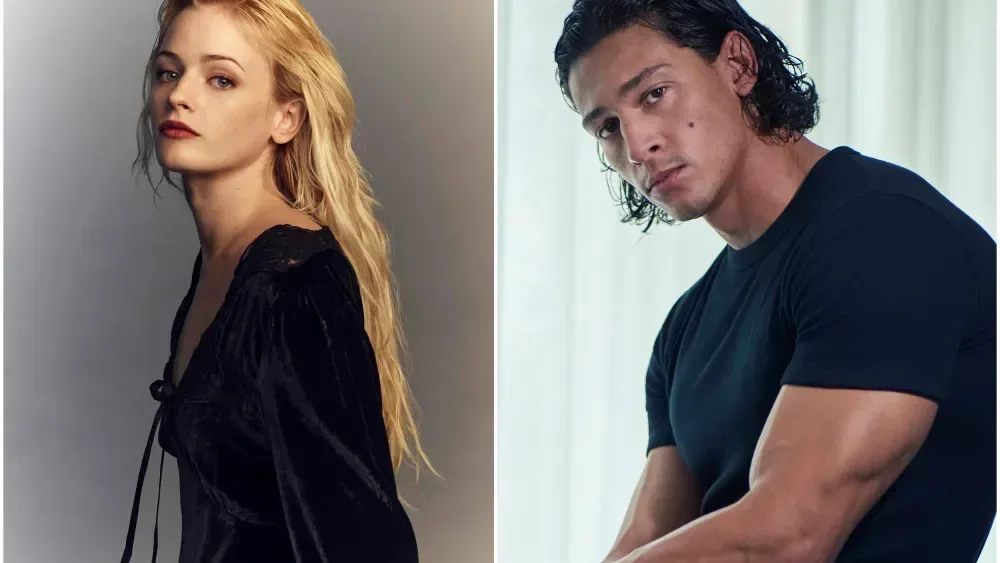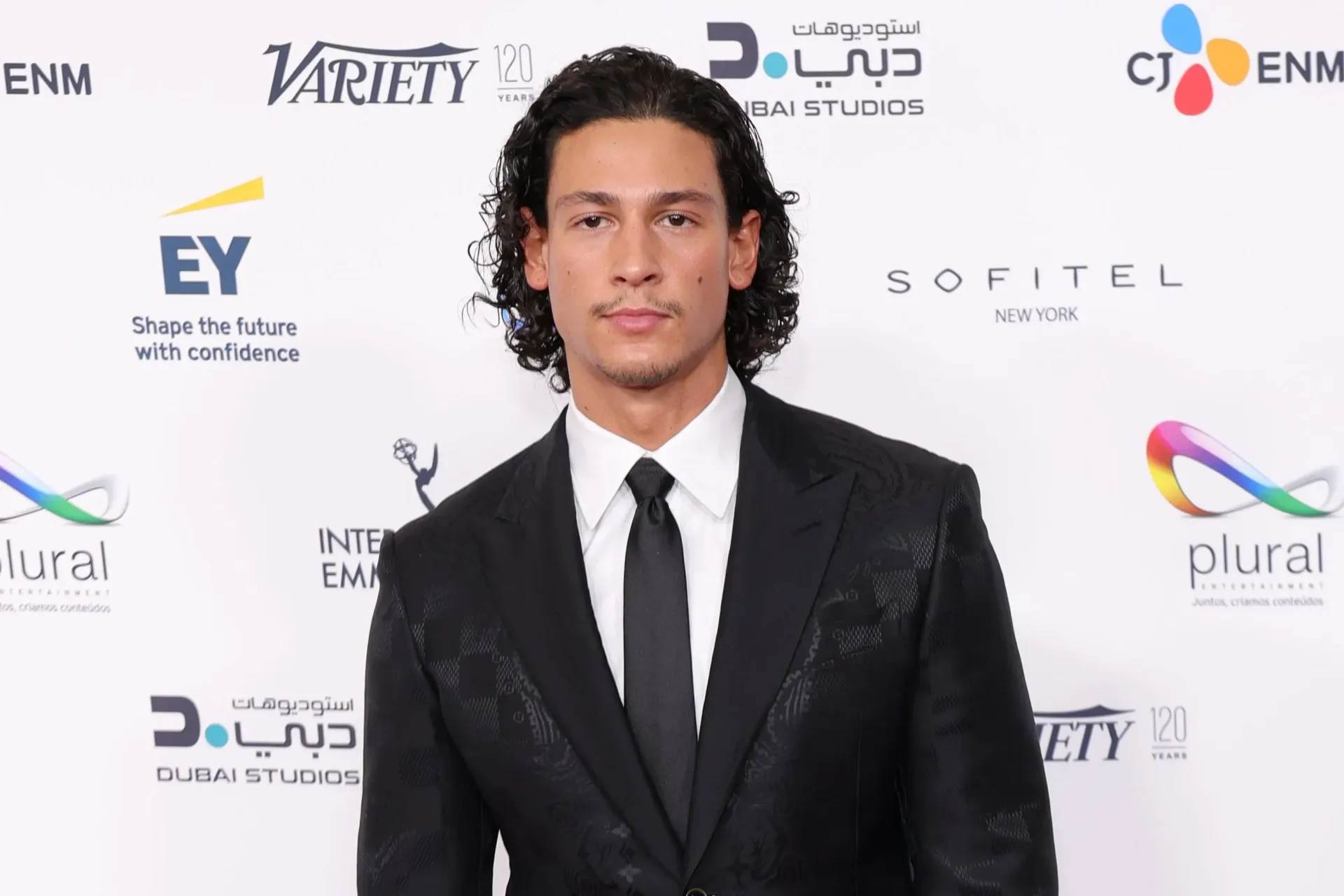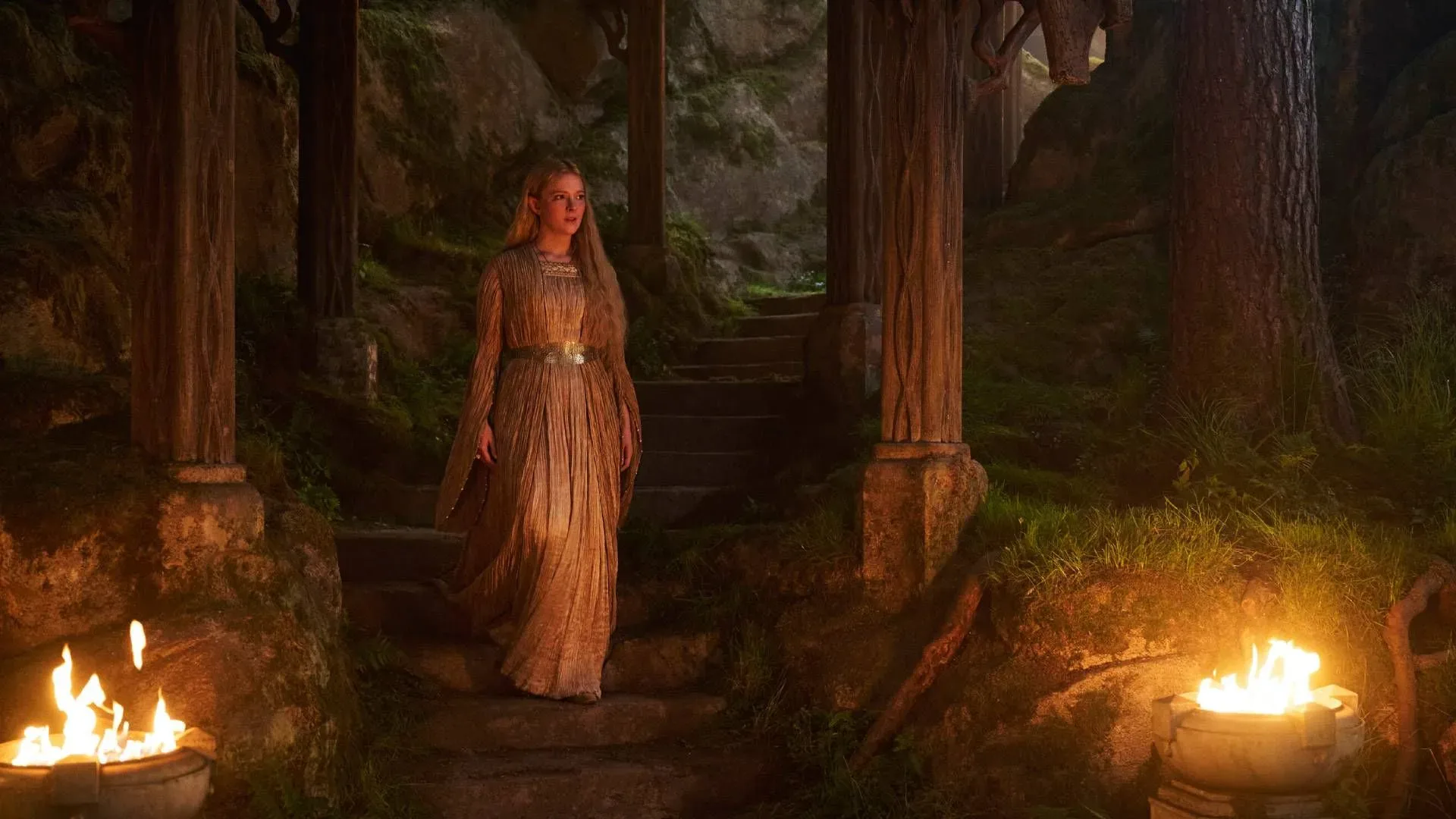
Fourth Wing has formally found the two faces at the center of its Prime Video adaptation. Esther McGregor will play Violet Sorrengail, while Emilio Sakraya has been cast as Xaden Riorson in the television version of Rebecca Yarros’ bestselling romantasy series.
The confirmation turns a major question for readers into a concrete part of the production: the adaptation now has actors for the story’s central heroine and one of its most pivotal characters. Yarros praised the casting process as a worldwide search and welcomed McGregor and Sakraya to the roles, while executive producer and pilot director Lisa Joy described both performers as “brilliant, magnetic actors.”
That language is necessarily promotional, but the significance is straightforward. In a book adaptation with a deeply invested global readership, lead casting is not a small production update. It establishes the onscreen anchors for the emotional stakes, character dynamics and audience expectations that the series will need to carry over from page to screen.
Who McGregor and Sakraya are playing
McGregor takes on Violet Sorrengail, the protagonist of Fourth Wing. The show’s official setup places Violet at Basgiath War College after her mother forces her into its brutal environment. There, she becomes one of hundreds of candidates attempting to join Navarre’s elite dragon riders.
That premise makes Violet more than a conventional student character. She enters an institution defined by competition and danger, with the series’ fantasy-adventure engine built around candidates striving to become riders. Adapting that kind of protagonist means the show must make both sides of Violet’s experience legible: the personal pressure behind her arrival and the larger, high-risk world she is required to navigate.
Sakraya will play Xaden Riorson. The announced material does not provide additional plot details about the character, and the production has not outlined how closely individual story beats, relationships or later developments will follow the books. What is clear is that Xaden is one of the two roles readers most closely associate with the series, which explains why the search for these particular performers was a central early milestone.
Yarros framed the casting in terms of bringing beloved characters to life, an acknowledgment of the adaptation’s balancing act. Readers will bring detailed ideas about Violet and Xaden to the show. A television version, however, also has to introduce them clearly to viewers who may know nothing about Basgiath, Navarre or dragon riders before pressing play.
What “romantasy” means for the adaptation
Romantasy is a commonly used shorthand for fantasy stories in which romance is a major structural element rather than a minor subplot. In this case, the confirmed casting of Violet and Xaden underscores why that label matters. The series is being positioned as a fantasy adventure involving a harsh war college and dragon-rider candidates, but the connection between its two leads is also fundamental to why the story has attracted such a passionate audience.
Related coverage includes Rebecca Yarros Welcomes Esther McGregor and Emilio Sakraya as ‘Fourth Wing’ Leads.
For television, that blend presents two linked creative jobs. One is world-building: establishing the rules, stakes, institutions and visual identity of a fictional setting. The other is character-driven drama: ensuring that the choices and relationships within that setting have emotional weight. Dragons and a military college may make for the obvious spectacle, but viewers need reasons to care about the people facing that danger.
The source material’s premise gives the production a clear foundation. Basgiath War College is not simply a scenic backdrop; it is the place where Violet is compelled to compete among hundreds of prospective dragon riders. That immediately creates a system of pressure, hierarchy and ambition. The adaptation will have to turn those broad stakes into scenes and performances without losing the intimacy that readers attach to Violet and Xaden.
Nothing has yet been announced about the series’ episode count, production timetable, premiere date, additional cast, or the precise visual approach to its dragons and fantasy setting. Those absences are worth keeping in mind. A lead-casting reveal confirms meaningful forward movement, but it does not answer every practical question involved in mounting a large-scale fantasy television series.
The creative team behind the show
Meredith Averill is set to adapt the books for television and serve as showrunner and executive producer. A showrunner is the senior creative leader responsible for guiding a scripted series across its development and production. The role typically connects writing, story decisions and the coordination needed to make a season operate as one coherent show.
Lisa Joy, a co-founder of Kilter Films, is an executive producer and will direct the pilot. The pilot is the first episode, and having its director identified early matters because that episode often establishes the show’s dramatic tone, visual grammar and the audience’s first impression of a new world. Joy’s involvement gives the project a named creative hand at the point where the adaptation will define how its college, characters and dragon-rider premise translate to the screen.
Yarros is also among the executive producers. Her participation does not, by itself, specify the degree of day-to-day creative control or guarantee that every element of the books will transfer unchanged. It does mean the author is part of the producing group attached to the series as it develops.
The executive-producing lineup also includes Kilter Films’ Joy, Jonathan Nolan and Athena Wickham; Outlier Society’s Michael B. Jordan and Elizabeth Raposo; and Premeditated Productions’ Liz Pelletier and Sherryl Clark. Amazon MGM Studios and Outlier Society are behind the project, and the series is planned to run exclusively on Prime Video.
An executive producer credit can cover different responsibilities from project to project, including creative oversight, development, financing-related work or high-level production leadership. The announced credits should therefore be read as the show’s confirmed leadership and producing structure, rather than as a detailed map of who will make every individual decision.
Why this casting announcement carries extra weight
Amazon MGM Studios’ television leadership has explicitly recognized the worldwide fandom built around Fourth Wing and the importance of Violet and Xaden to those readers. That is a useful indicator of the adaptation’s immediate challenge: satisfy an existing audience without making the series inaccessible to newcomers.
Lead casting is where those goals first meet. McGregor and Sakraya will not be judged only on whether they resemble a reader’s private mental image of the characters. They will also need to establish a dynamic that works in an episodic format, where dialogue, silence, pacing and performance must communicate material that a novel can explore through narration and interior perspective.
That is not an argument that a television adaptation must duplicate every detail. Adaptation is a translation between forms, not a one-to-one copy. Prose can spend extended time in a character’s interior thoughts; television instead relies on performances, writing, editing, sound, production design and camera choices to externalize emotion and information. The central issue for this project will be whether those tools preserve the tension and attachment that made the characters resonate with readers.
The fantasy side adds its own demands. The series needs viewers to understand that Violet’s destination is an elite dragon-rider path within Navarre, and it must make the severity of Basgiath feel consequential. Yet spectacle works best when it serves character stakes. A dangerous trial matters because of what a character risks losing, gaining or becoming through it.
That balance is especially relevant to a title described as both fantasy adventure and romantasy. If the setting overwhelms the people inside it, the central relationship can lose texture. If the relationship is isolated from the world’s rules and pressures, the dragon-rider premise can start to feel ornamental. The announced choice to identify Violet and Xaden together places both elements at the forefront from the outset.
What has and has not been confirmed
- Confirmed: Esther McGregor has been cast as Violet Sorrengail.
- Confirmed: Emilio Sakraya has been cast as Xaden Riorson.
- Confirmed: Meredith Averill will adapt the books, showrun and executive produce.
- Confirmed: Lisa Joy will executive produce and direct the pilot.
- Confirmed: The series is backed by Amazon MGM Studios and Outlier Society and is intended to stream exclusively on Prime Video.
- Not announced here: a release date, further cast members, episode count, shooting schedule or detailed adaptation plan.
Those distinctions matter as excitement around a book-to-screen project accelerates. There is now a confirmed lead pair and a defined senior creative team, but the public picture remains an early one. Fans can reasonably look to future announcements for the wider ensemble, the first footage and basic rollout information rather than treating the casting news as evidence that a premiere is imminent.
It is also a reminder of the scale involved in prestige fantasy television. Production questions can be significant even before effects work, locations and ensemble casting enter the public conversation. The broader economics of screen production remain a live industry issue, as seen in our look at California’s film tax-credit landscape and continued production decline, though no filming location or incentive arrangement has been announced for Fourth Wing.
A pivotal early step for Prime Video’s Fourth Wing
For now, the key development is simple: Violet Sorrengail and Xaden Riorson have their television actors. Yarros’ endorsement, the involvement of Averill and Joy, and Prime Video’s commitment to an exclusive release together give the adaptation a clearer creative identity than it had before.
McGregor and Sakraya now inherit the unusual task faced by performers stepping into fervently discussed fictional roles. They must honor the emotional importance readers attach to the characters while making them feel immediate for a television audience encountering the story for the first time. Whether the show succeeds will depend on much more than two castings, but this is the first major indication of who will carry its human center through the world of Basgiath and beyond.