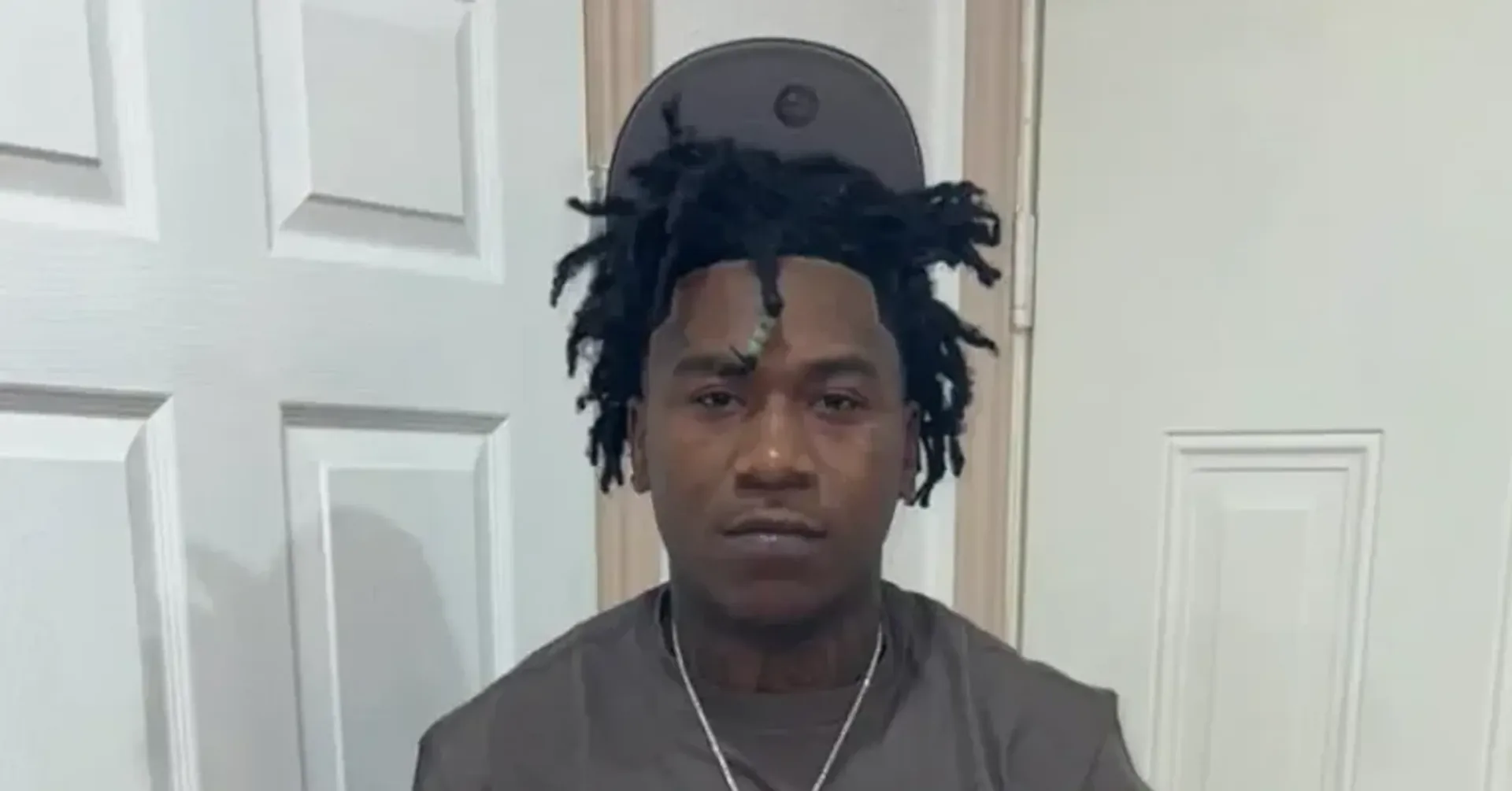
Finesse2tymes has added a new allegation to his public dispute over his relationship with Mob Ties: the Memphis rapper says that getting released from his recording agreement would require nearly $1 million and his royalties.
The alleged terms, attributed by Finesse2tymes to J. Prince Jr., have not been independently verified. No proposed buyout document or specific contractual language has been made public, and there is no public confirmation of what either side may have offered, requested, or rejected. That distinction matters. The allegation is part of an ongoing public disagreement, not an established account of the agreement’s terms.
Still, the claim puts a sharper focus on the core issue behind Finesse2tymes’ complaints throughout 2026: who controls his music and career, how money is accounted for, and what it would take for him to make a clean break.
A dispute that has played out in public
At the beginning of 2026, Finesse2tymes publicly asked to be released from Mob Ties. He indicated that the business relationship had run its course, while also expressing affection for J. Prince Jr. and people associated with the company. His position was not framed simply as a personal falling-out; he presented it as a desire for a new professional start.
He has said his roughly four years with the company did not deliver the financial outcome he expected. As the year went on, he publicly examined and criticized what he described as a 360 arrangement, complained about difficulties surrounding music releases, and said he was paying for music videos himself. By May, he was publicly seeking help to buy his way out of the situation.
The current allegation raises the stakes because it combines two different kinds of value: a large immediate payment and continued participation in future royalty income. A cash buyout is easy to understand as a one-time exit price. Royalties are different: they can refer to money generated over time by recordings, songwriting, or other rights. Without the contract, it is not possible to determine which royalties Finesse2tymes meant, how long any participation would last, or whether the alleged demand concerned existing releases, future work, or something else.
What a 360 deal means—and what remains unknown here
Finesse2tymes has characterized his agreement as a 360 deal. In broad terms, a 360 agreement is a music-industry contract in which a company can share in revenue from several parts of an artist’s career rather than only from recorded music. Depending on the particular agreement, that can include areas such as recordings, live work, merchandise, branding, or other commercial activity.
The key phrase is “depending on the agreement.” There is no single universal 360 contract. The practical effect comes down to definitions, percentages, exclusions, approval rights, contract duration, accounting rules, and the rights each party has after a disagreement. None of those details have been publicly established in this case.
Related coverage includes Finesse2tymes Alleges $1M Exit Demand in Mob Ties Dispute.
Finesse2tymes’ public complaint has been that affiliated companies could participate across multiple areas of his career while expenses and advances were recouped before he received royalties. Recoupment is the process by which a company recovers certain advances or contractually eligible costs from revenue before further payments are made to an artist. An advance is money paid upfront against future earnings rather than necessarily a bonus paid on top of them. Those concepts are central to many music-contract disputes because artists and companies may disagree over which costs are recoupable, what revenue is counted, and when a balance has been recovered.
That does not establish that any specific calculation involving Finesse2tymes was improper. It explains why transparency and contract language are so consequential when an artist believes income has not matched expectations. A dispute over “where the money goes” can involve several separate questions: the amount of revenue generated, the expenses deducted, the timing of statements, the ownership of rights, and the split remaining after recoupment.
Why the alleged royalty component is especially significant
If Finesse2tymes’ claim about surrendering royalties reflects an actual proposal, it would potentially be more consequential than the headline cash figure alone. Royalties can be tied to work that continues to earn after an artist leaves a business relationship. For a performer trying to move on, a release arrangement may therefore be about more than immediate freedom to put out music. It can also determine whether prior work, later income, or both remain economically connected to the former deal.
But the available information does not support assumptions about ownership or payout rights. “Royalties” can be used casually to cover different revenue streams, while contracts often separate recording income from publishing income and other compensation. The public record described here does not provide enough detail to say what rights Mob Ties holds, what rights Finesse2tymes retains, or whether the alleged demand would affect a defined catalog or future projects.
The same caution applies to the nearly $1 million figure. It has been described as an allegation by Finesse2tymes, not as a verified buyout amount. A proposed negotiation position, if one existed, would also not necessarily be a final deal term. Until there is corroboration or a public agreement, the amount should be treated as disputed.
Separate allegations involving a former manager
Finesse2tymes has also made separate claims involving former manager Brandon Mims. In a public rant, he accused Mims of mishandling money connected to his career, including money from a publishing agreement. Those are allegations made by Finesse2tymes and have not been established as fact.
That claim is related to the broader financial frustration he has expressed, but it should not be merged with the Mob Ties dispute. Different people, agreements, revenue streams, and obligations may be involved. Keeping the allegations distinct is important, particularly when the available information does not include contracts, financial statements, or responses resolving the claims.
The career context behind the split
Finesse2tymes’ association with Mob Ties dates to 2022, a period in which his career accelerated after his release from federal prison. His comeback included “Back End,” collaborations with Moneybagg Yo and Gucci Mane, and the release of 90 Days.
That trajectory helps explain why control and release issues have become so public. When an artist’s profile grows, the value of future recordings, brand activity, and business choices can become more significant to every party tied to an existing deal. It also makes the ability to release music a practical concern rather than a purely contractual one. Finesse2tymes has publicly complained of difficulty releasing music, alongside concerns about paying for videos and reaching the financial results he expected.
For fans, the immediate unanswered question is whether the dispute affects what comes next musically. The material available does not confirm a release date, a new agreement, a settlement, or a formal exit from Mob Ties. It only establishes that Finesse2tymes has repeatedly said he wants to leave and now alleges an expensive path to doing so.
What to watch next
The most meaningful developments would be concrete ones: a verified response from J. Prince Jr. or Mob Ties, publicly supported contract details, an announced settlement, or confirmation that Finesse2tymes has been released from his deal. Until then, the dispute remains defined largely by public claims from the artist.
It is also a reminder that music-business headlines can flatten complicated agreements into a single number. The proposed figure may draw attention, but the unanswered questions around royalty rights, recoupment, release authority, and the scope of any 360 participation are what would determine the real shape of an exit.
Music-business disputes often unfold beside the larger culture around releases and promotion; recent audience discussions around the 2026 VMAs’ preliminary multi-platform ratings are another example of how closely industry economics and public attention can travel together. In Finesse2tymes’ case, however, the available facts remain narrow: he wants out, he alleges a steep price for that freedom, and the claimed terms have not been independently verified.