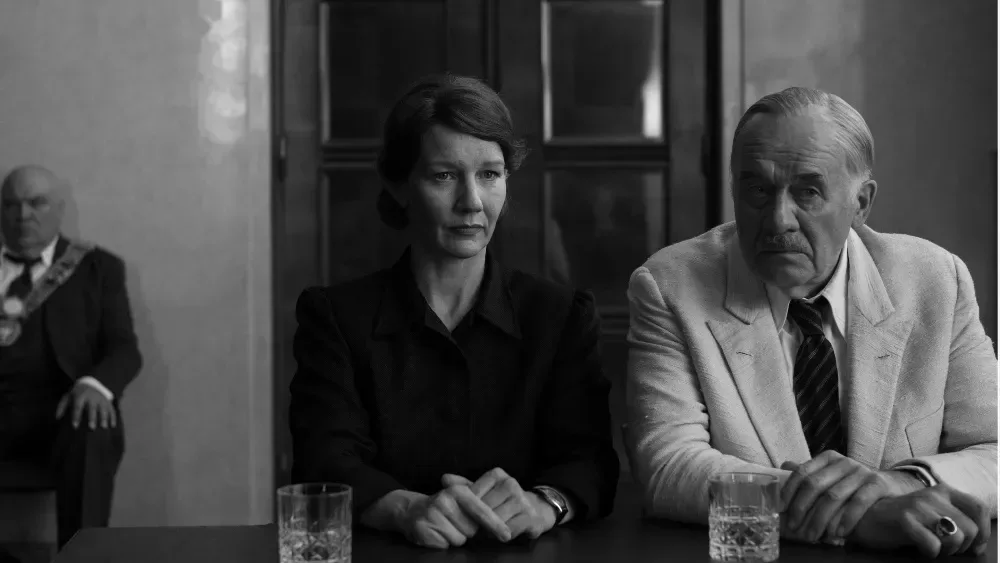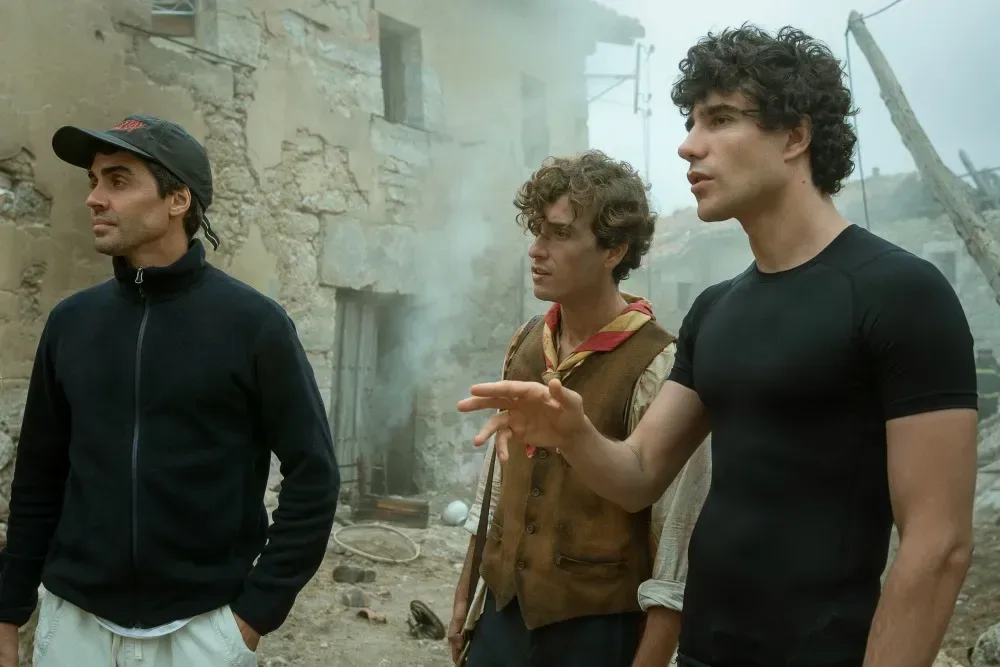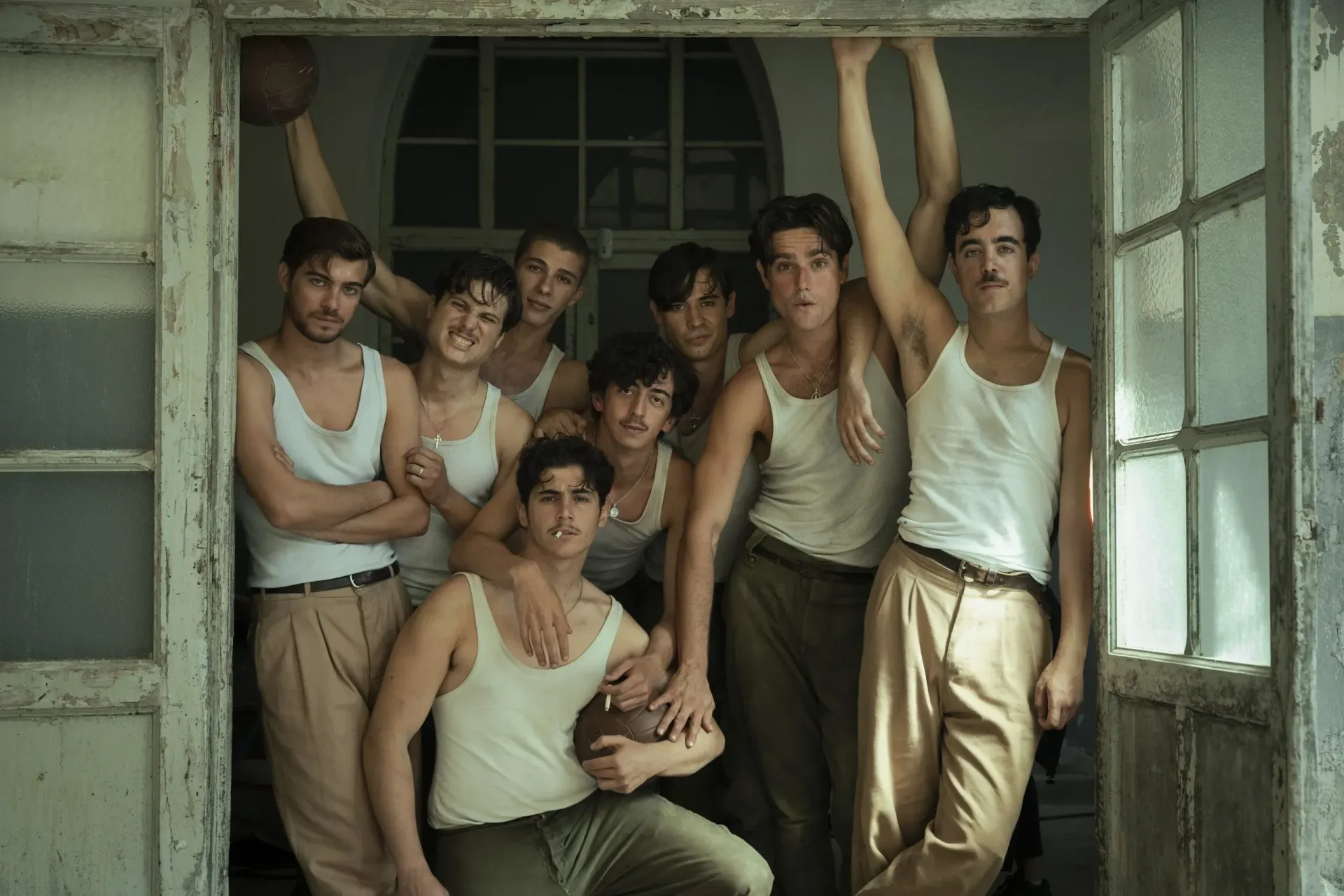
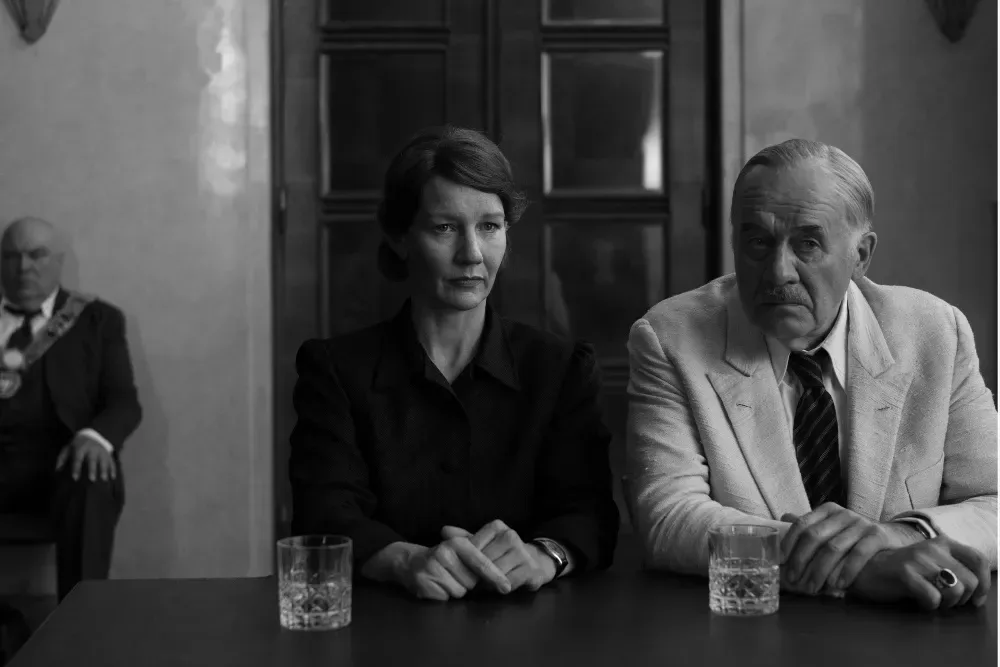
Paweł Pawlikowski’s Fatherland is the most-nominated title in the 39th European Film Awards race, collecting 11 nominations. Javier Calvo and Javier Ambrossi’s La Bola Negra is immediately behind it with 10, establishing a close contest before winners are announced in Athens on Jan. 16.
The nominations were revealed at the Thessaloniki Film Festival in Greece following votes from the European Film Academy’s 5,700 members. While awards tallies never settle the question of a film’s quality, they do show where support has accumulated across the academy’s membership. In this case, the headline is not merely two films receiving a large number of mentions. It is that each has appeared repeatedly in disciplines that collectively describe how a movie is made: directing, writing, casting, cinematography, costume work, editing, hair and make-up, production design and sound.
Fatherland, a Poland-Germany-Italy-France fiction co-production, concerns writer Thomas Mann and his daughter Erika. La Bola Negra, a Spain-France fiction co-production, is a story that spans time and is based on a work by Federico García Lorca. The films previously shared Cannes’ best director prize, and their European Film Awards totals now keep that rivalry firmly in view.
The leading films and what their tallies mean
Nomination totals can be useful shorthand, but they need context. A high count is not a list of guaranteed wins, and it is not necessarily a measure of how many individual voters chose one film over another. It does indicate that a title has remained prominent as nominations were selected across multiple categories.
For Fatherland, that breadth includes nominations for European Film, director, screenwriter, actress, actor, casting director, cinematographer, editor, make-up and hair artist, production designer, and sound. Pawlikowski is also personally named alongside Piotr Wójcik in the editing category, while he shares the screenwriting nomination with Henk Handloegten.
La Bola Negra is similarly represented throughout the crafts. Calvo and Ambrossi are nominated as directors and, with Alberto Conejero, as screenwriters. The film also appears in casting, cinematography, costume design, editing, make-up and hair, production design and sound. Its 10 nominations make it the only film within one nomination of Fatherland.
The distinction matters because the Academy recognizes the work that audiences may feel without isolating it in the moment. Cinematography concerns the image-making choices of the camera and lighting; production design concerns the designed physical visual world of a film; and sound covers the construction and presentation of its sonic environment. Editing, meanwhile, is the selection and arrangement of shots and scenes into the movie’s final rhythm. Recognition in these fields suggests that a title is registering beyond its lead performance or its director’s overall authorship.
In third place by nominations is Cristian Mungiu’s Fjord, with five. The Romania-France-Norway-Denmark-Sweden-Finland co-production is also a Palme d’Or winner. Markus Schleinzer’s Rose follows with four nominations. May el-Toukhy’s Woman Unknown, a Denmark-Latvia-Sweden production and Venice Golden Lion winner, has three.
Related coverage includes ‘Fatherland’ Leads 39th European Film Awards Nominations With 11.
Several other titles landed two nominations: Bunker, Coward, Elsinore, Everytime and Minotaur. That spread is an important reminder that the awards field is larger than the two frontrunners. A film can have a relatively modest total while still be competitive in a major individual category, particularly acting, directing, writing or a technical specialty.
European Film is a cross-format category
The European Film category brings together five fiction nominees with the films nominated in the separate documentary and animation categories. That structure makes the top film field wider than a standard fiction-only best-picture slate.
The five fiction nominees are Fatherland, Fjord, La Bola Negra, La Gradiva and Woman Unknown. They are joined by the animation nominees In Waves, Iron Boy, Jim Queen, Lucy Lost and Viva Carmen, plus documentary nominees Letters From the Silenced Country, NAZA, Rehearsals for a Revolution, To Hold a Mountain and Whispers in the Woods.
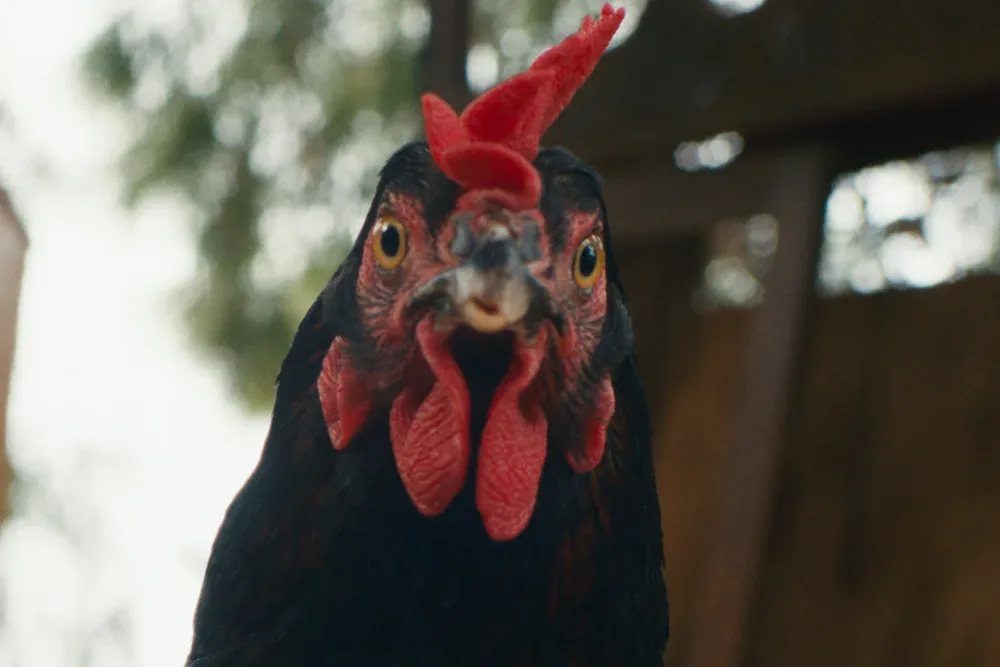
That setup gives animation and documentary nominees a place in the overall European Film competition without removing the medium-specific awards. It also means viewers following only the films with the biggest fiction nomination totals would miss a substantial part of the final field. For another example of the range that film coverage can encompass, see our look at a chicken escape story made with unusual urgency and humanity.
Director and screenplay races remain tightly linked
The director slate contains Calvo and Ambrossi for La Bola Negra, Mungiu for Fjord, Pawlikowski for Fatherland, Sandra Wollner for Everytime, and Andrey Zvyagintsev for Minotaur. Minotaur won the Cannes Grand Prix.
Four of those director contenders also appear in the screenwriter category. Calvo, Ambrossi and Conejero are nominated for La Bola Negra; Mungiu for Fjord; Pawlikowski and Handloegten for Fatherland; and Wollner for Everytime. Zvyagintsev shares the remaining screenplay nomination with Simon Liashenko for Minotaur.
This overlap does not mean direction and screenplay are interchangeable. Screenwriting recognition addresses the writing credited to the film, while directing recognizes the filmmaker’s overarching realization of the work. Yet the identical five-film concentration across these two categories makes clear that the Academy’s director and writer voters found a common group of films compelling.
Acting categories feature a notable double nomination
Sandra Hüller is nominated twice for European Actress: once for Fatherland and again for Rose. Her fellow nominees are Mathilde Arcel for Woman Unknown, Penélope Cruz for Bunker, Renate Reinsve for Fjord and Léa Seydoux for Gentle Monster.
The European Actor nominees are Swann Arlaud for A Man of His Time, Javier Bardem for The Beloved, Andrew Scott for Elsinore, Sebastian Stan for Fjord and Hanns Zischler for Fatherland. The acting fields consequently extend attention to films that have not amassed the largest totals elsewhere, including The Beloved, A Man of His Time and Gentle Monster.
For the leading films, the acting nominations underline different strengths. Fatherland has both Hüller and Zischler in contention. Fjord has Reinsve and Stan, in addition to Mungiu’s directing and writing nominations and its European Film placement. La Bola Negra, by contrast, is defined in this slate by its creative and technical nominations rather than a lead acting nomination.
The craft contests to watch
The crafts have yielded some of the clearest head-to-head matchups between the overall leaders. Fatherland and La Bola Negra meet in casting, cinematography, editing, make-up and hair, production design and sound.
- Casting: Nina Haun, Magdalena Szwarcbart and Karen Lindsay Stewart are nominated for Fatherland; Eva Leira and Yolanda Serrano for La Bola Negra; and Jessica Ronane for Elsinore.
- Cinematography: Łukasz Żal is nominated for Fatherland, Gris Jordana for La Bola Negra, and Frank van den Eeden for Coward.
- Editing: Pawlikowski and Piotr Wójcik are nominated for Fatherland, Alberto Gutiérrez for La Bola Negra, and Gesa Jäger for Yellow Letters.
- Production design: Katarzyna Sobańska and Marcel Sławiński represent Fatherland; Roger Bellés represents La Bola Negra; Olivier Meidinger is nominated for Rose.
Costume design is led by Doris Bartelt for Rose, Ana López Cobos for La Bola Negra, and Rebecca Richmond and Jūlija Volkinšteine for Woman Unknown. In original score, the nominees are Volker Bertelmann for Bunker, Tara Nome Doyle for Rose and Alberto Iglesias for Bitter Christmas.
The sound lineup includes Robert Farr, Lars Ginzel and Benjamin Hörbe for NAZA; Ginzel and Tarn Willers for Fatherland; and Rodrigo Madrigal, Anna Harrington, Alejandro López and Mayte Cazorla for La Bola Negra. That list places a documentary alongside the two overall nomination leaders, demonstrating again that the technical categories can point to a broader group of contenders than the main fiction race alone.
Animation, documentary and first-feature nominees
The European Animation Film nominees are Phuong Mai Nguyen’s In Waves, Louis Clichy’s Iron Boy, Marco Nguyen and Nicolas Athané’s Jim Queen, Olivier Clert’s Lucy Lost, and Sébastien Laudenbach’s Viva Carmen.
For European Documentary, the nominees are Andrei Kutsila’s Letters From the Silenced Country, Yuval Abraham and Rachel Szor’s NAZA, Pegah Ahangarani’s Rehearsals for a Revolution, Biljana Tutorov and Petar Glomazić’s To Hold a Mountain, and Vincent Munier’s Whispers in the Woods. NAZA previously won Venice’s Special Jury Prize, while Rehearsals for a Revolution won Cannes’ documentary prize.
The European Discovery – Prix FIPRESCI is specifically for a director’s first full-length fiction film. Its nominees are Kosara Mitic’s 17, Beatrice Gibson’s At Night, Marlene Emilie Lyngstad’s Cute, Pierre Le Gall’s Flesh & Fuel, Mads Mengel’s The Guest and Hosam Abu Dan’s Thirteen in Gaza. The award is decided by a committee bringing together FIPRESCI members and experts appointed by the Academy board, rather than by the full membership process described for the main nominations.
Nominations for the European Young Audience Award and European Short Film Award have already been announced, and the recipient of the European Achievement in World Cinema Award has already been revealed. The remaining competitive question is how the Academy’s final votes will divide between a broad Fatherland lead and an almost equally expansive showing for La Bola Negra when the ceremony arrives in Athens.