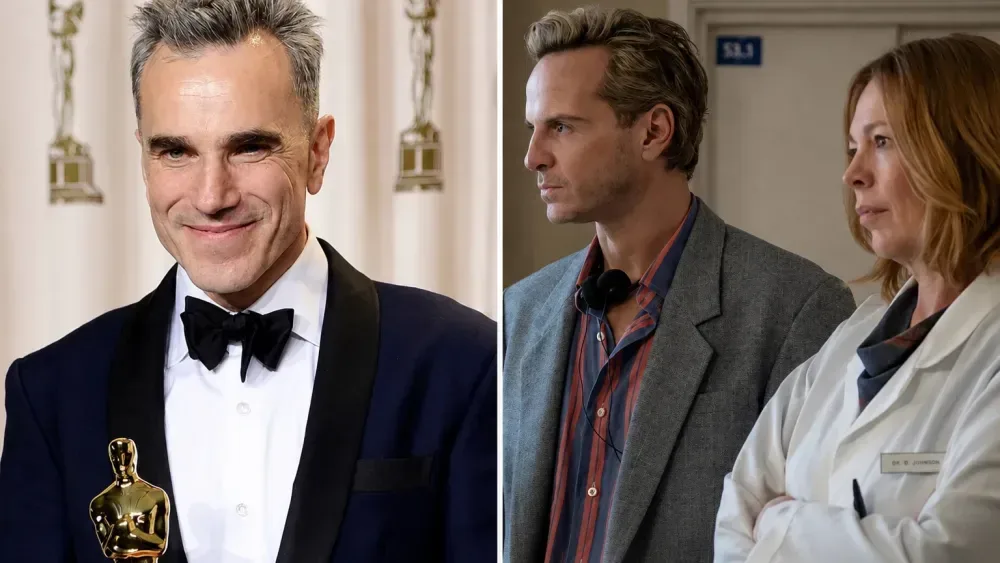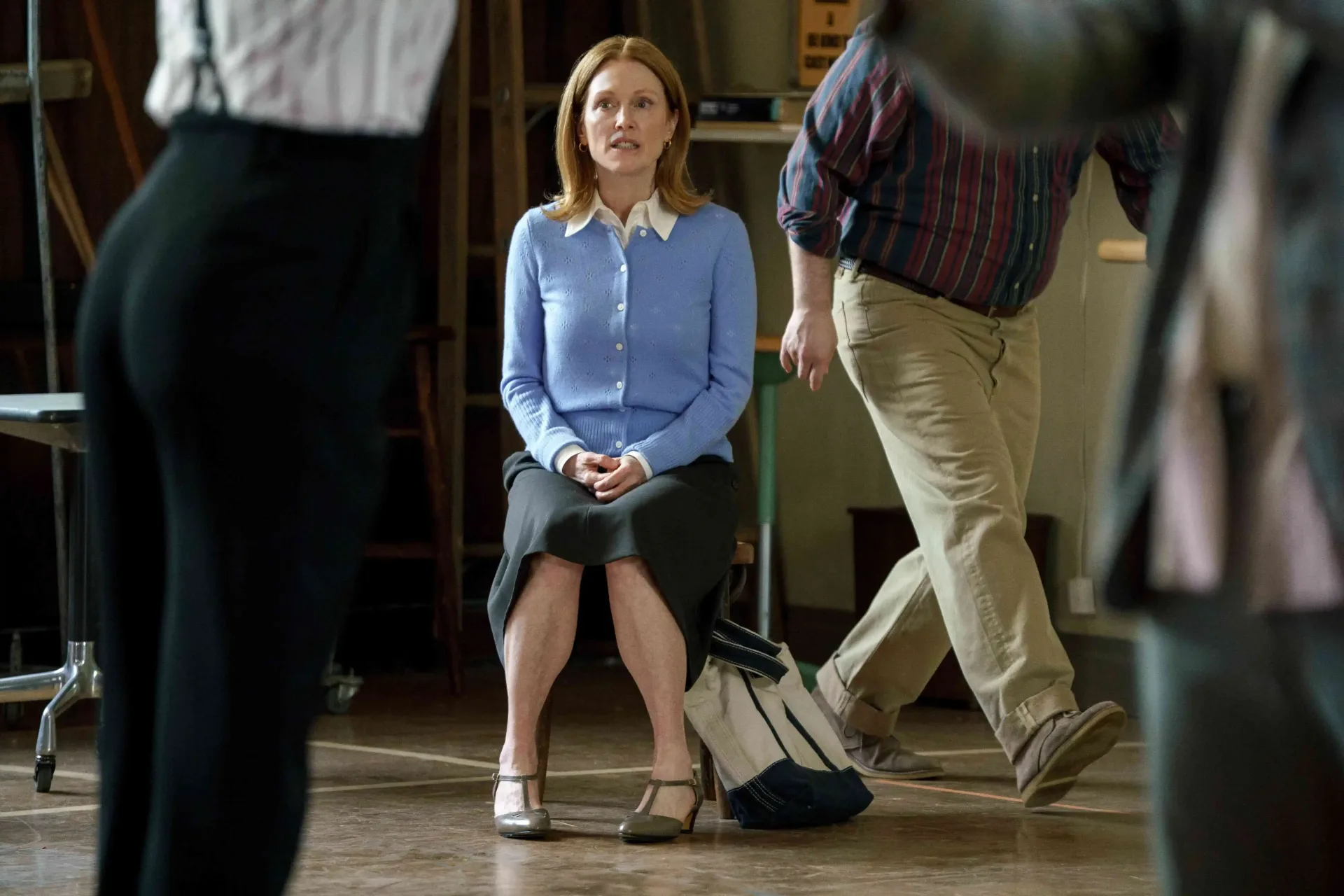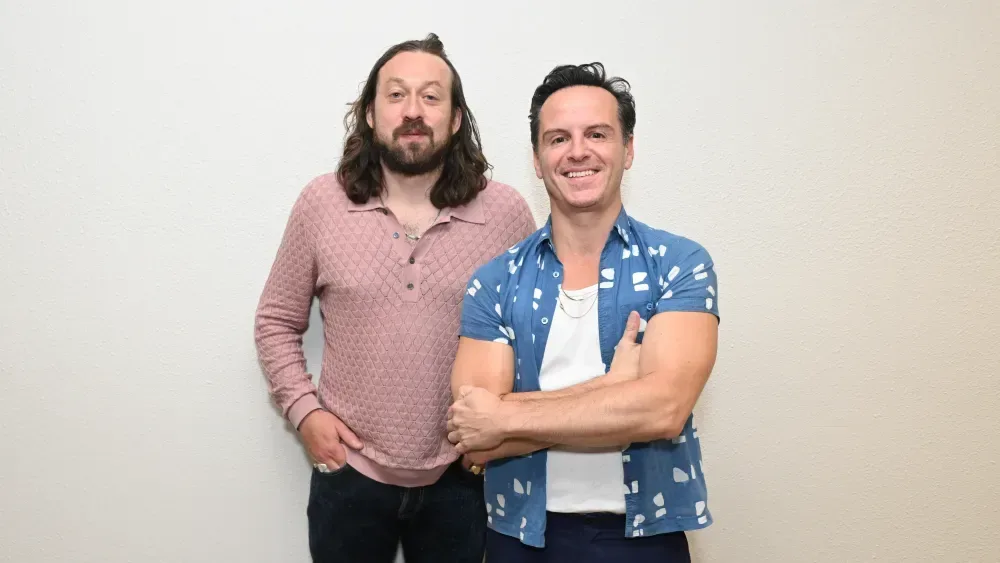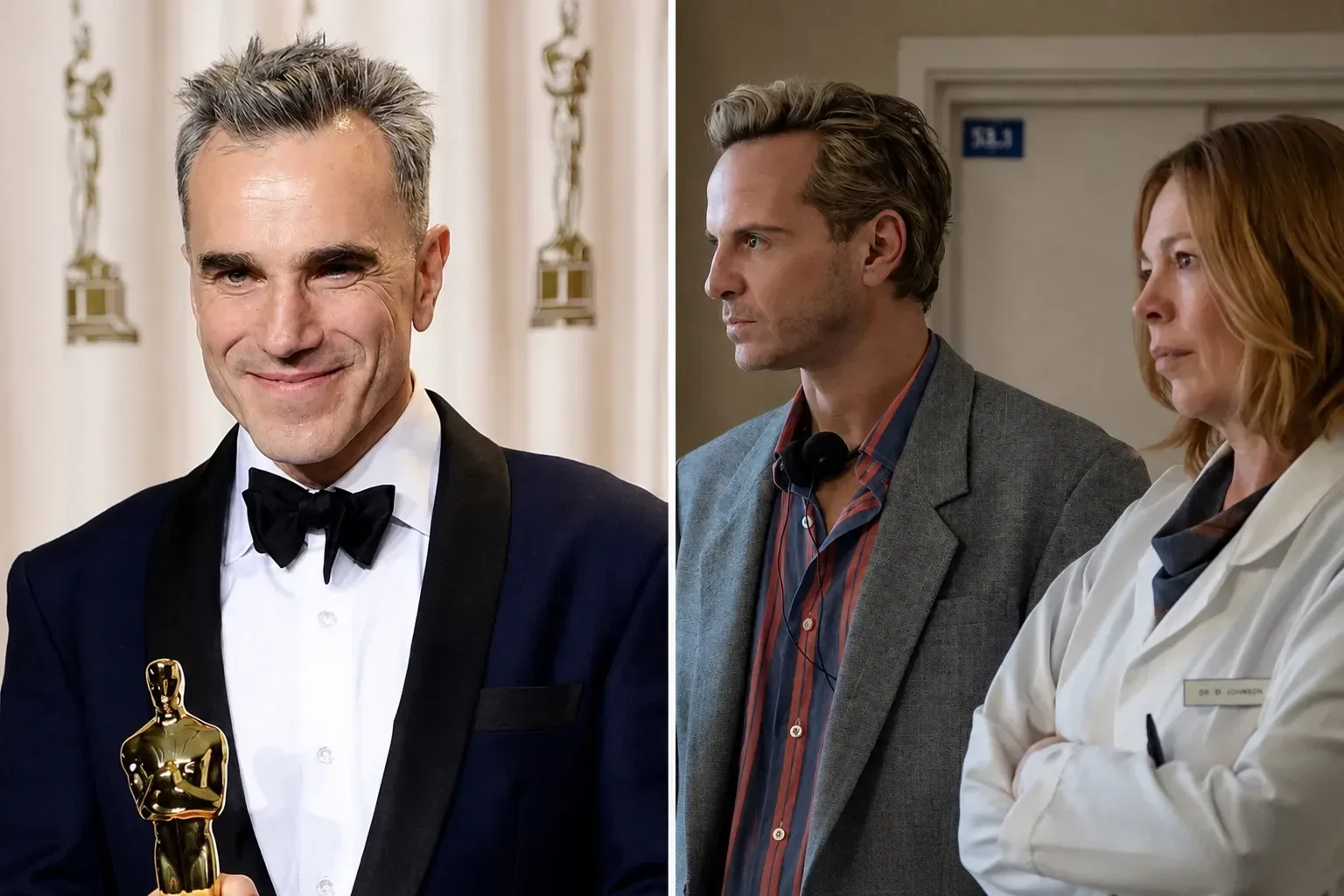
Elsinore has arrived with one of those pieces of theatre history that sounds too strange to have happened: Daniel Day-Lewis, performing Hamlet at London’s National Theatre in 1989, stopped during the play, left the stage and did not return to the production. But Simon Stone’s film is not simply a replay of a famous backstage calamity. Its central story is the life of Scottish actor Ian Charleson, who stepped into the role at an intensely difficult moment in his own life.
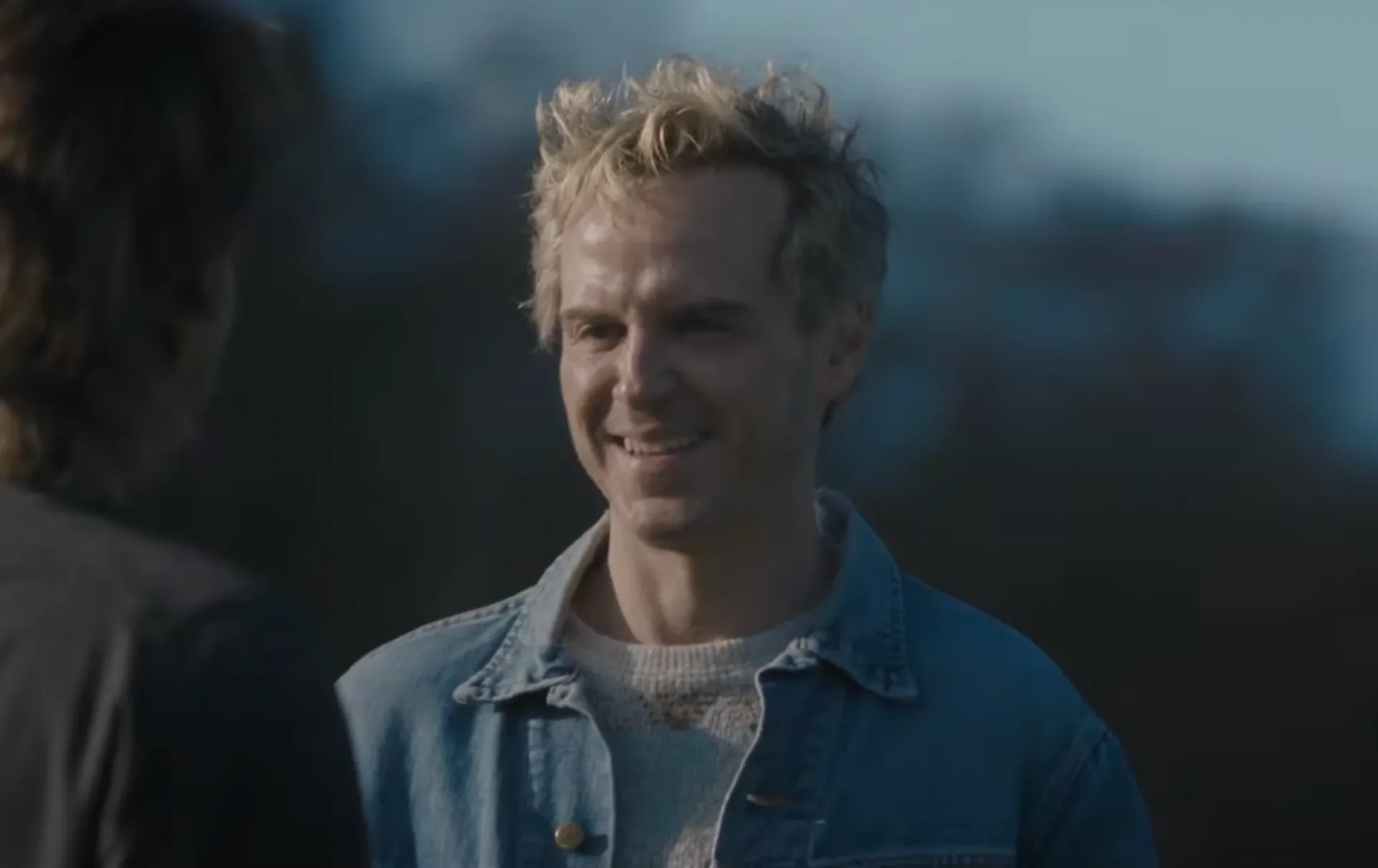
Andrew Scott plays Charleson in the film, which was shown at Telluride ahead of a planned theatrical release from Focus Features on November 20. The project uses the Day-Lewis episode as a dramatic rupture: a public collapse in one actor’s career that opens an extraordinary, painful opportunity for another. It is a setup with all the mechanics of a Shakespearean plot—absence, succession, illness, timing and the unnerving pressure of being asked to embody a role everyone already considers immense.
For viewers who know Day-Lewis largely through films such as My Left Foot and Lincoln, the incident is a reminder that even actors commonly associated with total control can become tied to a moment of startling uncertainty. For people who know Charleson through Chariots of Fire, it brings attention back to an actor whose stage work and final stretch of life deserve their own spotlight.
A walk-off that became theatre legend
Elsinore begins in 1989, amid a National Theatre production of Hamlet. During the pivotal scene in which Hamlet encounters his father’s ghost, the actor playing Hamlet freezes, then exits. The movie follows the immediate blast radius of that decision: shocked patrons, rattled colleagues and a production suddenly forced to confront the fact that the show cannot continue as planned.
Stone reportedly gives the scene a touch of bleak comic precision. A house manager watches events unfold via CCTV and coolly recognizes that something is going very wrong. The camera then tracks the departing actor to his dressing room, where the name on the door makes clear that the actor is Day-Lewis. The reveal turns a historical footnote into a piece of movie storytelling without separating it from the upheaval it caused for everyone in the building.
The details of why Day-Lewis left have remained a subject of debate for decades. The enduring legend held that, during the scene, he saw his late father, poet Cecil Day-Lewis. The actor later rejected that account in 2012, even though earlier comments had helped sustain the more supernatural version of events. The ambiguity matters. It means the episode is not neatly reducible to a single anecdote about ghosts, temperament or supposedly excessive commitment to a role.
That uncertainty also explains why the story has lasted. Theatre is built on liveness, and the most lasting legends are often born when the carefully managed machine stops working in front of an audience. A film can recreate the visible interruption—the silence, the exit, the backstage panic—but it cannot offer a definitive answer where the historical record remains unsettled. Elsinore appears to use that gap as part of its texture rather than pretending to close it.
Ian Charleson’s opening, and the stakes behind it
Charleson had a defining film credit in Chariots of Fire, but Elsinore places him at a point when he felt professionally diminished. Day-Lewis’ departure offered him the opportunity to play Hamlet in the very production that had been thrown into crisis. Producer Gabrielle Tana described it as a sudden chance for Charleson to do the work he had wanted to do—a carpe diem moment emerging from disaster.
Related coverage includes ‘Elsinore’ Brings Daniel Day-Lewis’ ‘Hamlet’ Exit Back to the Screen.
There was an agonizing reality alongside that professional breakthrough. Charleson was living with complications from end-stage AIDS. He withdrew after receiving rave notices and died seven weeks later. Those facts give the role’s urgency an entirely different scale. The familiar industry language of a “big break” is not enough here. This was a major artistic opportunity arriving against an unforgiving clock.
That combination is what separates Elsinore from a movie built merely around juicy theatrical gossip. Day-Lewis’ departure is the event that catches attention, but Charleson is the person whose experience provides the film’s emotional center. The story is about an actor being given a chance, the cost of taking it and the remarkable fact that the chance came at all.
It is also a story about how artistic histories get organized. A sudden departure by a famous performer can become the headline that survives for generations. The actor who arrives afterward, does acclaimed work and faces a private health crisis may be treated as a supporting detail in the same retelling. By foregrounding Charleson, Elsinore shifts the perspective. It asks audiences to see the vacancy not as the end of one anecdote, but as the beginning of another person’s defining chapter.
Handling real people without treating them as props
Depicting artists and events that are both real and emotionally raw brings clear responsibilities. The filmmakers and producers sought to approach Charleson’s story sensitively. Before the Telluride screening, a rough cut was shown to representatives for Day-Lewis, and the production received their blessing. That does not turn the film into an official account of every question surrounding the 1989 performance, but it signals an effort to handle the Day-Lewis material with care.
The movie’s reported structure is important on that point. A recreation of the walk-off might easily invite viewers to make Day-Lewis’ personal circumstances the entire subject. Instead, the incident serves as the point where several lives and pressures collide: a company managing a crisis, an audience realizing it is witnessing something exceptional for all the wrong reasons, and Charleson confronting an opportunity that cannot be postponed.
Day-Lewis was under enormous scrutiny in that era. He had completed My Left Foot and was approaching the first Academy Award of his career, which he won in 1990. In retrospect, the theatre incident sits beside the mythology that eventually formed around his intensely immersive preparation and selective public persona. In 2012, he reflected that he worked in a particular way and did not feel compelled to apologize for it, while also describing a British press culture that had characterized him as unhinged and would not let the idea go.
That later reflection does not solve the 1989 mystery. What it does provide is a useful warning against transforming an actor’s difficult moment into a simplistic diagnosis. The stage exit has survived because it is spectacular, but spectacle can flatten people. Elsinore has the potential to recover some of the human complexity behind the legend, especially by keeping Charleson’s life at the center of the narrative.
Why this theatre story lands now
There is a particular appeal in films about live performance because they reveal how fragile a polished production really is. The audience sees the completed illusion; performers and crews know how much can go sideways before, during and after curtain. A leading actor stopping in the middle of Hamlet is an extreme instance, but it magnifies a truth that every theatre company understands: the show is only ever one missed cue, illness or personal emergency away from becoming something else.
Elsinore also belongs to a larger current of stories interested in the intensity of stage work and the chaos around it. For another recent look at the complications surrounding community theatre, see ‘The Debut’ and its community-theater spiral. Stone’s film, however, works with stakes rooted in a real life cut short and an incident whose exact cause remains unresolved.
Its Shakespeare connection is more than a convenient title. Hamlet is a play about grief, haunted memory, performance, indecision and the impossible demand to act when certainty is unavailable. The 1989 interruption became notorious partly because it occurred during the ghost scene, where the play is already asking whether what is seen can be trusted. Charleson’s later entrance into the production gives the story a counterpoint: where one actor’s path abruptly ended, another found the role that would become inseparable from his legacy.
Focus Features is set to release Elsinore in theaters on November 20. Before then, the film’s early reception has already ensured that an old theatrical mystery is being discussed again—not only as Daniel Day-Lewis lore, but as a doorway into Ian Charleson’s extraordinary final performance.