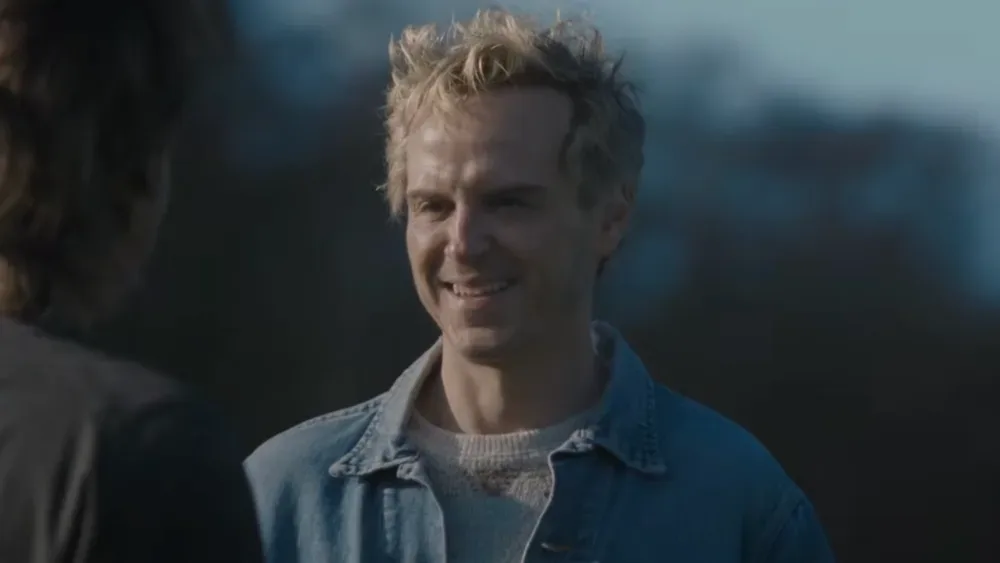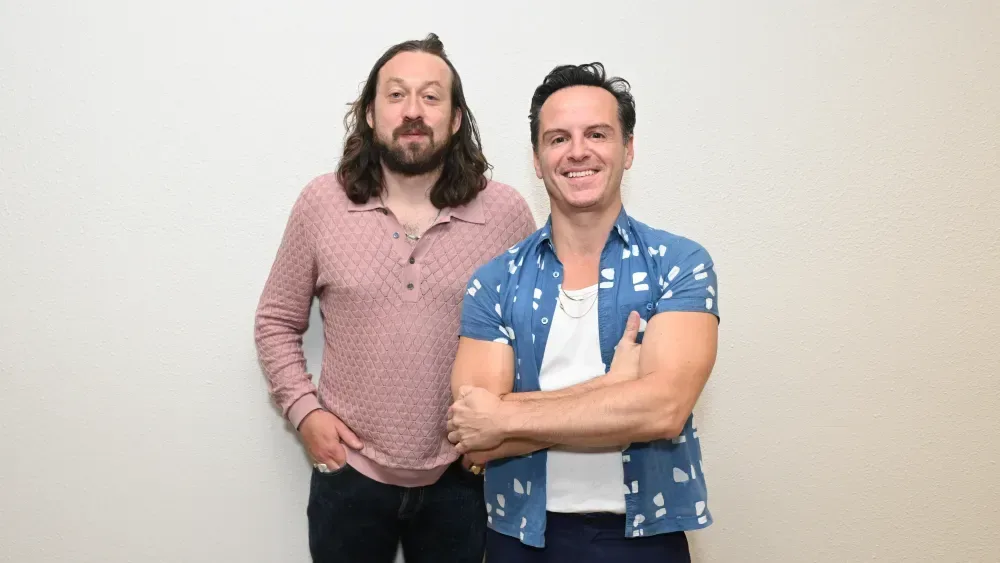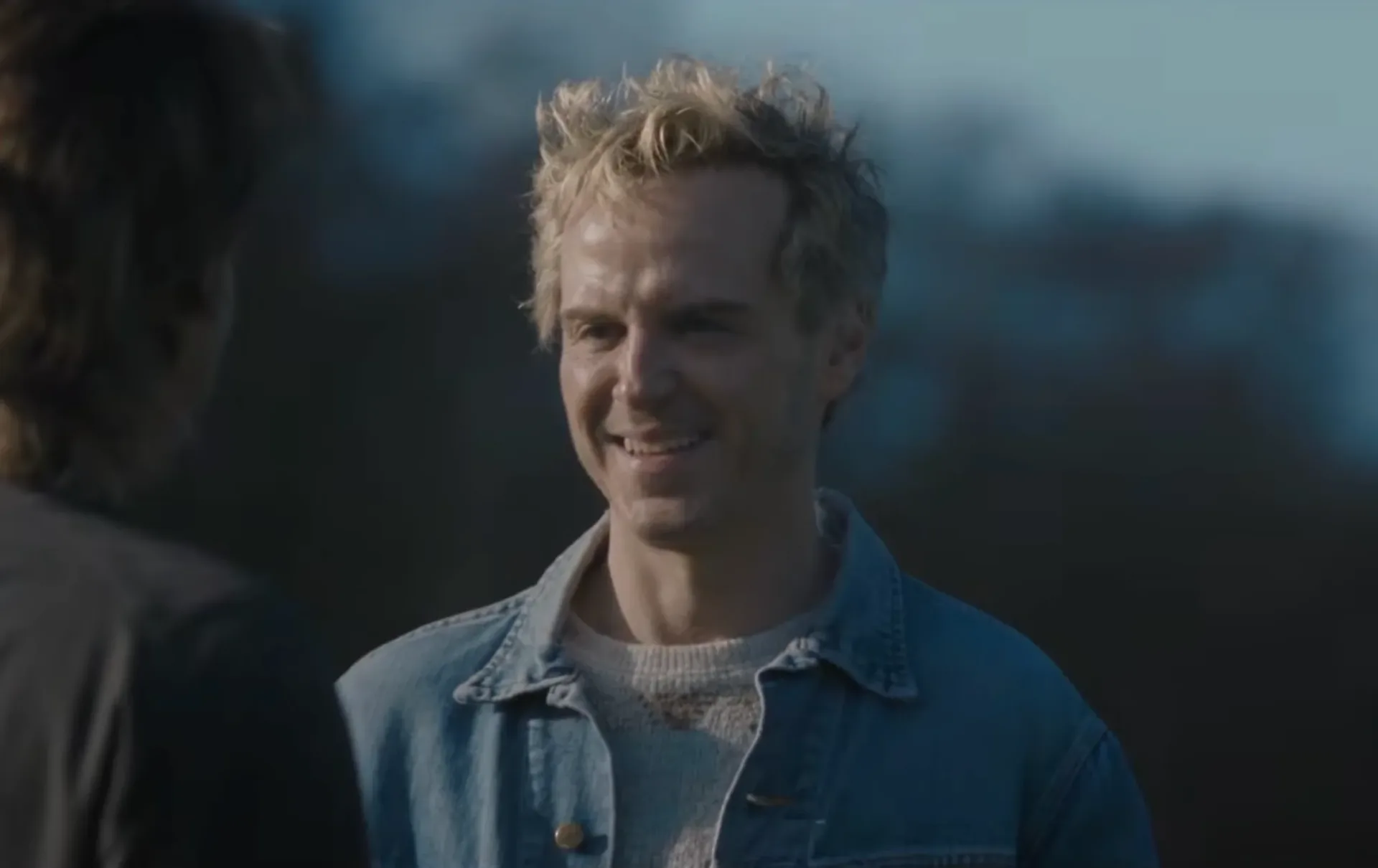
A trailer is now available for Elsinore, the Simon Stone-directed biographical drama starring Andrew Scott as Ian Charleson. The film is scheduled for a theatrical release on Nov. 20, with Stephen Beresford credited as writer.
Its subject gives the project an unusually concentrated dramatic frame: Charleson was an actor celebrated for his screen and stage work, whose opportunity to take over the title role in Hamlet at London’s National Theatre arrived while he was seriously ill. Elsinore centers on that intersection of performance, mortality and professional resolve rather than treating a life story as a simple chronology of career highlights.
What Elsinore is about
The film presents Charleson as a gifted performer confronting his own mortality with honesty, wit and grace. Its premise is that his final challenge becomes a defining achievement, with the work he does onstage becoming meaningful not only to him but to people around him. That places the story in the tradition of performance dramas where the act of appearing before an audience is part of the narrative’s emotional engine, not merely the backdrop.
Charleson is widely associated with Chariots of Fire, but the key event behind Elsinore is rooted in theatre. Daniel Day-Lewis was playing Hamlet at the National Theatre when he stopped during a performance, left the stage and did not return to the production. Charleson subsequently had the chance to assume the role.
The opportunity carried exceptional weight. Hamlet is among theatre’s most demanding leading parts, requiring an actor to sustain a character who is at once grieving, analytical, volatile, funny and immobilized by competing obligations. In practical production terms, a replacement is also asked to step into a company and a staging already in motion. The drama’s title invokes Elsinore, the Danish castle that serves as the central setting of Shakespeare’s play, signaling that the theatrical world of Hamlet is integral to Charleson’s story.
At the time he took on the part, Charleson was receiving strong notices while dealing with complications from AIDS. He withdrew seven weeks later and died. Those facts give the film’s stated emphasis on courage and healing a clear foundation, while also making restraint important: the story concerns an actor’s illness, but it is specifically framed around his work, his relationships and the impact of a performance made under profound personal pressure.
Why Andrew Scott is a natural focal point
Scott leads a substantial ensemble as Charleson. The supporting cast includes Olivia Colman, Billie Piper, Johnny Flynn, Luke Thompson, David Dawson, Matthew Beard, Joe Locke, Monica Dolan, Georgie Glen, Sadie Soverall, Adeel Akhtar, Dickie Beau, Kadiff Kirwan, Juliet Stevenson and Peter Mullan.
The available information does not identify each character, so it would be premature to assign specific real-life roles to the supporting players. Still, the size and range of the cast suggest a story that can place Charleson within a broader professional and personal circle, rather than presenting his final period in isolation. That matters for a narrative about theatre, an art form made through a company even when one performer occupies the center of the stage.
Related coverage includes Andrew Scott’s ‘Elsinore’ Sets Nov. 20 Theatrical Release After Trailer Debut.
Early festival response has put particular attention on Scott’s work. Elsinore premiered at the Telluride Film Festival and later played the Toronto International Film Festival, where it received the International People’s Choice Award. Commentary from the festival run described Scott’s performance as deeply layered and moving, and positioned it as a major awards-season contender.
That reception does not tell audiences everything about the finished film, and an audience prize is not a substitute for individual viewing. It does, however, indicate that the film connected strongly with festival attendees. For a biographical drama about illness and artistic endurance, that response may be especially notable: stories of real people can easily become reverential summaries, while a successful dramatic portrayal needs to make the person feel immediate and complicated.
A drama about acting under pressure
Elsinore arrives with an inherently layered premise. Charleson was an actor portraying Hamlet, while Scott is portraying Charleson as he prepares for and delivers that work. This is sometimes called a performance-within-a-performance structure: the audience is asked to read the character’s life through the choices he makes in another role. Here, the connection is unusually direct because Hamlet itself is a play preoccupied with death, grief, public duty and the gap between outward action and private feeling.
That does not mean the film needs to treat Shakespeare as a coded explanation for Charleson’s life. Rather, the overlap gives Stone and Beresford a potent dramatic tool. Rehearsal, backstage preparation and the pressure of a live appearance can show how an actor’s craft operates at a moment when the stakes outside the theatre are equally acute.
The material also reflects a specific human cost of the AIDS crisis without reducing it to a historical footnote. The supplied description emphasizes Charleson’s confrontation with mortality and the inspiration felt by those around him. In that framing, the story’s significance comes not from abstraction but from one performer’s choices in a finite period of time: accepting a formidable role, doing the work, and leaving an impression on colleagues and audiences.
For viewers who follow performance-centered stories across media, the film’s theatre focus may be its chief attraction. Games and screen entertainment often borrow the vocabulary of performance—roles, scripts, staging and an audience—yet Elsinore is concerned with the literal discipline behind those terms. A lead actor must meet a fixed curtain time, inhabit a role in front of a live crowd and continue carrying a production night after night. The pressure cannot be paused, replayed or edited after the fact.
That sense of shared, time-bound experience also helps explain why live events continue to matter across entertainment. Recent reporting on the rapid sellout of a Wuthering Waves concert stop offers a modern example of audiences attaching value to gathering for a performance as it happens. Elsinore concerns a very different medium and period, but its story likewise rests on the singular intensity of live work.
What the trailer release confirms
The trailer’s release puts Elsinore into its next public phase following its festival appearances. Confirmed details are straightforward: Scott plays Charleson; Stone directs; Beresford wrote the screenplay; and the film is set for theaters on Nov. 20. The festival journey includes Telluride and Toronto, along with the International People’s Choice Award at the latter event.
Beyond those specifics, audiences should avoid assuming details that have not been established, including the exact scope of the film’s timeline, how it portrays Charleson’s earlier career, or which historical figures are played by the ensemble. The central outline is already compelling enough: an acclaimed Scottish actor, suffering complications from AIDS, takes on Hamlet after an extraordinary opening appears at the National Theatre.
With Scott at its center and a large cast around him, Elsinore has the ingredients of an actor-focused drama in which a famous role is not the destination but the setting for a larger account of resilience, artistry and the people affected by both.