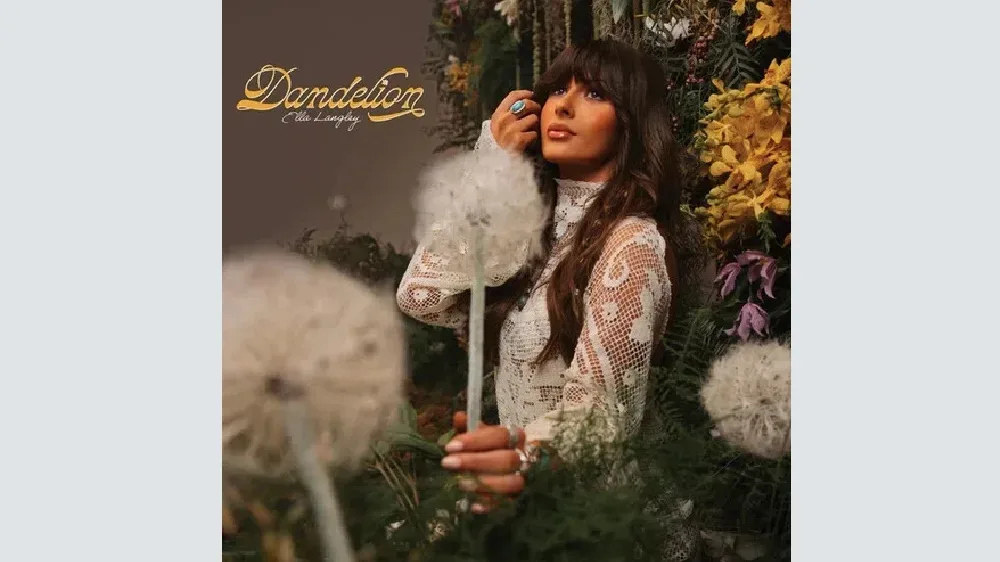
Ella Langley’s “Choosin’ Texas” has spent 23 weeks at No. 1 on the Billboard Hot 100, passing the 22-week mark held by Mariah Carey’s “All I Want for Christmas Is You.” It is an enormous statistical achievement: by mid-August, the song had accumulated 911 million on-demand U.S. streams and 1.26 billion globally.
Yet the achievement has come with an odd companion debate. Plenty of listeners say they have not heard the record at all. That is not necessarily an indictment of Langley or the song, and it does not erase the audience that has made the track historically successful. It is instead a useful illustration of a changed music culture: a song can be the most consumed record in the country without becoming a shared reference point for everybody else in it.
For players, collectors, and anyone accustomed to algorithmically sorted entertainment libraries, the underlying feeling should be familiar. Two people can each spend a lot of time with games, music, movies, and short-form video while having almost no overlap in what they encounter. Today’s biggest song may be genuinely inescapable inside one listener’s feed, genre station, friend group, and local public spaces—while remaining absent from another person’s day altogether.
A chart record is real, but it measures something specific
The Hot 100 is a ranking, not a survey asking whether every household can hum the chorus. Its modern results quantify commercial activity, including consumption and radio exposure. That makes a 23-week No. 1 run a real and meaningful measure of sustained demand. It means “Choosin’ Texas” maintained enough activity to outpace every competing song across nearly half a year.
But a chart is not a cultural-recognition meter. On-demand streams are listener-selected plays through digital services, and they are powerful evidence that people are choosing a song. They do not establish how many unrelated communities recognize it, how often it enters public places, or whether someone outside its audience has encountered it by accident.
That distinction matters because older ideas of a “smash hit” bundled several different things together: sales, radio rotation, visibility, familiarity, annoyance, admiration, parody, and general public awareness. A song could be disliked by someone and still be part of their life because it was on the radio, playing in a store, or used in a television segment. Today, the same chart result can arise from huge, repeated engagement within a more bounded set of listening ecosystems.
That is not a loophole or a lesser achievement. It is simply what the measurement measures. Langley does not need every listener in America to know her song in order for the song to lead the Hot 100 for 23 weeks. The record demonstrates the scale of her audience’s activity; it does not require the old assumption that every other audience has been pulled into the same room.
Why the Mariah Carey comparison feels larger than a number
Carey’s record is the natural point of comparison because “All I Want for Christmas Is You” is not only a huge chart performer but also a seasonal cultural fixture. Still, the comparison comes with an important difference in chart history. The song was not commercially available as a single in 1994, which made it ineligible for the Hot 100 under the rules at the time. It first reached No. 1 in 2019, after rule changes and streaming gave catalog and holiday music more power in the chart calculation.
Related coverage includes Ella Langley’s Record Run Shows How a No. 1 Hit Can Feel Invisible.
In other words, Carey’s song had a footprint that exceeded what its original Hot 100 résumé could show. Many people knew it long before the chart could fully reflect that familiarity. “Choosin’ Texas” poses the reverse question: can a song have an unprecedented measurable footprint while feeling less universally familiar outside the communities driving its performance?
Carey’s broader catalogue helps explain why the question lands so sharply. Tracks such as “Fantasy,” “Touch My Body,” and “We Belong Together” crossed into audiences that did not necessarily follow contemporary R&B or buy her albums. Whitney Houston’s “I Will Always Love You,” which spent 14 weeks at No. 1 in 1992 and 1993, occupied a similarly wide public space. Mariah Carey and Boyz II Men’s “One Sweet Day” later reached 16 weeks at the summit, while Carey’s “We Belong Together” also managed 14.
Those were chart feats, but they were also difficult to avoid in everyday life. Familiarity was not proof that everybody liked a record. Often it was proof that common media channels had placed it in front of people whether they opted in or not.
The old shared feed was powerful—and restrictive
Radio, music television, malls, restaurants, films, and major awards shows once created more compulsory encounters with the same small pool of songs. A listener who preferred rock could still know a pop record. A rap fan could know an R&B crossover. A person who did not actively seek out country could still recognize a country song that escaped its format.
Examples appeared across genres. 50 Cent’s “In Da Club” reached well beyond hip-hop’s core audience. Beyoncé’s “Crazy in Love” crossed outside R&B. Taylor Swift’s “Shake It Off” was familiar even to many people who did not follow her work. Shania Twain’s “You’re Still the One” reached No. 2 on the Hot 100, another demonstration that country could travel widely.
There is a temptation to romanticize that common exposure as a simpler or healthier media era. It was neither automatically. The same limited distribution system concentrated gatekeeping power in the hands of labels, programmers, networks, and industry relationships. Many deserving artists never received the push that could put their work in heavy rotation. Listeners had less control, while powerful intermediaries had more.
Personalized distribution solves part of that problem. It can help artists find audiences without first clearing every traditional bottleneck, and it lets listeners pursue what they actually enjoy. The trade-off is fragmentation. The public square did not vanish, but it became less like one enormous room and more like thousands of adjoining rooms whose doors sometimes stay shut.
That fragmentation reaches beyond music. Streaming platforms offer endless libraries, social platforms customize feeds, and home screens can become so crowded that choosing something to watch becomes its own chore. The same broader challenge sits behind efforts such as tools designed to organize an overloaded streaming queue: access is abundant, but shared attention is scarce.
“Everywhere” now depends on where you are
Reports of “Choosin’ Texas” being unavoidable and reports of people not recognizing it can both be honest. A song can dominate contemporary country listening while barely surfacing for people whose habits center on other genres, other platforms, or non-music entertainment. Recommendation systems reinforce this pattern because they make future suggestions from prior behavior. TikTok’s For You experience is also individually tailored rather than a universal playlist.
This is what makes the word inescapable slippery. In the past, it often implied a public environment where one song followed people across stations, stores, broadcasts, and conversations. Now it may mean a song saturates a particular audience’s daily routine. That audience can be immense, intensely engaged, and more than sufficient to support a record-setting chart run. It just may not overlap much with another huge audience.
Country bias may be part of why some listeners resist treating a country leader as the season’s obvious big song. But genre bias cannot explain every recognition gap. Country and country-adjacent songs have recently reached widely beyond their expected base, including Shaboozey’s “A Bar Song (Tipsy)” and Beyoncé’s “Texas Hold ’Em.”
Likewise, streaming can still create a broad breakthrough. Lil Nas X’s “Old Town Road” spent 19 weeks at No. 1, with its country-classification dispute, Billy Ray Cyrus remix, and meme-driven spread making it a larger pop-culture event. People ran into it not merely as audio but as an argument, a joke, a remix, and a story. “Choosin’ Texas” has surpassed that run without an equivalent all-purpose cultural flashpoint. That makes its success especially revealing, not suspect.
Virality is not the only path to a historic hit
One practical lesson for artists and music observers is that a song does not need to dominate every conversation to achieve remarkable scale. The listener relationship behind sustained streaming can matter more than a short, universal burst of attention. A viral moment may force a song across audience boundaries, but it is not the only engine capable of keeping a record at No. 1 week after week.
The inverse lesson is useful for audiences: personal unfamiliarity is no longer especially strong evidence that something is niche. It may only indicate that the algorithmic and social pathways carrying a hit have not crossed one’s own. Modern media is good at giving people a highly convincing sample of the culture around them. It is less reliable at showing them the culture outside that sample.
That makes online disagreements over whether a song is “really big” less productive than they first appear. One side may be describing the magnitude demonstrated by consumption data. Another may be describing the absence of ambient, cross-cultural recognition. Neither observation has to invalidate the other, because they concern different forms of success.
Awards television has the same shared-attention problem
The 2026 MTV Video Music Awards provide a parallel case. The ceremony reached 8.43 million same-day viewers, up 51 percent from 2025 and its largest same-day audience in 11 years. However, CBS accounted for 7.61 million viewers after an NFL game, while MTV drew fewer than 700,000 viewers during the main telecast. The football broadcast ran over its allotted time and delayed CBS by more than 20 minutes, even though the VMAs had already begun.
That situation captures the modern challenge neatly. Clips and photos could circulate online before part of the television audience had even reached Madonna’s opening. The show could generate moments for fragmented feeds, but it did not necessarily gather a single synchronized crowd in the manner that earlier awards telecasts often did.
At their peak, the VMAs created common conversation because viewers with different music preferences tuned in to see what might happen. Madonna’s 1984 “Like a Virgin” performance helped establish that event status. Beyoncé’s 2011 pregnancy reveal triggered a rapid burst of Twitter reaction and was part of one of MTV’s most-watched broadcasts. The point was not that every viewer adored every nominee; it was that the program created a place where different parts of the music world met.
In 2026, only six awards were presented during the two-and-a-half-hour telecast. Langley’s Best Country victory occurred off-air. That means the artist behind the Hot 100’s longest No. 1 run was not shown receiving a major award on a ceremony still trying to reclaim cultural centrality. It is a small but telling sign that the institutions once built around shared music attention now compete with the same fractured attention economy as everybody else.
What Langley’s record may ultimately represent
“Choosin’ Texas” has made history, full stop. A discussion about recognition does not make the record less legitimate, nor does it diminish the listeners who repeatedly chose it. The more interesting question is what kind of history this will prove to be.
In years to come, people may remember the song’s sound, its place in country music, and the audience that powered it. Or they may remember primarily that it surpassed a Carey record, turning the statistic itself into its most portable cultural reference. Either outcome would say something about the era.
The old unavoidable-hit model made chart dominance and broad household familiarity feel almost inseparable. Langley’s 23-week run suggests they no longer are. A historic No. 1 can be enormous without being equally visible in every cultural lane. In a personalized entertainment landscape, that is not a contradiction. It may be the new definition of a blockbuster.