‘Dune: Part Three’ is set to begin with an exceptionally large piece of physical filmmaking. Production designer Patrice Vermette has revealed that the film’s opening battle involved a spaceship weighing 55 tons, built so that it could be seen from both inside and outside, then placed underground and buried for a sequence staged amid black sand, attacking ships and constant rain.
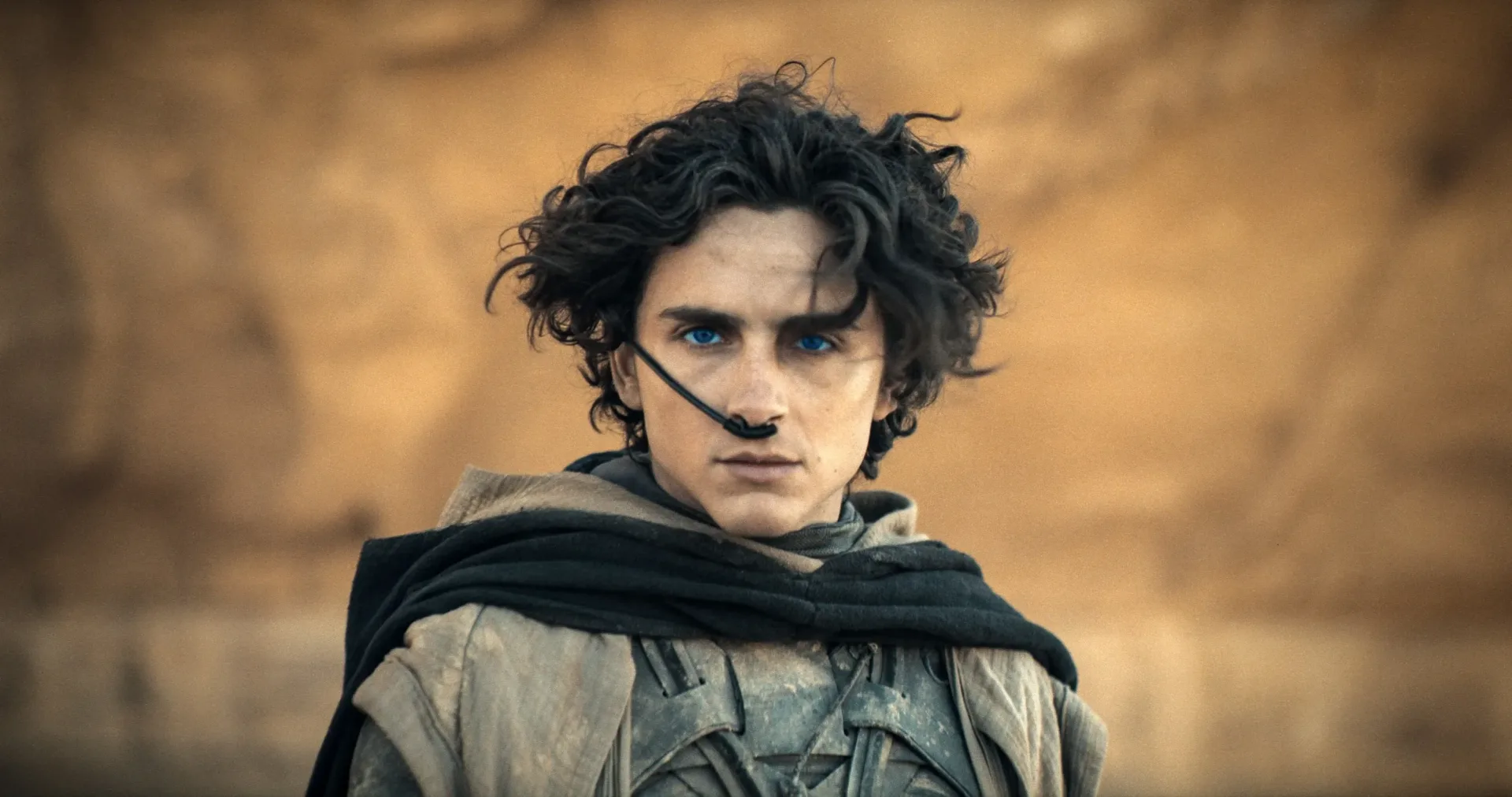
The third film in Denis Villeneuve’s ‘Dune’ series is due to open on December 18. Timothée Chalamet returns as Paul Atreides following the character’s ascent at the end of ‘Dune: Part Two.’ The new film draws inspiration from Frank Herbert’s ‘Dune Messiah,’ jumps 17 years forward from the previous story, and examines the repercussions of Paul’s rule as emperor.
Vermette has appropriately characterized the new chapter as a major spectacle. Yet the most revealing detail is not simply that a 55-ton ship exists. It is that the production chose to construct one practical, camera-ready spaceship capable of being filmed across a full 360 degrees, rather than treating the vehicle as an exterior-only object or a separate interior set.
A ship that had to work above and below ground
The opening was conceived as an expanse of black sand with ships attacking a planet. To realize it, the crew needed to place the giant ship underground and cover it. Rain runs throughout the scene, creating an unusual production problem: the set was not only enormous and heavy, but repeatedly filled with water.
Vermette said the crew used spider rigs and touch spinners during the battle sequence. In practical terms, this describes the machinery and rigging needed to position, move or support equipment and set elements in a demanding environment. The ship itself was lifted by a crane during the day every two days, while a pumping system removed accumulated water.
That rotation says a great deal about the design challenge. A rain scene is not merely an image of wet ground on screen. Water has to be introduced, controlled, drained and safely worked around. Once a ship is buried in a set, access becomes more complicated; once it weighs 55 tons, moving it is a planned operation rather than an on-the-fly adjustment. The result is a sequence where the environment and the spacecraft are physically connected, not simply composited together as separate visual pieces.
It also makes the opening sound designed around tactile consequences. A real structure can collect water, sink into a prepared landscape, carry weathering and give performers a space with usable entrances, surfaces and scale. Visual effects may still play a role in a sci-fi battle of this size, but Vermette’s description identifies the central ship as a substantial built object, not just a digital reference for the cast and camera.
What “360 degrees” means for production design
A 360-degree set can be photographed from all sides. That distinction matters because many film sets are constructed with removable walls or unfinished sides, allowing lights, cameras and crew to occupy the space where a wall would normally be. Such flexibility is useful, but it also places limits on where a camera can look.
Related coverage includes ‘Dune: Part Three’ Built a 55-Ton Ship for Its Rain-Soaked Opening Battle.
For this ‘Dune’ ship, Vermette says the production built one vessel that audiences will see both internally and externally from every angle. That requires the design to hold together as an object, whether the camera is observing a room within it or viewing its overall form in the battlefield. It also means the exterior design cannot be treated as a disconnected shell, while the interior cannot feel like a generic room unrelated to the vehicle around it.
The logistical cost is clear from the need for a crane and drainage system. The creative benefit is coherence: the physical geography of the ship can guide shots, movement and damage in ways that remain consistent. For viewers, that may translate into a stronger instinct for where characters are during a chaotic opening sequence.
Vermette says the demanding approach was worth it. His comments do not disclose the exact narrative context of the ship or the battle, and the production designer was careful not to reveal detailed plot material. For now, the verified picture is one of scale and method rather than story spoilers.
Villeneuve’s instruction: do not repeat the sets
The design brief for the final film was blunt: do not repeat sets. Vermette says that was Villeneuve’s directive, and it fits a working philosophy the pair have developed through several collaborations. Even when a story remains within the same fictional universe, their aim is to challenge each other and make the environments feel different.
That is a meaningful constraint for a third installment. Familiarity can make a fictional world legible, but repeating the same spaces risks making its expansion feel routine. The instruction does not necessarily mean audiences will see no returning visual ideas or materials; it means the team sought new designed environments rather than relying on previously established sets as a shortcut.
For ‘Dune,’ production design has been central to making its political and environmental divisions understandable. Vermette previously designed the dark Harkonnen world of Giedi Prime using industrial septic tanks as inspiration. He also created the Atreides castle and Arrakis’s Imperial Nexus Laboratory. The work demonstrates how real-world references can be transformed into a world with its own logic.
His stated principle is that every object in a fantasy setting should have a reason to exist and should be grounded in reality. That is not an argument against imagination. It is an argument for design rationale: a prop, room or machine should suggest a function, material history or narrative purpose, even when the setting is far beyond the present day.
In the case of a buried 55-ton ship amid black sand and rain, that philosophy may be especially important. The spectacle gets attention because of its scale, but the design’s practical work is to make the structure feel like it belongs in its setting and has a credible relationship to the sequence around it.
Why collaboration is the key part of the spectacle
Production design is sometimes discussed as though one person simply draws an impressive setting and the finished image appears. Vermette’s account offers a more useful view. He describes the work as a collaboration with department heads who collectively solve the logistics.
That includes considerations across construction, rigging, water management, lighting, camera work and the needs of performers. The Imperial Nexus Laboratory on Arrakis is an earlier example from the ‘Dune’ films: Vermette worked with cinematographer Greig Fraser and other departments to realize the scene without faking sunlight. The stated lesson was to keep pursuing ambitious ideas, but the practical lesson is equally clear: ambition needs departments to coordinate around a common visual objective.
This is also why the 55-ton figure tells only part of the story. The number establishes physical mass. It does not by itself account for the planning required to bury the ship, maintain rainfall, bring in cranes on schedule, remove water and make the structure filmable inside and out. The spectacle is a collaboration before it becomes an image.
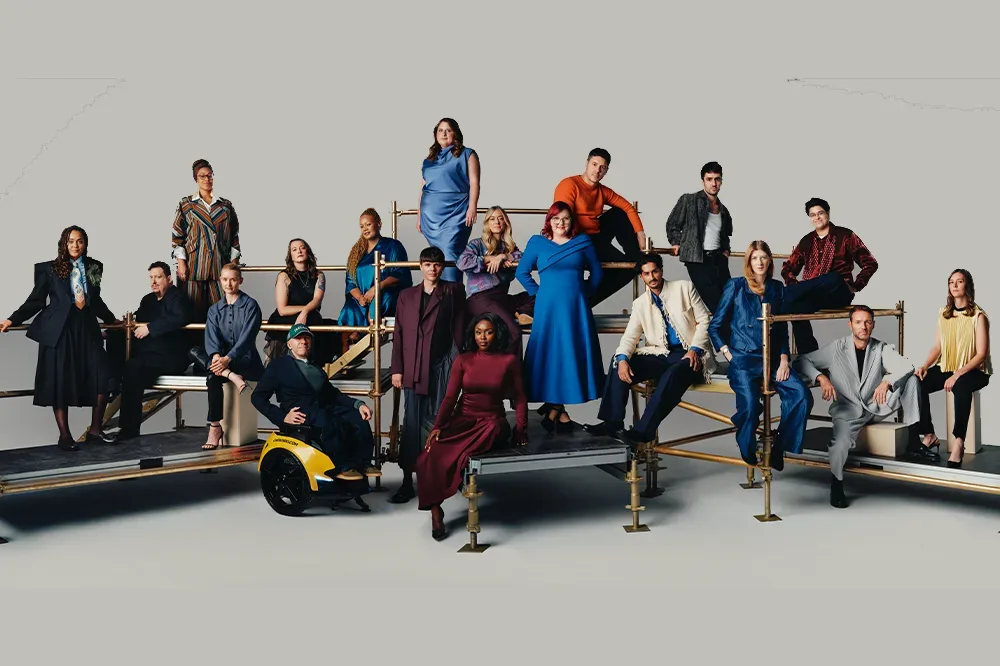
That broader craft-first perspective overlaps with a theme raised by emerging screen artists recognized this year in the U.K.; the BAFTA Breakthrough 2026 cohort includes five games creatives, a reminder that complex visual storytelling across film, television and games relies on specialists working within a shared direction.
From ‘Enemy’ to the final ‘Dune’ chapter
Vermette and Villeneuve’s feature-film collaboration began with 2013’s ‘Enemy,’ identified as Villeneuve’s first English-language movie. They had known each other through a shared circle of friends and had worked together on commercials in the early 2000s, but their schedules had not initially aligned for a feature.
Vermette was originally set to work on ‘Dallas Buyers Club’ before that project was delayed by a year. Villeneuve contacted him after learning of the opening in his schedule, leading to ‘Enemy.’ Vermette later worked with Villeneuve on films including ‘Sicario’ and ‘Arrival,’ as well as the ‘Dune’ films.
When the filmmaker proposed ‘Dune,’ Vermette understood how deeply Frank Herbert’s novel mattered to him. Villeneuve had begun storyboarding the project when he was 15, Vermette said. After receiving the first 100 pages of the screenplay and revisiting the book, Vermette made extensive notes.
That long-term collaboration helps explain how a directive as broad as “do not repeat sets” can become a workable plan. A production designer needs to understand not only the immediate request, but the director’s storytelling priorities: what a place communicates about power, danger, culture and character, and why a particular visual departure matters now.
What is known—and what remains deliberately unknown
There is enough information to establish several concrete facts about ‘Dune: Part Three.’ Its opening includes a large battle sequence. It features black sand, rain and attacking ships. One 55-ton ship was built as a practical 360-degree environment, buried underground, periodically lifted by crane and supported by water-pumping systems. The story continues after Paul Atreides becomes emperor, takes place 17 years after ‘Dune: Part Two,’ and is inspired by ‘Dune Messiah.’
Much else remains under wraps. There is no confirmed explanation here for the ship’s identity, the world under attack, the battle’s place in the plot or the roles of other characters. Vermette’s details are valuable precisely because they reveal filmmaking process without surrendering the sequence’s dramatic purpose.
For audiences, the clearest takeaway is that the final ‘Dune’ installment is pursuing new spaces at a formidable practical scale. The opening’s 55-ton vessel is a headline-friendly object, certainly, but it also embodies the team’s stated approach: build an imaginative world with physical credibility, solve difficult production problems together, and avoid returning to familiar terrain merely because it is familiar.