Drake’s FOMO arrived as a nearly hour-long visual project on September 15, but its public life was unusually brief. The self-funded film premiered on YouTube and was subsequently made private without a public explanation. As things stand, it is unclear whether the complete project will return, when that could happen, or why its original viewing window closed.
That uncertainty is particularly important because FOMO was not presented as a conventional music-video rollout with one new single at its center. It was a large, connected package: music videos, comedy material, personal footage, luxury showcases and a run of celebrity appearances assembled around Drake’s summer. It also contained unreleased music, meaning the now-private film briefly functioned as the only known official premiere venue for at least some of its material.
Calling it a “short film” is accurate in the broad promotional sense, but viewers should not expect a traditional narrative film with a single plot, rising action and a final resolution. FOMO instead uses vignettes: short, self-contained scenes or sequences that share a larger thematic thread. The people, locations, songs and possessions on screen are connected by Drake’s point of view rather than by characters pursuing one fictional storyline.
What ‘FOMO’ is trying to say
The title borrows the common shorthand for “fear of missing out,” normally used to describe anxiety over opportunities, events or experiences happening elsewhere. Drake turns that feeling into a prompt for action. In his introduction to the project, he framed the film around the idea that nobody else will arrive to solve a person’s life for them.
The practical examples attached to that message are notably ordinary beside the film’s extravagant imagery: take the trip, make the call, put out the music, launch the business and spend time with parents. In that sense, FOMO is not simply a document of access to celebrity friends, expensive objects and unusual outings. It presents those things alongside a more direct argument that waiting for an ideal moment can mean letting meaningful time pass.
Drake had described the project as a story about making the most of one summer. The ending reportedly looks back through recognizable imagery from his career, joining his current circumstances to the ambition behind his earlier rise. That retrospective element gives the project a more reflective purpose than a sequence of isolated flexes: success is shown as something to experience with close people, not merely inventory.
Music from two projects, plus unreleased material
The opening visual is for “Cheetah Print,” featuring Sexyy Red. From there, the film includes songs tied to Drake’s 2026 projects Maid of Honour and Habibti: “Outside Tweaking,” “Amazing Shape,” “True Bestie,” “WNBA,” “Road Trips,” “I’m Spent,” “Rusty” and “White Bone.”
It also introduced several unreleased records. Among the more notable reveals was a Drake and Don Toliver collaboration built around Ella Langley’s “Choosin’ Texas.” The remake had not received an official streaming release at the time the film premiered. That distinction matters. A song heard inside a visual project is not automatically available as a standalone track on streaming services, and the film becoming private makes the status of that particular debut more complicated for fans trying to revisit it.
No release plan for those unreleased songs was provided here. It would therefore be premature to treat an appearance in FOMO as confirmation of an album placement, a full commercial release or a particular release date. What is known is narrower: the film contained the music, and at least the Don Toliver record was not officially on streaming when the premiere occurred.
Cameos are part of the format, not one shared plot
FOMO includes appearances from Kevin Durant, Sexyy Red, Stunna Sandy, Shane Gillis and Drake’s mother, Sandi Graham. Winnie Harlow, BabyDrill, Loe Shimmy, Pinkchyu and Maurice Kamara also appear. Their presence works more like a series of cameos than a cast list for a drama.
A cameo is a brief appearance by a recognizable person, often designed to add texture, humor, cultural context or surprise. Here, the guests are attached to separate scenarios within the film’s vignette structure. That design lets the project move between music promotion and personal documentation without requiring viewers to follow a fictional explanation for why every participant is in the same place.
Its more intimate scenes center on family and trusted company. Sandi Graham is shown on a Chanel shopping outing and displays an “ICEMOM” tattoo. Elsewhere, Drake visits Canada’s Wonderland, takes a speedboat ride and works out. These are not presented as a complete behind-the-scenes chronology of a summer; they are selected moments that support the film’s message about being present for experiences and relationships.
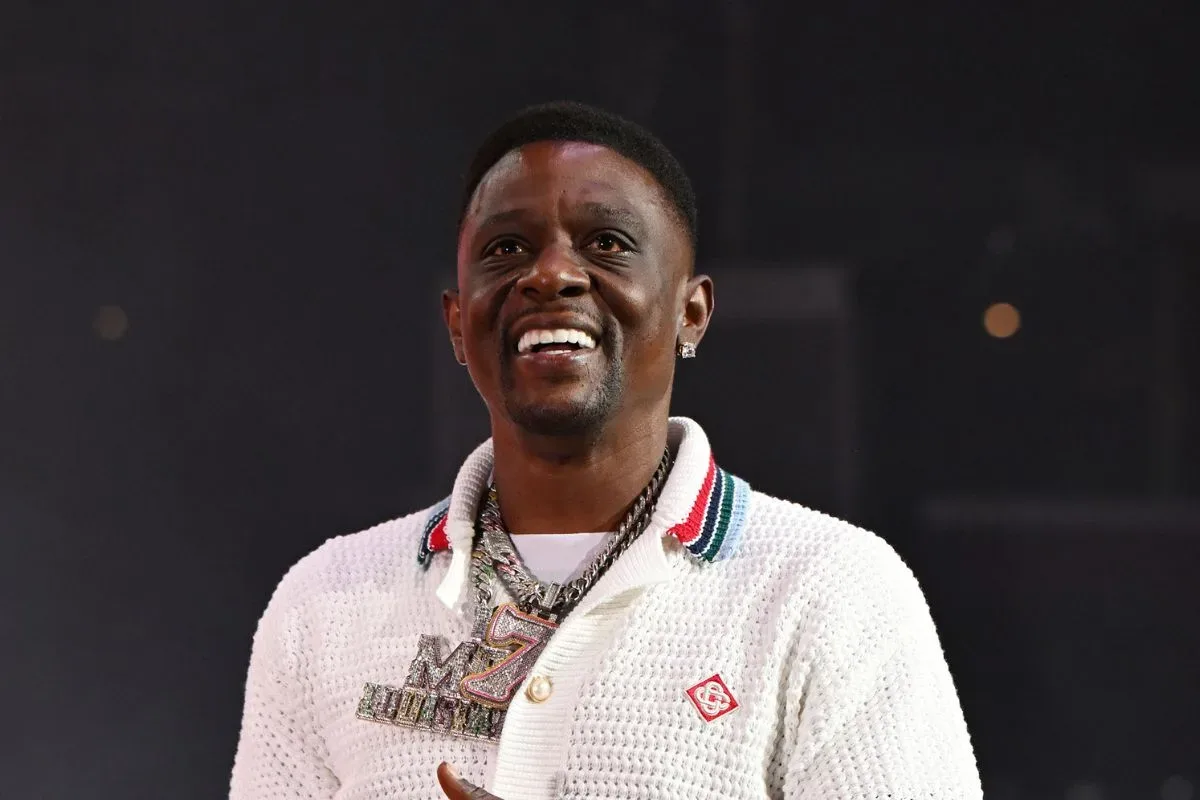
For a useful adjacent look at how music and celebrity stories can unfold well beyond the work itself, see this update on Boosie Badazz’s separate legal and civil matters.
The collection footage is spectacle with a personal angle
Some of FOMO’s most conspicuous scenes take place in Drake’s closet and around his jewelry collection. The film displays watches described as rare, custom Chrome Hearts pieces, luxury bags and an engagement-ring necklace reported to be worth millions. The presentation is rooted in the visual language of a collection tour: objects are not only worn or owned, but singled out as individual pieces with rarity, customization or personal significance.
“Custom” generally means an item has been made or altered for a specific owner rather than sold in a standard form. In a collection context, that can matter because it makes the piece more personal and potentially less reproducible, even though the film does not establish authentication records, production quantities, provenance or market valuations for the items shown. Likewise, an item described as rare may be scarce, difficult to obtain or simply unusual in the context of the collection; the film’s footage alone does not provide a complete collectible-market dossier.
The engagement-ring necklace’s reported multimillion-dollar value is clearly part of the spectacle, but the wider point of the sequence is curation. A closet, jewelry case or garage becomes a visual expression of taste and accumulated experience. That fits FOMO’s broader tension: the project celebrates possession and access while repeatedly steering back toward the value of the people sharing the moment.
Another high-cost visual finds Drake and Loe Shimmy in Iron Man and War Machine suits reportedly valued at about $150,000. The project also pairs Drake with Pinkchyu for a Hot Topic visit, a deliberately different setting from a private jewelry display or luxury showroom. The shift between retail browsing, superhero suits, fashion pieces and sentimental family scenes gives the film its collage-like rhythm.
Cars, career memory and the limits of what is confirmed
Vehicle footage supplies another part of the collection motif. Drake showcases rare cars, including Cam’ron’s famous pink Range Rover. As with the jewelry sequences, the car selection is less a technical vehicle review than a signpost for personal taste, association and cultural recognition. The specifically identified Range Rover carries its own connection to Cam’ron, making it more than an anonymous luxury vehicle in a montage.
At the same time, viewers should separate what the film shows from claims it does not substantiate. The supplied details identify the vehicles as rare and note the pink Range Rover’s association with Cam’ron, but do not provide model-year information, ownership documentation, restoration history, mechanical specifications or a sale estimate. Those distinctions are especially useful whenever collectible objects are filmed in a highly stylized setting, where visual impact can outrun the available verification.
The same restraint applies to the project’s future. The complete film was initially viewable via YouTube, then made private, and no public reason was given. There is no confirmed answer on whether the film will be restored or whether individual songs will be released separately. The private status should not be mistaken for a cancellation, but neither does the available information support assuming an imminent return.
A 2027 tour was mentioned, but details remain absent
During the premiere, Drake said he plans to tour in 2027. No dates or locations were immediately revealed. A tour announcement at this stage is best understood as an intention rather than an itinerary: without cities, venues, dates or ticket information, there is nothing concrete for prospective attendees to plan around yet.
That open-ended final note mirrors the current status of FOMO itself. The project offered a compressed record of music, friends, family, fashion, collecting and motion, then became inaccessible through its original premiere link. Its message argues against waiting for life to begin, while its own withdrawal from public view leaves a key part of the release temporarily out of reach.