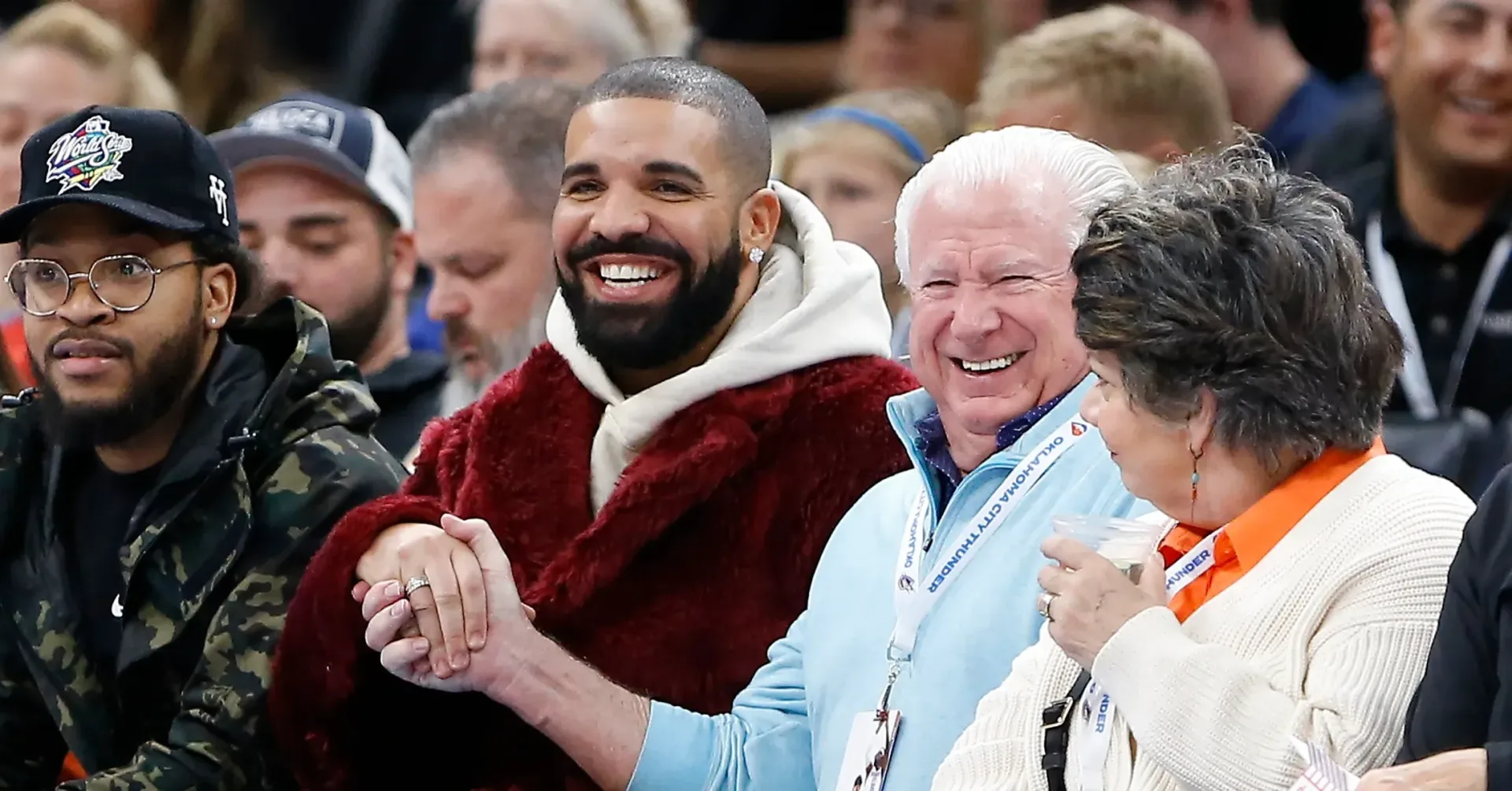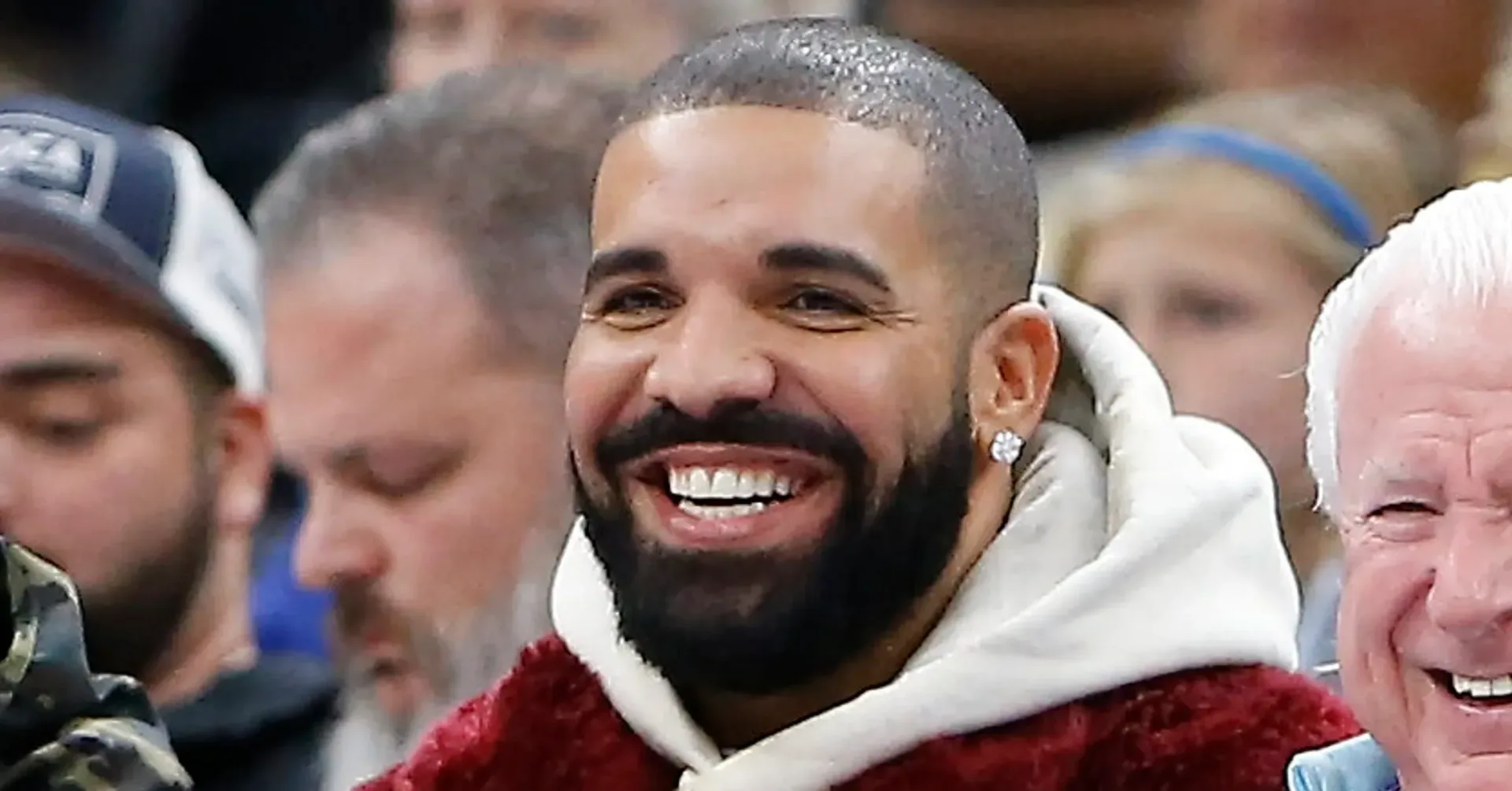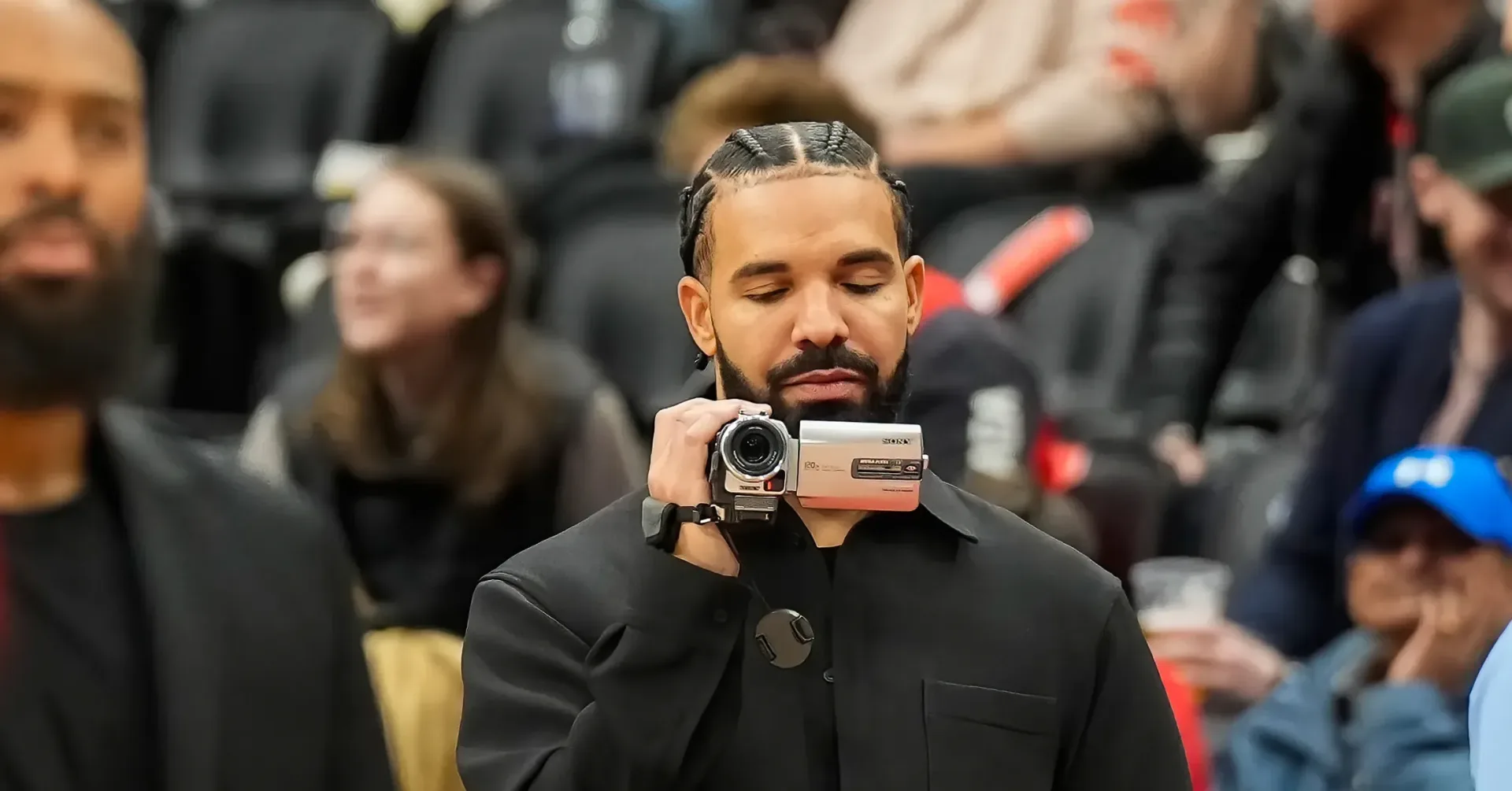
Drake’s latest Instagram photo dump did what a celebrity birthday post is supposed to do: it showed the outfits, the people, the weekend atmosphere, and the kind of larger-than-life celebration that follows a global rap star. But the images were only half the conversation. The bigger hook was the caption—a gloomy, compact piece of writing that reads like a verse even though it was presented as an original social-media thought rather than a lyric from a released song.
Posted after his 40th birthday weekend, the message begins with a joke that immediately curdles into detachment: “I’m starting to think I’m no fun.” It continues by contrasting the casual online reflex of typing “lol” with not actually smiling, then moves through isolation, self-assessment and a declaration of loyalty to his circle. The final line frames that loyalty in deliberately oversized terms: “It’s still US over all of them like I’m patriotic as f**k.”
It is a lot to place beneath a set of party photos, which is precisely why it is resonating. Drake has long used Instagram captions that sit somewhere between diary entry, rap-bar construction and ominous status update. The new post continues that familiar approach, combining an apparently festive setting with wording that is more guarded than celebratory.
A photo dump with two different moods
A photo dump is a loose collection of images posted together rather than a single tightly curated portrait or announcement. It can include snapshots from an event, outfits, friends, family and miscellaneous moments that are meant to create an overall mood. Here, the reported images cover Drake’s birthday weekend and include some of the clothing looks that have already become talking points online.
The visual side is easy to understand: a major birthday, familiar faces and a few conspicuous fits will always create a stream of reactions. The caption makes the post stranger and more interesting. Rather than simply thanking guests or marking the milestone with a toast, Drake used language about emotional flatness and being done with saying what he has said he would do.
That does not establish a specific real-world conflict, and the post should not be treated as a coded confirmation of one. It does, however, give the dump a tension that a standard birthday carousel would not have. The photographs present celebration; the prose presents distance. Fans can laugh at the wardrobe, admire the gathering or parse the wording, all from the same upload.
Why the wording feels like a lyric
The caption’s lyric-like quality is not only about rhyming. Its short clauses stack ideas in a way that resembles rap writing: an everyday phrase (“I type lol”) becomes a stark admission (“don’t crack a smile”), then the thought expands into a broad statement of allegiance. It moves fast, changes scale and leaves room for readers to project their own interpretations onto the gaps.
That is different from saying it is a song excerpt. The post describes the lines as not coming from a song. That distinction matters. A lyric is usually received as part of a performance, album narrative or promotional cycle. A caption, meanwhile, sits beside candid-looking personal images and invites immediate public interpretation. The same kind of compressed writing can feel more exposed in that context, even when it remains highly controlled.
“I’m starting to think I’m no fun,” Drake wrote, before describing the difference between typing “lol” and actually laughing.
There is also a practical social-media reason this formula works. A plain caption lets the pictures do all the work; an opaque one makes the comment section do some of it. It can generate discussion without explaining everything. In this case, the idea of being emotionally checked out is paired with a strong statement of “US” versus “them,” giving followers two obvious themes to debate: mood and loyalty.
The birthday weekend and Houston stop
The weekend gathering reportedly brought Drake together with media personalities, longtime friends and family members across Friday and Saturday. He then continued celebrating in Houston during the week. Those details make the caption’s inward tone stand out further. The post is not built around solitude in a literal sense; it appears alongside images from a social occasion surrounded by people close to him.
That contrast should not be overread as proof that the celebration was unhappy. Public posts regularly compress different moods into one package, and a reflective caption can simply be a stylistic choice. Still, the deliberate mismatch is central to the post’s appeal. The occasion offers the big, public image of success and community. The text offers a narrower portrait of someone who says he is not getting much joy from the usual online gestures.
Houston added another notably public element: comedian Jeff Ross, known as the Roastmaster General, roasted Drake during the continued festivities. A roast is a comic format in which a guest of honor is teased, sometimes sharply, in front of an audience. It is premised on consent and status—the target is important enough to be the focus, and the jokes are part of the occasion rather than an ordinary feud.
That makes the Ross appearance a clean counterweight to the caption’s dourness. One part of the celebration is literally organized around public mockery and laughter; another part is headlined by Drake writing that he may not be fun anymore. The juxtaposition is almost too neat, but it also illustrates why the dump travels well online. It contains the serious post, the fashion discourse and the joke-ready party detail all at once.
The outfits are part of the story, not a side note
The photos also included outfits that had already gone viral and drawn criticism from both supporters and detractors. Fashion is often one of the quickest ways a celebrity post becomes participatory online. People do not need to know the guests or understand every caption reference to have an opinion on a jacket, silhouette or styling choice.
For an artist at Drake’s level of visibility, that response is predictable rather than unusual. The same look can become evidence of confidence to one audience and an easy target to another. The relevant point is not whether any particular reaction is correct; it is that the clothing helped turn the post into a broad conversation rather than a private birthday recap.
The caption actively supports that dynamic. Its “US over all of them” language makes the divide between allies and critics feel like part of the framing, whether or not Drake intended the wardrobe response to be the target. It gives defenders a phrase to rally around and gives skeptics another line to scrutinize. In entertainment culture, an ambiguous caption can function as a small piece of open-ended storytelling: everyone sees the same text, but no one has a definitive key to it.
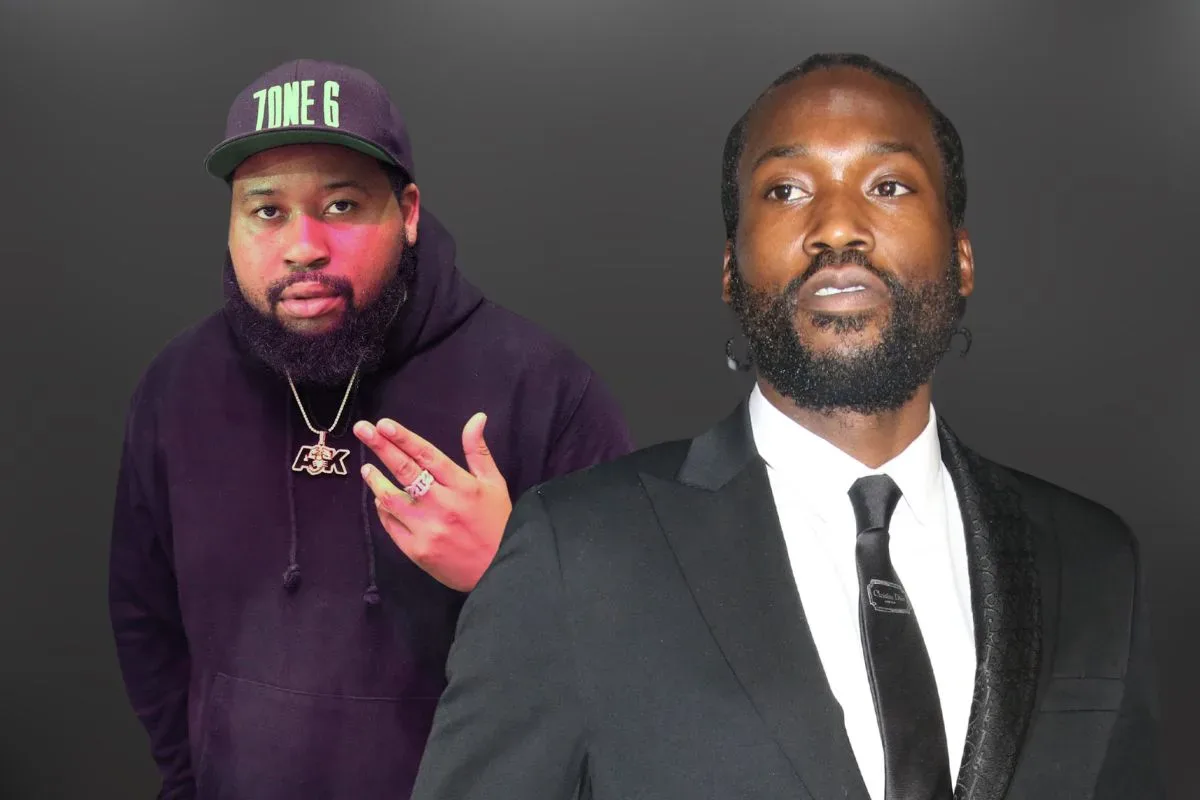
That interpretive tug-of-war is familiar across celebrity rap coverage. It also sits in a wider environment where personal posts, old feuds and public replies can become connected in audiences’ minds quickly. For another recent example of how existing tensions can reignite through online public discussion, see the renewed public clash involving Meek Mill and DJ Akademiks. Drake’s birthday caption, however, names no individual target in the material available here.
What the post does—and does not—say about Drake’s next chapter
The birthday post arrives amid claims of a celebratory 2026 for Drake, including the view that he has returned to the top of rap. That is an assessment, not a measurable fact supplied with chart figures, release data or other benchmarks, so it is best understood as part of the post’s broader triumphant framing rather than a conclusion that can be independently established here.
There is also mention of big plans for 2027, including a world tour expected to sell out. No dates, cities, venues, ticket information or formal itinerary are included in the available material. As a result, fans should distinguish the existence of tour-related anticipation from a confirmed set of logistical details. A world tour is not the same thing as an announced schedule; until specifics are provided, it is sensible to avoid treating individual stops or on-sale information as settled.
That uncertainty does not weaken the immediate significance of the Instagram post. A post does not need to announce an album or a tour to tell a story about an artist’s public image. Here, Drake used a major birthday occasion to deliver several versions of that image at once: the host surrounded by friends and family, the fashion figure attracting reactions, the celebrity game enough to be roasted by Jeff Ross, and the writer who turns a caption into an uneasy miniature monologue.
Practical takeaway for readers following the chatter
- The caption is presented as original writing: it should not be automatically catalogued as a lyric from a Drake song.
- The images and words are intentionally different in tone: celebration in the photos does not erase the introspection in the caption, but neither does the caption prove a hidden dispute.
- Houston festivities included Jeff Ross: the roast element is a comic birthday-event detail, not evidence of a personal attack.
- Tour talk lacks particulars in the available information: wait for concrete dates and ticket details before making plans around a 2027 world tour.
Most of all, the dump reinforces the usefulness of Drake’s long-running caption habit. He can make a familiar celebrity format feel more layered by giving viewers just enough text to debate. The birthday images supply the spectacle, the outfits supply the memes, the guest list supplies the social proof, and the few lines underneath supply the lingering question: is he joking, venting, performing, or doing all three at the same time?