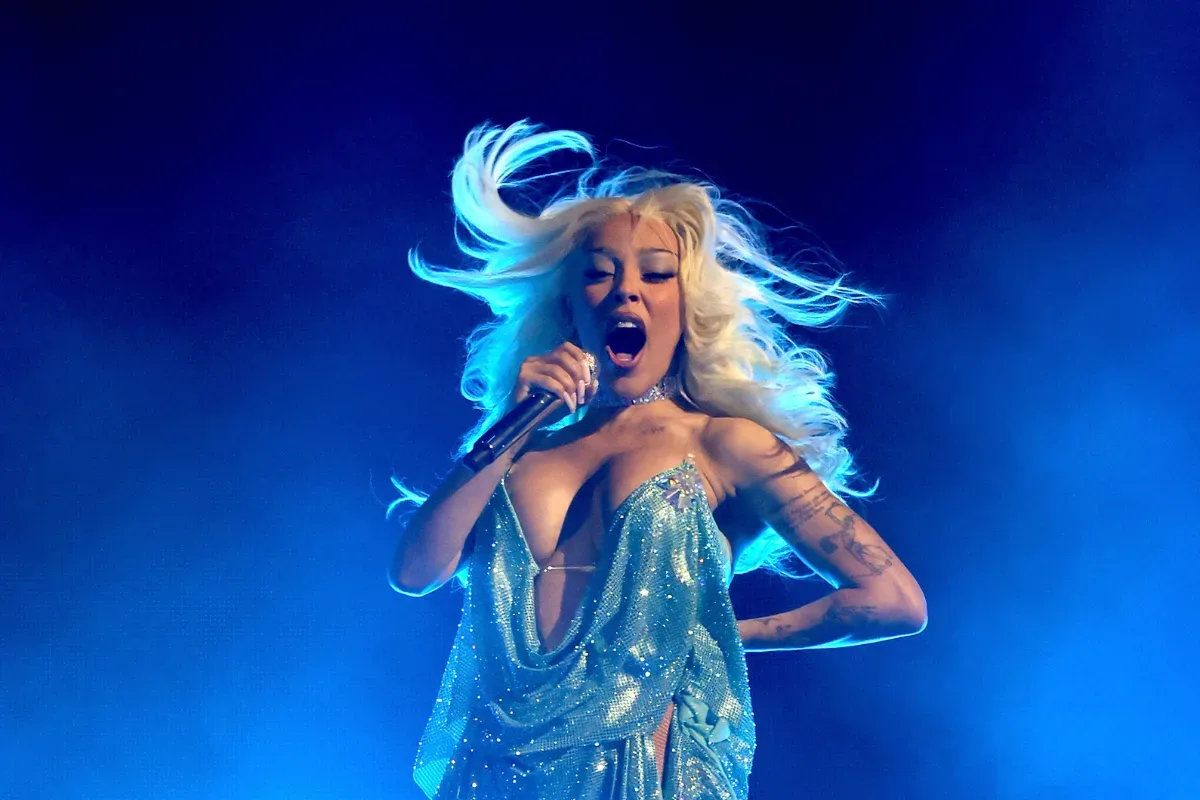
Doja Cat gave one of her biggest songs a one-night political twist in Dallas, changing the final line of “Paint The Town Red” to “I don’t care, I paint the town BLUE!” during her November 4 performance at American Airlines Center.
The lyric adjustment arrived at the end of the song rather than as a separate address to the crowd. It was a short, unmistakable reference to the Democratic Party’s midterm-election victories, which included Democrats regaining control of both the House and Senate. Video of the moment spread online soon afterward.
Just as importantly, the available details put a clear boundary around the exchange: Doja Cat did not turn the concert into a campaign speech, and she did not offer a longer endorsement from the stage. The altered word was the statement. After that brief detour, the show continued.
A familiar chorus becomes a timely live moment
Live performances make room for small changes that a studio recording cannot. An artist can alter a lyric, pause for a crowd reaction, change an arrangement, or introduce a guest without revising the song as it exists on an album or streaming service. In this case, the choice to swap “red” for “blue” worked because the original title already supplied the color language.
That distinction matters. This was not presented as a newly released political version of “Paint The Town Red,” nor as a permanent replacement lyric. It was a localized, time-specific performance decision made the night after the vote, at a Dallas date on the Tour Ma Vie World Tour.
The phrase “paint the town” ordinarily means going out to celebrate in a lively, conspicuous way. The song title gives that familiar expression a color. By changing the color at the climax, Doja Cat made the existing wording carry a second meaning tied to the election result. The audience did not need a lengthy explanation to understand the reference.
That economy is likely why the clip traveled. Concert footage often catches moments that are meaningful precisely because they are not rehearsed into a lengthy segment of the production. A brief lyric change can be highly shareable: it has context, a recognizable song, and a concise point that can be understood outside the arena.
Why the setting and timing shaped the response
The Dallas performance took place in Texas one night after the midterms. That timing turned a pop-song modification into a response to an immediate national conversation. Democrats’ wins had already prompted reactions across music, film, and television, and Doja Cat’s line was one contribution to that larger cultural reaction.
It also shows the difference between a political acknowledgment and a full political address. The former can be a pointed comment attached to an event that is already dominating public discussion. The latter generally asks the performer to spend part of the concert making a broader case, naming candidates or policies, or encouraging a specific action. The Dallas moment, as described, stayed firmly in the first category.
That is not a smaller thing merely because it was short. A charting song performed in a major arena gives one revised line unusual visibility. But it was also limited by design. The night’s defining purpose remained a Doja Cat concert, not a political rally.
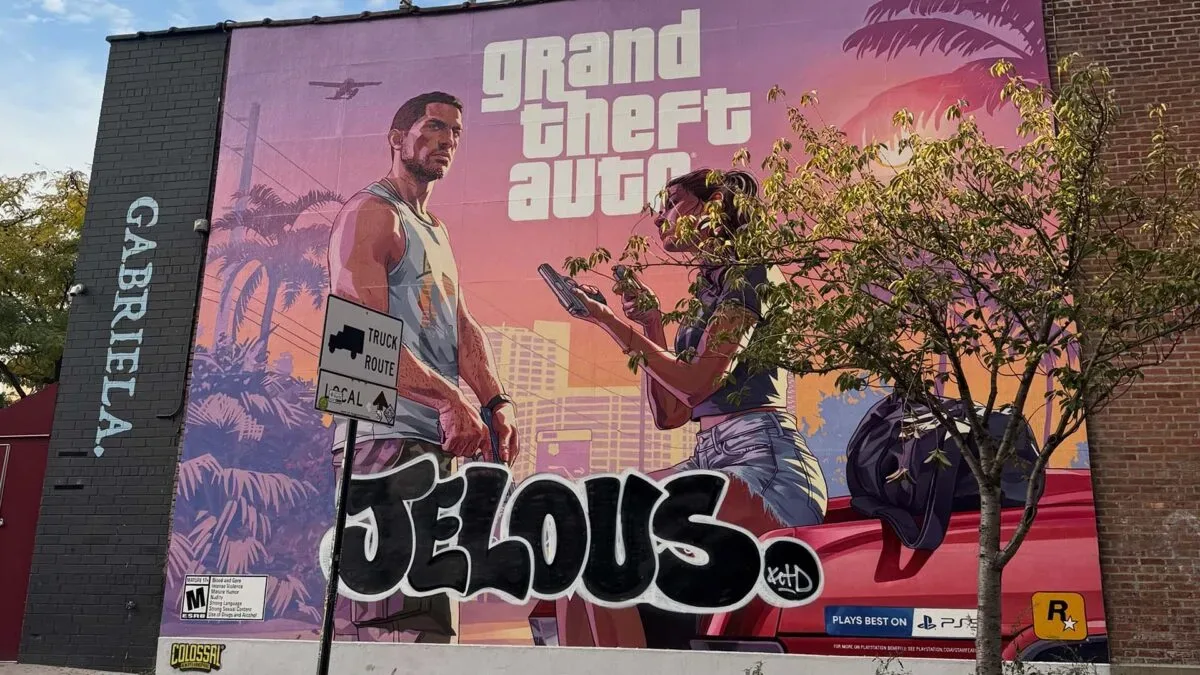
There is a useful parallel in the broader conversation around public-facing art. The visual context of a work, its location, and who encounters it can all affect how people read it. That tension has recently surfaced in discussions about graffiti, advertising and respect for artists around a GTA 6 mural tag. Doja Cat’s Dallas alteration was not a visual-art intervention, but it similarly demonstrates how an existing creative work can take on fresh meaning when it meets a specific cultural moment.
Part of the Tour Ma Vie World Tour
The Dallas date was part of the Tour Ma Vie World Tour, which supports Doja Cat’s fifth studio album, Vie. Latto was billed as the special guest for the stop.
The North American dates were announced in September 2025, when Vie arrived. This leg began October 1 in Detroit and is scheduled to conclude December 1 at Madison Square Garden in New York. Dallas fell late enough in the route for the tour to have developed its own momentum, but with a substantial stretch still ahead.
Following Dallas, the itinerary continues through San Antonio on November 6 and Houston on November 7 before moving east. That makes the revised “Paint The Town Red” ending particularly tied to the Dallas show rather than a declared new feature of the tour. Fans at later stops may see a different variation, or no variation at all; no broader change to the song’s performance has been indicated.
For audiences, that is part of the appeal of touring. A concert setlist may be shared by thousands of attendees across many cities, but individual nights can still gain their own identity through a guest appearance, a spoken aside, an unexpected reaction, or a lyric adjusted to meet the news cycle. The Dallas crowd got one of those singular details.
A notable period before a possible pause
The political lyric change comes during a personally and creatively revealing period for Doja Cat. In August, she discussed a past cocaine problem while speaking about her mental health. In October, her Los Angeles birthday show included a surprise appearance by Rico Nasty for a “Tia Tamera” reunion.
Those moments followed a May disclosure that Doja Cat was considering a three-year break from music once the tour is over. She said that time away could involve family plans and a return to visual art.
The possibility of an extended pause gives the current run additional context without changing what happened in Dallas. The tour remains active, and the dates ahead remain the immediate focus. Still, the combination of candid personal discussion, surprise live reunions, and an on-the-spot election reference makes this stretch feel less like a routine album cycle and more like a period in which Doja Cat is willing to let the live setting reflect the moment around her.
It is also worth resisting the urge to make one changed lyric answer questions it cannot answer. The Dallas performance establishes that Doja Cat chose to celebrate the Democratic midterm result in that particular moment. It does not, on its own, establish a complete political platform, a future campaign role, or a permanent redesign of her show.
What the “blue” switch actually says
In practical terms, the performance did three things at once:
- It acknowledged an election outcome that was already receiving broad attention.
- It used a lyric from a well-known song to make the acknowledgment immediate and memorable.
- It preserved the concert’s format by keeping the reference to one line rather than expanding into a speech.
That balance explains why the Dallas clip has a clear identity. It was political, but it was also unmistakably a concert moment: a word change at the end of a hit, delivered to an arena audience, then followed by the rest of the show.
For now, it stands as a Dallas-specific version of “Paint The Town Red,” connected to November 4, the midterm results, and a tour that is still headed through San Antonio, Houston, and beyond. In an era when every arena moment can be replayed almost instantly, one substituted color was enough to give that performance a place of its own.