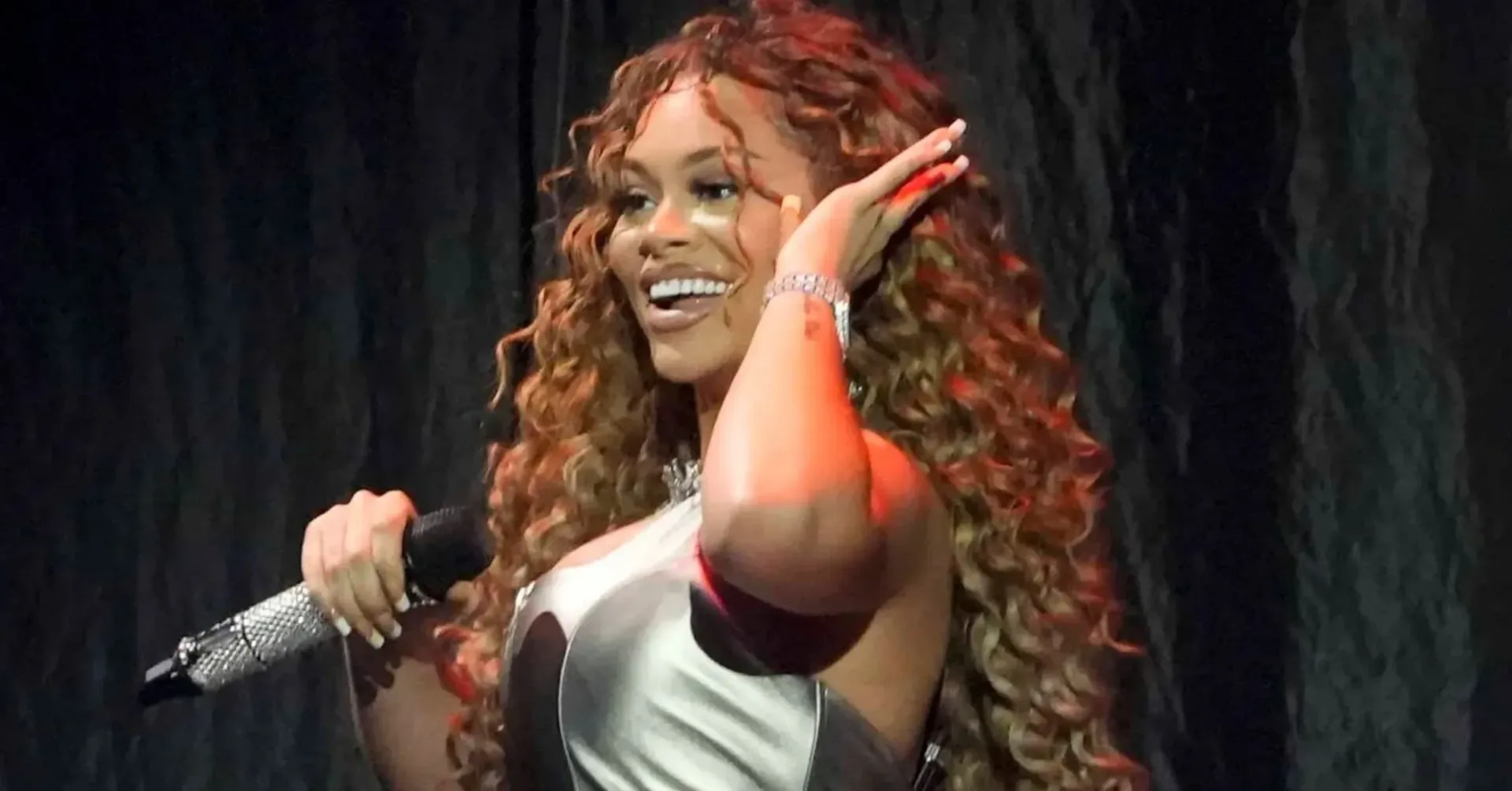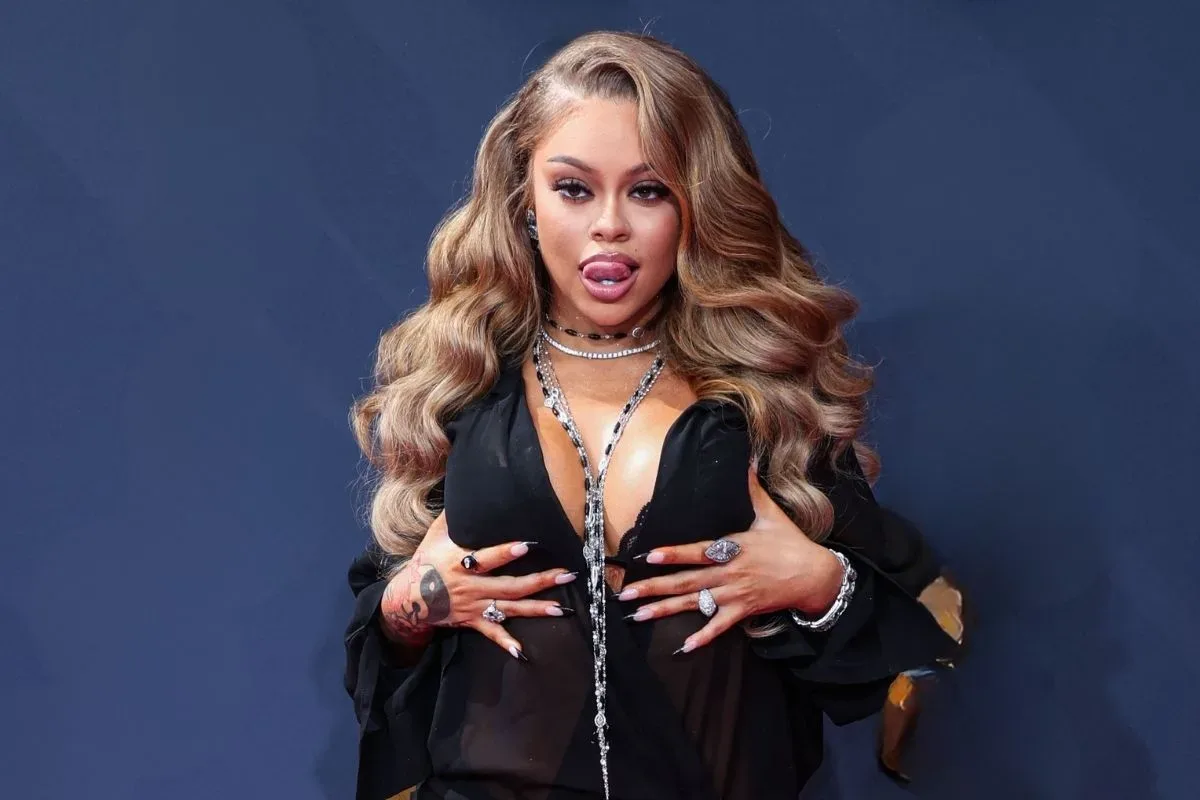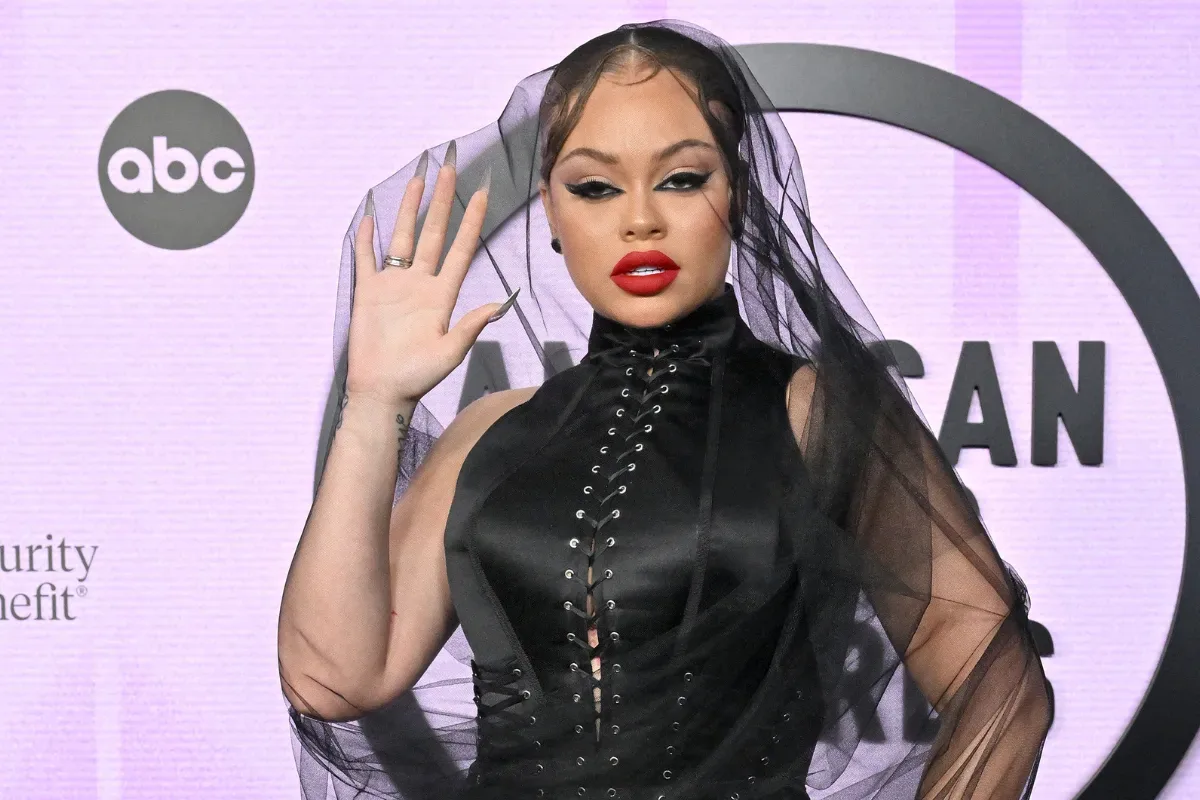
Latto is reconsidering how freely she gives away one of rap’s most valuable currencies: the guest verse. In an October 29 appearance on Hot Ones, she said she has historically jumped on songs without charging when she genuinely liked both the record and the artist behind it. But motherhood has introduced a new practical consideration.
“But I’ve been thinking about that now that I got a baby to feed,” Latto said when the subject of feature fees came up.
She did not name a rate, announce a formal new policy, or say that every future collaboration will come with an invoice. The important distinction is that she framed the past arrangements as favors motivated by the music itself. Her comments instead show an artist weighing whether a longstanding, relationship-driven approach still makes sense as her personal responsibilities and professional value evolve.
A feature can be a favor, a business deal, or both
A guest verse, often called a feature, is an appearance by one recording artist on another artist’s track. It can be a straightforward paid service, a reciprocal creative favor, or an arrangement shaped by relationships among artists and their teams. Latto indicated that she has sometimes opted for the favor route because she liked the material and the collaborator—not because she was unaware that other artists charge for appearances.
That choice can have obvious creative upside. It lets an artist follow enthusiasm, support peers, and join songs without reducing every decision to a transaction. It can also result in a wider range of collaborations than a rigid fee-first system might encourage. But choosing not to charge has a cost as well: time spent recording, the value of an established name on a song, and the opportunity to take on other work.
Latto’s point about feeding her baby is concise, but it changes the frame. She is not presenting collaboration as a less meaningful artistic act. She is acknowledging that the labor around it exists within a larger life, where financial choices carry additional weight. A paid-feature model would not necessarily mean she no longer cares whether a song is good; it would mean the creative impulse and the business calculation can sit alongside each other.
For listeners, there is no indication that a feature fee automatically determines the quality of a collaboration. Nor did Latto suggest that she will stop making music with artists she admires. What her remarks do make clear is that free appearances are not an automatic expectation.
Big Mama shows how central collaboration is to Latto’s recent work
The discussion is particularly notable because Latto’s recent catalog is packed with collaborators. Her fourth studio album, Big Mama, arrived May 29 with 18 tracks and a guest list that moves across rap, R&B and other musical lanes.
GloRilla appears on “GOMF,” Doja Cat is featured on “Okayyy,” and 21 Savage joins “Hostage.” Sexyy Red appears on “Need Luv 2,” while Mariah the Scientist features on “Make Me.” Elsewhere, Odeal and Wizkid appear together on “Anxious,” Teyana Taylor joins “4L,” and Jelly Roll is featured on “Mama.”
That is a substantial spread of voices for one album. The list matters because it puts Latto’s comments about guest verses in context: collaboration is not peripheral to her current work. She is both a recording artist who brings guests into her own projects and one who can be asked to bring her voice to someone else’s record.
“Feature” can flatten those different roles into one industry word, but they are not identical situations. When an artist curates guests for an album, the result can shape the project’s pacing, vocal contrast and genre range. When that same artist is invited onto another performer’s song, their appearance can become part of the host track’s appeal and identity. Latto’s new consideration concerns the latter situation, while Big Mama demonstrates how deeply the former remains part of her album-making approach.
The album also arrived amid a major personal change. Latto learned she was pregnant while making Big Mama, connecting the recording period to the life development she later referenced in discussing features. The available details support a direct link in timing, but not a claim that any particular song was written about pregnancy or that motherhood dictated a particular creative choice on the album.
Career momentum adds context, not a published price tag
Latto’s hesitation about continuing to work for free comes after strong chart results for her earlier albums. Her 2024 release Sugar Honey Iced Tea reached No. 1 on Billboard’s Top Rap Albums chart. The achievement made her the first solo female rapper from Atlanta to top that chart. Her 2022 album 777 reached No. 6 on the same chart.
Those placements help explain why the question of compensation is relevant now. Chart performance is not the same thing as a publicly stated market rate, and Latto supplied no number. Still, a performer with a sequence of high-profile releases and collaborations has reasonable cause to reassess how often their work is offered as a favor.
It is also worth separating what Latto said from the assumptions that can grow around music-business conversations. She did not accuse any individual artist of exploiting her. She did not identify someone who charged her for a verse. And she did not say that charging for features is inherently more legitimate than doing them for free. Her observation was simply that other artists do charge her, while she has frequently prioritized liking the song and collaborator over collecting a fee.
That nuance matters. A feature fee is often treated online as a simple scoreboard for popularity, but Latto’s comments point to a more ordinary question: when does a generous working habit need boundaries? Parenthood is one answer because it makes the consequences of professional decisions more immediate.
Public scrutiny remains part of the conversation around Latto
The interview also touched on criticism beyond music. Latto said negative comments can push her to prove people wrong, and she addressed reactions to the food featured in her “Soul Food Sunday” posts, including criticism of her gumbo.
That cooking debate may seem far from a conversation about feature fees, but both topics reflect how public-facing work can expand well beyond the finished record. Social posts, food, appearance and personal decisions can all become material for unsolicited commentary. Latto’s described response is not withdrawal; it is treating criticism as motivation.
She has previously answered personal criticism directly. In May 2024, after clips from her TwoGether Land Festival performance in Dallas prompted body-shaming comments about her BBL, Latto posted photos to Instagram and wrote on X that her partner was happy with how she looked. The clips followed her performance of “Sunday Service.”
That earlier response and the newer conversation about her cooking illustrate a consistent public reality: an artist can be asked to defend matters that have little to do with the craft of making records. For anyone trying to parse what is actually happening on Instagram rather than what is being said about it elsewhere, this guide to Instagram reposts and the platform’s two-arrow icon explains one common way posts can travel beyond an original audience.
Latto and Doja Cat’s collaboration has a live extension
Doja Cat’s appearance on “Okayyy” is not the only recent point of overlap between the two artists. Latto is also listed for Doja Cat’s “Tour Ma Vie World Tour” stop at T-Mobile Arena in Las Vegas on October 31, scheduled for 7:30 p.m.
The pairing emphasizes that recorded collaborations can grow into wider professional connections, including live appearances. It does not establish the terms of their recording arrangement, and Latto did not connect her remarks about free verses to Doja Cat or any other specific collaborator. Still, the overlap underlines the broader value of an artist’s participation in another artist’s ecosystem—on a track, onstage, or both.
What Latto actually said—and what remains unknown
The clearest takeaway is narrow: Latto has done guest verses for free because she liked the song and artist, and she is now considering a fee because she is a mother. It is a reassessment, not a fully detailed pricing announcement.
- Known: She said other artists charge her for features.
- Known: She described her own past free verses as favors where the music came first.
- Known: She is thinking about charging now that she has a baby to support.
- Unknown: Any specific amount she might charge.
- Unknown: Whether she will charge every collaborator or still make exceptions.
- Unknown: Which future release, if any, would be the first to follow a changed policy.
For now, the story is less about a number than a shift in how Latto is talking about her work. A guest verse can still be a creative connection and a favor. But she is making room for it to be paid labor, too—a distinction sharpened by a new chapter in her life and a recent album that shows just how much collaboration continues to matter in her music.