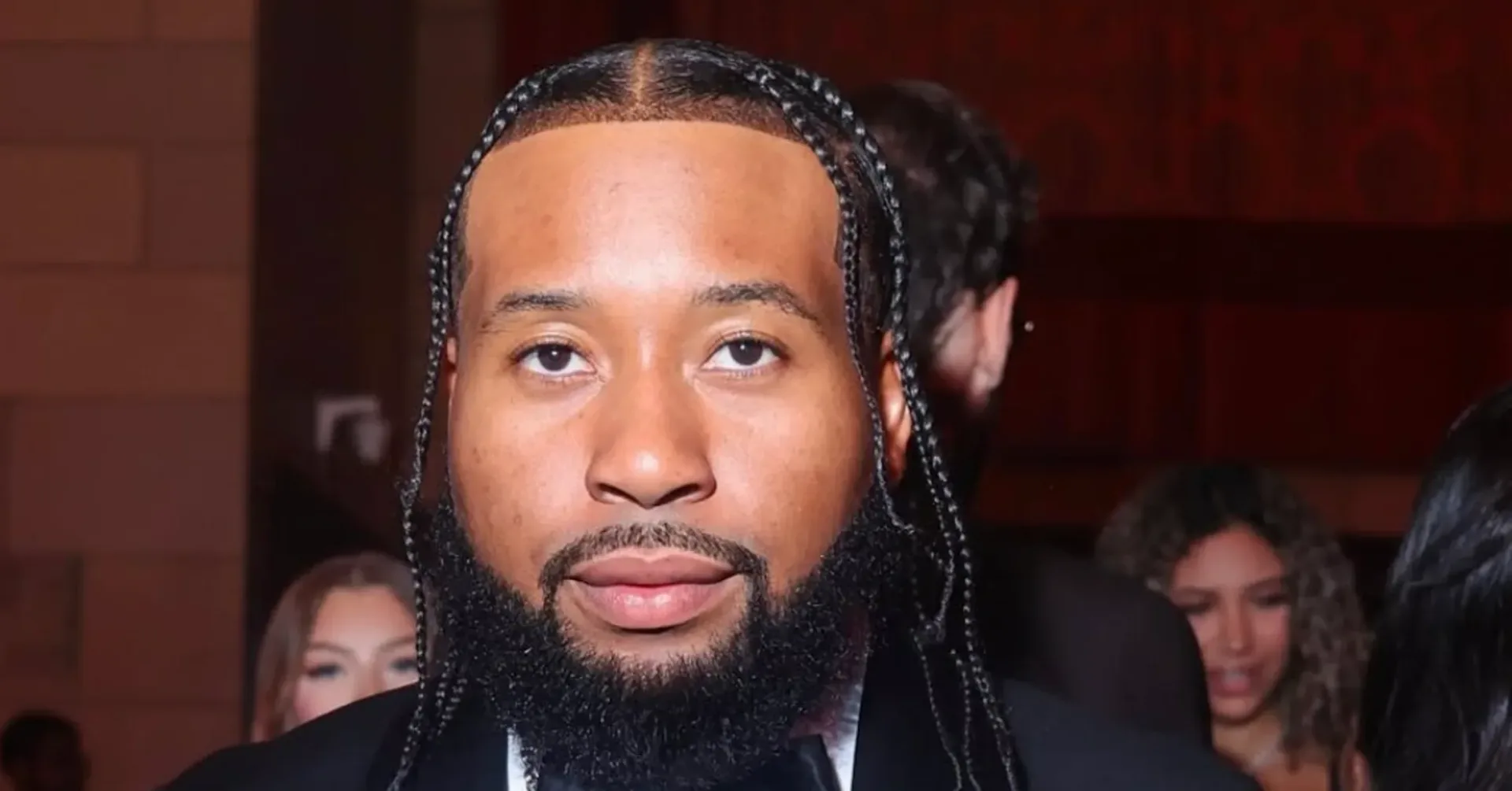
DJ Akademiks and Blueface are publicly clashing over a question that is both simple and intensely loaded in modern entertainment: who gets to claim credibility after finding success on camera?
The immediate disagreement centers on streaming. Blueface had previously positioned himself as above the kind of online, camera-facing work associated with personalities such as Akademiks. Now, Blueface has built a significant presence on Kick, with claims that he earns six figures in a typical week. Akademiks has seized on that apparent reversal, arguing that Blueface abandoned the position he once took.
Blueface’s response, as described in the dispute, is less about whether he streams and more about speed. His point is that he did not require 15 years in the format to become successful. That is a pointed way of minimizing Akademiks’ longer career in streaming and online hip-hop coverage: Blueface frames quick audience growth as proof that the old guard’s time investment is not the only route to relevance.
That would already be a recognizable platform rivalry. Instead, the exchange reportedly became much more personal during Akademiks’ weekend stream, when he brought up serious allegations involving Blueface’s family and Chrisean Jr. Those allegations are not established by the information available here, and they should not be repeated as fact. Their appearance in a livestream argument matters, however, because it shows how rapidly a dispute over professional identity can spill into private and potentially harmful territory.
From format debate to credibility contest
At surface level, this is an argument about a contradiction: someone who once dismissed streaming is now a major streamer. But the deeper disagreement is over what streaming represents.
For Akademiks, streaming is work built over time. It involves a regular on-camera presence, community-building and the ability to keep an audience engaged while covering a fast-moving culture. His online profile originally grew through YouTube before streaming became a central part of his business. By that reading, Blueface joining the format after deriding it makes him an easy target for accusations of changing his tune once the money and attention became compelling.
For Blueface, the useful counterargument is that audience demand—not years spent mastering a format—is the real test. A celebrity who can attract viewers quickly has demonstrated something valuable: existing interest, a strong persona, or both. He does not need to have followed the same path as a commentator to turn live content into a successful operation.
Both ideas can be true at once. Longevity can reflect skill, persistence and an understanding of an audience. Rapid growth can reflect powerful name recognition and an ability to create moments people feel they need to see live. The mistake is treating either metric as a complete verdict on the other.
What “streaming success” actually means
Streaming is not simply posting a video. It is live, ongoing programming where personality, reaction time and audience interaction are part of the product. A creator can build interest through commentary, interviews, games, music, reaction content, guests or unpredictable personal drama. The revenue claims associated with Blueface’s Kick presence are substantial, but a weekly income figure on its own does not explain how it is generated, how consistent it is, or what expenses and arrangements may sit behind it.
That distinction is important whenever online personalities turn earnings into ammunition. Gross income, recurring revenue, sponsorships, platform arrangements and take-home pay are not interchangeable terms. Without a detailed accounting, an eye-catching number is best understood as a claim about scale, not a complete financial picture.
Still, there is no need to minimize the broader point: Blueface’s streaming presence gives him a direct way to turn attention into an audience relationship. That changes the terms of a feud. Rather than relying on a traditional interview, a song release or a media intermediary, each participant can speak at length to viewers in real time and circulate clips almost immediately.
Why these disputes keep escalating
Live platforms reward immediacy. A provocative statement may create a larger reaction than a measured response, and a larger reaction can mean more clips, conversations and return viewers. That does not mean every streamer is seeking chaos, but it does create an incentive structure in which escalation can feel useful in the moment.
The problem is that the boundary between a performance and a personal attack can erode quickly. Calling out a perceived career contradiction is one thing. Invoking children, partners or alleged private harm is another. Once claims of that nature are broadcast, the debate stops being solely about whose content model is more legitimate. It becomes a question of whether public attention is being pursued at the expense of people who did not choose to be part of the exchange.
That is also why viewers should avoid treating a livestream monologue as verification. Live content is immediate and often emotional; it is not automatically reporting, evidence or a reliable account of private events. A clip can travel far beyond the context in which it was made, while the targets of allegations may have little control over how strangers repeat or interpret it.
The wider concern around platform incentives has drawn attention well beyond music and creator feuds. Questions about social-media design, audience engagement and potential harms are increasingly part of public debate, as illustrated by a recent settlement involving a teen social-media addiction lawsuit. The Akademiks-Blueface exchange is not evidence of any particular legal or product claim. It is, however, a clear example of why the relationship between attention and escalation deserves scrutiny.
The entertainment value—and its limits
Akademiks reportedly acknowledged that Blueface is entertaining while arguing that he himself would not go as far for internet fame. That observation gets at the central contradiction of the conflict. Entertainment is plainly a major part of what brings viewers to personality-led streams, and unpredictable behavior can be extremely effective at holding an audience. Yet “entertaining” is not a blank check for any subject matter or any accusation.
Kick is central to the current story because it is where both the professional comparison and the public confrontation are playing out. But the underlying dynamic is broader than a single service. When an artist or media figure has a direct feed to an audience, the barrier between a personal disagreement and mass distribution is low. A remark that might once have stayed in a private conversation can become an extended broadcast, then a series of clipped posts and reaction discussions.
For Blueface, the practical upside is obvious: live streaming gives a performer another outlet beyond recorded music and conventional publicity. For Akademiks, whose hip-hop coverage has been a core part of his streaming career for years, it is also a format built into his professional identity. That overlap makes the disagreement unusually combustible. Each is not merely criticizing the other’s behavior; each is questioning the legitimacy of the other’s place in the same attention economy.
What to watch next
A response from Blueface would not be surprising, given that the conflict is public and rooted in a dispute over status. But a further reply would also risk moving the conversation even farther away from its original subject: whether changing one’s view of streaming is hypocrisy, adaptation or simply business.
The more useful standard for audiences is straightforward. It is fair to discuss the contradiction in Blueface’s earlier stance and current streaming success. It is also fair to recognize that a newcomer can gain traction faster than someone who has worked in a field for years. What deserves greater caution are personal allegations, especially those involving family members and children. Those claims should not become casual scoreboard points in a creator rivalry.
In the end, the dispute illustrates a durable rule of livestream culture: attention can validate a format without settling every argument about character, credibility or harm. Blueface’s success on Kick may prove that he can command viewers. Akademiks’ longer tenure may prove that he understands the medium’s grind. Neither point makes unverified personal accusations a responsible substitute for an argument.