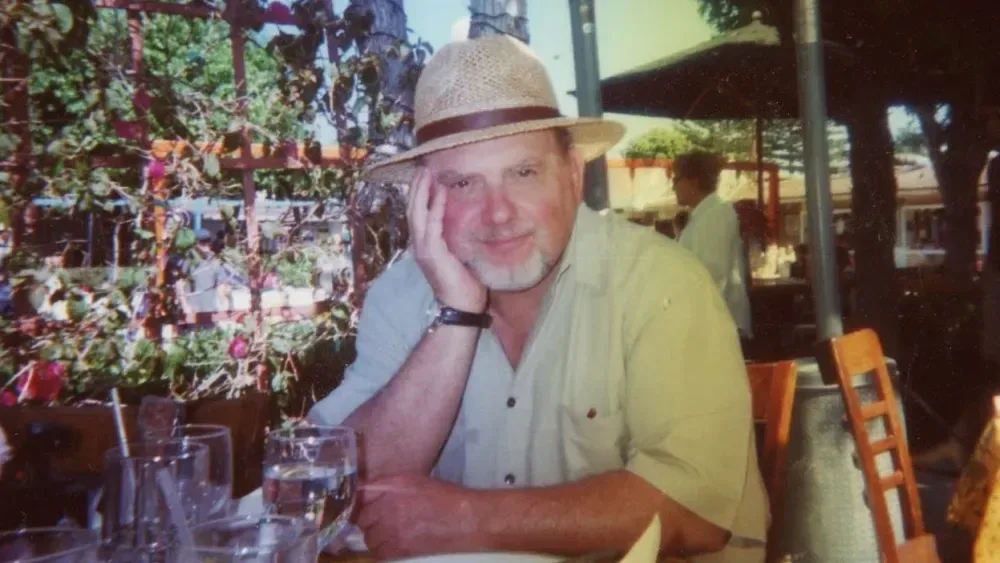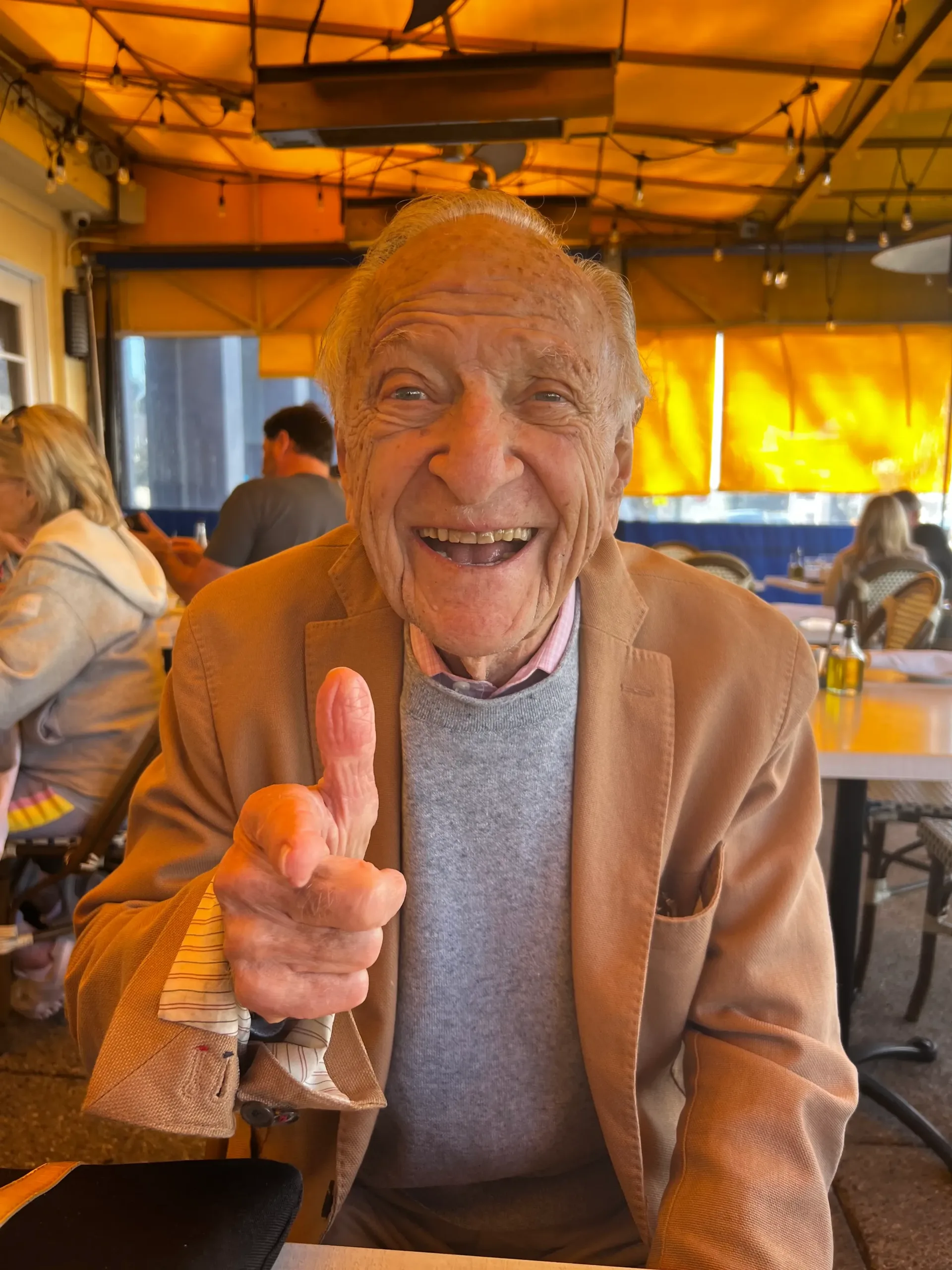
Dick Guttman, the longtime Hollywood publicity executive and screenwriter whose working life brought him alongside some of the entertainment industry’s most recognizable performers and films, has died. Guttman died Sept. 19 in Los Altos, California, at 93.
His career moved through the changing mechanics of celebrity—from an era in which individual actors needed independent representation beyond the studio system to a later period of major awards-season films, global entertainment companies and enduring character brands. Across decades at Rogers & Cowan, Guttman & Pam and Guttman Associates, he represented performers including Barbra Streisand, Clint Eastwood, Paul Newman, Audrey Hepburn, Natalie Wood, Gene Hackman, Warren Beatty, Elizabeth Taylor and William Shatner.
Guttman’s death marks the loss of a behind-the-scenes figure whose work touched both the public image of individual artists and the campaigns surrounding landmark movies. Publicity often leaves fewer obvious artifacts than a screenplay, performance or directing credit, but it can be essential in establishing what audiences know about a film, a personality or a company—and when they encounter that story.
A career built around the people behind the marquee
Guttman came to Los Angeles from St. Louis, Missouri, with his family after World War II. His interest in entertainment began early. His official biography recalled him traveling by streetcar to radio-drama soundstages, waiting near the doors for discarded scripts and autographs. While attending Fairfax High, he also entered journalism by covering high-school sports for the Los Angeles Examiner.
That combination of interest in performers, production and reporting was a fitting starting point for publicity. A publicist’s role may involve shaping how a project reaches the press and public, coordinating access to talent, and helping define the information available around a release. It is not the same as creating the work itself. Yet the job occupies a crucial space between production, talent and the audiences who will eventually decide whether to see a movie, follow a performer or recognize a brand.
While studying at UCLA, Guttman worked part-time at Rogers & Cowan PR. He later became a unit publicist in Europe, working on films including Paris Holiday and The Key. A unit publicist is attached to a particular production rather than serving a broad roster of clients. The position can make a production’s day-to-day activity legible to reporters and photographers while a film is being made.
It was while working in Paris as unit publicist on Billy Wilder’s Love in the Afternoon that he met Gisela, who would become his wife. They married in 1956. The couple later spent more than 50 years in Malibu before moving to Los Altos last year.
From “press agent” to independent representation
After returning to Los Angeles, Guttman spent more than a decade at Rogers & Cowan. He preferred the term “press agent,” a label associated with the practical, relationship-driven work of getting performers and projects into public conversation. The wording also reflects the period in which he worked: actors were no longer necessarily tied to studio contracts in the way earlier Hollywood stars often had been, increasing the importance of representatives who could help build and maintain independent careers.
That shift is important context for Guttman’s professional footprint. When performers are managing careers beyond a single studio, a publicity representative becomes part of the network that connects talent to press attention, premieres, interviews and long-term public recognition. A publicist does not determine an actor’s body of work, but can help make sure the work and the person are understood on terms that serve a career.
In 1971, Guttman partnered with Jerry Pam to establish Guttman & Pam. Over the next two decades, the agency became one of Hollywood’s prominent publicity firms. In the early 1990s, he formed Guttman Associates, continuing to represent a large roster of stars while working on film campaigns.
The client list is striking not simply for its length, but for its range. It includes actors associated with different generations, genres and styles of stardom: Hepburn and Newman; Eastwood and Streisand; Wood, Taylor, Hackman, Beatty and Shatner. A list like that indicates the central challenge of publicity work: adapting to distinct people and distinct moments rather than applying a single template to every client.
Film campaigns across eras
Guttman’s agency work also extended to films including Dirty Harry, Bonnie and Clyde, The Conversation, Kramer vs. Kramer, All That Jazz, The Year of Living Dangerously, The Man Who Would Be King, Unforgiven, Shakespeare in Love, The English Patient, The King’s Speech and The Artist.
Those titles span very different kinds of filmmaking, from crime stories and political dramas to musical cinema and historical narratives. The significance of that variety is less about assigning a single style to Guttman than recognizing the sustained demand for publicity expertise. A campaign for an established star vehicle is not necessarily built around the same story as a film seeking critical attention, prestige positioning or broader awareness for an ensemble.
For viewers, these efforts can seem invisible because the finished film is what endures. But publicity is part of the environment in which a film arrives: interviews, stories about the cast and filmmakers, festival or awards attention, and the basic process of giving an audience a reason to pay attention. Guttman’s list of campaigns shows a career connected to films that continued to occupy public discussion long after their initial releases.
His work was not limited to film performers. Guttman represented author Sidney Sheldon and astronaut Buzz Aldrin, as well as companies including Lucasfilm, Industrial Light & Magic and Sanrio during the introduction of Hello Kitty. That breadth points to a larger principle of entertainment publicity: public identity can belong to a person, a studio, a technical-effects company or a character brand. Each may require its own approach, but all depend on communication that is clear, timely and credible.
In an earlier reflection on the number of people he had represented, Guttman estimated that he had worked with roughly 700 clients, including about 200 people he considered legends. Whatever the exact total, the estimate conveys the scale of a professional life built on long-term relationships across entertainment and adjacent fields.
Writing credits and a record of Hollywood stories
Guttman also worked as a screenwriter, receiving credits on seven films. Among them was 1963’s Back Door to Hell, which featured Jack Nicholson. His television-film work included collaborations with director Joseph Sargent on Passion Flower and Ivory Hunters.
That creative work gives an additional dimension to a career more frequently defined by publicity. A screenwriter contributes directly to the text and shape of a production; a publicist helps frame the conversation around it. Guttman worked on both sides of that divide, participating in the creation of screen stories as well as the practical work of presenting artists and projects to the world.
In 2015, he published the autobiography Starflacker, chronicling stories from his decades among major Hollywood figures. For readers interested in the business architecture around entertainment, such accounts have value beyond celebrity anecdotes. They can show how careers and public narratives are assembled by a wider group than the famous faces on a poster.
The entertainment business still relies on that collaborative infrastructure. From screenwriters and unit crews to representatives, publicists and producers, many of the people shaping a project’s life are not its on-screen stars. Guttman’s long career is a reminder that Hollywood history includes the people who helped artists move from a set, a script or a company office into the public imagination. For another look at how creative industries connect artists with broader professional opportunities, see this report on a New York Broadway business program involving Rachel Zegler, Aaron Sorkin and Tom Felton.
Guttman Associates continues
Guttman Associates remains active, with Susan Madore and Rona Menashe overseeing the firm. Its continuation is a practical part of Guttman’s legacy: a professional institution and client network built over decades that remains in operation after its founder’s death.
Guttman is survived by his wife of 70 years, Gisela; daughters Danielle Guttman Klein and Monika Guttman Robertson; granddaughters Alyssa Brucculeri and Claire Robertson; great-granddaughter Aria Brucculeri; and sister Joan Ostrow.
Donations in his memory may be made to the Dick Guttman Memorial Fund at the Entertainment Industries Foundation. The fund supports people in the creative community through philanthropic work that includes wildfire relief.