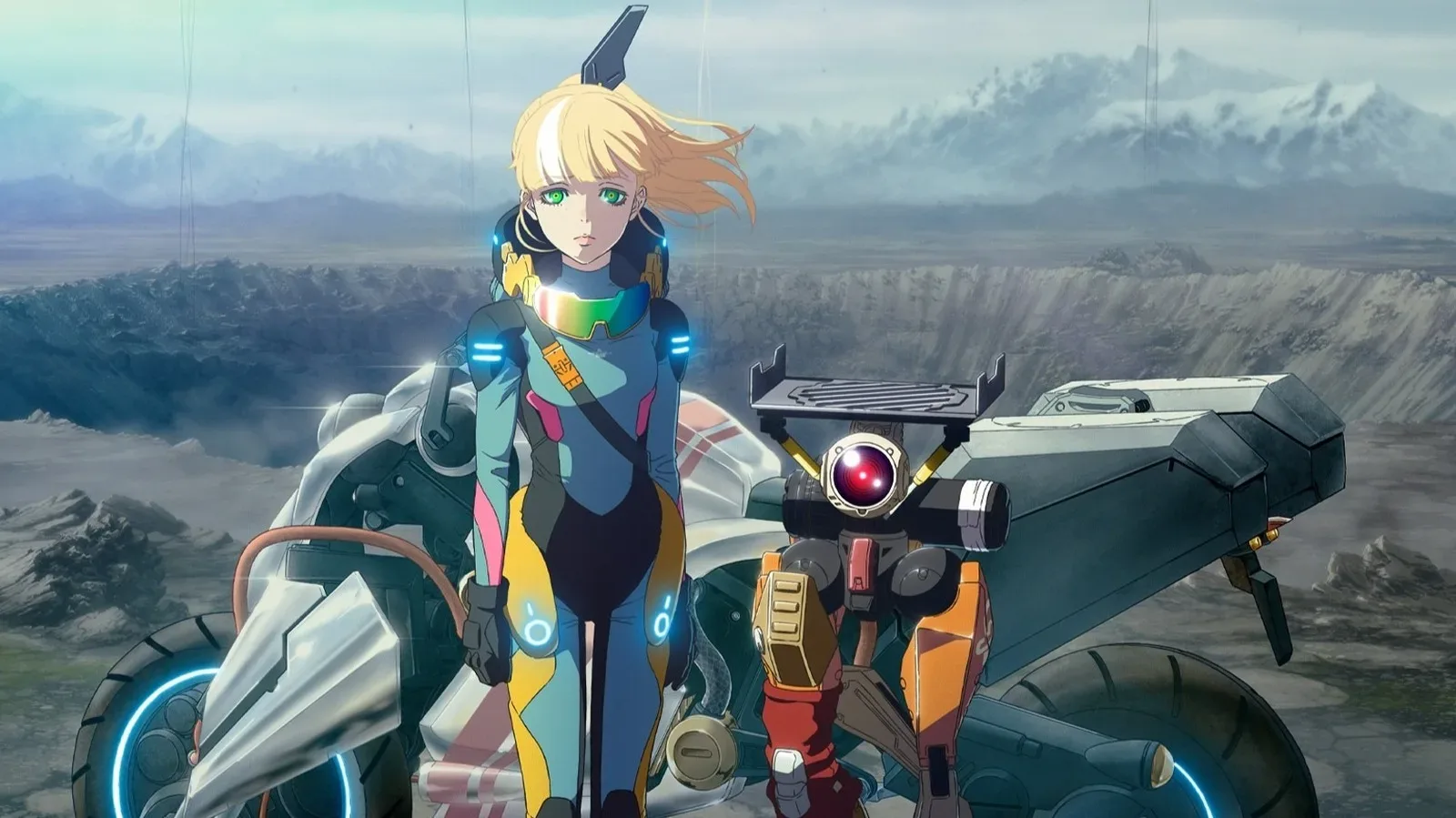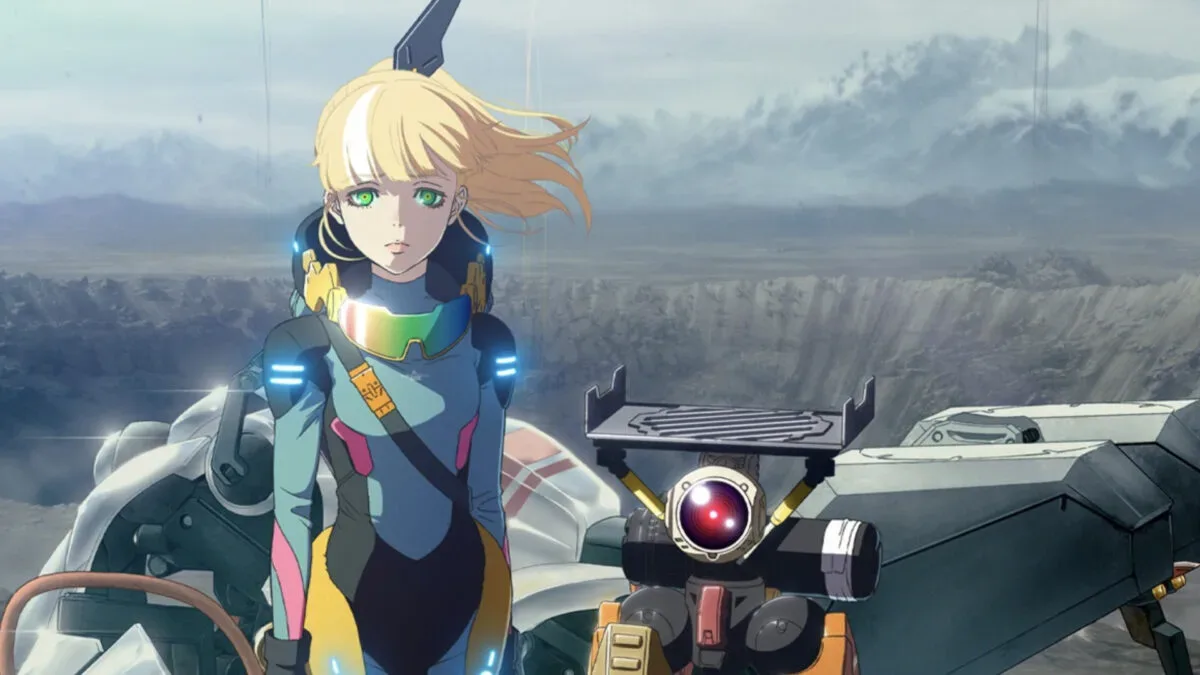
Death Stranding Isolations has offered its first, deliberately limited look at an anime story set in the unsettling world of Death Stranding. The teaser does not attempt to explain its mysteries. Instead, it supplies an image that feels designed to lodge in the brain: a lone trailer home sitting within a vast crater, where an unnamed young girl sleeps until a nightmare involving BTs interrupts her rest.
Then comes the line doing most of the conversational heavy lifting: “My mom became a crater.”
It is an absurd sentence when pulled out of context, and it has naturally inspired jokes. In Death Stranding terms, though, it may be a concise, tragic clue to the show’s central event. The games use the term voidout for enormous explosions that occur under particular circumstances and can leave craters behind. The teaser does not spell out what happened to the girl’s mother, but the wording and setting make a connection to a voidout a reasonable reading rather than a confirmed plot detail.
That distinction matters. Death Stranding Isolations is making an early promise of atmosphere, character trauma and questions—not a detailed synopsis. For a franchise that often treats explanations as things to be earned through continued contact with its world, a crater, a child and an unsettling dream are a very on-brand opening hand.
An original story, not a replay of the games
The most important detail in the reveal may be the protagonist herself. The girl is a new character, and Isolations is set to tell an original story within the Death Stranding universe rather than simply animating the existing game narrative. That gives the production room to approach the setting from a different emotional angle: a young person living with the consequences of a catastrophe, rather than a familiar game character undertaking a known journey.
It also means viewers should not assume that seeing a familiar concept guarantees a familiar outcome. BTs, craters and the wider apocalyptic setting establish the shared universe, but the teaser positions its own heroine and her family loss as the immediate focus. The effect is closer to entering a strange place through a new resident’s memories than receiving a scene-by-scene retelling.
For newcomers, the teaser’s vocabulary needs a little unpacking. BTs are one of the franchise’s defining supernatural threats, and the girl’s dream shows them rising through the ground. The abbreviation itself is not explained in the teaser, but its appearance instantly marks the anime as part of the same hostile, uncanny reality as the games. A voidout, meanwhile, is a destructive blast in that world whose aftermath can include a giant crater. The crater around the trailer therefore works on two levels: it is a striking visual location, and it may be physical evidence of the event that shaped the protagonist’s life.
There is another deliberately vague image to consider: a shadowed figure approaches the sleeping girl before the teaser ends. It could be a threat, a memory, a dream manifestation or something else entirely. At this stage, identifying the figure would be pure speculation. What the scene does establish is that the character’s sleep is not a refuge from the world outside. The boundary between nightmare, grief and danger appears to be thin.
Related coverage includes Death Stranding Isolations Teaser Introduces a New Hero and a Haunting Crater Mystery.
Why the “crater” line is more than a meme
The tagline works because it is simultaneously funny in its bluntness and awful once the setting’s rules come into view. A crater is normally an object or location: something people point at, map and attempt to understand. Calling it a mother turns a landscape feature into a statement of personal loss. It also suggests the scale of the young protagonist’s pain. Her mother is not merely gone; her absence may be the giant wound in the terrain surrounding her home.
That reading remains an interpretation, not a stated plot revelation. The available footage does not confirm precisely whose body was involved in a voidout, whether the girl personally witnessed it, or how much time has passed. But the show’s advertising plainly wants viewers to hold the phrase beside its crater image and consider the implication.
In practical storytelling terms, that premise could give Isolations a clean entry point for people who have never played Death Stranding. Viewers can understand the emotional fact immediately: a child has a devastating relationship to the place where she lives. Familiar players, meanwhile, can recognize the ominous significance of the crater and BT imagery. One mystery therefore serves two audiences without requiring the teaser to pause for a lore lecture.
The choice to center a child also changes the apparent scale of the story. The teaser’s setting is not presented as a grand tour of the apocalypse or an encyclopedic explanation of the setting. It is intimate: sleep, a dream, a home and a person approaching in shadow. A world-ending event is present in the background, but it is filtered through someone who may understand only fragments of it. That is a promising fit for a universe where the incomprehensible is often as important as the explained.
The creative team behind Isolations
Hideo Kojima is executive producing Death Stranding Isolations. Takayuki Sano directs the anime after work as animation director on Attack on Titan: The Final Season; Isolations is his first project as a lead director. That is a meaningful distinction. An animation director role concerns the visual execution of animated material, while the lead director carries the broader responsibility of shaping the series’ overall creative direction. The teaser is too brief to judge how that transition will play out, but Sano’s appointment places a major new responsibility at the center of the project.
Character designs come from illustrator and designer Ilya Kuvshinov, whose previous credits include Ghost in the Shell: SAC_2045 and Scott Pilgrim Takes Off. In animation, character design is more than a matter of making a face look appealing in a promotional image. Designs need to communicate personality, support expression and movement, and remain readable as animation repeatedly brings them to life. For a series that is introducing an all-new lead rather than relying on recognition of an established game hero, that work will be especially visible.
E&H Productions leads the animation. The studio is relatively new, so the series represents a notable showcase for its work within a major game universe. Tow Ubukata is writing the script. His science-fiction credits include Psycho-Pass 2 and Ghost in the Shell Arise, an appropriate background for a project balancing a surreal disaster setting, speculative concepts and the smaller-scale emotions implied by the teaser.
The team’s combined credits point toward experience with science fiction, stylized worlds and high-pressure animation, but they should not be mistaken for a promise that Isolations will resemble any one earlier series. A résumé indicates the perspectives creators may bring; it does not reveal episode structure, tone across a full season or the shape of this particular original story. The teaser is the only direct evidence so far, and it favors mystery over definition.
What is confirmed, and what remains unknown
There is enough information to set reasonable expectations, but not enough to fill in the series’ major blanks.
Confirmed so far
- Death Stranding Isolations is an anime set in the Death Stranding universe.
- It follows an unnamed young girl who is new to the franchise.
- The series tells an original story with new characters rather than directly adapting the game’s existing story.
- The first teaser includes a crater, a trailer home, BTs, a shadowed figure and the “My mom became a crater” tagline.
- Kojima is executive producer; Takayuki Sano directs; Ilya Kuvshinov handles character designs; E&H Productions leads animation; and Tow Ubukata writes the script.
- Global streaming is planned for 2027 on Disney+, with Hulu handling the United States.
Still unconfirmed
- The protagonist’s name, her mother’s identity and the precise meaning of the tagline.
- Whether the crater definitely resulted from a voidout and, if so, the exact circumstances.
- The identity and role of the shadowed figure.
- Further story details, supporting characters and a more specific release date.
That list of unknowns is not a flaw in the reveal; it is the reveal’s design. The teaser offers just enough shared terminology to orient existing fans while building its hook around a question that is human before it is technical: what happened to this girl’s mother, and what does it mean to grow up literally inside the aftermath?
A broader reminder that game worlds can support new viewpoints
Original screen stories in established game settings have a difficult balance to strike. Lean too heavily on familiar names and events, and the project can feel like a reference checklist. Move too far away, and it risks losing the particular ideas that made the setting recognizable. Isolations appears to be taking the middle route. It retains unmistakable Death Stranding imagery and terminology, then builds its premise around people who have not previously occupied the center of the franchise.
That approach has an obvious advantage: it makes room for consequences. Rather than asking viewers to revisit a known event from the same position, it can ask what life is like for someone who inherits a disaster’s geography and mythology. The crater is not merely backdrop. If the teaser’s implication is borne out, it is home, memorial and evidence all at once.
The move arrives amid continued interest in how major game properties expand beyond their original format. Elsewhere in the business, reports of priorities shifting toward a new Star Wars Battlefront project over Mass Effect: Universe underline how consequential franchise decisions can be. Isolations takes a different kind of expansion path: it is not simply another game chapter, but a new story using animation to view a familiar apocalypse from ground level.
For now, the crater remains the show’s clearest symbol and best mystery. It is visually strange, emotionally specific and tied to one of Death Stranding’s most alarming concepts. Until more footage arrives, viewers have a girl, a dream of BTs, an approaching silhouette and a line that turns a colossal scar in the earth into a family tragedy. That is not much plot, but it is more than enough mood.