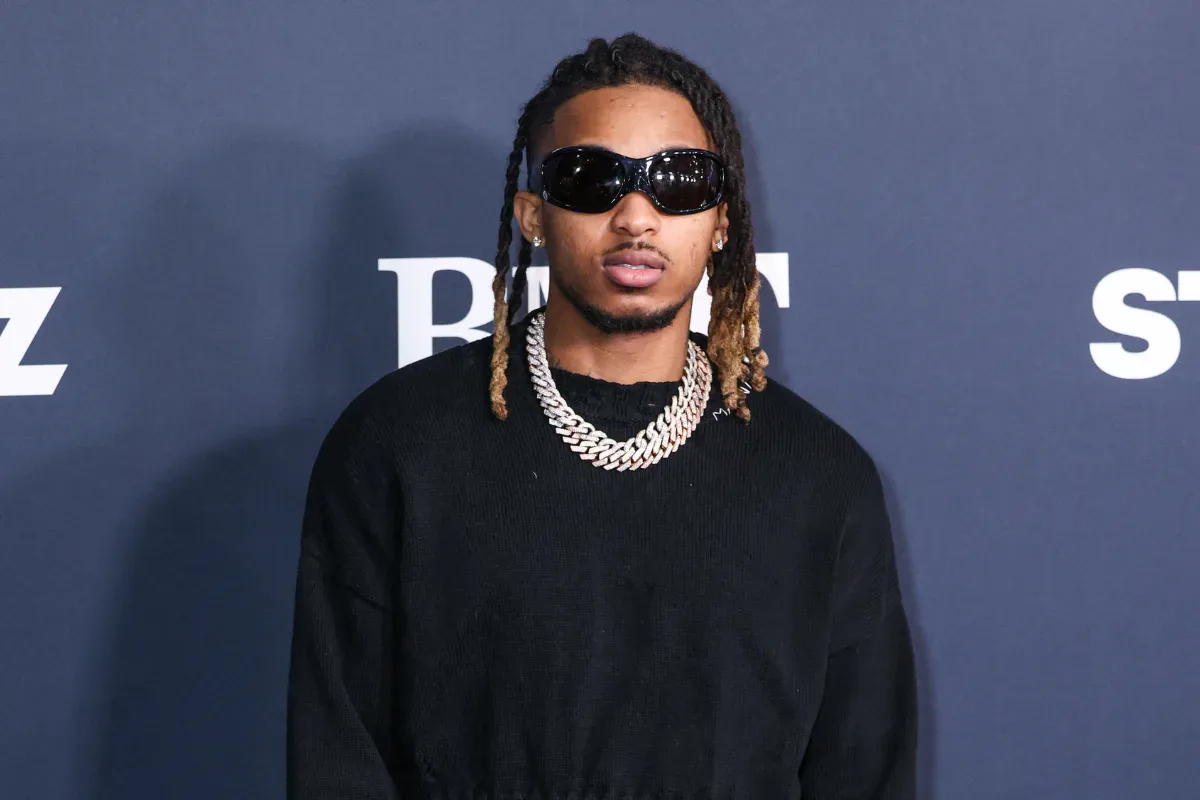
The 2026 Streamer Awards’ Best Music Streamer category has a four-person field: DDG, PlaqueBoyMax, Bishu and AriAtHome. It is a notably broad contest by design, covering streamers whose music work can include singing, playing instruments, DJing, producing and composing.
DDG and PlaqueBoyMax arrive with a particularly visible shared thread: both have made the audience part of the creative process rather than treating a finished song as the only thing viewers see. Their nominations put that participatory approach alongside the work of Bishu and AriAtHome in a category built to recognize music content on stream, not one narrowly defined musical role.
Voting opened October 16 and closes October 31. The awards show is scheduled for November 12. Fans determine 70% of the final result, while a panel is responsible for the remaining 30%.
A category with a wide definition of music streaming
Best Music Streamer is meant to encompass more than a singer performing live or a DJ playing a set. The category’s definition explicitly includes several disciplines: singing, instrumental performance, DJing, producing and composing, among others. That matters because the nominees’ work can be judged through different kinds of live entertainment and craft.
Producing, in this context, refers to the process of shaping a recording: it can involve developing the sound, arranging parts, steering a session and helping turn a musical idea into its completed form. Composing concerns creating the music itself, while streaming adds another layer—the work is presented as it happens, with an audience able to witness the decisions, delays, conversations and revisions behind it.
That distinction is central to the DDG and PlaqueBoyMax cases. A conventional release presents listeners with a completed track or album. A music stream can instead turn development into programming. Viewers may see artists meet, guests enter a studio, ideas become songs and a project change direction before it is released.
The category therefore recognizes the blend of music-making and live creator work. It is not simply an award for the most successful release, and it is not limited to a single genre or performance style.
DDG’s live album-making format
DDG’s nomination follows another live album-making run. He released the 15-track HIT-A-THON last month after a seven-day, around-the-clock stream in Atlanta. The broadcast showed the recording process while guests came through to work on songs.
Related coverage includes DDG, PlaqueBoyMax Lead 2026 Best Music Streamer Field.
The finished album included Lil Yachty, 42 Dugg and Real Boston Richey, bringing collaborations that occurred around the live sessions into a release through Epic Records. The format gives a project two distinct lives: first as a stream built around the process, then as an album made up of completed recordings.
That was not the first time DDG had made the audience part of the format. During his 2025 Hit-A-Thon, viewers had input on which songs made the eventual record. They also weighed in on beats and offered feedback on lyrics. Shaboozey, Kevin Gates and Ty Dolla $ign were among the artists who participated.
The practical implication is that audience interaction is not merely a comment feed placed beside a studio session. In this model, viewer response can influence choices that affect the project itself: which material advances, what direction production takes and how lyrics are received in real time. The resulting album still remains an artist-led work, but its public path to completion is unusually visible.
DDG previously described the appeal of this approach as giving fans a way to watch studio work unfold and witness first meetings with guest artists. For a viewer, that access can make a later release feel less like a surprise drop and more like the end of a process they followed from its early stages.
PlaqueBoyMax’s chat-driven studio sessions
PlaqueBoyMax has also used live collaboration as part of his music content. His audience has helped select names for new songs with guest artists, allowing the chat to participate in one small but concrete piece of the recording process. Viewers can follow a song during a live studio session as it takes shape.
Song titles are not the same as composition, production or performance, but they are part of how a track is presented and remembered. Letting a live chat help make that decision illustrates the specific appeal of interactive music streaming: the audience is not only consuming an event but can be invited into selected creative choices while the event remains live.
PlaqueBoyMax also has a major music-industry credit attached to his work. “Victory Lap,” his collaboration with Fred again.. and Skepta, received a Best Dance/Electronic Recording nomination at this year’s Grammy Awards. PlaqueBoyMax was listed among both the track’s artists and producers.
That credit gives the Streamer Awards nomination a useful additional dimension. The music-streaming category is about live creator content, whereas the Grammy nomination concerns a specific recording within a genre category. Together, they show how a creator can move between a live audience-facing practice and a formal recorded-music credit without those being identical measures of achievement.
How the vote can shape the result
This year’s Streamer Awards process also gives creators a new route into the field: creators were able to nominate themselves for an award. Fans’ leading selections populated each category, while a panel added one additional nominee. The final Best Music Streamer lineup is therefore the product of both audience preference and panel participation.
The 70/30 final-vote split is significant. With fans accounting for 70%, community turnout is the dominant factor. The panel’s 30% share still has meaningful weight, however, especially in a four-nominee race. It means the winner will not be selected solely by a public tally, but public mobilization remains the clearest route to the result.
- Voting opened: October 16
- Voting closes: October 31
- Fan share of final result: 70%
- Panel share of final result: 30%
- Awards show date: November 12
Why the matchup stands out
The four-nominee ballot is a reminder that “music streamer” can describe a format as much as a genre. The category can accommodate artists who sing, play, DJ, produce or compose, and it leaves room for very different ways of turning musical ability into a live broadcast.
For DDG and PlaqueBoyMax, the overlap lies in making studio work legible and participatory to viewers. DDG’s streams have included feedback on songs, beats and lyrics as well as guest sessions; PlaqueBoyMax’s chat has helped name tracks while the audience watches music form in the studio. Those are separate practices, but both make the audience’s proximity to creation part of the attraction.
There is also a broader entertainment angle: live streaming can preserve the uncertainty normally edited out of a polished release. A guest may arrive, a song may be changed, a title may be debated, or a track may not make the final project. That unpredictability is valuable as programming because it gives viewers a reason to be present rather than simply wait for the finished music.
It is one more example of how online creators and established entertainment industries increasingly overlap, a shift also visible across wider pop-culture reporting on how creative work reaches audiences. In this race, though, the immediate question is straightforward: which nominee’s music content and community will carry the most support before voting ends on October 31?