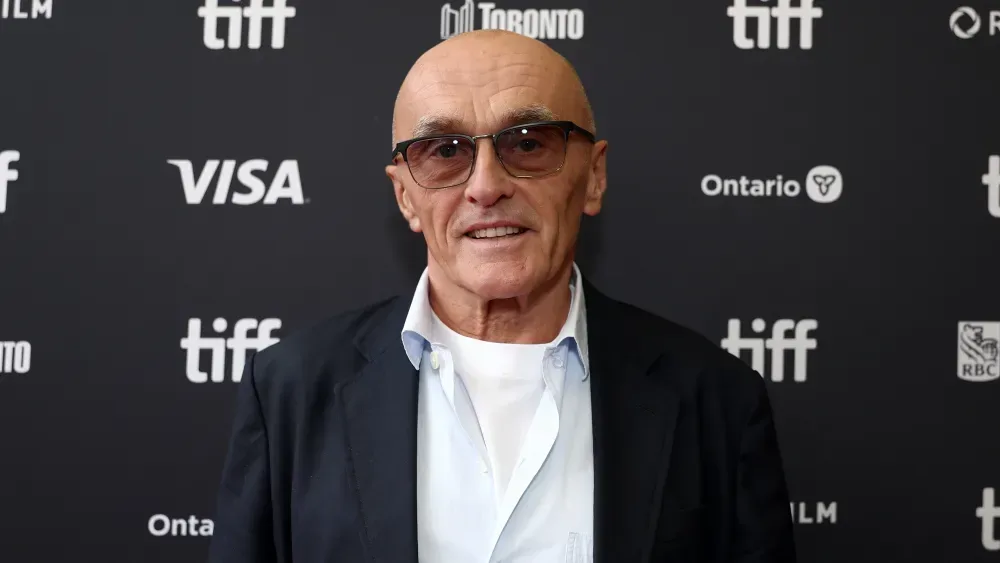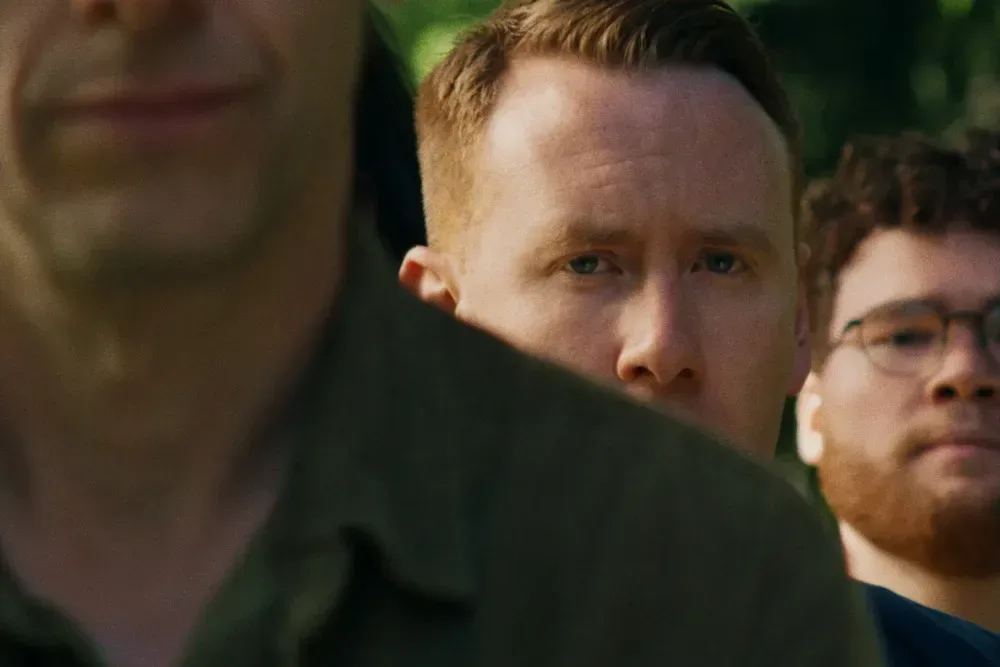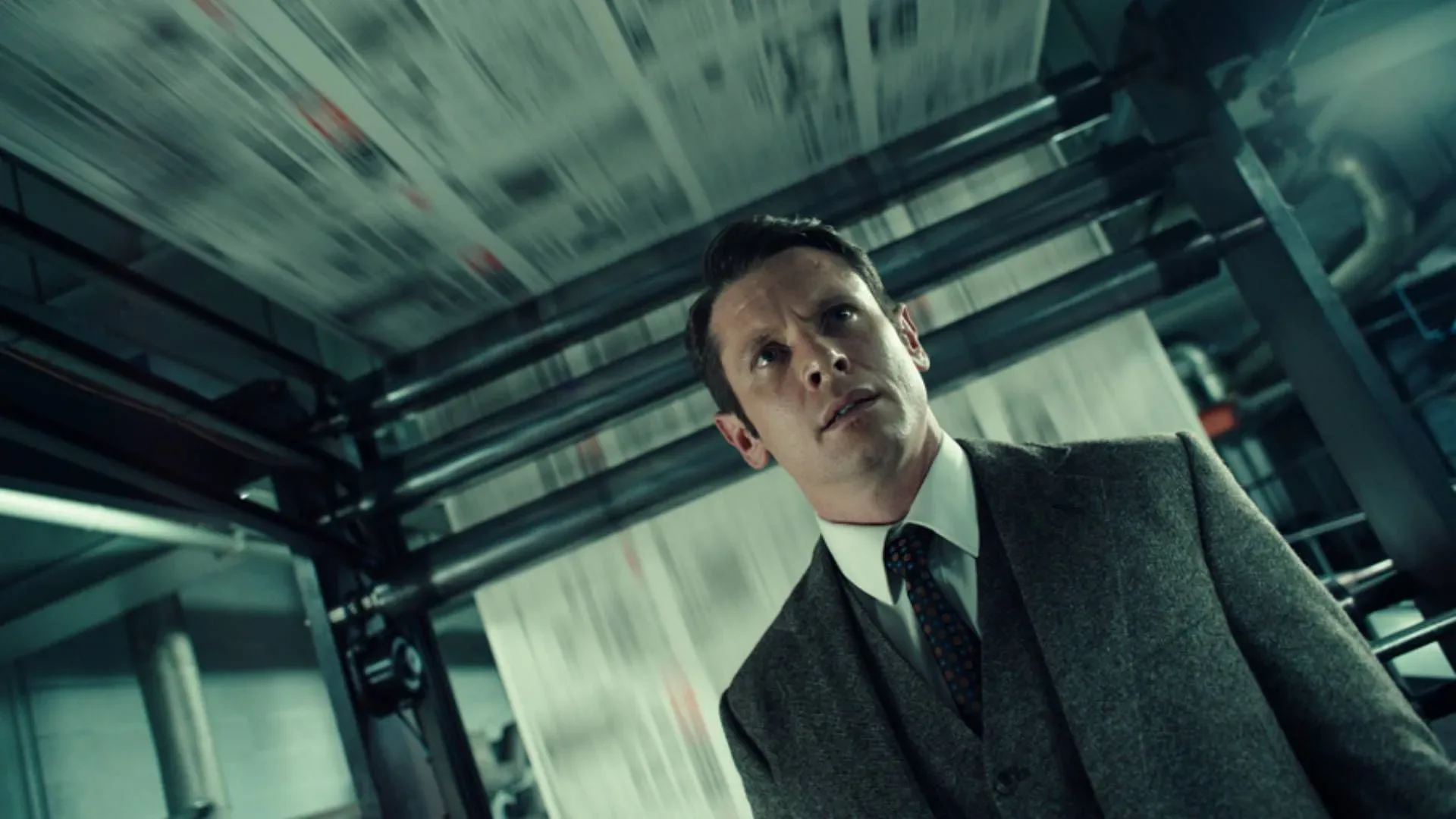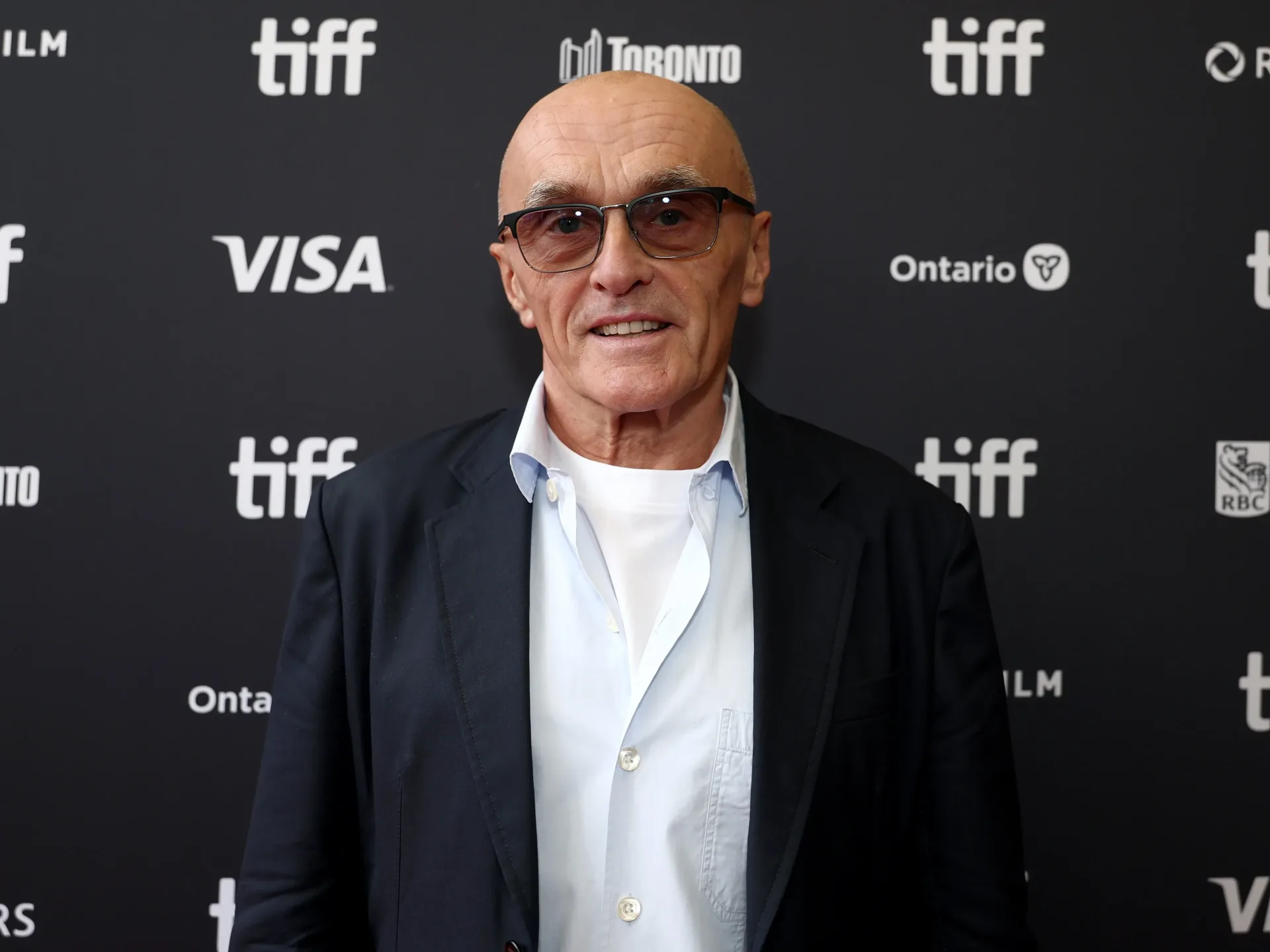
Danny Boyle has put a remarkably precise number on the artificial-intelligence component of Ink: about 30 seconds. Speaking after the film’s Canadian premiere at the Toronto International Film Festival, the director described the technology as a small part of the production rather than its creative engine, saying it was used to animate a couple of older photographs and to help create mice moving around The Sun newsroom.
That narrow disclosure is useful because “AI in a movie” can mean almost anything. It can refer to imagery made from a text prompt, altered performances, generated voices, digital background work, or tools used inside a conventional visual-effects workflow. Boyle’s description places Ink in the latter, limited-use territory: brief effects work tied to specific shots, not a claim that the film was made with generative AI.
The film follows the rise of the British tabloid The Sun under owner Rupert Murdoch and editor Larry Lamb. Guy Pearce plays Murdoch, while Jack O’Connell plays Lamb. Its subject is an era in which the paper embraced attention-grabbing headlines, contests and topless women instead of prioritizing hard-news reporting—a charged backdrop for a modern discussion about tools that can alter images and the systems that distribute them.
What Boyle said about the AI footage
Boyle said the production used only “a tiny amount” of AI and connected it to visual effects, or VFX. In film production, VFX is the broad term for imagery created or modified after filming: a period skyline, a removed modern object, an environmental extension, compositing, digital creatures, or a photograph brought to life can all fall under that umbrella. AI is increasingly one potential tool within that larger department, rather than a separate genre of filmmaking.
“We try to be very responsible and make sure no actors were out of work because of it,” Boyle said. “We would always employ actors if we were going to use a bit of it.”
His comments identify a practical labor question without claiming to solve the much larger debate. The distinction matters. A filmmaker can describe a tiny, bounded application in one project while still recognizing that broad adoption across an industry may carry different consequences. Boyle did exactly that, declining to turn a post-screening question into a sweeping verdict on AI’s place in filmmaking or society.
“The wider question” is “huge and complicated,” he said, adding that it is a conversation “we will need to go into, all of us.” The event’s moderator then ended the Q&A.
Why 30 seconds is not a trivial detail
Thirty seconds is a short duration in a feature film, but it is not meaningless. It gives audiences a more concrete way to assess the disclosure. The reported uses—animated old photos and newsroom mice—sound like shots designed to add motion or atmosphere, not substitutes for the central dramatic performances by Pearce and O’Connell.
Related coverage includes Danny Boyle Says ‘Ink’ Uses About 30 Seconds of AI at TIFF.
It also helps separate two questions that are often bundled together:
- What was the tool used for in this specific film? Boyle identified limited material: archival-photo animation and animals in the newsroom, amounting to roughly 30 seconds.
- What could AI mean for creative work and employment at large? Boyle acknowledged the stakes but offered no comprehensive answer in the brief festival setting.
That division is especially important when discussing a historical drama. Audiences may reasonably care whether a production alters archival materials, recreates animals digitally, or changes an actor’s work. Those are different creative and ethical categories, even if each involves some version of machine-assisted image generation or manipulation.
Boyle’s stated safeguard concerns performers: actors would be hired rather than replaced where the production used the technology. It is a commitment about the movie’s approach, not a detailed account of every process used by its VFX team. The comments do not establish which software was used, how the imagery was produced, or whether any other job categories were involved. Those details were not provided, and it would be a mistake to fill them in from the word “AI” alone.
A film about attention, power and a tabloid’s transformation
Ink is built around figures whose public personas can be so large that they threaten to flatten into shorthand. Boyle, Pearce and O’Connell discussed the challenge of finding the people inside those reputations. Boyle said he connected with Lamb’s experience as a Yorkshire-raised outsider coming to London, relating it to his own background as someone from Lancashire.
Pearce approached Murdoch through archival footage from the mid-1960s onward. His research did not initially lead him to the imposing, mythic figure many people associate with Murdoch. Instead, Pearce said the clips often showed someone awkward, shy and humble, while also revealing intense ambition.
That is an acting approach worth distinguishing from endorsement. Humanizing a character means searching for behavior, insecurity, motivation and contradiction that can make a performance credible. It does not require absolving a person of the effects of their decisions. In a story about the commercialization and sensationalization of news, that tension is central: institutional power is exercised by individuals, but portraying an individual with complexity need not diminish the impact of the institution.
O’Connell’s Lamb is described as swaggering, while Pearce’s Murdoch carries a more reserved presentation. The contrast appears suited to a drama about how a newspaper’s public identity is built: ambition can be quiet in the boardroom and loud on the page. Ink examines that shift through a paper that increasingly chose provocation and spectacle over more substantive reporting.
Analysis: the disclosure is clearer than a blanket label
From the available comments, the most responsible reading is neither “AI made Ink” nor “AI is irrelevant to Ink.” Both conclusions erase the useful specifics. AI was used in a reported 30 seconds of the film, and Boyle characterized it as VFX-related work for defined sequences. That is a real production choice, even if it is a restrained one.
Transparency works best when it comes with scope. The number of seconds, the identification of old photographs and mice, and the director’s remarks on employing actors tell viewers more than a vague yes-or-no label ever could. They also leave meaningful questions open, particularly about standards for archival imagery and the evolving relationship between VFX workflows and machine-learning tools.
The festival exchange did not provide a policy, a technical breakdown or a universal rule for future productions. It did offer a small case study in how directors may explain limited AI use: name the amount, identify the intended function, and address the human work the production says it sought not to displace. In an entertainment landscape already preoccupied with authenticity, that level of specificity is likely to matter as much as the technology’s presence itself.
For more on films engaging with the pressures of online scrutiny and public image, see ‘Salvation’ and its social-media microscope.