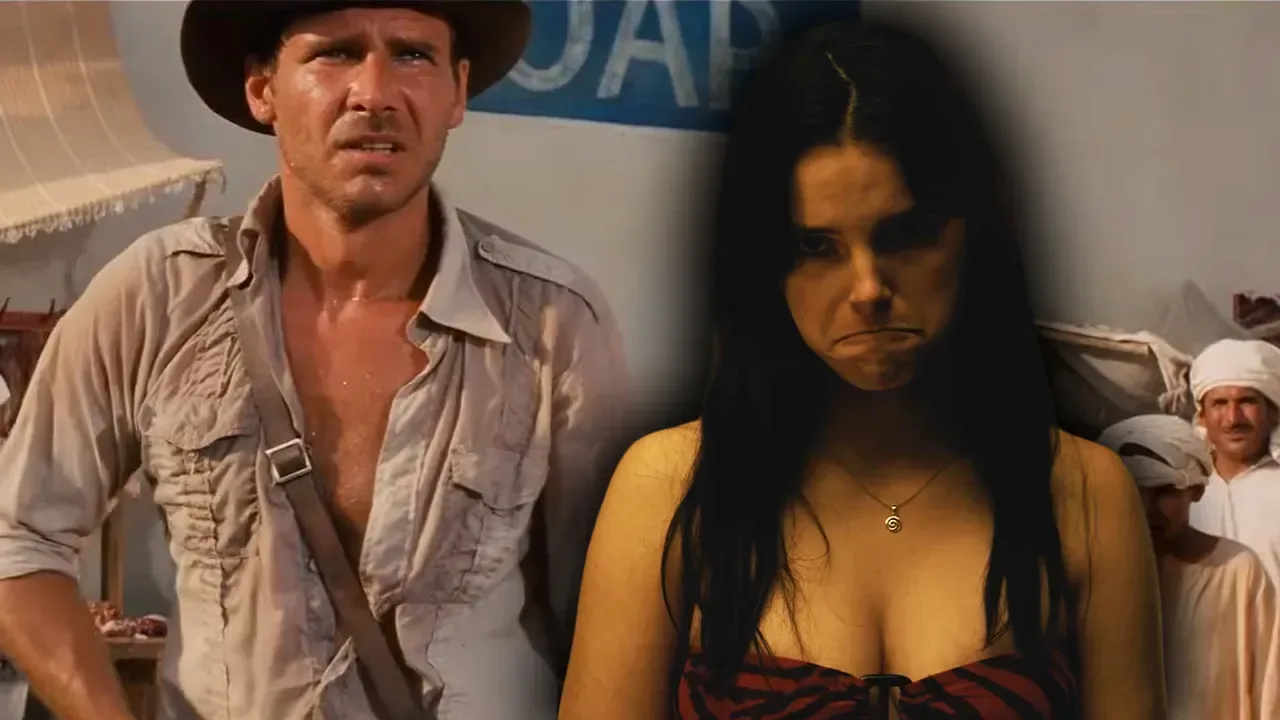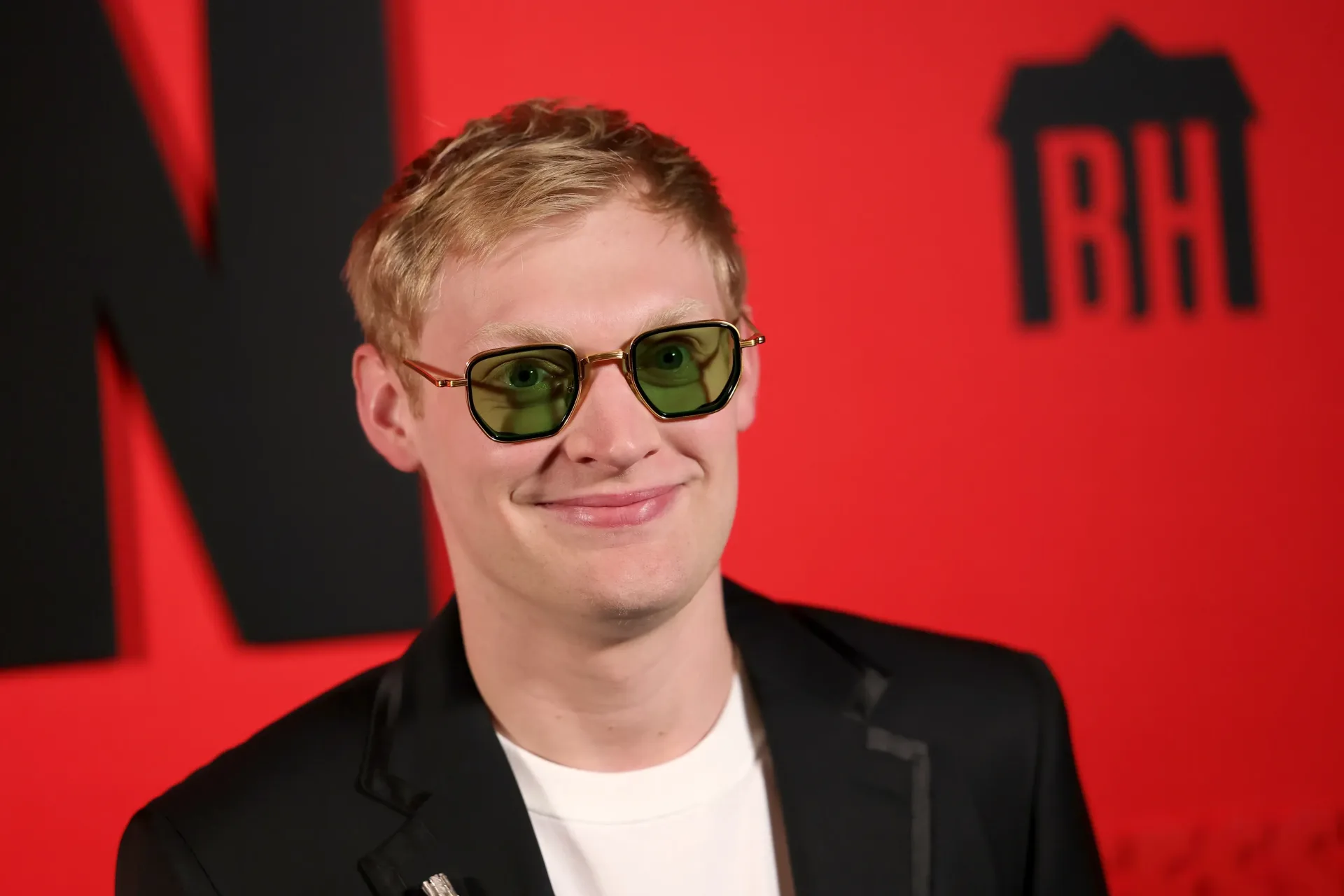
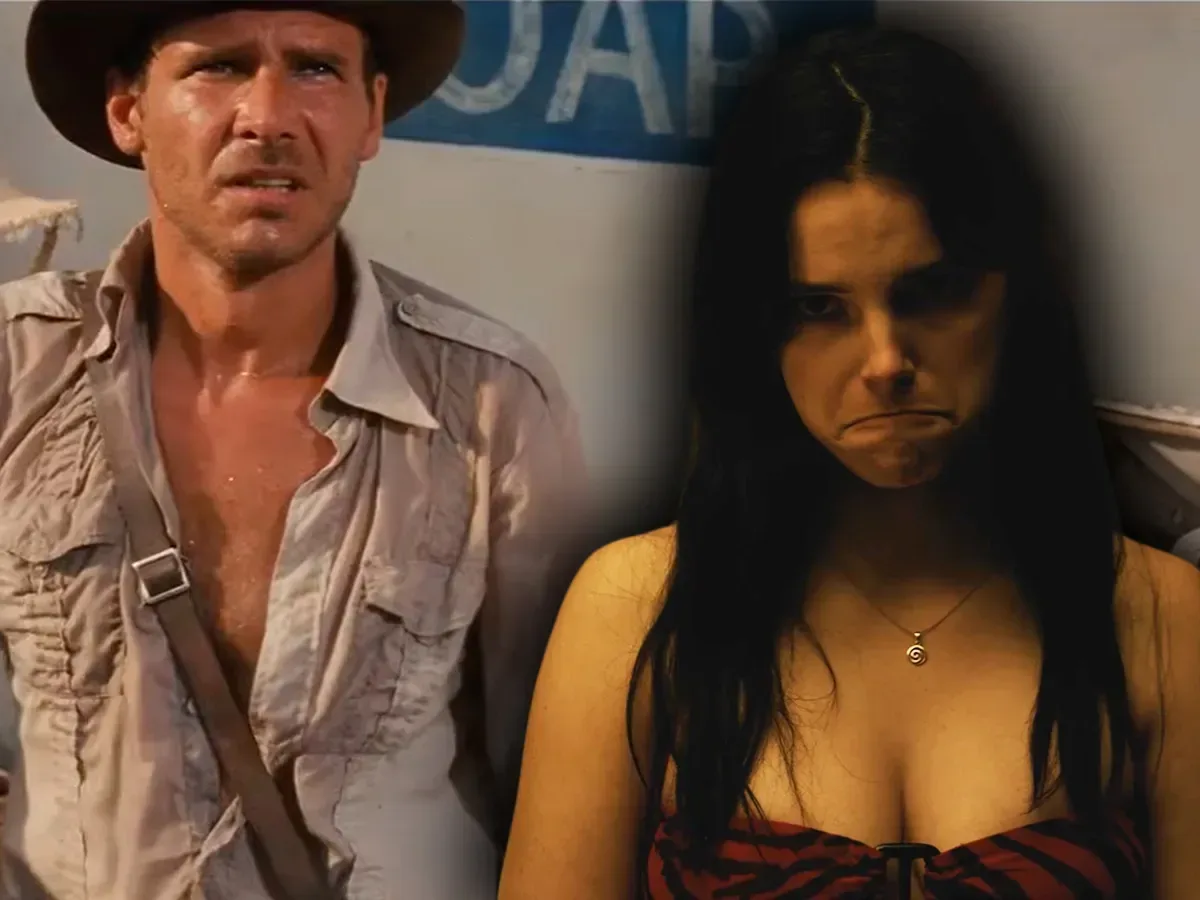
Curry Barker has described the kind of Indiana Jones movie he would want to make if the opportunity ever came along: an R-rated adventure built to get considerably stranger and harsher than the family-friendly version of the format audiences usually know.
The Obsession filmmaker’s comments are an expression of creative interest, not news of an Indiana Jones film in development or an attachment to the franchise. But the pitch is specific enough to illuminate what Barker and frequent collaborator Cooper Tomlinson believe is missing from contemporary action-adventure storytelling: a journey with the propulsive scale of a classic treasure hunt, but with ordinary protagonists, more tangible consequences, and room for horror to disrupt the ride.
Barker said he would want to make a “really f**ked up, rated-R version” of Indiana Jones, framing it as an opportunity to make an unusually wild adventure movie. He and Tomlinson have discussed taking the familiar structure—one or two everyday people setting out and finding events spiralling beyond their control—and pushing it much further.
This is a creative wish, not a franchise announcement
It is worth separating the headline-friendly idea from what has actually been said. Barker has not announced a script, deal, release date, cast, studio involvement, or an officially sanctioned Indiana Jones project. The comments amount to a filmmaker identifying a direction he would find exciting.
That distinction matters especially with major legacy properties. A director saying they would like to work with a character is fundamentally different from a production moving into development. For now, the useful takeaway is not that an R-rated Indiana Jones movie is on the way, but that Barker sees an opportunity in combining adventure mechanics with adult-oriented intensity.
His central question is simple: what changes when a relatively normal person enters a world that becomes genuinely extreme? In an action-adventure story, that premise can affect more than the amount of onscreen violence. It can reshape the lead character’s confidence, their decision-making, the emotional cost of danger, and the meaning of survival after the set pieces stop.
What “R-rated adventure” can mean
An R rating is often reduced to gore, profanity, or shock value, and Barker’s language certainly signals an appetite for a more grisly, unruly movie. Yet an adult rating is not a genre by itself. In the context of his and Tomlinson’s remarks, the more interesting prospect is tonal: adventure stories can retain escapes, chases, mysteries, exotic threats, and heightened spectacle while allowing fear and physical peril to land with less cushioning.
Action-adventure is a hybrid form. “Action” supplies momentum through confrontations and dangerous movement; “adventure” supplies the larger journey, discovery, pursuit, and often a destination or object that gives the plot shape. The tension in Barker’s hypothetical version would come from applying horror-minded escalation to that framework rather than merely adding a few bloodier images.
That could mean treating danger as something that marks the characters rather than something they brush off before the next sequence. It could mean that a bizarre relic, hostile environment, or increasingly impossible quest produces dread as well as excitement. Those are interpretations of the filmmakers’ stated interests, not details of a proposed film, but they explain why the idea is more substantial than a rating change alone.
The phrase “pushing the boundaries” also suggests Barker is interested in the threshold where a traditional crowd-pleasing adventure starts to feel unstable. A conventional adventure can ask viewers to marvel at its protagonist’s ability to improvise through catastrophe. A horror-inflected one can instead make improvisation feel desperately inadequate. The same collapsing bridge, ancient chamber, or chase sequence has a different charge when the characters do not feel protected by the genre’s usual safety net.
Tomlinson’s case for grounded characters
Tomlinson, who co-wrote, produced, and appeared in Obsession, shares the enthusiasm for a return to large-scale adventure films associated with the 1980s and 1990s. His emphasis, though, is on grounding the people and story even when the action becomes implausibly large.
“Grounded” can be an overused word, so it helps to be precise about what it does—and does not—mean here. It does not require every event to be realistic. Tomlinson explicitly leaves space for audiences to suspend disbelief and enjoy spectacular material. Instead, grounding refers to emotional and behavioural credibility: characters should react like people with understandable fears, wants, relationships, and limits.
That approach is particularly relevant to an adventure epic. Viewers can accept a heightened threat or a huge action beat if the people caught in it retain recognizable stakes. A character who is scared, makes an imperfect choice, or has something personal to lose gives the spectacle an anchor. Without that anchor, escalating action can become visually busy but dramatically weightless.
There is a productive tension between Barker’s desire for something deeply twisted and Tomlinson’s call for honesty. One impulse asks for the adventure machine to go off the rails; the other asks that the people inside that machine remain legible. Together, they point toward a version of the genre where big moments are not dismissed as disposable noise. The stranger the journey gets, the more important it becomes to understand why the leads keep moving forward and what it costs them to do so.
Why an everyperson lead changes the formula
Barker’s mention of “two regular guys, or one regular guy” is another important clue. Adventure leads are often unusually qualified for danger: experts, soldiers, detectives, treasure hunters, or heroes with a pre-existing reputation. Beginning with someone more ordinary changes the problem-solving logic.
An expert can enter an ancient ruin or criminal conspiracy with a toolbox of knowledge and an expectation of competence. An everyperson has to learn under pressure. That produces a different kind of suspense because the audience is not merely waiting to see how a talented protagonist wins; it is also assessing whether this person can cope at all.
It can create comedy, panic, and moral compromise without abandoning the scale that makes adventure compelling. It is also compatible with horror: unfamiliarity makes unusual threats harder to classify, and a lack of expertise makes every choice feel riskier. Again, there is no announced story attached to Barker’s comments, but the creative direction he describes has a coherent internal logic.
The collaborators’ current projects point in different directions
While Barker and Tomlinson are talking about a hypothetical adventure movie, their immediate work remains elsewhere. Barker’s next film is the horror-comedy Anything But Ghosts, which is slated for May next year. The project’s genre label is notable because horror-comedy, like horror-adventure, relies on tone management: fear and absurdity need to coexist without one completely cancelling out the other.
Meanwhile, Michael Johnston, who played Bear in Obsession, has been cast in The Mummy: Book of the Dead. The film is scheduled for October 15, 2027, and will feature Brendan Fraser and Rachel Weisz. Matt Bettinelli-Olpin and Tyler Gillett are directing.
Johnston has described the difference between the smaller independent production of Obsession and the scale of the new Mummy film. On the larger production, scenes can be filmed many times from many angles, giving performers more room to adjust their work. The trade-off, he noted, is more downtime between setups. By contrast, a smaller independent film can leave little margin for additional takes while requiring cast members to help more broadly behind the scenes.
That production contrast is useful context for Barker’s imagined adventure. A big action-adventure film often depends on a highly segmented process: coverage from multiple camera positions, intricate staging, repeatable physical beats, and considerable coordination. “Coverage” is the term for filming a scene from enough angles and shot sizes to give editors options when constructing the final sequence. It can reduce pressure on a single take, but it also demands patience and precision.
Independent filmmaking can encourage a different energy: speed, economy, improvisational problem-solving, and tighter creative interdependence among the people on set. Neither method automatically produces a better film. They simply impose different constraints. Johnston’s remarks make clear that the change from a smaller horror production to a major action picture is not just a matter of bigger surroundings; it changes the rhythm of the work itself.
Adventure remains fertile ground for genre crossovers
The strongest part of Barker and Tomlinson’s discussion is their shared interest in the adventure epic as a flexible container. Adventure can absorb horror, comedy, mystery, romance, or fantasy because its basic engine is a forward-moving pursuit. The characters have somewhere to go, something to find, someone to outrun, or a problem that expands with every new location.
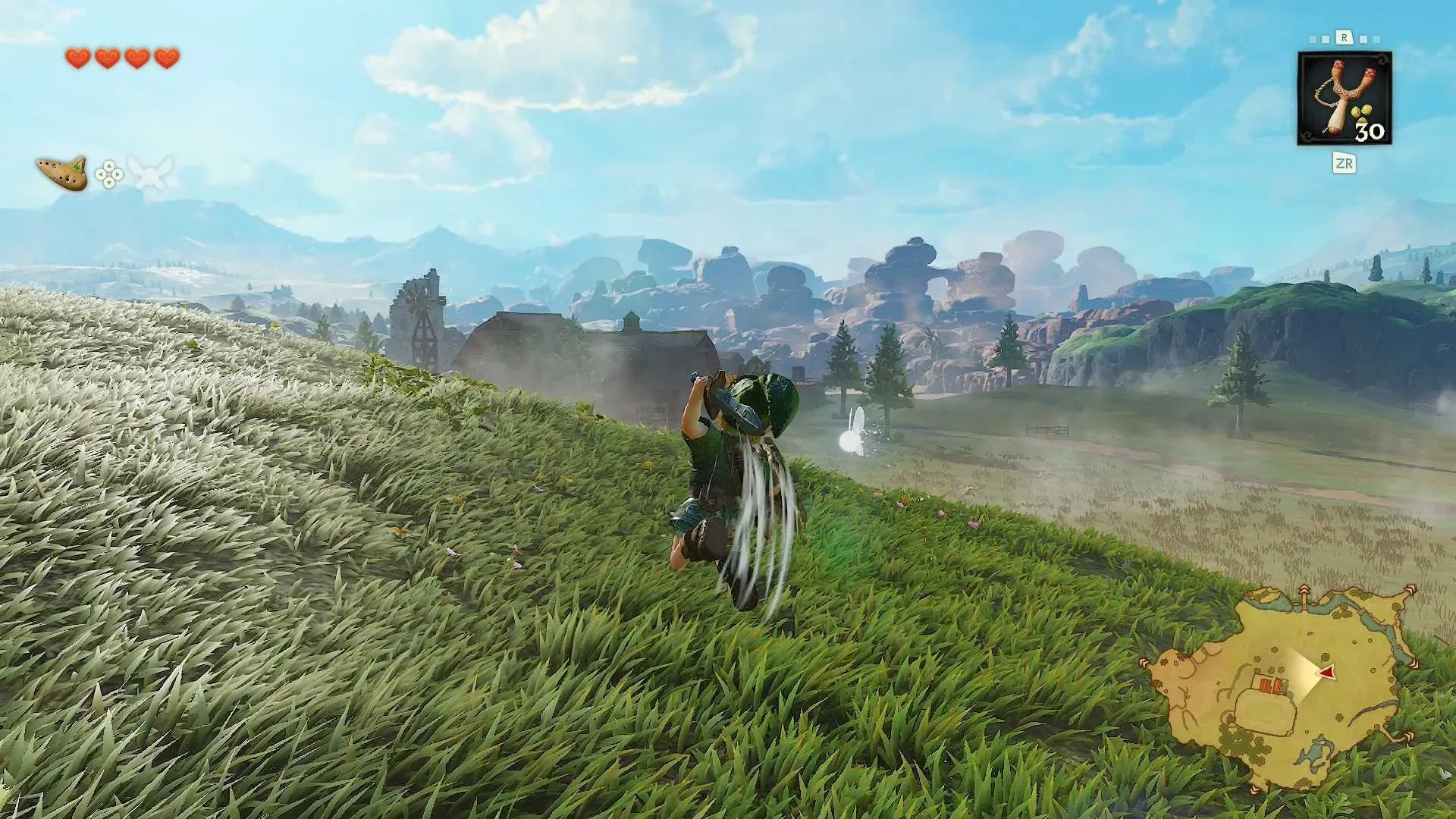
For viewers who want a recent reminder that Indiana Jones-style momentum can be interpreted in another medium, the character’s game presence has also been part of the conversation around modern adventure design. Joking Joystick has covered a gameplay technique in Ocarina of Time’s jump attack shortcut, another example of how action-adventure games turn movement, danger, and discovery into an active player rhythm.
Film and games obviously ask different things of their audiences: a game gives players agency over actions, while a film controls the timing and perspective of every reveal. Still, the shared appeal is clear. Both forms can turn a route through hostile spaces into a story of improvisation, resourcefulness, and escalating risk. Barker’s comments argue for a cinematic version where that escalation is allowed to become more unnerving and less sanitised.
Whether that particular franchise ever heads in such a direction is entirely unknown. What is known is narrower: Barker would welcome the chance to make an R-rated, boundary-testing Indiana Jones take; Tomlinson wants a renewed commitment to adventurous spectacle with believable characters; and the pair’s idea of the genre rests on making extraordinary events feel consequential to the people experiencing them.