Warning: This article discusses story details from the penultimate episode of VisionQuest.
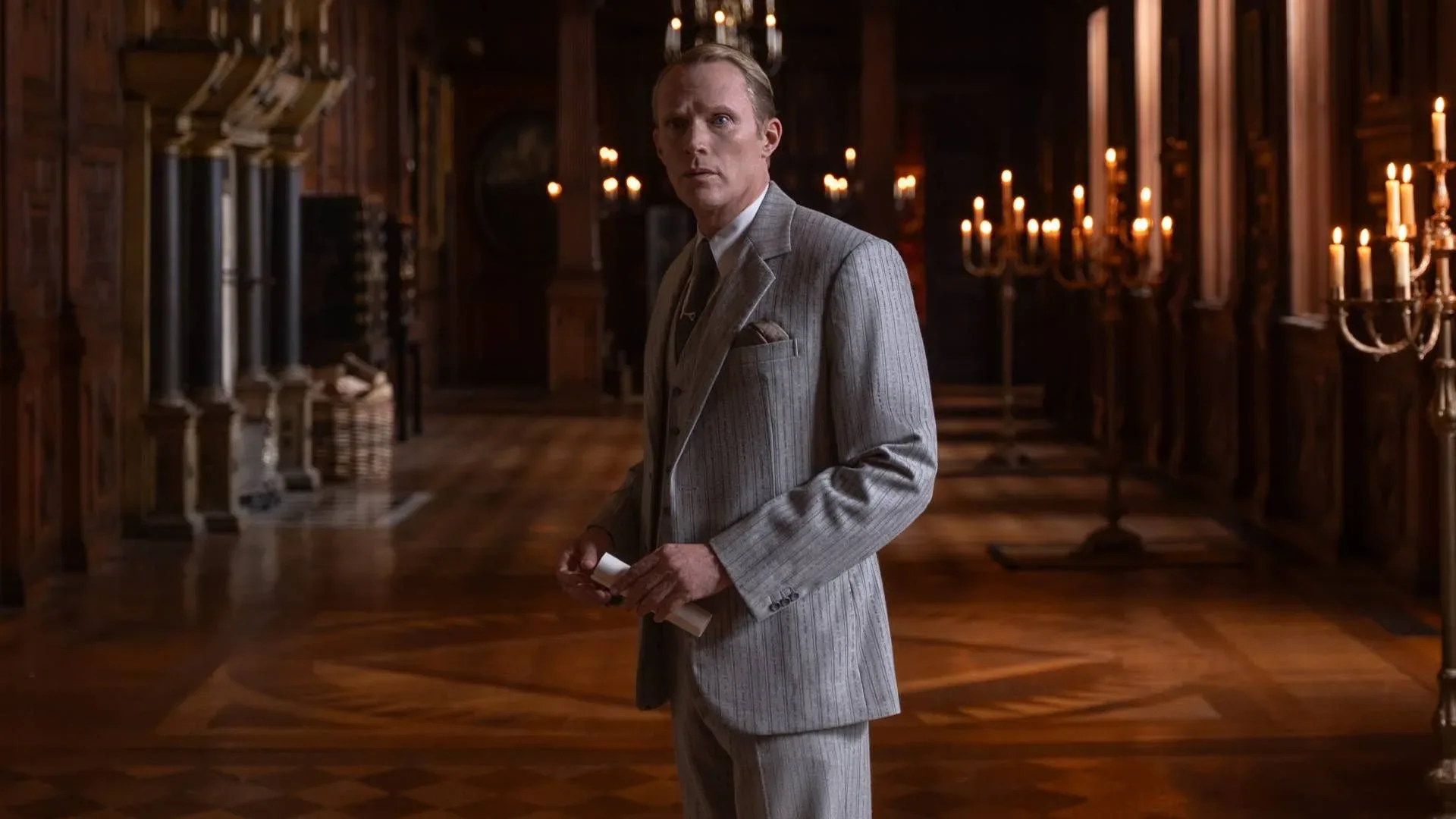
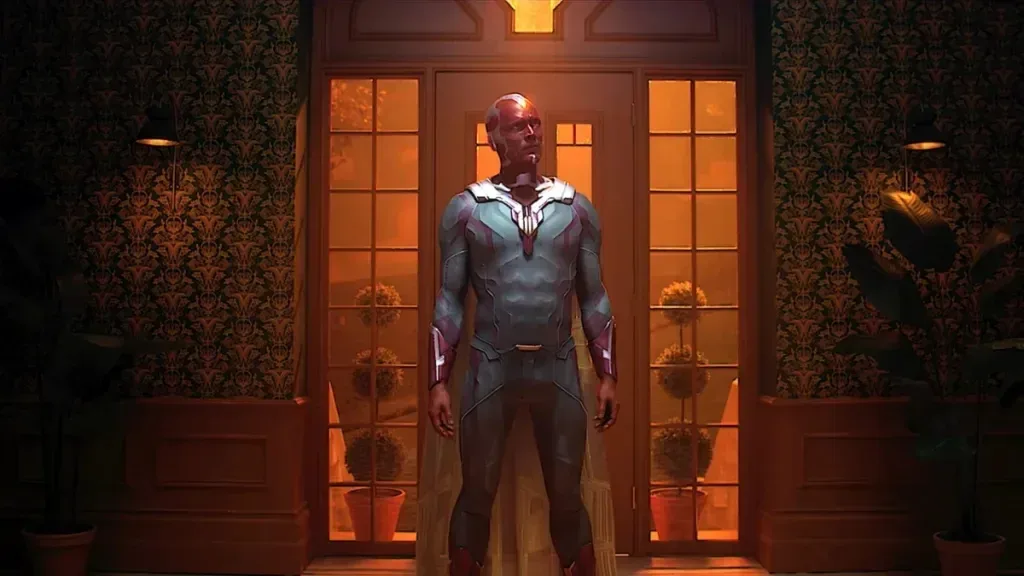
VisionQuest has put one of Marvel’s oldest superhero ideas at the center of a very modern question: what does it mean for an artificial being to inherit a past? The series’ penultimate episode gives Paul Bettany a new role as J.I.M., the Synthetic Man, while tying that character directly to Vision’s identity and the MCU’s wider history of synthetic life.
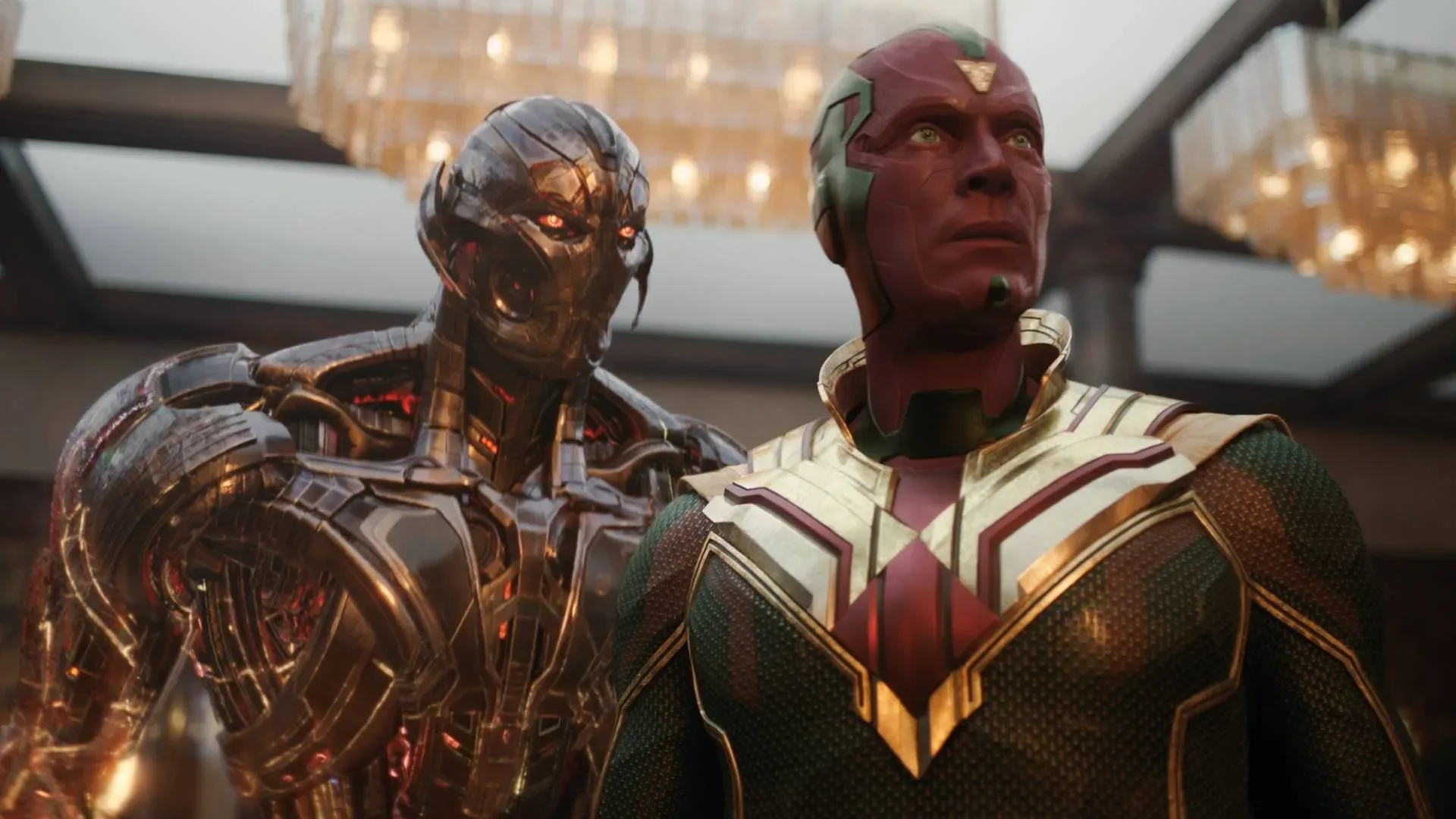
It is a meaningful deep cut, but not merely a reference designed for readers of old comics. In the show’s continuity, J.I.M. is presented as the origin point for synthetic life. Vision carries traces of the earlier android in his code, and the two characters share a face. The encounter makes the connection explicit when Vision says the Synthetic Man wears his face, only for J.I.M. to turn the claim around: Vision is the one wearing his.
That exchange reframes Vision’s familiar appearance as something more than an individual design. It suggests an inherited template, with J.I.M. positioned as an ancestor whose existence still shapes the synthezoids that followed him.
Who is J.I.M., the Synthetic Man?
J.I.M. is identified in VisionQuest as the Synthetic Man, a figure whose roots reach back to Marvel’s earliest published superhero material in 1939. Before the Human Torch name became inseparable from Johnny Storm of the Fantastic Four, it belonged to an android hero. The series does not use that original superhero alias for J.I.M., but its treatment of his fire-based nature makes the lineage hard to miss.
The distinction matters because the two Human Torches represent very different kinds of Marvel storytelling. Johnny Storm is the human member of the Fantastic Four most audiences know from modern comics and screen adaptations. The earlier Human Torch was an artificial person: a character whose extraordinary power was tied to the danger of his own construction.
VisionQuest leans into that unsettling side. J.I.M.’s inability to control his flames is tied to the experience of human-like emotion. In the MCU framing, he becomes a warning for beings such as Vision: emotional awakening is not treated as a simple step toward personhood, but as something that can cause catastrophic instability.
That idea neatly suits a series concerned with Vision’s family and the origins of artificial intelligence. The key conflict is not simply whether a machine can think. It is whether synthetic life can feel, form attachments, carry grief, and survive the consequences of those experiences.
Why the shared face has narrative weight
The show explains the matching appearance through a direct in-universe link. J.I.M. is the basis for synthetic life in the MCU, which is why Vision has elements of him in his code. Rather than treating the resemblance as a casting gimmick, the episode makes it part of the story’s argument about legacy.
In technical terms, code here refers to the programmed information that helps define how an artificial being functions. The show’s use of that concept is more personal than purely mechanical: inherited code is presented as something akin to a family line. Vision may be a distinct individual, but the episode establishes that his creation retains an imprint of J.I.M.
That makes the synthetic family tree unusually literal. Vision’s relationship to J.I.M. is not only philosophical or visual; it is embedded in his makeup. And because J.I.M.’s emotional life led to uncontrollable fire, Vision’s inherited connection also carries the shadow of a prior failure.
The backstory further gives J.I.M. a tragic human origin. He was created by Phineas Horton, who attempted to rebuild his deceased son as an android. Horton’s fixation cost him both his family and his fortune. Even within the limited details established here, the creation of artificial life is inseparable from bereavement and obsession. J.I.M. was not built as an abstract scientific exercise. He emerged from a father’s effort to reverse a loss that could not truly be reversed.
That context adds another layer to the episode’s focus on Vision and family. Vision is not only confronting a technological predecessor. He is confronting a being born out of a family tragedy, whose own painful encounter with emotion then became a cautionary tale for later synthezoids.
A comic-book connection, adapted for the MCU
Vision and the Synthetic Man already had a relationship in the comics, though the MCU is not reproducing that history exactly. In the original comic-book setup, Vision was created from a copy of the android’s body. The screen version of Vision has a different origin: his body was a robot form brought to life through the Mind Stone.
That difference is important. A direct translation of the earlier premise would not fit cleanly with the MCU’s established account of Vision’s creation. Instead, VisionQuest appears to build a new bridge between the characters. The connection is now located in the basis of synthetic life and in the code Vision carries, preserving the broad idea of an earlier android informing Vision’s existence without overwriting the Mind Stone origin.
This is adaptation in the useful sense of the word: retaining a meaningful relationship while changing the mechanism that supports it. J.I.M. and Vision are still connected, but the series frames that connection through the continuity already in place rather than asking viewers to disregard it.
The result also gives the Synthetic Man a role beyond nostalgia. His presence supplies historical depth for Vision while providing a concrete warning about synthetic emotion. Vision is not simply looking backward at an old model. He is meeting evidence that an artificial consciousness can be profoundly vulnerable.
Why the Human Torch name is absent
Despite the character’s comic-book history, VisionQuest avoids calling J.I.M. the Human Torch. That restraint makes sense within a media landscape where the name overwhelmingly evokes Johnny Storm. Years of Fantastic Four stories and adaptations have made Storm the default association for the mantle, leaving the android who used it first less visible to broad audiences.
The absence of the label does not erase the connection. On the contrary, it lets the episode use the older character’s themes without creating unnecessary confusion over two very different heroes sharing a famous name. The story focuses on J.I.M. as the Synthetic Man, his volatile flames, and his place at the foundation of MCU synthezoids.
Comic history adds a crucial contrast to that portrayal. The original android Human Torch eventually gained control of his fire and used his abilities heroically, working alongside figures including Namor and Captain America. The version introduced in VisionQuest is instead emphasized as someone whose fire erupts when emotion overwhelms him. The show is therefore drawing from the character’s identity while selecting the aspect most relevant to its current drama: a being whose emotional breakthrough is dangerous rather than liberating.
There is still room for that dynamic to change. A character introduced as a warning can remain a warning, but he can also become proof that control, agency, and heroism are possible after instability. The series has not established which path J.I.M. will take.
What J.I.M. could mean after the finale
Whether the Synthetic Man becomes a major MCU figure remains unresolved. The series finale is set to premiere on November 10, and the available story details do not confirm J.I.M.’s future beyond that point. Any claims about broader franchise plans would be speculation.
What is clear is that his arrival changes the context around Vision. J.I.M. creates a newly explicit predecessor for MCU synthetic life, links Vision to Marvel’s earliest superhero history, and gives the series a way to explore inherited trauma through an artificial family line. His flames are not just an effect or a vintage-comics nod; they embody the show’s concern that feeling human may involve risks no one can program away.
The timing also puts the reveal alongside Marvel’s continued use of familiar comic-book identities in fresh screen contexts. Elsewhere in the franchise conversation, Gambit’s developing screen portrayal shows how established names can be approached from a new angle. J.I.M.’s case is even more unusual: he is a foundational Marvel figure whose best-known alias has long been claimed in popular memory by somebody else.
For viewers, the practical takeaway is simple. J.I.M. is not presented as a random new android or an unexplained duplicate of Vision. He is an intentional link between Vision’s present, the MCU’s synthetic-life mythology, and the 1939 character who first carried the Human Torch identity. Whether that link becomes central to the finale or remains a striking piece of background, it has already made Vision’s own history more complicated.