Major spoilers for Clayface follow.
Clayface does not have a mid-credits or post-credits scene. Once the film reaches its credits, there is no additional tag, character reveal, or preview of a future DCU chapter waiting at the end.
That may be useful intelligence for viewers deciding whether to remain seated, especially because DCU films have not established one fixed rule for end-credit material. Superman included two stings, including one involving Supergirl, while Supergirl did not add a post-credits tease. Clayface joins the latter camp: its final piece of story happens before the credits begin.
Crucially, “no post-credits scene” does not mean “no sequel hook.” The movie’s closing sequence gives its apparent death a very large, very damp asterisk. Matt Hagen’s immediate crisis reaches an endpoint, but the final image reframes that resolution and leaves the character alive, active, and profoundly unsettling beneath Gotham.
No credits tag means the ending is the real sting
A post-credits scene, sometimes called a credits sting or tag, is an extra scene placed during or after the credits. It can serve several purposes: offer a joke after the main drama, clarify a plot point, introduce another character, or advertise a later installment. Viewers accustomed to superhero releases may understandably expect one, particularly with a Batman adversary headlining the first Chapter One DCU project set in Gotham.
Clayface handles that function differently. Instead of putting its lingering reveal after a credits break, it keeps the material in the body of the film. That makes the movie’s last act the point viewers should pay attention to; leaving when the plot seems to have resolved could mean missing the actual indication of where Matt Hagen stands.
The decision also fits the supplied description of Clayface as a stand-alone movie and as a horror film. A story built around bodily transformation, resentment, obsession, and false identities does not necessarily need a familiar superhero-franchise button. Its ending already has a horror-movie shape: an apparent solution is followed by evidence that the danger has endured in a warped new form.
What happens to Matt Hagen at the end?
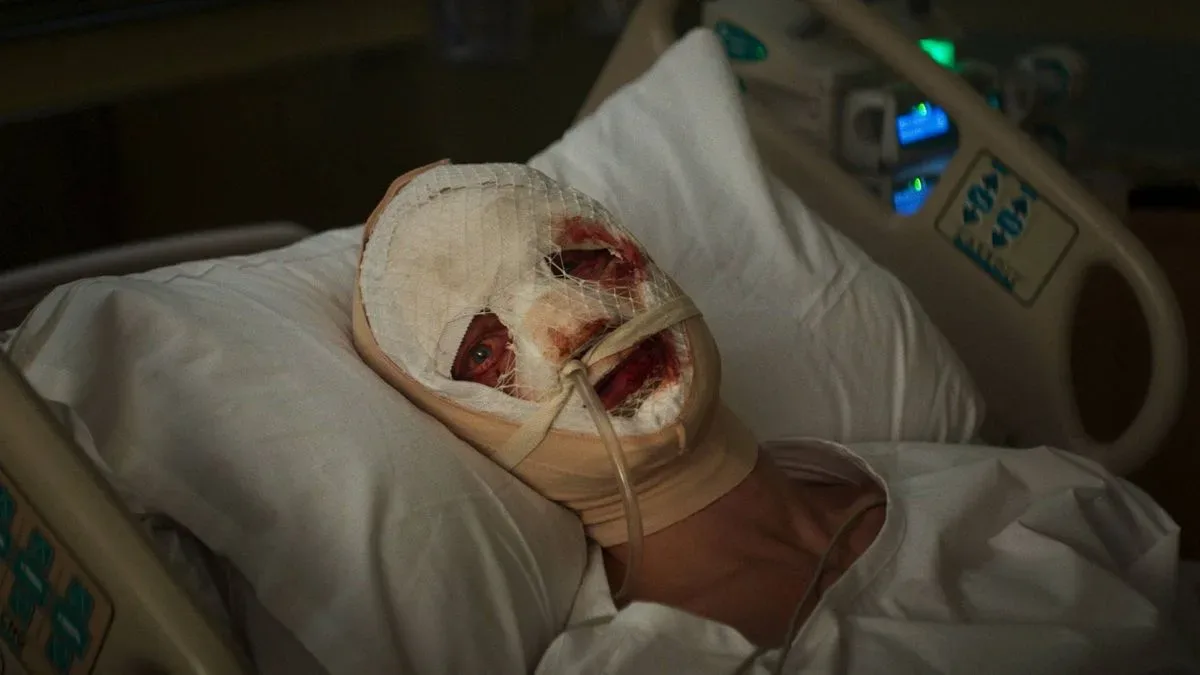
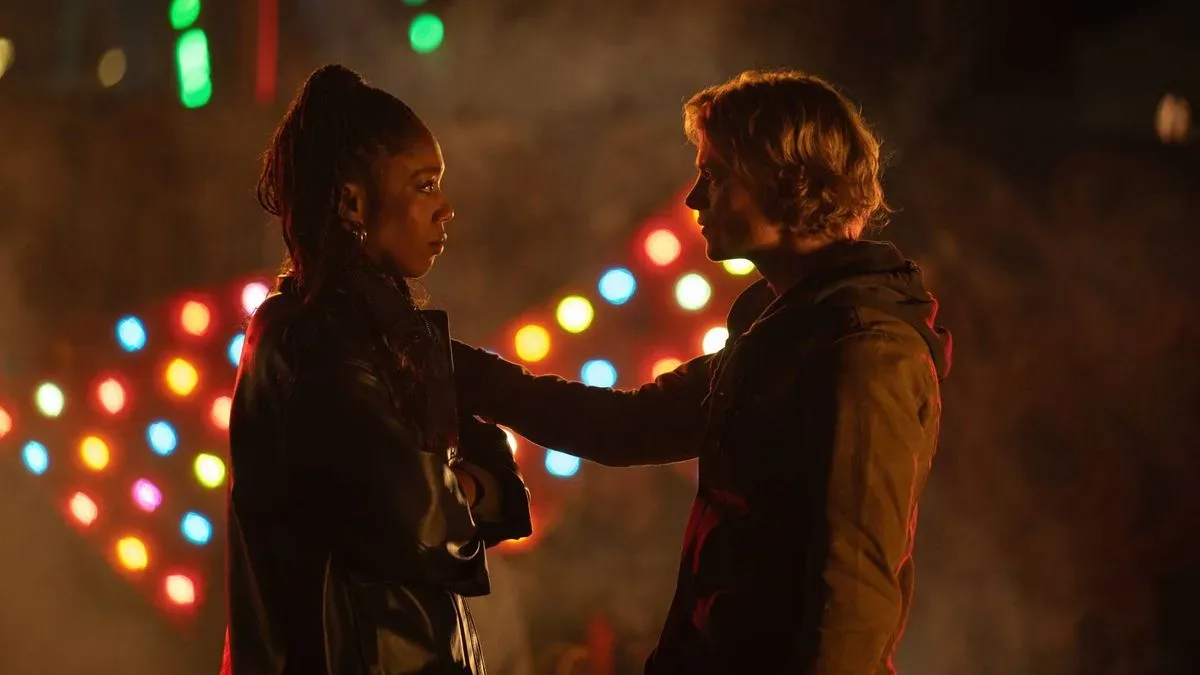
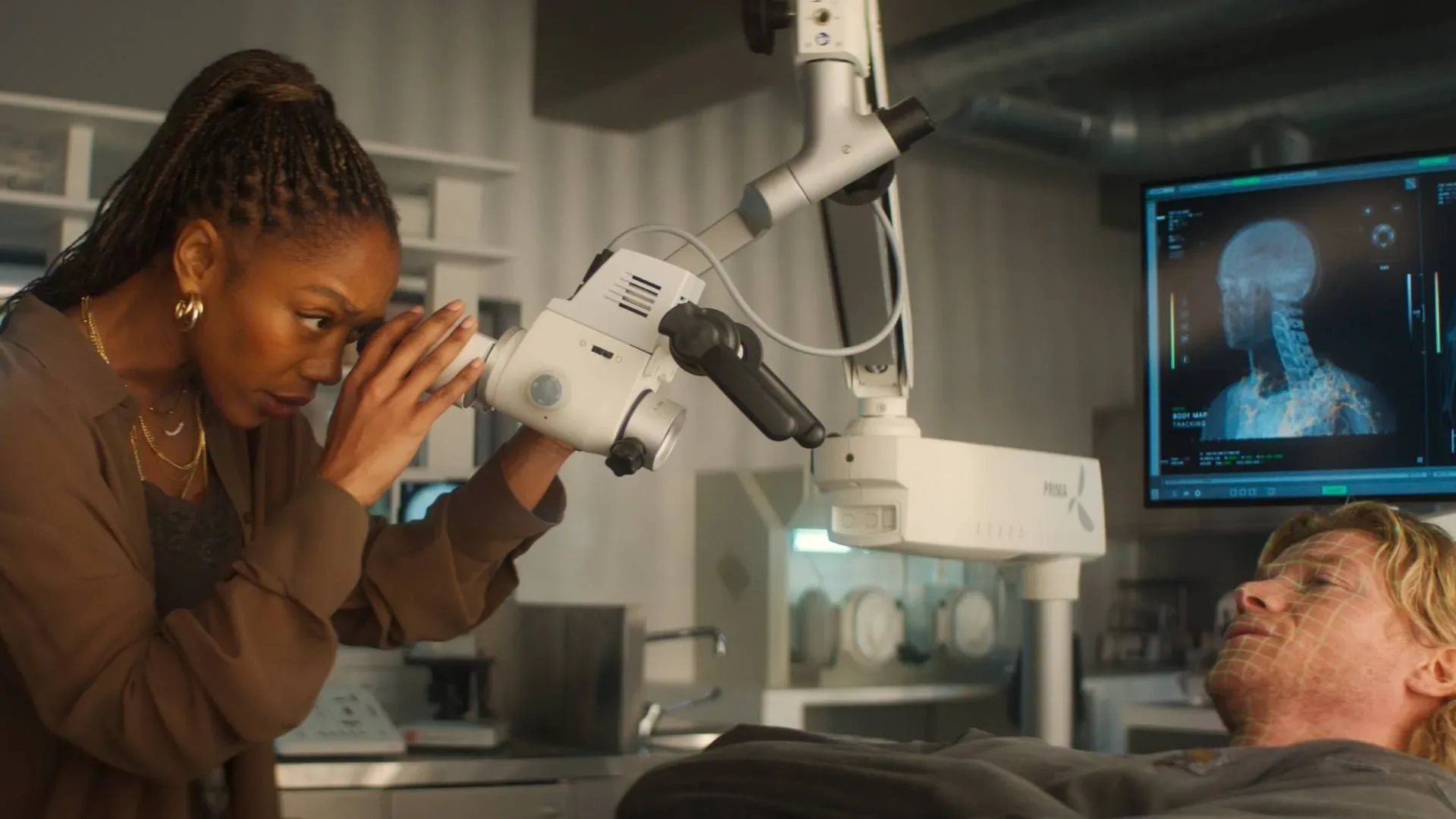
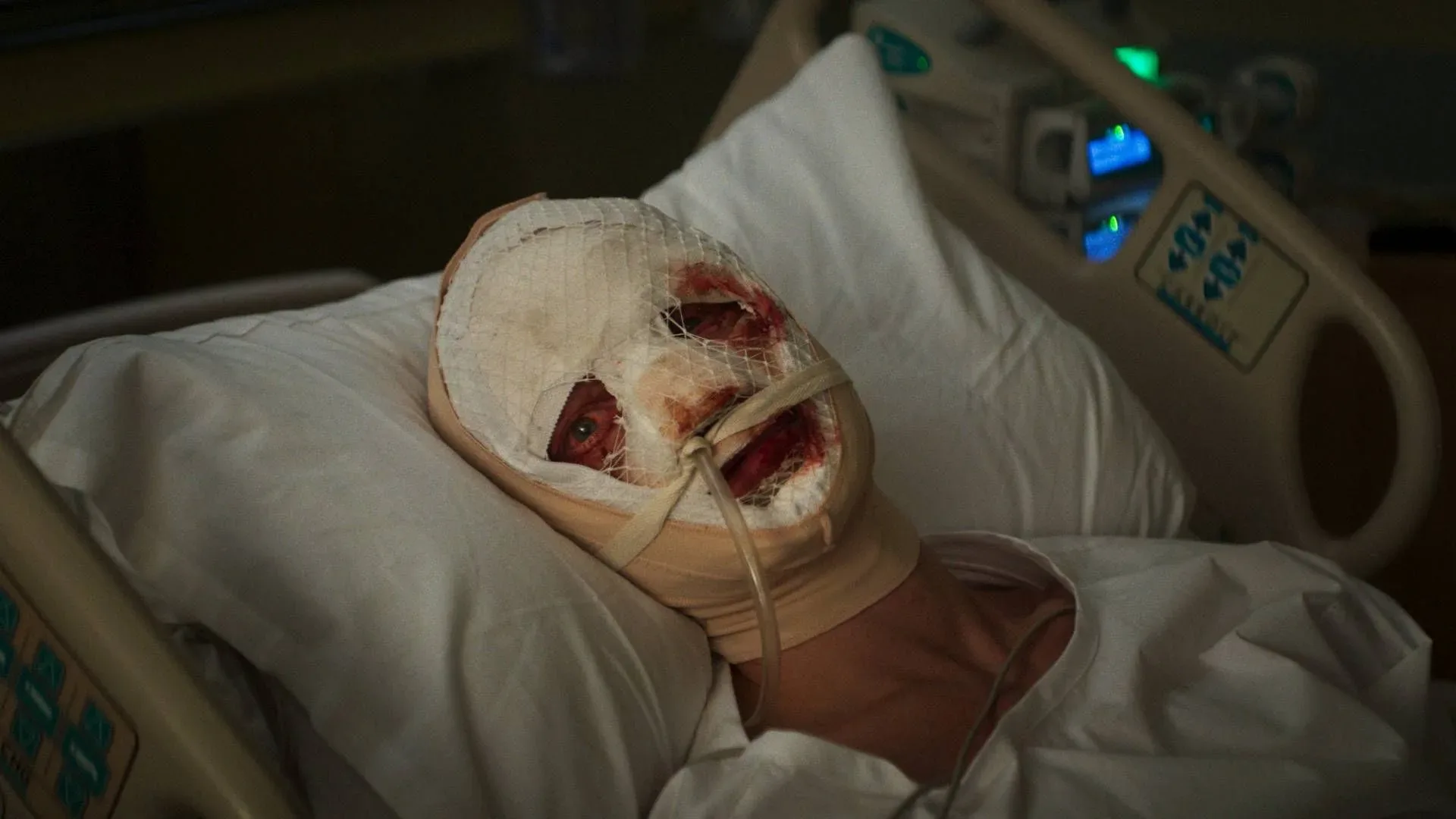
Tom Rhys Harries plays Matt Hagen, an aspiring Hollywood actor whose life changes after a mob boss has him badly disfigured. Unable to continue his previous life or career as before, Hagen turns to Dr. Caitlyn Corr, played by Naomi Ackie. Her experimental treatment uses tiny AI-powered cells—referred to as nanobots—to repair his scars.
The treatment does more than restore him. Hagen becomes a shapeshifting, clay-like creature whose instability is tied to anger and revenge. The premise turns a medical attempt to heal physical damage into the mechanism of his transformation, giving the film’s version of Clayface a technical explanation without taking away the grotesque result.
Nanobots are extremely small machines in the film’s terminology. Here, the relevant plot point is not a real-world claim about medical technology, but that Corr’s experimental AI-powered cells can reconstruct Hagen’s body so aggressively that they enable him to alter it. That capability is what allows him to become Clayface—and what makes stopping him so difficult.
Hagen ultimately murders the gangsters responsible for mutilating him. His fixation also extends to Caitlyn. He falls in love with her and kills her fiancé, John, played by Max Minghella. The pivotal reveal arrives when Caitlyn discovers Hagen impersonating John while John’s body is nearby. This is not simply a disguise in the ordinary sense; it demonstrates the personal violation at the center of Hagen’s use of his powers. He can wear a familiar face while eliminating the person behind it.
Caitlyn responds by terminating the nanobots. Hagen appears to die as he reaches his final Clayface transformation, with his gooey remains flowing into a sewer grate. On a literal first reading, it looks like the treatment has been switched off and its subject has been destroyed.
The film then refuses to let that be its final word.
The sewer reveal changes the meaning of the apparent death
Some time after the confrontation, Caitlyn encounters Clayface on the street while he is disguised as a homeless man. The movie follows this unnamed figure back below Gotham, where he transforms into Clayface again. Hagen has survived.
His situation in the sewers is stranger and sadder than a conventional villain escape. The ending indicates that he is hiding there and using his own clay-like material to form Caitlyn’s body, effectively acting out a relationship with an imitation of her. It is a deliberately uncomfortable image: Hagen retains the power to become other people, but his inability to accept Caitlyn’s autonomy has reduced that power to a private, delusional performance.
That closing scene is the film’s practical answer to the question of what comes next. There is no need for an after-credits cameo because the movie has already established several facts: Matt Hagen survived; he can still transform; he remains in Gotham; and Caitlyn is still central to his obsession. The threat is no longer the immediate murder spree that drove the climax, but an unresolved villain living beneath the city and capable of impersonation.
For a closer look at the film’s Gotham and wider DC references, readers can also explore the Gotham, Batman and DC details hidden in Clayface.
Why there is no Batman tease
A Batman appearance or end-credit tease would have been an obvious expectation on paper. Clayface is a Batman villain, the film is set in Gotham, and it is the first DCU Chapter One project located in that city. But Batman does not appear in the movie, and there is no post-credits footage to change that.
The available information gives a straightforward reason to avoid reading too much into the omission. The DCU has yet to cast its Batman for The Brave and the Bold, despite that film having been announced. Without a DCU Batman actor in place, a dramatic onscreen introduction would be difficult to assume—and the film itself supplies no such promise.
It is also important not to merge separate continuities. Robert Pattinson’s Batman belongs to DC’s Elseworlds line rather than the DCU. Pattinson has confirmed that he will not move into James Gunn’s DCU universe. Therefore, Clayface’s Gotham setting should not be taken as evidence that Pattinson’s version of Batman is about to turn up.
The distinction matters because “Gotham” is a location, while “DCU” and “Elseworlds” identify different storytelling continuities. A character can be closely associated with Gotham in comics and still be introduced on screen without importing every other interpretation of that city or its protector.
Where Clayface sits in the DCU timeline
Although it arrived after Superman, Clayface is set earlier on the DCU timeline. That chronological placement further weakens the case for a closing scene designed to point toward events viewers have already seen. The next Chapter One film named here is Man of Tomorrow, the Superman sequel scheduled for July 9, 2027, and it is set in Metropolis rather than Gotham.
That geographic separation does not prove the characters will never meet; it simply means the available information offers no reason to expect a direct Clayface-to-Man of Tomorrow handoff. The same caution applies to The People v. Gorilla Grodd, the upcoming HBO show featuring Skyler Gisondo as Jimmy Olsen. It is another project in the broader slate, not evidence of a specific Clayface connection.
In franchise terms, the ending is best understood as a character continuation hook rather than a crossover hook. A character continuation hook establishes that someone or something can return. A crossover hook directly identifies the next property, hero, or event. Clayface clearly does the first. It does not explicitly do the second.
What the ending confirms—and what remains speculation
The firm takeaway is simple: viewers do not need to wait through the credits for additional footage, but they should not treat the apparent death in the climax as Clayface’s final fate. Matt Hagen survives and remains capable of transforming.
There is also a future return to consider. DCU co-CEO James Gunn has confirmed that Matt Hagen will be seen in future projects. That confirmation makes the sewer ending more than a purely symbolic horror flourish: the film is preserving a villain for later use.
Everything beyond that is uncertain. The Brave and the Bold is an easy topic for fan speculation because Clayface is traditionally associated with Batman, but the supplied information does not establish that Hagen will appear in it. Likewise, the film does not announce a sequel, identify his next target, or connect the final sewer scene to a particular DCU release.
So the cleanest viewing advice is this: see the last sewer sequence, then feel free to leave when the credits begin. The movie has no hidden credits surprise, but it has already delivered a far more disturbing survival reveal before the screen turns to names.