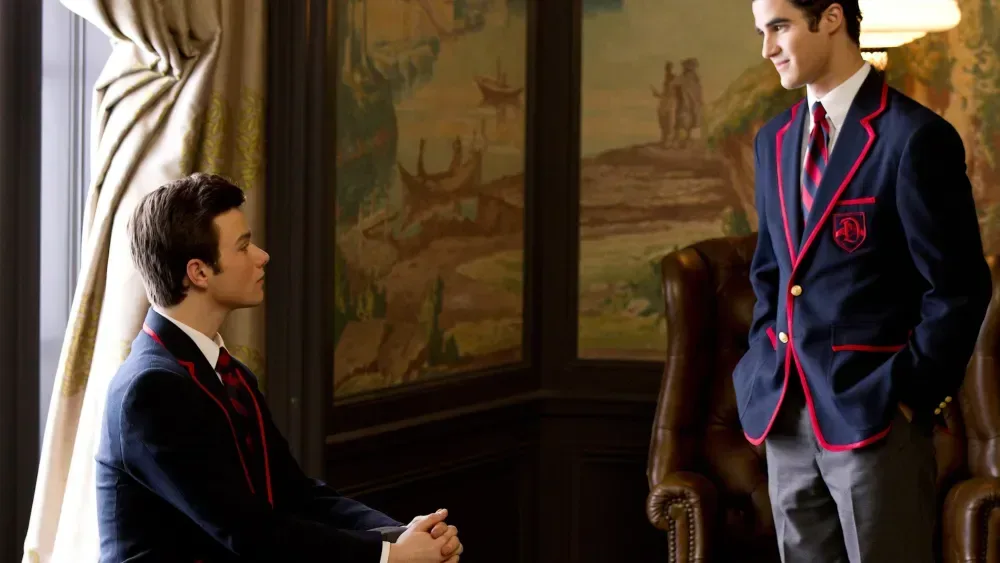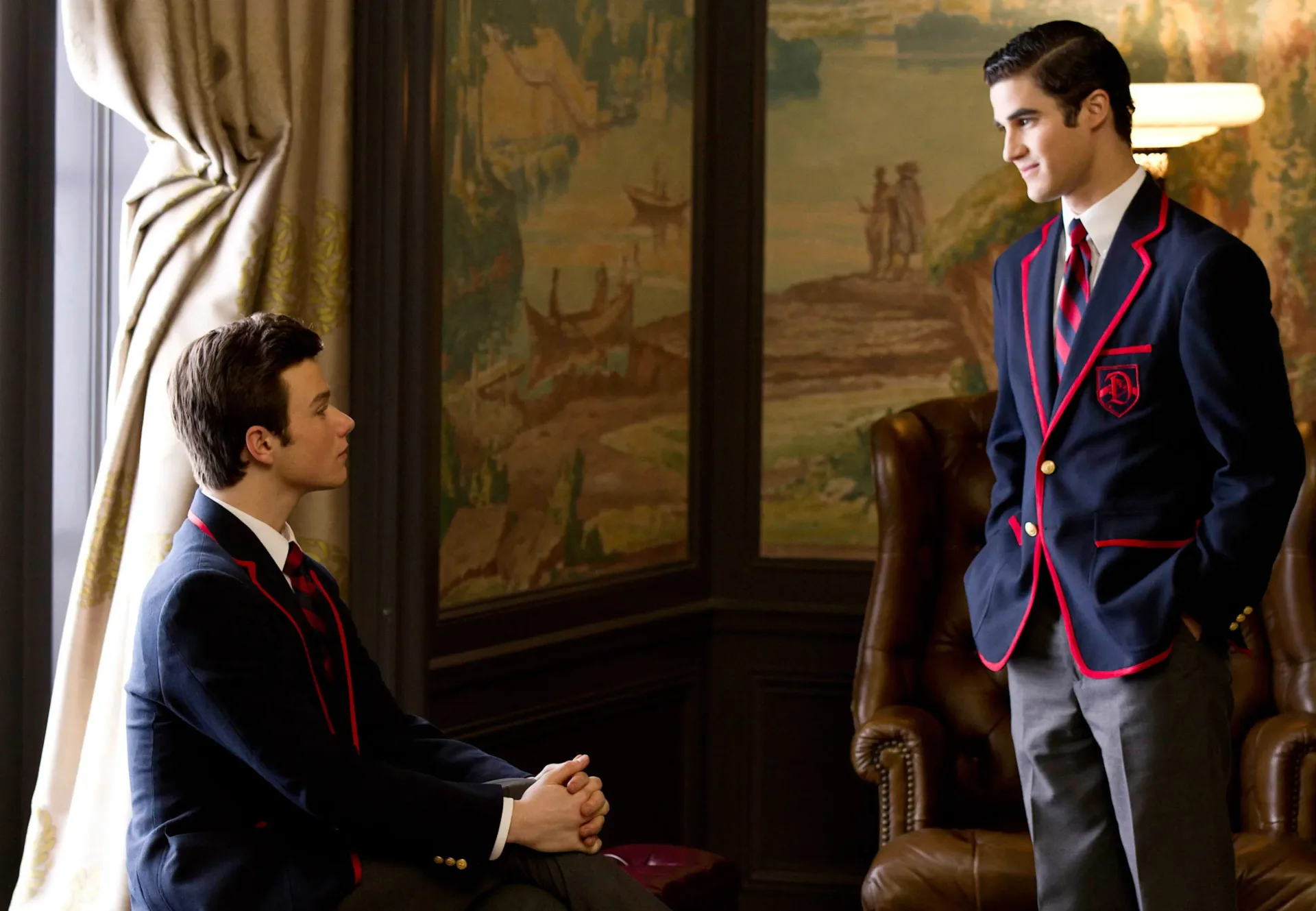
Darren Criss turned a one-night concert at London’s Royal Albert Hall into a small but potent Glee reunion when Chris Colfer joined him onstage for “Baby It’s Cold Outside.” The performance deliberately recalled their characters, Blaine Anderson and Kurt Hummel, and their version of the song from the series’ 2010 Christmas episode.
Criss began alone, setting up the joke that he would cover both sides of a duet. Colfer then emerged a few verses in, puncturing the setup with a line of his own: “The only thing inappropriate about doing this song is doing it without me.” The entrance transformed the number from a solo bit into the specific pairing the audience recognized.
It was a compact reunion rather than evidence of a formal cast project, but that distinction does not make it insignificant. For a show built around performance, its musical pairings were often the clearest shorthand for character relationships. Criss and Colfer revisiting this duet gave the crowd a direct connection to Kurt and Blaine without trying to recreate an entire episode or suggest that the actors had stepped back into those roles permanently.
Why this duet carries more weight than a random cover
“Baby It’s Cold Outside” has a particular place in the Kurt-and-Blaine story. Criss and Colfer first performed it in Season 2, Episode 10, “A Very Glee Christmas,” which aired in 2010. By that point, the characters’ relationship had become an important part of the series. They began dating in Season 2, and the show eventually took them through an engagement and marriage in its final season.
That timeline matters because the selection is not simply a familiar holiday standard. In the context of Glee, the duet became tied to two fan-favorite characters whose relationship developed over several seasons. Bringing it back on a concert stage allows the song to work in two ways at once: as a theatrical live duet between two performers and as a callback to an established television memory.
The staging also appears to have leaned into anticipation. Criss opened the song by himself and told the audience he would sing both parts, while acknowledging that was not how the number was meant to work. Colfer’s delayed arrival supplied the punchline. It is a simple concert device, but one especially suited to a reunion: the absence becomes part of the setup, and the appearance becomes the payoff.
A live callback, not a reboot confirmation
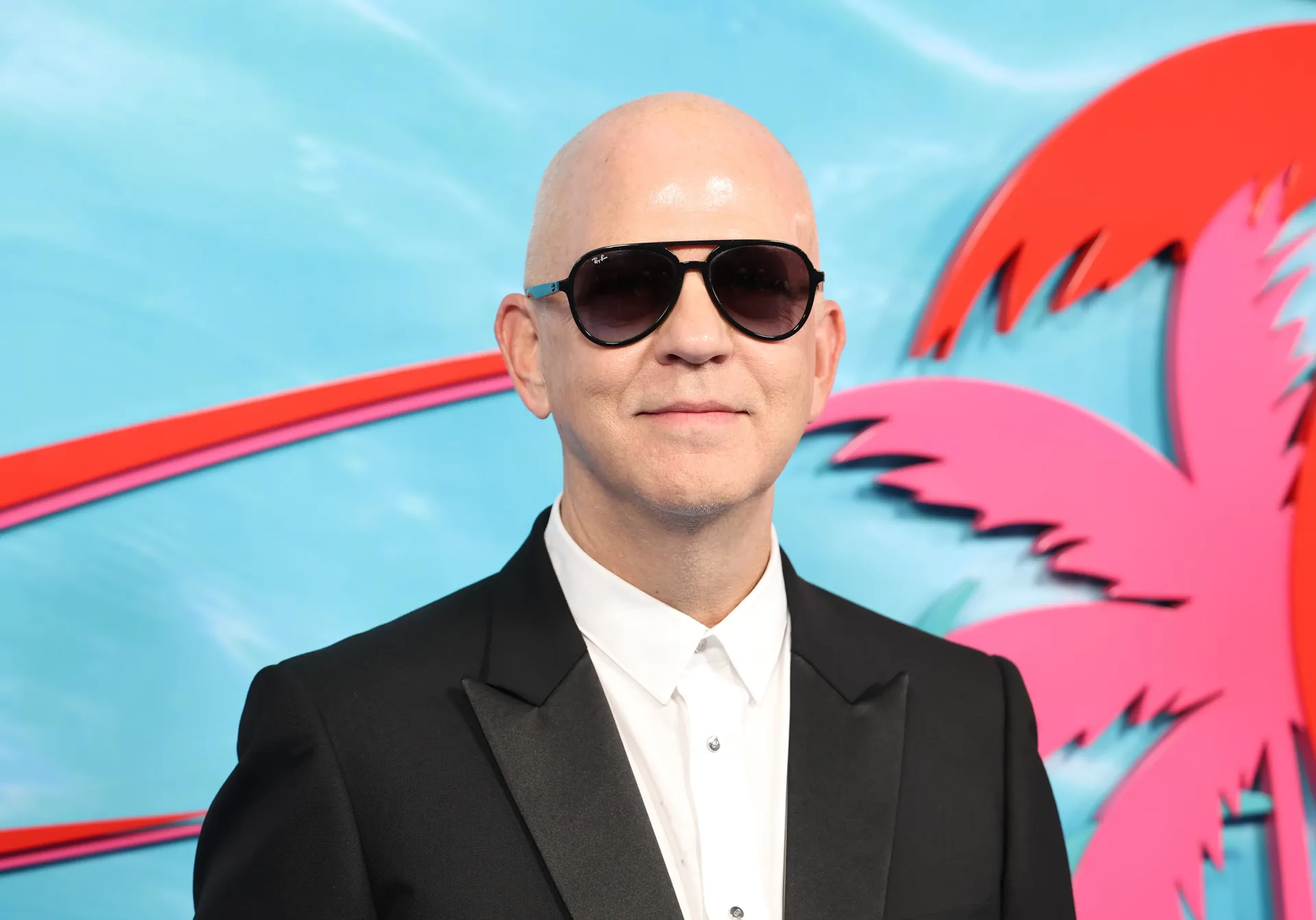
The timing will naturally draw attention because discussion of a possible Glee return has recently moved beyond rumor. Series co-creator Ryan Murphy has said that a script exists, written with Brad Falchuk and Ian Brennan, who were involved in writing the show’s first two seasons. Murphy also said he had contacted around 10 members of the original cast and that the conversations had been enthusiastic.
Still, the available details leave the proposed project at an early stage. Murphy said no one had read the script and described a plan to write additional versions and seek reactions, particularly from cast members. A script is an important creative step, but it is not the same thing as a greenlight, casting announcement, production start, release date, or confirmation that particular performers will return.
Related coverage includes Chris Colfer Joins Darren Criss for ‘Glee’ Reunion at Royal Albert Hall.
That uncertainty is worth preserving amid the excitement around the Royal Albert Hall moment. Colfer joining Criss for one song confirms exactly what it is: an onstage collaboration between former co-stars, designed as a tribute to Kurt and Blaine. It does not establish participation in any prospective new Glee production. The performance can be meaningful to fans without being treated as evidence for details that have not been announced.
The power of character-specific reunions
Television reunions come in many forms. A full-panel appearance gathers a broad group of cast members, while a revival attempts to continue or revisit a show’s fictional world. This was something narrower and, for many viewers, potentially more immediate: two actors returning to a song closely associated with their characters.
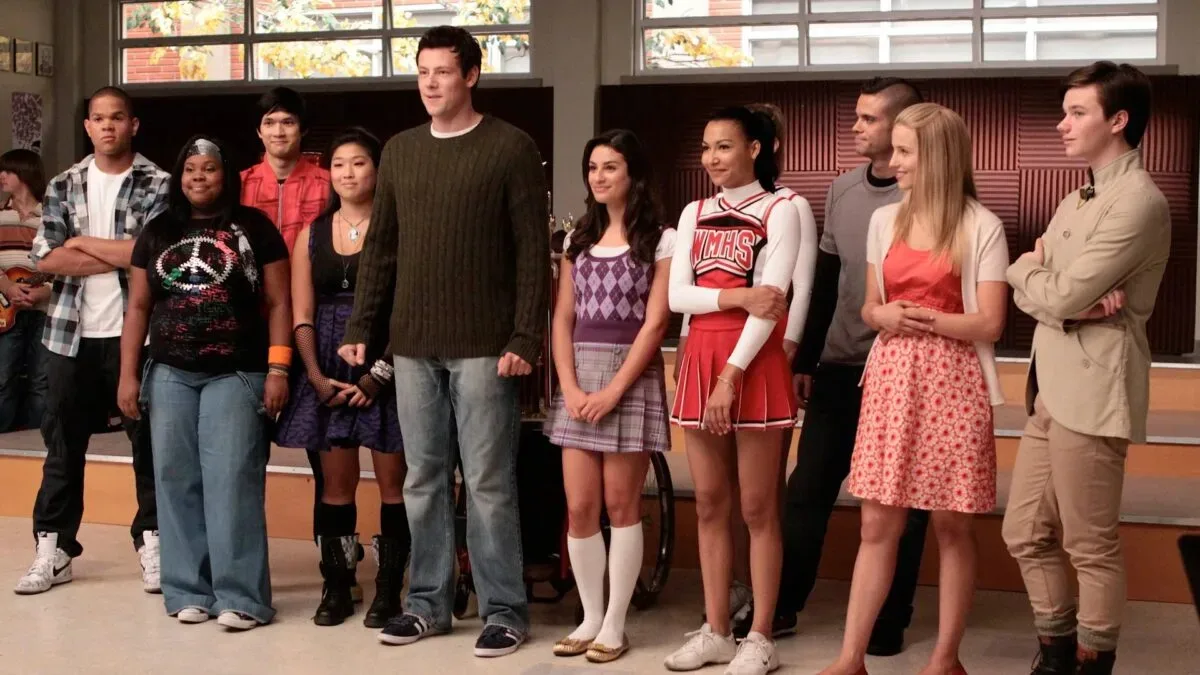
That specificity is the point. Glee premiered in September 2009 and featured an ensemble that included Lea Michele, Colfer, Criss, Cory Monteith, Naya Rivera, Dianna Agron, Matthew Morrison, Jane Lynch and Heather Morris, among others. With an ensemble of that size, no single performance can stand in for every relationship or every era of the series. But Kurt and Blaine’s duet gives this particular appearance a clearly defined emotional reference point.
It also speaks to how music functions in fan memory. Dialogue can be memorable, but a song has a built-in structure: an opening, alternating parts, a harmony, a final refrain. When two performers reunite for a number associated with their screen characters, the audience can recognize the reference before any broader explanation is needed. Criss beginning alone and Colfer arriving later turns the familiar duet format into a piece of storytelling in miniature.
There is another practical reason this type of callback lands well in a concert setting. It respects the event as Criss’ show while making room for a surprise guest. The reunion is substantial enough to feel intentional, yet it does not need the logistical weight of a full cast appearance. It also leaves the performance rooted in the present: two artists sharing a stage, using a well-known number as a bridge to the past.
What fans can reasonably take from the night
- Confirmed: Colfer appeared during Criss’ Royal Albert Hall concert and joined him for “Baby It’s Cold Outside.”
- Confirmed: The choice was an homage to Kurt Hummel and Blaine Anderson and their earlier performance of the song on Glee.
- Confirmed: A script for a potential Glee project has been written by Murphy, Falchuk and Brennan.
- Not confirmed: Whether the project will proceed, which original cast members might participate, or when any further development could occur.
That last line is the key guardrail. Reunion performances often create a burst of speculation because they visibly demonstrate that former collaborators can still share an easy rhythm. In this case, the exchange was playful, the song choice was loaded with series history, and the venue added occasion. None of those ingredients, however, replaces a formal production update.
For now, the concert appearance stands well enough on its own. It was a knowingly theatrical callback to one of Glee’s best-known couples, built around a duet that had already done narrative work on the show. The result was not a new chapter for Kurt and Blaine, but a brief live reminder of why their musical partnership remains so closely connected to the series’ legacy.
As pop performers continue to turn concerts into spaces for nostalgia, surprise guests and carefully chosen callbacks, this kind of appearance shows why a single song can carry so much context. For another example of how music news can extend well beyond a one-night performance, see this look at a long-running chart story.