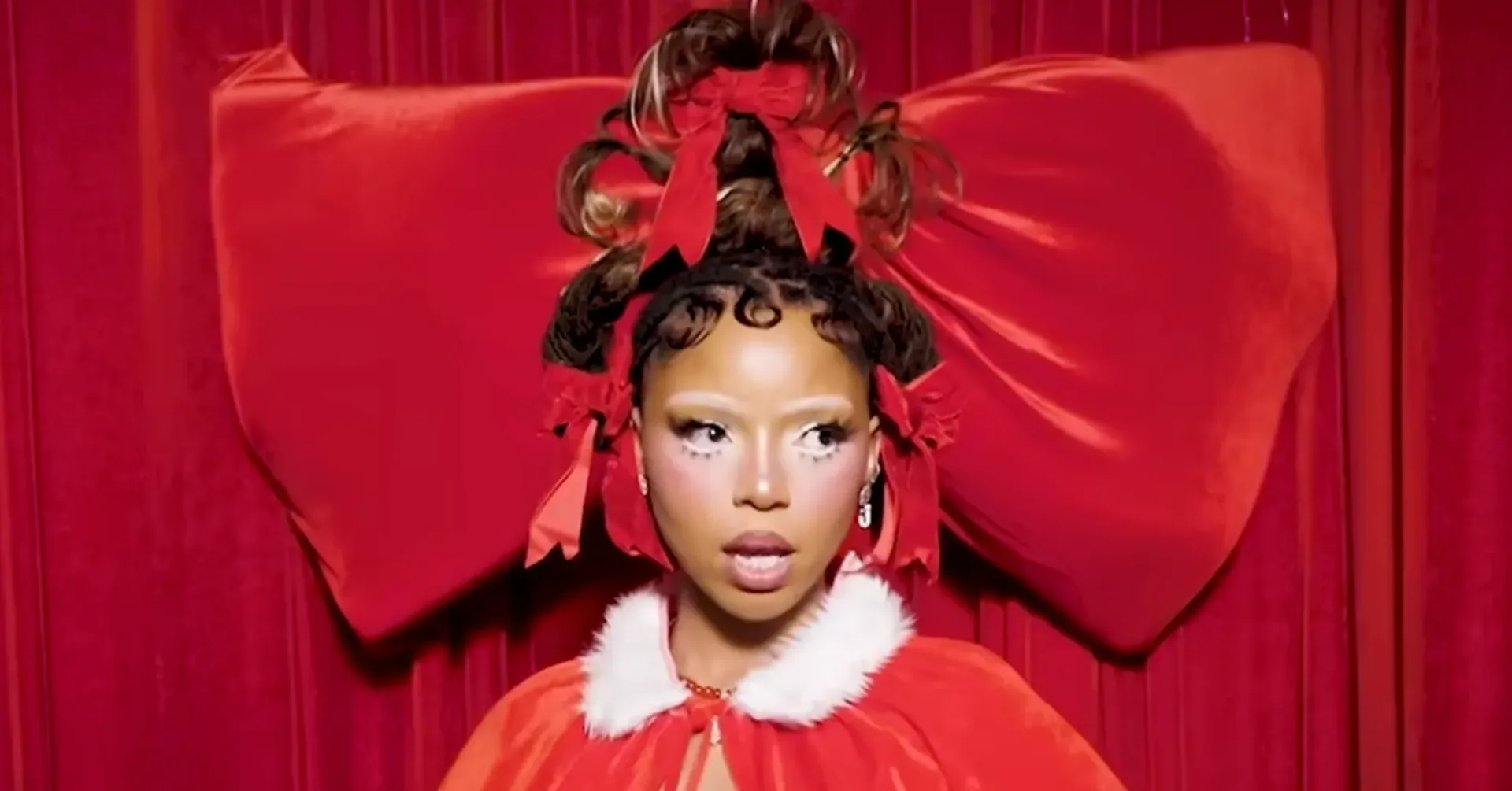
Chlöe Bailey publicly thanked SZA after SZA defended Bailey’s freedom to make the music she wants, rather than treat artistic output as a product audiences are entitled to dictate.
Bailey responded on X to a fan account’s post that paired a clip from her recent radio interview with an image of SZA replying to a critic on Instagram. “i love you @sza thank you!!!!!” Bailey wrote.
The moment connects two parts of the same discussion: Bailey’s insistence that she knows herself as an artist, and SZA’s rejection of the idea that a performer’s gifts are a service arranged around every listener’s preference.
What SZA said—and what Bailey was responding to
The screenshot, shared November 27, showed SZA responding to a commenter who compared Bailey to a cook telling customers they were wrong for disliking the food. SZA’s answer drew a firm boundary between receiving work as an audience member and claiming authority over why an artist makes it.
“God given gifts are not a ‘service,’” SZA wrote, adding that Bailey “does not exist and create to be of service to YOU.”
That wording does not mean listeners must enjoy every record, or that criticism is impossible. It addresses a different assumption: that negative reception gives an audience ownership over an artist’s direction, identity, or motivation. People can decide a song does not connect with them. They cannot reasonably turn that preference into a demand that the person who made it must create differently to validate their taste.
Bailey’s appreciative response makes clear that she read SZA’s message as support for creative agency. The exchange was not framed as a detailed argument about one track, one genre, or one performance. Instead, it concerned a basic question familiar to pop artists working in public: who gets to define whether their work represents them successfully?
Bailey says she knows who she is
In an appearance on The Morning Hustle, Bailey pushed back on a recurring suggestion that she had not yet figured herself out artistically. Her answer was direct: “I know exactly who the hell I am.”
Related coverage includes Chlöe Bailey Thanks SZA for Defending Her Creative Choices.
She also offered an important distinction that is easy to lose when confidence is treated as the absence of all uncertainty. “You can still have imposter syndrome while being confident in the gift you have,” Bailey said.
Imposter syndrome is the feeling that one’s achievements or abilities may not be legitimate, often despite clear evidence of skill or accomplishment. Bailey’s point is not that confidence and doubt cancel each other out. An artist can recognize a real ability, make intentional choices, and still have moments of insecurity. In creative work, where public reaction arrives quickly and loudly, those two states can coexist.
That nuance also helps explain why criticism of an artist’s choices can feel larger than ordinary feedback. A response to a song may be read as a verdict on the person’s judgment, taste, authenticity, or readiness to lead their own career. Bailey’s comments draw a line between being open about the internal pressures of creating and accepting the premise that others know her artistic identity better than she does.
A Chlöe Christmas is also a practical example of autonomy
The discussion comes as Bailey promotes A Chlöe Christmas, a seven-song solo holiday project released November 13. Bailey produced and assembled the EP herself over a weekend, making the project more than a seasonal release: it is a concise example of her taking responsibility for the creative process.
Production work can refer to many decisions behind a finished recording, including shaping its sound, arranging musical elements, directing the recording process, and determining how an idea becomes the version audiences hear. Bailey had already done production work for Chloe x Halle before starting her solo career, so the self-produced holiday release continues an established part of her work rather than presenting production as a brand-new role.
Bailey said in the interview that writing original material was useful because it meant she would not have to wait for clearance. In music, clearance generally means securing permission to use copyrighted material or rights that a release requires. The exact requirements vary with the material involved, but the practical issue Bailey identified is straightforward: an original song can avoid a potential delay attached to obtaining approval to use someone else’s work.
That logistical freedom mattered for a project assembled quickly. Bailey also said the original songs let her build on interest in “Mrs Claus Don’t Have 2 Know,” which had already been released before the EP. Rather than pausing for permissions related to outside material, she could turn attention around that song into a seven-track holiday project on her own timetable.
There is a meaningful difference between saying an artist is “doing whatever they want” and recognizing the work required to make a record independently. The latter involves decisions, deadlines, writing, production, and assembling a coherent release. Bailey’s account of the project describes autonomy as a working method, not merely a defiant slogan.
Separate catalogs, then a Chloe x Halle reunion
A Chlöe Christmas arrived one week before Bailey reunited with her sister, Halle, as Chloe x Halle for “All I Think About on Christmas.” The timing places two creative lanes side by side: Bailey’s solo work and a return to the duo’s shared catalog.
Chloe x Halle had spent much of the preceding years developing separate catalogs, but the reunion track shows that individual work did not erase the duo’s collaboration. Bailey’s history of production work within Chloe x Halle also provides helpful context for the current conversation. Her creative identity has included work behind the console as well as in front of the microphone, with solo releases adding another space for those choices to be expressed.
For fans, the immediate practical takeaway is simple: Bailey’s holiday output includes both a seven-song solo project and a new Chloe x Halle song. They reflect different configurations of her work, not an either-or contest between her individual voice and her partnership with her sister.
Why the exchange matters beyond one comment thread
Online criticism often reduces a creative career to a binary: the artist either listens to the audience or ignores it. Bailey and SZA’s comments suggest a more useful framework. An artist can understand that listeners have opinions, notice what resonates, and still retain the right to decide what to make next. Audience response is information; it is not an instruction manual.
That distinction is especially relevant when the criticism is framed as consumer dissatisfaction. A listener may approach music as something they choose, stream, replay, skip, celebrate, or dislike. But the relationship is not identical to ordering a customized product. Songs can invite connection without being designed to meet an obligation to every individual listener.
It is also worth separating disagreement from dismissal. Saying that a record does not work for someone is a response to the work. Claiming the artist has no right to pursue a direction, or that she has failed to understand herself because her choices do not match a commenter’s expectations, is a claim about control. SZA’s reply squarely confronted that latter idea.
The conversation lands in a broader pop-culture environment where musicians are frequently discussed across several identities at once—performer, producer, collaborator, public figure, and sometimes player. That crossover can create unexpected new points of connection, as in Carly Rae Jepsen’s comments about becoming a later-in-life gamer through GTA VI. But different interests and public roles do not remove the central principle evident here: the person making the work remains the person who gets to make its creative decisions.
Bailey’s thank-you was brief, but the point behind it was substantial. SZA defended the idea that talent is not a public utility, while Bailey reinforced that confidence in one’s creative gift can exist alongside vulnerability. With A Chlöe Christmas, Bailey has also supplied the clearest possible companion to that position: a self-produced project she wrote and assembled herself, released in the form she chose.