A decades-old Academy Awards result is back in the conversation after Michael Douglas argued that Glenn Close should have won the 1988 Best Actress prize for Fatal Attraction, rather than Cher for Moonstruck. Cher’s response, delivered through a representative, has avoided turning the revived disagreement into a feud: “Cher adores Michael Douglas.”
That brief statement matters because Douglas’ comments were not framed as a vague appreciation of Close’s work. While appearing with Close on The Graham Norton Show, Douglas reflected on her fourth Oscar nomination at the time and said that she should have won for Fatal Attraction. When the conversation turned to Cher being the winner, Douglas added a dismissive punchline: “I know, that’s what we all said!”
Close immediately pushed back in a gentle but pointed way, telling Douglas, “Michael, be kind,” as the audience laughed. Cher, meanwhile, has not escalated the exchange. Her representative’s response makes the practical point clear: an old Oscar disagreement does not have to become a personal dispute between the people connected to it.
A crowded 1988 Oscar race
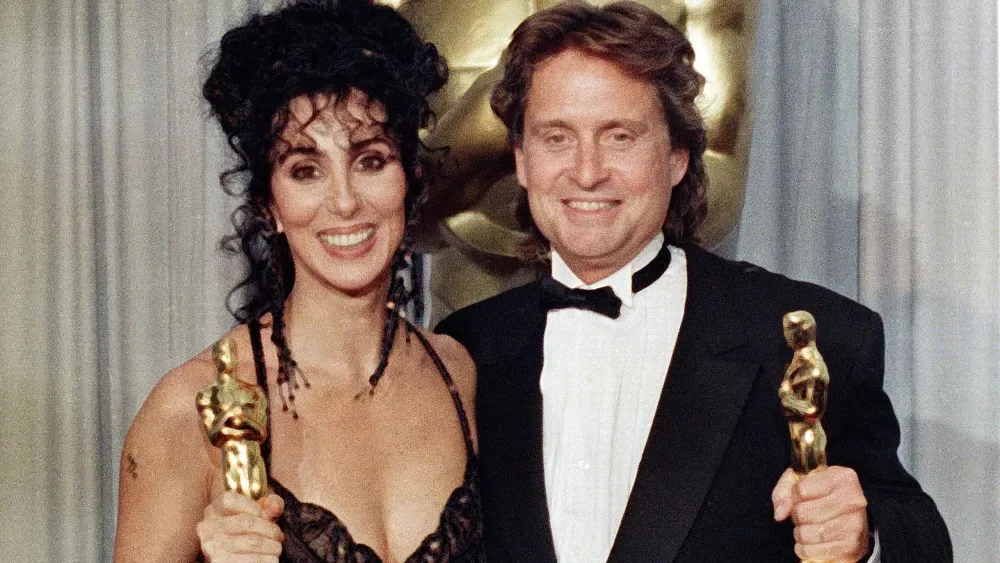
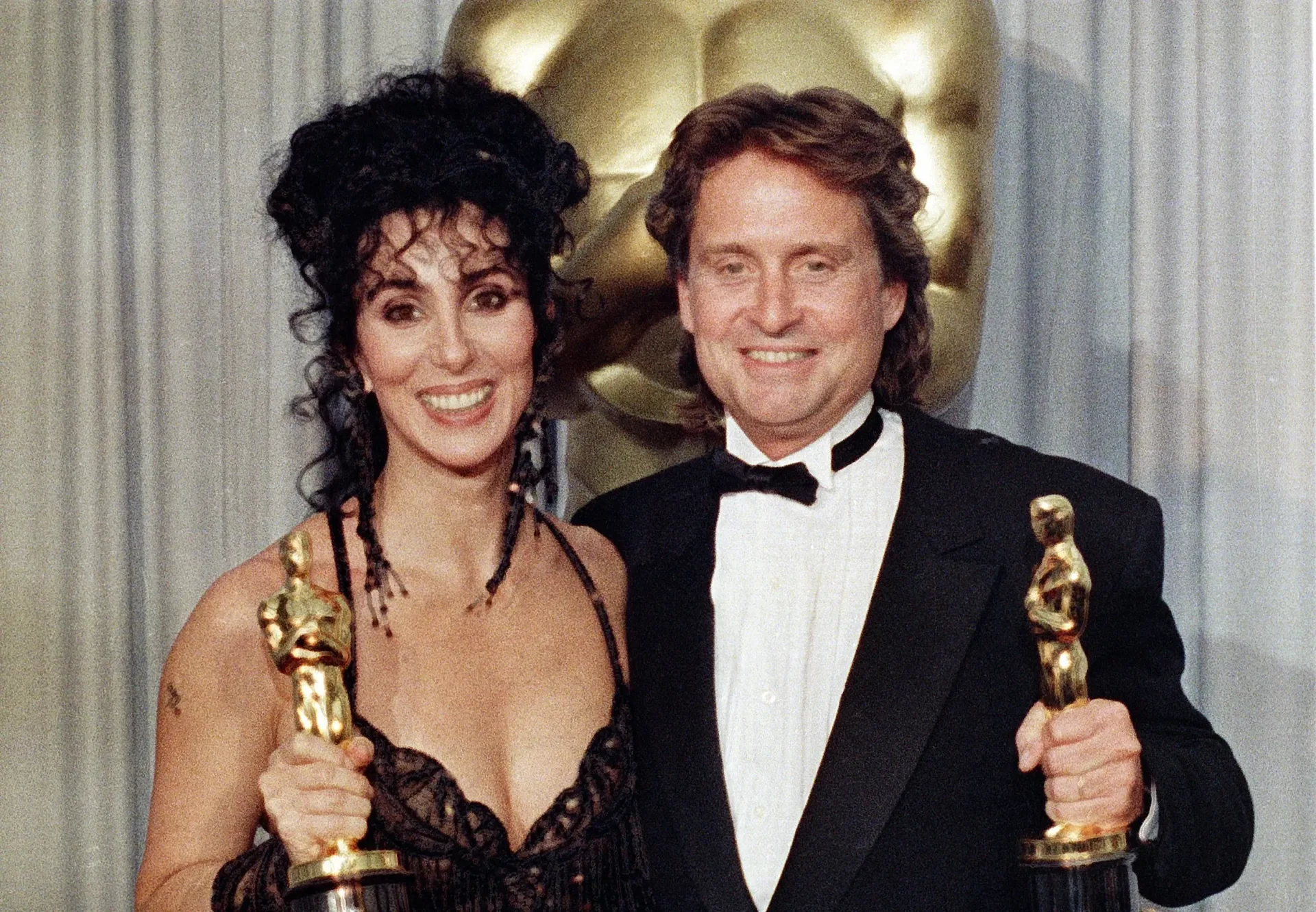
The 60th Academy Awards, held in April 1988, put all three performers in the room as nominees. Cher won Best Actress for Moonstruck, while Douglas won Best Actor for Oliver Stone’s Wall Street. Close was nominated for Best Actress for Fatal Attraction.
The debate is easy to understand as a matter of awards-history fascination, but it is worth separating a retrospective preference from the result itself. Douglas is saying that Close’s performance was his preferred winner. The Academy’s voting members made a different choice, and Cher took the competitive Best Actress award. Neither fact cancels the other out: Close’s performance remains acclaimed enough to be the subject of a decades-later defense, while Cher’s performance was the one the Academy ultimately honored.
Moonstruck was not a lone acting contender that surprised the ceremony. The romantic comedy received six nominations, including Best Picture, and it won three Oscars:
- Best Actress for Cher
- Best Supporting Actress for Olympia Dukakis
- Adapted Screenplay
Douglas’ own Wall Street campaign was more centered on his performance: he was its sole nominee and won Best Actor. Meanwhile, Fatal Attraction also received six nominations but did not win any. Both Moonstruck and Fatal Attraction were nominated for Best Picture and Best Director, with those awards going instead to The Last Emperor and Bernardo Bertolucci.
Why Close’s loss is still such a talking point
Douglas’ remarks also land differently because Close’s Oscar record is unusually extensive. By the 1988 ceremony, she had already accumulated three supporting-actress nominations: for The World According to Garp, The Big Chill, and The Natural. Fatal Attraction marked her first nomination in the Best Actress category.
She later earned four additional nominations, for Dangerous Liaisons, Albert Nobbs, The Wife, and Hillbilly Elegy. Despite those eight competitive nominations, Close has not won a competitive Academy Award. She is set to receive an honorary Oscar at the Governors Awards this month.
That distinction is important. A competitive Oscar is awarded through the usual nomination-and-vote process for a specific eligible performance or film achievement in a given year. An honorary Oscar, by contrast, recognizes a career or broader contribution rather than selecting one nominated role from that year’s field. The honorary award does not rewrite the 1988 result, but it does formally acknowledge a body of work whose awards history has long generated conversation.
Close’s repeated nominations help explain why observers and colleagues can still view her as an overdue winner. But “overdue” is a description of a career narrative, not a retroactive category at the 1988 ceremony. Cher was also an established nominee rather than an outsider to acting recognition. Before winning for Moonstruck, she had received a Best Supporting Actress nomination in 1984 for Silkwood.
Two performances, two very different movies
Part of the lingering argument comes from the contrast between the films. Fatal Attraction is a dramatic thriller, while Moonstruck is a romantic comedy. Awards debates often become shorthand for assumptions about genre: that intense drama is inherently more “serious,” or that comedy faces a steeper path to acting recognition. The supplied awards record, however, shows that Moonstruck was broadly embraced across multiple Oscar categories, not merely in Cher’s category.
It is also misleading to reduce the night to a simple Cher-versus-Close duel. The films were part of a wider awards field, and the Academy recognized different work across acting, writing, and film categories. Cher’s Best Actress victory sat alongside Dukakis’ supporting-actress win and the adapted-screenplay award for Moonstruck; Douglas simultaneously won for Wall Street. The ceremony produced several distinct outcomes, not one consensus statement about which film was “best” in every respect.
For fans, these old arguments can be worthwhile when they lead back to the performances and films themselves. They become less useful when a preference is treated as proof that another performer was unworthy. Close’s long nomination history and impending honorary award make a strong case for appreciating her career. Cher’s win, and the wider recognition for Moonstruck, make a strong case that her achievement was more than a strange footnote in an otherwise predetermined race.
Cher’s answer is a lesson in handling revived pop-culture feuds
Douglas’ remark was built for a talk-show laugh, and Close’s “be kind” reply gave the moment an immediate human correction. Cher’s representative then supplied the calmest possible follow-up: admiration for Douglas rather than retaliation. It is a notably measured response to a comment that could easily have been converted into a social-media-era celebrity squabble.
There is also an obvious shared-history element here. Cher and Douglas were both Oscar winners that same night, and Close was the nominee Douglas was defending. The three performers are tied to one of the most remembered Academy Awards races of the era, even if they plainly do not share the same view of its outcome. Cher’s response suggests there is no need to turn that difference into an enduring grievance.
Oscar history invites counterfactuals because awards are singular, final decisions about work that people continue to revisit for decades. People can reasonably favor Close in Fatal Attraction, Cher in Moonstruck, or another performance from the field. But the record remains specific: Cher won Best Actress in 1988, Douglas won Best Actor for Wall Street, and Close’s acclaimed career will receive an honorary Oscar at the Governors Awards.
For another example of how screen performance, public image, and casting choices can invite close audience scrutiny, see our coverage of Mason Thames’ casting as Dick Grayson in Dynamic Duo.