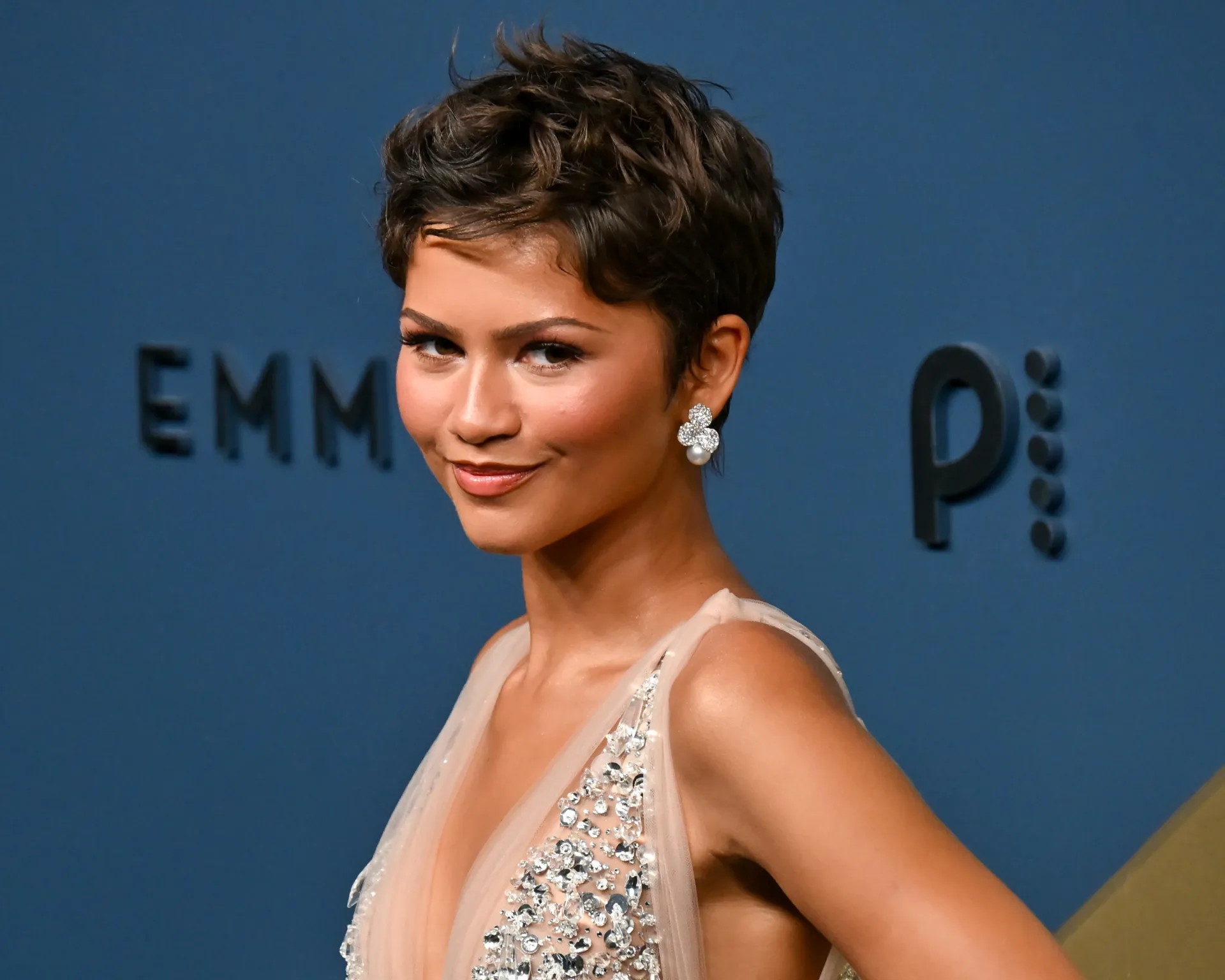
Zendaya is reportedly set to campaign for the Best Actress Oscar in connection with Dune: Part III, where she returns as Chani. It is a meaningful awards-season classification change for the performer and for the character: Chani was positioned in the supporting-actress race for the first two films, while the new approach treats her role in the third installment as a leading one.
That distinction is more than a line on an awards ballot. A campaign category signals how a studio and its awards team believe a performance fits within a film’s dramatic center. “Lead” and “supporting” do not operate like rigid measurements of screen time. They are campaign choices that frame an actor’s importance to the story, its emotional perspective, and the overall conversation that follows a movie through awards season.
For Dune: Part III, the reported Best Actress push indicates that Chani’s importance has grown substantially. Everything indicated so far points to a version of the character whose circumstances and choices sharply diverge from the role she has in Frank Herbert’s Dune Messiah.
Why Chani’s category has changed
Chani’s position in the new film is reportedly markedly different from the source novel’s status quo. Rather than standing beside Paul as his loyal concubine and hoping to bear his children, this interpretation has rejected Paul and what he represents. She instead chooses to remain a true Fremen: free, autonomous, and in service to no ruler.
That setup gives the character a fundamentally more active dramatic function. Chani is no longer defined principally by her proximity to Paul or by a future promised within his empire. Her rejection creates conflict with the story’s central power structure and places her own values, identity, and agency at the forefront. If the film develops that conflict as its premise suggests, it is easy to see why Zendaya’s work would be presented as a lead performance rather than a supporting one.
There is an important caveat: a campaign placement is not a nomination. It is the beginning of an awards strategy, not a verdict from voters. It also does not settle how every viewer will interpret Chani’s prominence once the movie is seen. But the decision itself offers a clear indication of how the performance is expected to be understood in the context of the finished film.
What an Oscar campaign actually means
An Oscar campaign is the organized effort to put a film and its eligible contributors in front of Academy voters during the awards season. In acting races, category placement matters because Best Actress and Best Supporting Actress are separate fields with their own competitors. A leading campaign asks voters to regard the performance as one of the movie’s principal acting achievements; a supporting campaign places it in a different competitive lane.
The labels can carry strategic consequences, but they should not be confused with a hierarchy of artistic value. Supporting performances can be pivotal, and leading performances can exist inside large ensembles. In Zendaya’s case, the shift is best read as a response to Chani’s expanded narrative role, not merely as a relabeling exercise.
The Academy has also recently revised rules ahead of next year’s ceremony. Among the changes are updated positions concerning AI and permission for an actor to receive multiple nominations in the same category. The latter change is notable in a year when performers may have several high-profile eligible projects, although nothing in the reported campaign plan guarantees that Zendaya will receive any nomination.
A franchise with technical recognition, but no acting nominations
The first two Dune films established a record of Oscar recognition in technical categories, yet none of their actors received Oscar or Golden Globe nominations for acting in those films. That history gives the prospective Zendaya campaign extra significance. A Best Actress nomination for Dune: Part III would mark a new kind of major awards attention for the series, one focused on an individual performance rather than its craft achievements.
It would also test whether voters respond to the third film as a dramatic expansion rather than simply another chapter in a large-scale franchise. The reported emphasis on Chani supplies a clear human throughline for that case. Her refusal to accept Paul’s path establishes a personal and political tension inside the story, potentially giving Zendaya material that can stand apart from the films’ scale and technical ambition.
That possibility remains speculative until the Academy’s voting process produces results. The useful factual takeaway is narrower: the campaign is reportedly being aimed at the lead category, and it represents a departure from how Zendaya was positioned for the earlier films.
Zendaya’s crowded awards-year picture
Dune: Part III is only one part of an unusually prominent year for Zendaya. She has received praise for The Drama and appeared in 2026’s two highest-grossing films, Spider-Man: Brand New Day and The Odyssey. That visibility does not automatically translate into Academy attention, but it means her work is present across several of the year’s biggest film conversations.
Current awards forecasting has not placed Zendaya among its leading Oscar hopefuls in either actress category for any of her films. In the same forecasting picture, her The Odyssey co-stars Anne Hathaway and Samantha Morton are viewed as leading possibilities for Best Supporting Actress nominations. Forecasts are inherently provisional rather than official, especially before nominations are announced, but they illustrate that a reported campaign can precede broad prediction consensus.
Her outlook is stronger in some other awards projections. Zendaya is considered a contender for a Golden Globe nomination in film comedy or musical actress for The Drama. She is also in contention in television drama actress for the final season of Euphoria, both at the Golden Globes and with the Screen Actors Guild.
The television side of that picture is a reminder that an actor’s awards conversation can span formats at once. The final season of Euphoria places Zendaya in a TV drama field while Dune: Part III, The Drama, and her other movies create a separate film-season discussion. For another perspective on how actors weigh major television chapters in their careers, see Jenna Ortega’s comments on potentially stepping away from TV after Wednesday.
What to watch as the race develops
The clearest issue is whether awards voters agree that Chani belongs in the lead-actress conversation. That will depend on the film itself, the shape of the role on screen, and the competition that emerges throughout the season. A reported category decision is meaningful, but voters determine nominations independently.
It is also worth separating the different awards bodies and their categories. The Oscars’ Best Actress category is not the same as the Golden Globes’ film comedy or musical actress category, and neither is equivalent to the Screen Actors Guild’s television drama actress recognition. Zendaya can be in the discussion across those spaces because the bodies, mediums, and category definitions differ. Strong momentum in one does not ensure success in another.
The 99th Academy Awards are scheduled to air live on ABC and Hulu on Sunday, March 14, 2027, at 7 p.m. ET/4 p.m. PT. Conan O’Brien is set to host for a third consecutive year. Between now and then, the campaign’s central message appears straightforward: Dune: Part III is positioning Chani not as a supporting presence in Paul’s story, but as a lead figure whose break with him reshapes the drama.