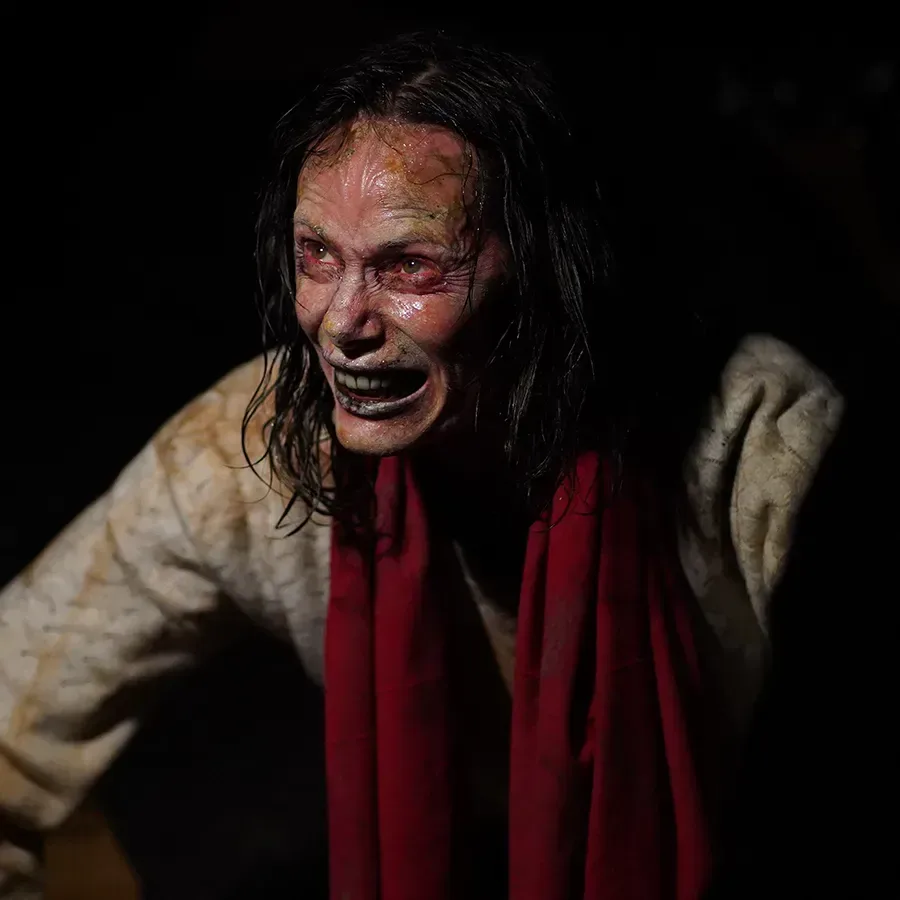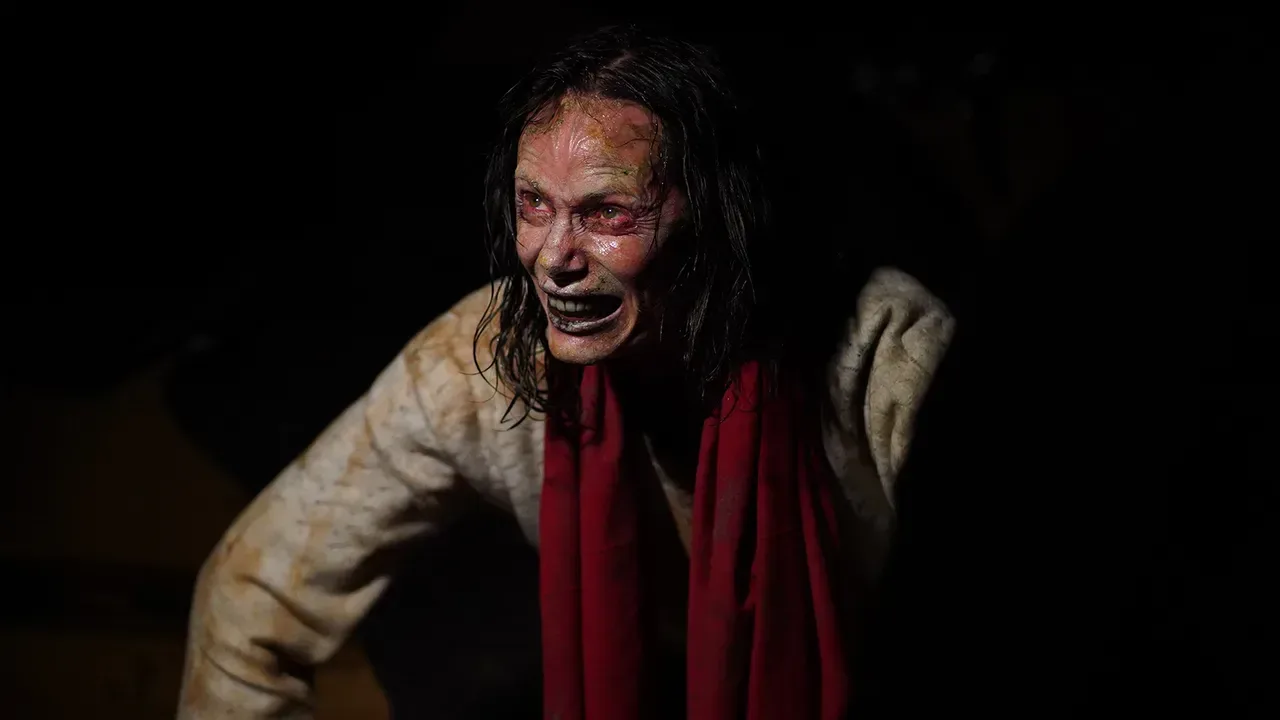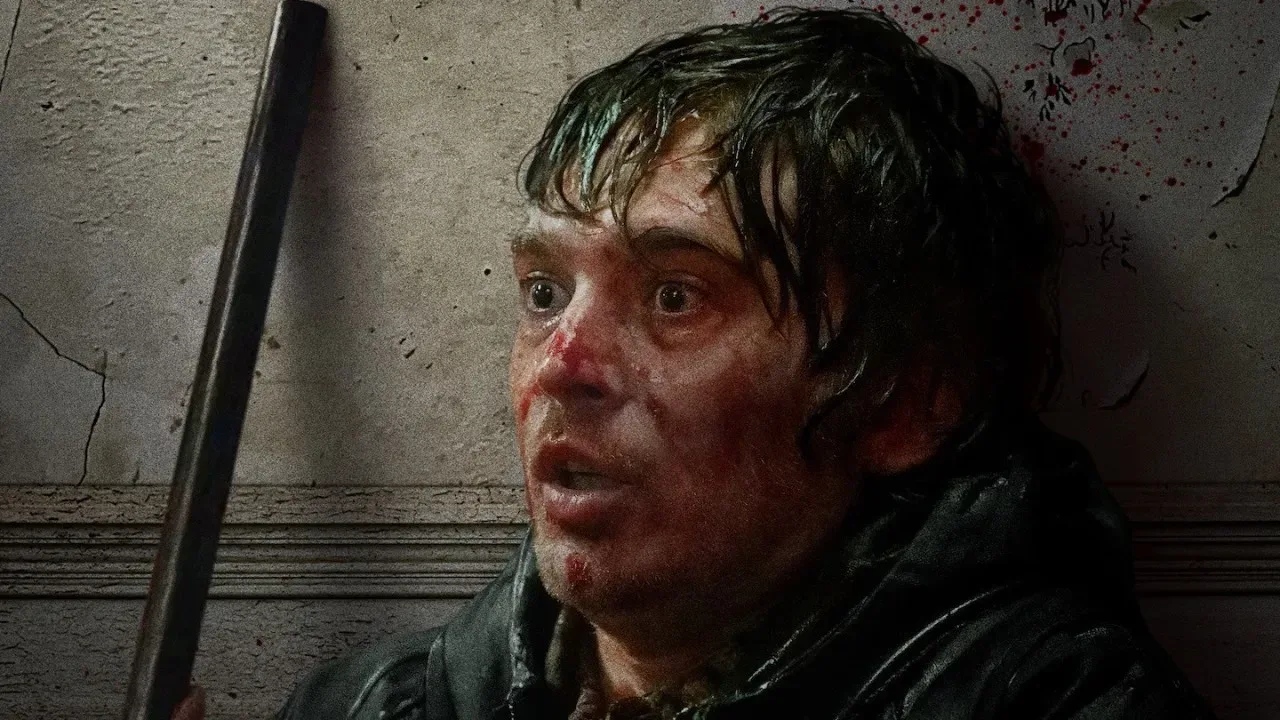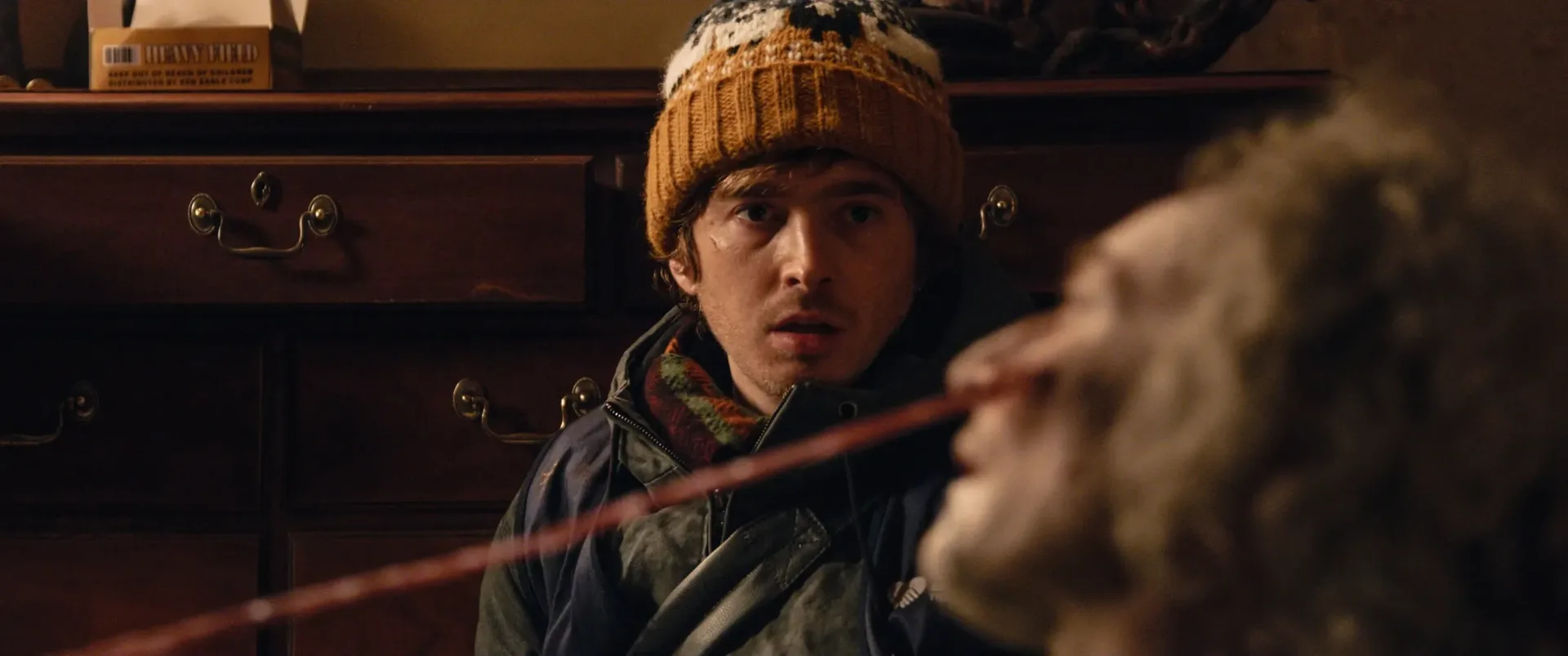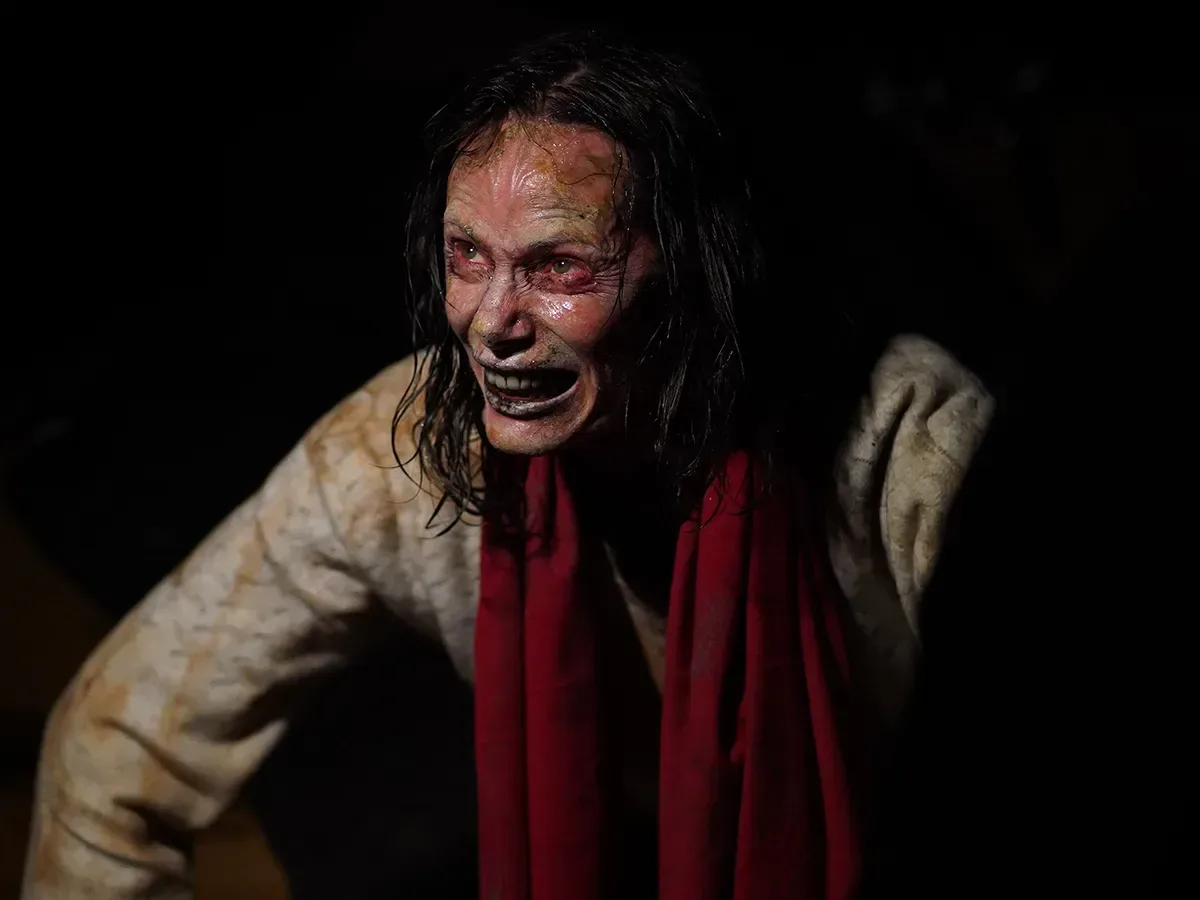
Chandler Riggs is taking a particularly dangerous Resident Evil 7: Biohazard set piece out of first-person horror and into live action. His upcoming 20-minute fan film adapts the game’s garage confrontation between Ethan Winters and Jack Baker, with Riggs playing Ethan and Jason Douglas playing Jack.
The short is due online October 14 and also features Mary Rachel Quinn, Eugenie Bonderant, Johnathan O’Niel and Sam Coyles. For Riggs, known to many viewers for playing Carl in The Walking Dead, the project is fundamentally an act of fandom—and an opportunity to get a production moving rather than wait for the perfect invitation. That makes the premise straightforward, but the creative choices behind it are not.
Resident Evil 7 is unusually difficult material to translate literally. Its perspective is a central part of its identity: players experience much of Ethan’s ordeal through his eyes, and Ethan himself is famously kept visually elusive in the game. A film camera cannot seamlessly preserve that trick while also delivering readable action, performance and spatial clarity to people who have never held a controller. Riggs and his team therefore made a conspicuous change: their Ethan has a visible face.
A short film built around one high-pressure encounter
The garage fight is a useful focus for a compact adaptation because it contains the essentials of the game’s horror-action contrast in one place. Ethan is not simply facing a monster at a safe distance; he is caught in a close, contained confrontation with Jack Baker. The situation calls for physicality, danger and a recognisable sense of escalation, all while the location gives the production a specific visual identity.
Riggs has described the film as a 20-minute, high-energy interpretation of that encounter rather than a claim to have adapted all of Resident Evil 7. That distinction matters. A short can concentrate on the rhythm and stakes of one sequence without pretending it can recreate the entire game’s structure, exploration or extended first-person immersion.
It also answers a question that often hangs over fan productions: why this scene? A well-known encounter gives existing players a clear reference point, while the basic setup can still be understood by viewers who do not know the Baker family or Ethan Winters’ larger story. The film does not need to explain every piece of Resident Evil lore before putting two people in a garage and making the danger immediate.
Why Ethan’s face is the biggest adaptation choice
Riggs acknowledged that portraying Ethan was intimidating precisely because the project otherwise aims to stay close to the game. In game terms, Ethan is a player-avatar protagonist: a lead character whose presentation is designed, at least in part, to preserve the player’s own viewpoint and identification with events. Keeping his face out of emphasis supports that design.
Live action has different requirements. A performer’s face is not merely a cosmetic detail; it is one of the primary tools for communicating fear, resolve, pain and reaction. Riggs said the team considered whether it could shoot entirely in first person or avoid showing Ethan’s face, but concluded that doing so would not be the best way to tell the story to a broader audience.
Related coverage includes Chandler Riggs Brings Resident Evil 7's Garage Fight to Life in New Fan Film.
That is not a declaration that one approach is inherently more faithful than the other. It is an acknowledgement that fidelity has more than one meaning. A shot-for-shot or rule-for-rule reproduction may protect a game’s surface conventions, but it can also limit what a film can communicate in its own medium. Conversely, changing a signature convention can create immediate resistance from players who see that convention as inseparable from the character.
Riggs’ position is practical: a live-action version has to break some rules if it wants to work for people beyond the audience who already knows the game. The gamble is clear. Showing Ethan makes the short more conventional as filmed drama, but it also puts a definitive performer in the place of a hero whose identity has been intentionally obscured.
Adaptation is not a 1:1 transaction
The timing puts Riggs’ short alongside a much larger argument about what Resident Evil films should be. Zach Cregger’s Resident Evil adaptation reached theaters in September, earned strong notices and became the franchise’s most financially successful film. It has nevertheless divided some dedicated fans, especially those who wanted a one-to-one transfer of the games’ stories and characters.
Cregger’s approach was not built around that kind of direct replication. He has argued that the games already tell their stories effectively and chose to pursue a different direction. Riggs said he respects that choice, noting that using figures such as Leon and Jill brings its own enormous expectations because they are so iconic to players.
It is a useful distinction between two kinds of audience promise. A direct adaptation asks whether recognisable plot beats, characters and images have been retained. A new story in an existing universe asks whether its tone, ideas and world still feel connected to what players value. Neither strategy eliminates criticism. The former can be accused of reducing a game to a checklist; the latter can be accused of moving too far away from the thing named on the poster.
Riggs’ film sits in an interesting space between those approaches. It selects a specific, recognisable game moment and aims to be very faithful in much of its construction, yet it changes Ethan’s presentation for cinematic reasons. The short is therefore not a literal recreation, but neither is it detached from the game. Its success with viewers will likely depend less on whether every visible element is identical and more on whether the garage clash feels like the same kind of pressure-cooker confrontation players remember.
Making the work instead of waiting for the call
Riggs’ explanation for making the film is refreshingly direct. He says he enjoys being on set and collaborating with good people; if more film or television work is not immediately available, he would rather create an opportunity himself. That perspective is more revealing than the coincidence of release timing.
Riggs said the team was already in pre-production when news emerged that Cregger would direct a Resident Evil movie. There was an effort to finish the fan film sooner, but the necessary pieces did not fall into place. The result arrives after Cregger’s theatrical feature, not before it.
There is no indication that the short is intended as a competitor to the studio production. If anything, Riggs has spoken enthusiastically about wanting to see Cregger’s film and said that his desire for a strong, game-faithful live-action Resident Evil experience was one of the reasons he made the project. Two productions can respond to the same franchise from very different scales: one a theatrical feature with a new approach, the other a focused fan-made interpretation of a beloved game encounter.
The work also points to a practical lesson for creators: a concise premise can be an advantage. Rather than promising a full feature version of an enormous game, the project has an identifiable dramatic unit, a limited runtime and a cast attached to defined roles. The focus does not remove the production challenge, especially with a sequence associated with horror, action and effects, but it gives the film a clear reason to exist.
Riggs wants a larger Resident Evil future
Riggs has said he would like to make a feature-length adaptation of Resident Evil 7 someday. He would also welcome the chance to collaborate with Cregger on another Resident Evil film if the director continues in the franchise. His message to Cregger was blunt and cheerful: his phone is open.
Whether that connection ever happens is uncertain. Cregger has said strong backlash from a vocal section of the Resident Evil fanbase made him reluctant to take on another franchise movie. At the same time, he has ideas for a sequel. Those two facts leave the series’ movie future unresolved: interest in more stories exists, but so does a clear recognition of how intensely franchise audiences can scrutinize creative decisions.
That tension is hardly limited to Resident Evil. The recent discussion around game adaptations repeatedly comes back to a central issue: is the goal to reproduce the player’s exact memory, or to make a movie that can stand on its own? Performance is part of that equation too. As seen in another game-to-film role, screen performers may study a character’s moves and physical language closely, but study alone does not settle the wider adaptation debate.
For Riggs, the answer appears to be action rather than abstraction. His short cannot settle what the definitive Resident Evil movie should look like. It can, however, test one concrete answer: put Ethan Winters and Jack Baker in a garage, let a live-action actor give Ethan an expression, and see whether the moment retains its bite when the camera moves outside the player’s eyes.
What viewers can reasonably expect on October 14
The firm details are limited but meaningful. The project is a 20-minute fan film based on the Resident Evil 7: Biohazard garage fight. Riggs plays Ethan Winters, Douglas plays Jack Baker, and Quinn, Bonderant, O’Niel and Coyles are in the cast. It is scheduled to arrive online October 14.
Beyond that, viewers should avoid treating the short as a substitute for either the game or a feature-length adaptation. Its stated purpose is more personal and more modest: bring a favourite Resident Evil moment into live action with collaborators who wanted to make it happen. That narrowness may be exactly what allows it to be judged on its own terms.