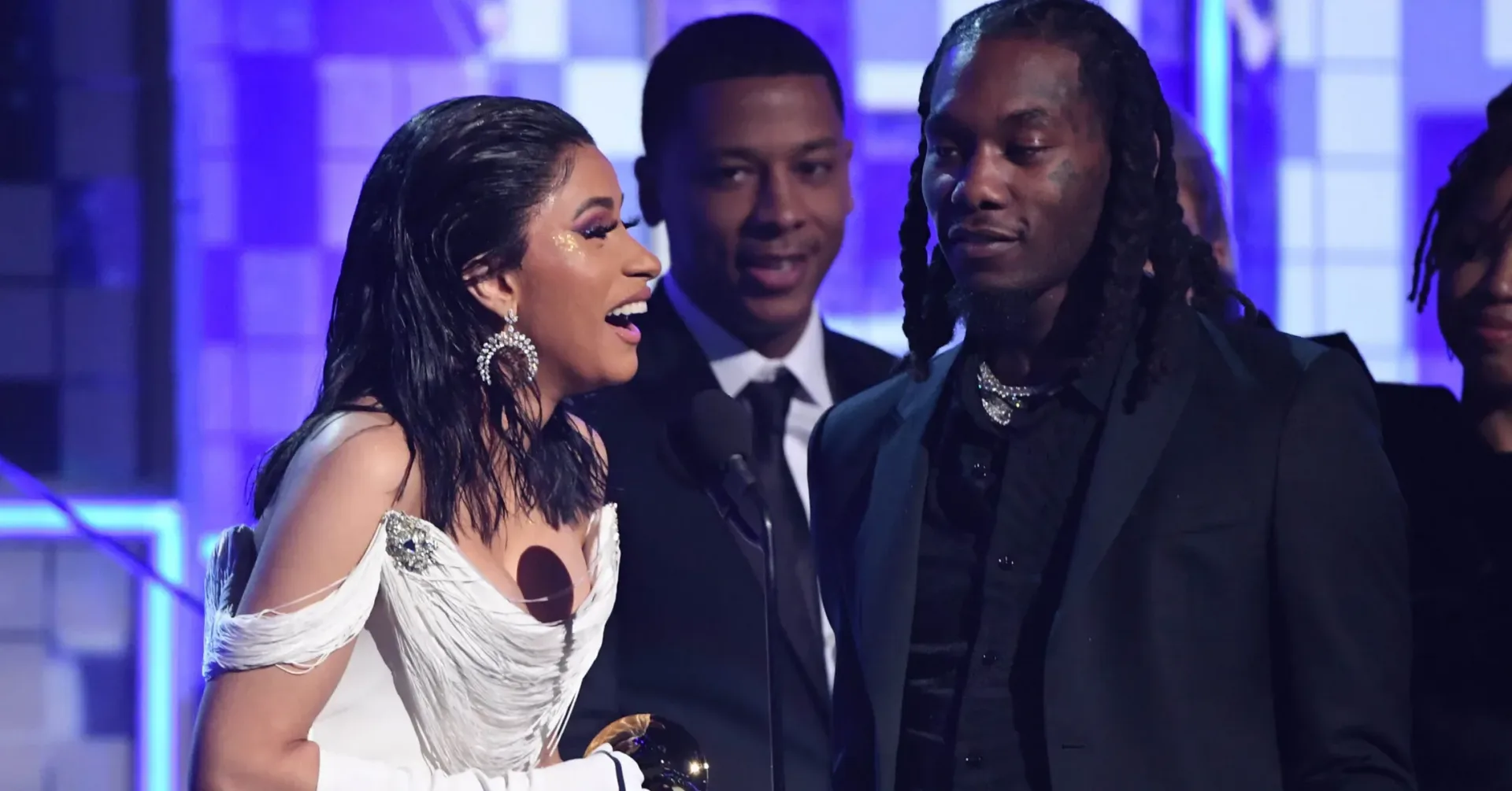
Cardi B and Offset have settled the dispute over a Beverly Hills mansion used for Cardi B’s “Like What” music video, ending a case that had been scheduled to go to trial on January 5. The lawsuit has been dismissed, while the terms of the agreement remain confidential.
The result closes a conflict built around a question that sounds straightforward but can become costly in production: what exactly was the property booked for, and did the finished shoot match what the owner says it was told to expect?
BI LLC, the owner of the glass-and-aluminum residence designed by architect Ed Niles, filed suit in September 2024. Its complaint alleged that the booking came through representatives who did not disclose the clients’ identities. More centrally, the owner claimed the group obtained access at a lower rate by representing that the project was a TikTok shoot, then used the house as a major location for a professionally made music video.
Cardi B contested that description when the case was filed. She said $10,000 cash was paid for 24 hours at the property and that an additional hour was subsequently paid through the realtor. She also said the owners and realtors were present during filming, and maintained that the agreement did not say the shoot was limited to TikTok material.
A settlement, not a public ruling on whose account was right
The confidential settlement means the dispute will not be resolved through a public trial record. That distinction matters. A dismissal following settlement does not, by itself, establish that either side’s factual narrative was proven in court. It means the parties reached an arrangement that allowed the case to end before trial.
The parties had indicated in an April filing that they were willing to pursue mediation. Mediation is a structured settlement process in which a neutral third party helps opposing sides explore a deal; it is not a judge or jury deciding the merits. In practical terms, it can let parties manage expense, uncertainty and publicity without putting the final agreement on the public docket.
Neither side’s lawyers commented, and the terms have not been released. There is therefore no public basis to state whether money changed hands, whether either side accepted any particular condition, or whether the agreement includes provisions beyond ending the litigation.
What the property owner alleged
The property owner’s claims included trespass, unjust enrichment and intentional misrepresentation. These terms address different alleged problems:
Related coverage includes Cardi B and Offset Settle ‘Like What’ Mansion Lawsuit.
- Trespass generally concerns unauthorized entry or use of property. In a location-rental conflict, the issue can turn on whether the consent that was granted had limits and whether those limits were exceeded.
- Unjust enrichment is a claim that one party received a benefit under circumstances where keeping that benefit would be unfair. Here, the owner’s theory was tied to the alleged gap between the rate paid and the commercial value of the video production use.
- Intentional misrepresentation concerns an allegation that someone knowingly made a false statement of material fact to induce another party to act. The asserted representation about a TikTok shoot was central to that part of the complaint.
The filing included still images from the production and said the “Like What” video had amassed more than 26 million YouTube views in its first six months. That audience figure was part of the owner’s attempt to frame the home’s appearance as commercially significant rather than incidental.
The alleged price distinction was also important. The complaint maintained that the project was presented as a lower-cost social-media shoot, while the owner characterized the finished work as a professional video using the mansion as a visual centerpiece. The dispute was not simply over whether cameras entered the house; it was over the purpose, scale and value of the use that was allegedly communicated before access was granted.
Cardi B’s response focused on payment and on-site awareness
Cardi B’s public account pushed back on the claim that the production was misrepresented. Her position was that the production paid for a full day at the home, paid for extra time, and operated while the owners and realtors were there. She also disputed that the contract identified TikTok as the purpose of the shoot.
Those points go to a familiar location-use tension: a property owner may view a booking description as an important limit on permission, while a production may argue that the written terms, payment, and the conduct of those present show the use was permitted. The settlement prevents those competing views from being tested at trial.
Cardi B and Atlantic Records also challenged whether the complaint set out viable legal claims. In a February 2025 tentative ruling, Judge Michael E. Whitaker wrote that the complaint sufficiently alleged reliance on a statement that the intended activity was only filming a TikTok when a professional music video was actually filmed.
That tentative ruling was not a final verdict. It meant, at that stage, the court found the owner had alleged enough for the case to proceed on that theory. The court did not thereby determine that the representation occurred or that the owner would ultimately prevail. Those are key differences in any case that ends before trial.
Why the exact booking description can matter for video locations
Music videos, branded content, short-form clips and other screen productions can look similar from a distance: lights, crew members, talent and cameras all may be involved. But property access can be priced and approved differently depending on the planned activity, number of people, duration, equipment and commercial purpose.
That helps explain why the TikTok-versus-music-video allegation sat at the center of this lawsuit. The owner alleged it accepted a lower-priced booking based on a limited description. Cardi B disputed that there was any contractual TikTok restriction and pointed to the full-day payment and people present at the shoot. Without a trial, the public will not receive a ruling settling how the booking documents, communications and on-site circumstances fit together.
For location owners and production teams alike, the broad practical lesson is less glamorous than the resulting video: put the intended use in clear written terms. That includes the nature of the project, how the location will appear, the length of access, the people and equipment expected on site, and who is authorized to make decisions. Precision cannot guarantee that a disagreement will never arise, but it reduces the amount that later has to be inferred from competing recollections.
The case also underlines why a short-form label may be a poor substitute for a full production description. A project’s ultimate platform, its professional status and its promotional value can all become contested when a location’s rate or permission is tied to a specific purpose. Clear contracting is especially important when a shoot involves artists whose finished work may quickly reach a large audience.
The mansion was already a recognizable video setting
The Beverly Hills house was not new to music-video visibility. Court records noted that it had previously appeared in Jake Paul’s “It’s Everyday Bro.” That earlier appearance does not resolve the dispute over “Like What,” but it adds context to why the property could be valuable as a screen location: distinctive architecture can become part of a production’s visual identity.
Its design is also relevant to the owner’s framing of the property. The home is described as a glass-and-aluminum residence designed by Ed Niles, features that make it an especially conspicuous backdrop rather than a generic interior. When an architecture-forward location is used as a centerpiece, questions about scope of permission and commercial use can carry greater stakes for both the property owner and the people producing the work.
For viewers, a location may be a few seconds of high-gloss imagery. For the parties arranging a shoot, it is a private property transaction with conditions, intermediaries and potentially very different understandings of what is being purchased. That divide is the real story behind the settlement.
What happens now
With the case dismissed, there will be no January trial and no public courtroom resolution of the owner’s allegations or Cardi B’s response. The confidential deal leaves the public record with the claims, the denials and the judge’s earlier tentative decision that the complaint adequately alleged a theory for the case to move forward.
The resolution also arrives within a broader pop-culture environment where music news can move rapidly from creative work to commercial negotiations and public narratives, as seen in ongoing discussion around Rihanna album speculation and unconfirmed business claims. In this instance, though, the most important facts remain narrow: the mansion lawsuit is over, the agreement is private, and neither side’s version of the shoot was ultimately decided in a public trial.