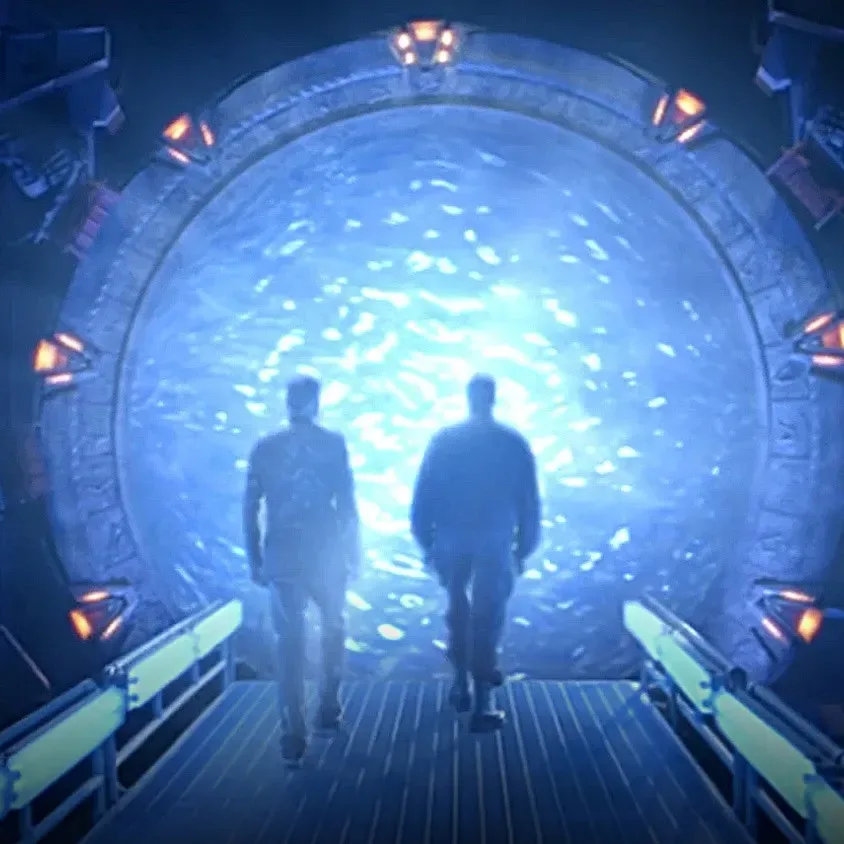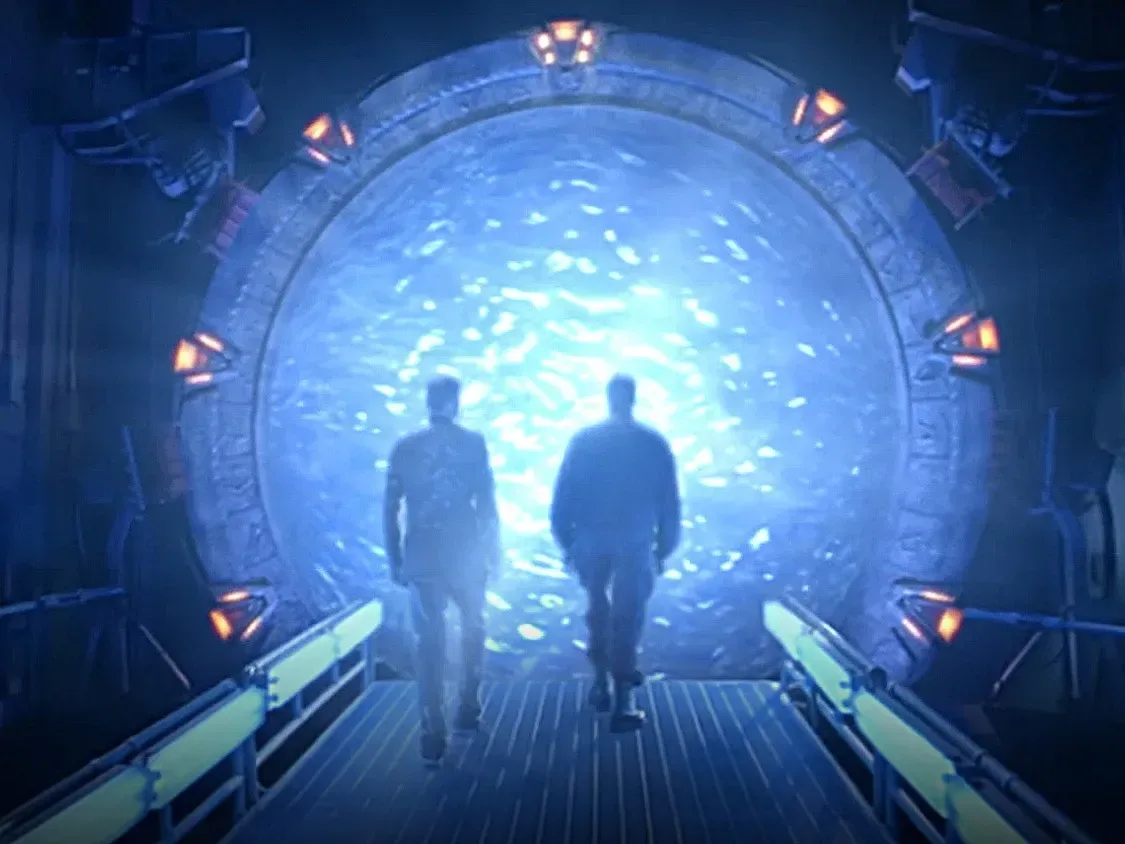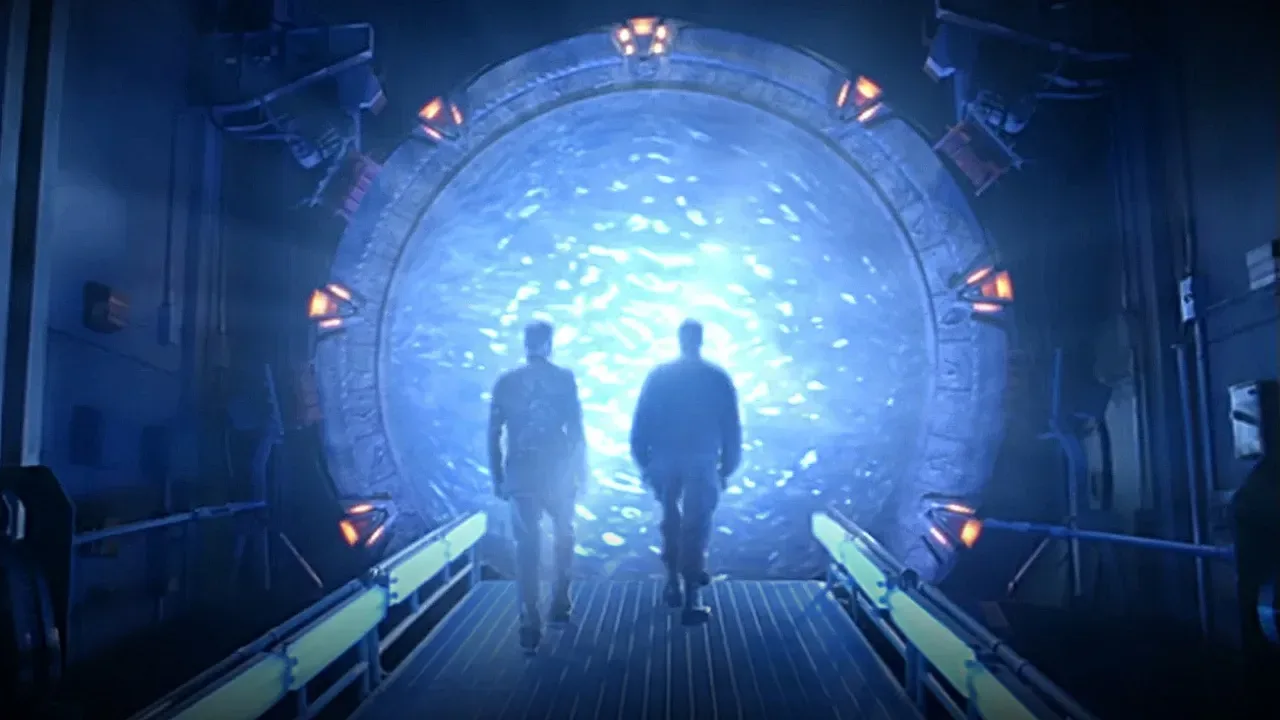
The Stargate revival that will not be dialing home had a notably ambitious way of bringing back one of the franchise’s most recognizable faces. The canceled project reportedly planned to feature Michael Shanks as Daniel Jackson, with the longtime SG-1 character stuck in a parallel universe whose history had diverged sharply from the familiar Stargate continuity.
Shanks confirmed his involvement with the project during the Starfury: Ascension 2 convention in Birmingham, UK, and subsequent discussion has outlined the proposed premise in greater detail. Rather than simply picking up after every previous Stargate story, the series was intended to use an alternate reality where various events from the older shows had never happened.
That approach appears designed as a soft reset: new viewers could enter a version of Stargate without needing to navigate decades of continuity, while Daniel himself would remain a direct link to the established universe. It is a concept with the pleasingly Stargate-specific complication of asking an expert in ancient languages, alien civilizations and catastrophic cosmic events to explain why his own reality is no longer the one around him.
Daniel Jackson was meant to be the audience’s bridge
Daniel Jackson was reportedly set to be a regular character rather than a one-off legacy appearance. Crucially, this version would have been the original Daniel: a man carrying memories and knowledge from the franchise’s main, or Prime, universe while living among alternate versions of people and events.
That distinction would have done a great deal of storytelling work. For a returning viewer, Daniel could have provided emotional continuity and a familiar perspective on what had changed. For an incoming viewer, the alternate setting could have supplied a fresh starting line. The character would understand the difference between the worlds even when the new audience did not yet need to know every detail.
It is also an unusually apt role for Daniel. Across Stargate SG-1, he was frequently the person attempting to interpret the unknown, connect fragments of history and persuade people that the impossible thing happening in front of them was, regrettably, both real and urgent. A displaced Daniel trying to make sense of a universe that resembles home but is not home would have put those qualities at the center of the revival.
None of this means the proposed show was a straightforward nostalgia exercise. The alternate-universe framework reportedly would have altered enough past developments to make the setting its own branch of the franchise. That could have prevented a revival from becoming a continuity checklist while preserving room for a legacy character whose history mattered.
A soft reboot with a Stargate-sized escape hatch
The reported plan was not necessarily to remain away from the Prime universe forever. Later seasons could have moved the wider narrative back toward the original continuity. In other words, the parallel reality may have been intended as the opening destination, not the permanent address.
Related coverage includes Canceled Stargate Revival Would Have Put Daniel Jackson in a Parallel Universe.
That long-term possibility is important because it suggests the creative team was considering both audiences at once. A clean entry point can be valuable for any revived franchise, but Stargate’s enduring appeal is deeply tied to its accumulated relationships, discoveries and escalating mythology. Starting from an alternate reality could have lowered the barrier to entry without declaring the existing story irrelevant.
The format also could have created an obvious avenue for guest appearances by Stargate veterans, potentially as alternate-universe versions of their characters. Those appearances were possibilities, not confirmed casting commitments, and no list of returning performers has been established. Still, alternate timelines are one of the few storytelling devices that can make a familiar face feel both comfortingly recognizable and genuinely surprising.
There is a difference, though, between a premise that leaves doors open and a production that has reached the stage where those doors are actually walked through. The revival has been canceled, and the available details describe what was being planned rather than what audiences will definitely see. The distinction matters, especially with a property whose fans have had ample practice separating tantalizing possibilities from completed missions.
Why this version of the revival matters to longtime fans
Shanks’ participation carries particular weight because Daniel Jackson is inseparable from the identity of SG-1. The character was part of the franchise from its earliest television days, and Shanks became central to its ensemble dynamic. Bringing him back as a continuing presence would have offered more than a cameo designed to prompt applause; it would have made legacy continuity part of the proposed show’s engine.
Earlier comments from Shanks had already made clear that the cancellation was a painful outcome after years of work and a public reveal that created considerable anticipation. He also indicated that this project may have been fans’ only opportunity for a revival built with former members of the SG-1 production team and including people from the former cast.
That helps explain why the latest outline has drawn interest even though it describes an unrealized series. Fans are not merely hearing that an unnamed reboot once existed. They are getting a clearer picture of a project that appears to have been designed to honor an older foundation while making a case for a different beginning.
The broader entertainment landscape is packed with revivals that struggle to balance those two tasks. Lean too hard into continuity, and unfamiliar viewers can feel as though they arrived several seasons late. Strip everything back, and the people who sustained the franchise for years may reasonably ask why it needed the old name at all. The reported Stargate plan seems to have tried to make that tension part of the plot: Daniel’s memories of the original universe would be meaningful precisely because the world around him was no longer bound to it.
The cancellation remains the central fact
Amazon canceled this particular Stargate series, and months after calls for fans to show support, there is no indication that decision is being reversed. Reports previously suggested concern that the show might struggle to appeal beyond the existing Stargate fan base. Joseph Mallozzi, a veteran Stargate writer who had been involved with the project, later disputed that characterization.
Those competing accounts leave the exact reasoning unsettled. What is clear is that the canceled project had been in development for years and had progressed far enough for a public reveal, yet it is not moving forward in the form described here. There is no basis to treat Daniel Jackson’s parallel-universe story, a return to the Prime universe, or possible veteran cameos as forthcoming episodes.
Amazon is nevertheless reported to retain interest in Stargate’s future, even if this revival remains shelved. That keeps the franchise’s larger status in the realm of possibility rather than closing the iris entirely. But a future Stargate project, if one materializes, should not automatically be assumed to use this concept, employ the same creative personnel or feature the same returning cast members.
For now, the clearest legacy of the canceled revival is an intriguing blueprint: Daniel Jackson, not rebooted into a blank slate, but displaced into a changed reality; a new continuity that could welcome unfamiliar viewers; and a potential path back toward the universe fans already know. It is a very Stargate idea—one foot in the past, one foot through an impossible portal, and an archaeologist in the middle trying to explain the map.
The news also lands during a period when franchise plans at Amazon and Prime Video can shift quickly; for another recent example of a defined ending rather than an open-ended future, see the report on Spider-Noir ending after one season. Stargate’s next destination remains unknown, but this canceled version now has a much clearer outline—and Daniel Jackson was supposed to be the one carrying the old universe with him.