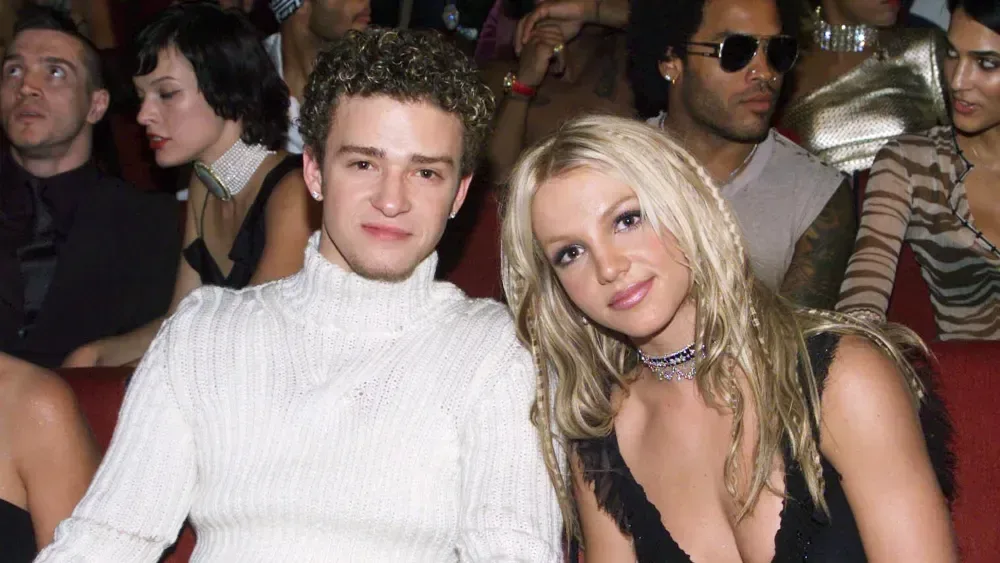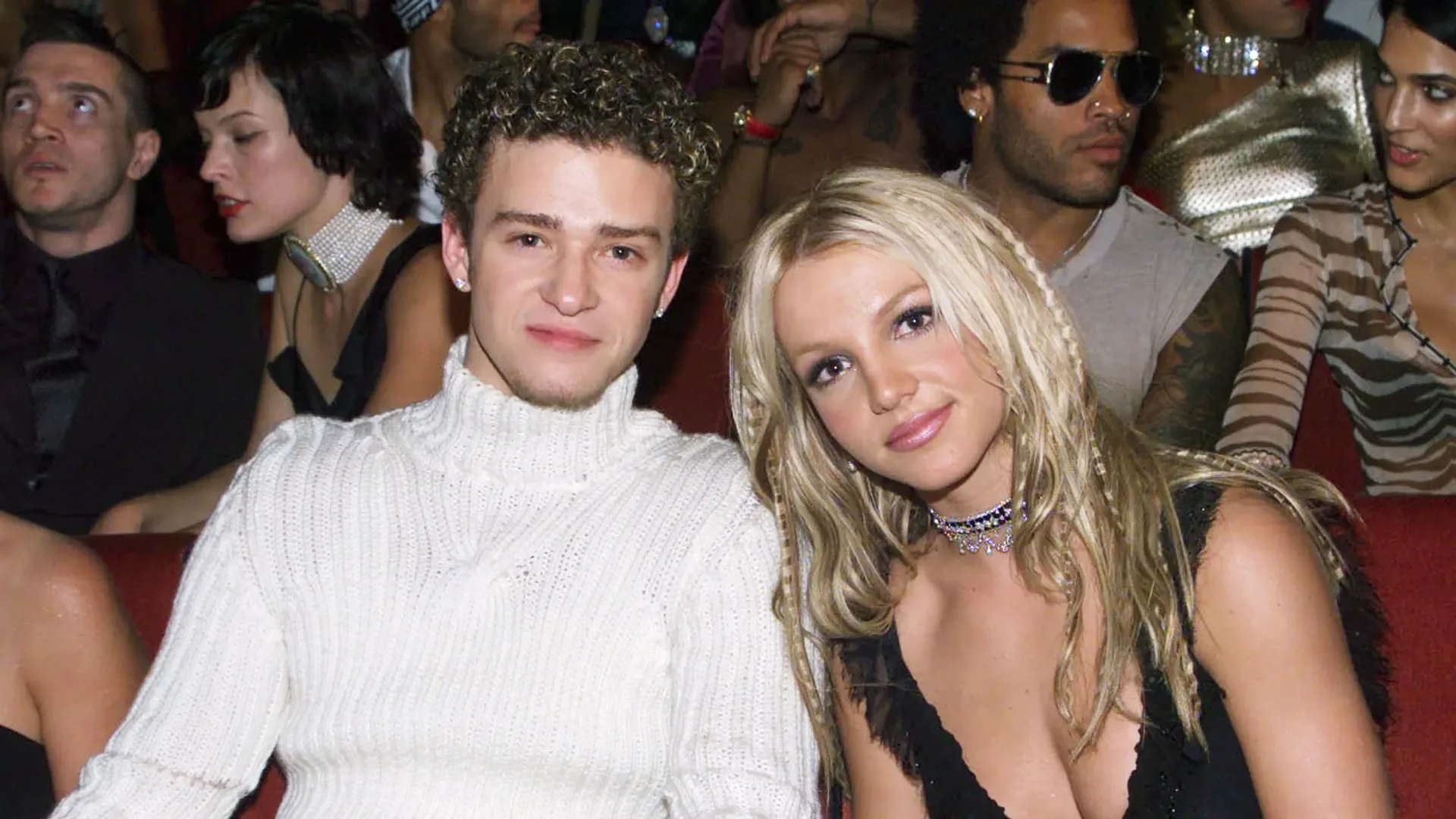
Britney Spears has shared “She’ll Never Be Me,” an unreleased recording featuring Justin Timberlake that dates back to sessions for her 2001 album Britney. The track serves as an early preview of a 25th anniversary edition of the album, scheduled for release on Nov. 6.
The recording is a notable archival release for several reasons. It connects two of pop music’s most recognizable artists at a specific early-2000s moment, when Spears and Timberlake were dating, and it returns to material made for an album that has remained a major marker in Spears’ catalog. It is also part of a package built around songs that were created at the time but did not make the original standard album release.
What is on the anniversary edition?
“She’ll Never Be Me” is one of five previously unreleased tracks included with the anniversary edition. The other newly issued archival recordings are “Am I a Sinner,” “When I Say So,” and “My Big Secret,” plus a full version of “Right Now (Taste the Victory).”
The latter title may be familiar in a different form: it was used in a 2002 Pepsi commercial. Its inclusion in full is meaningful because advertisements can leave listeners with only an excerpt, alternate edit, or campaign-specific presentation of a song. A full version gives the anniversary release another function beyond nostalgia: it gathers a piece of music that had circulated in a promotional context into an album-centered collection.
Anniversary editions commonly revisit an established release through remastering, bonus tracks, alternate takes, demos, or material that was left unreleased. Here, the distinguishing feature is the set of songs from the original era. They are not presented as evidence of a newly recorded Spears album; they are archival recordings from more than two decades ago, now being formally released.
A collaboration from the original era
Spears and Timberlake were joined on “She’ll Never Be Me” by Bradley Daymond and Alex Greggs, the songwriting and production team known as Riprock ’n’ Alex G. The pair had longstanding ties to *NSYNC, making their participation a natural part of the track’s period context.
That context matters because unreleased songs are often discussed as though they are newly created events. In this case, the novelty is the public availability of a previously unheard—or at least not officially released—recording. The music itself belongs to the creative orbit of the 2001 Britney sessions. For listeners, that distinction helps set fair expectations: this is a recovered piece of an existing album cycle, not a signal that Spears and Timberlake returned to the studio together for a present-day collaboration.
It also makes the track an unusually direct artifact of an era when both artists were central figures in mainstream pop. A recording made when the two were a couple will inevitably draw attention for reasons beyond its production credits or place on a reissue. But the useful musical question is simpler: how does a song held back from an album session complement the material that did arrive in 2001? The expanded edition is positioned to let listeners consider that question across several newly released tracks, rather than treating one collaboration as an isolated curiosity.
A quiet rollout, despite the size of the discovery
The release has arrived with little of the usual advance campaign. Beyond a Facebook reel, there was no notice on Spears’ website or other social accounts and no accompanying announcement from RCA. That low-key approach contrasts sharply with the attention attached to both performers and to a previously unreleased song from a high-profile album era.
There is a practical upside to a restrained rollout for archival music: the material can take center stage without turning the release into a promise of a wider comeback. That is especially important here. Spears has said that she will not return to the music industry, and she has also said she will not perform in the United States again. The anniversary edition should therefore be read on its stated terms—as a retrospective release—not as confirmation of future recording or touring plans.
That distinction is valuable for fans and casual listeners alike. Pop releases are frequently interpreted as signals about what comes next: a single suggests an album, an album suggests performances, and performances suggest a promotional cycle. The information available around “She’ll Never Be Me” supports none of those assumptions. What is clear is that an anniversary edition is coming Nov. 6 and that it contains five previously unreleased recordings from the Britney era.
Why archival releases can matter without becoming a “return”
The release is Spears’ first newly issued music since her 2023 collaboration with will.i.am, “Mind Your Business.” That track was assembled from older recordings. The new material attached to the Britney anniversary edition similarly belongs to an earlier period, reinforcing the difference between a release date and a recording date.
For an artist’s catalog, that difference can be substantial. A current recording reflects a present creative decision in the studio. An archival release involves bringing an earlier work into public circulation, often as part of a curated retrospective. Neither is inherently more meaningful than the other, but they answer different questions. One asks what an artist is making now; the other asks what was left unheard from a particular chapter.
In this instance, the anniversary framing gives the tracks a shared purpose. Rather than presenting them as unrelated vault finds, the edition places them alongside the album for which they were recorded. That allows listeners to approach the bonus songs as extensions of the project’s creative period. Some may hear them as missing pieces; others may hear why they were held back. Both responses are part of what makes an expanded edition interesting.
The approach also avoids overstating the status of the material. “Previously unreleased” does not necessarily mean unfinished, and it does not automatically mean a song was unknown to devoted fans. It means an official release had not arrived before now. Likewise, a song’s exclusion from an original album does not, by itself, establish why it was excluded. Track sequencing, label decisions, timing, a project’s overall length, and artistic direction can all shape what appears on a standard release. No reason for these particular omissions has been provided.
What listeners should take from the track list
The five-track bonus slate offers a compact snapshot of material that remained outside the original Britney release. “She’ll Never Be Me” will receive much of the immediate attention because of Timberlake’s appearance, but the other songs are just as central to the anniversary edition’s premise. Together they turn the project from a single headline-grabbing collaboration into a broader look at the album’s unused recording pool.
- “She’ll Never Be Me” is the Spears and Timberlake collaboration, with Daymond and Greggs credited as writers and producers alongside them.
- “Am I a Sinner,” “When I Say So,” and “My Big Secret” are also listed as previously unreleased tracks.
- “Right Now (Taste the Victory)” is included in a full version after its connection to a 2002 Pepsi commercial.
For audiences who follow pop music through moments as much as albums, this kind of release can be a reminder that the public record is often incomplete. Major records are the finished selections from a larger body of work. Anniversary editions occasionally widen that record—not by rewriting the original album, but by revealing adjacent material that was made at the same time.
The timing also reflects the continuing appeal of catalog releases that offer more than a new cover or commemorative label. The newly surfaced songs give listeners a specific reason to revisit Britney, while the Timberlake feature creates an especially unusual connection to the era. Elsewhere in music news, releases and performances continue to be shaped by intensely personal circumstances, as seen when Paul Wall performed at the Texas State Fair after learning of his mother’s death. Spears’ release, by contrast, is best understood through its archival nature: a look backward at an album era rather than a newly launched chapter.
What is confirmed—and what is not
Confirmed details are straightforward: “She’ll Never Be Me” was recorded for the 2001 Britney album era; it features Timberlake; and it previews a Nov. 6 25th anniversary edition with five previously unreleased tracks. The release was promoted quietly through a Facebook reel, without the broader notices often associated with major catalog campaigns.
What should not be inferred is equally important. The song’s publication does not establish that Spears is ending her stated retirement from the music industry, preparing U.S. performances, or launching a new run of newly recorded work. It is an archival release connected to an anniversary package. That alone is enough to make it significant: a previously unavailable Spears and Timberlake collaboration from one of pop’s defining early-2000s album cycles is now part of the official record.