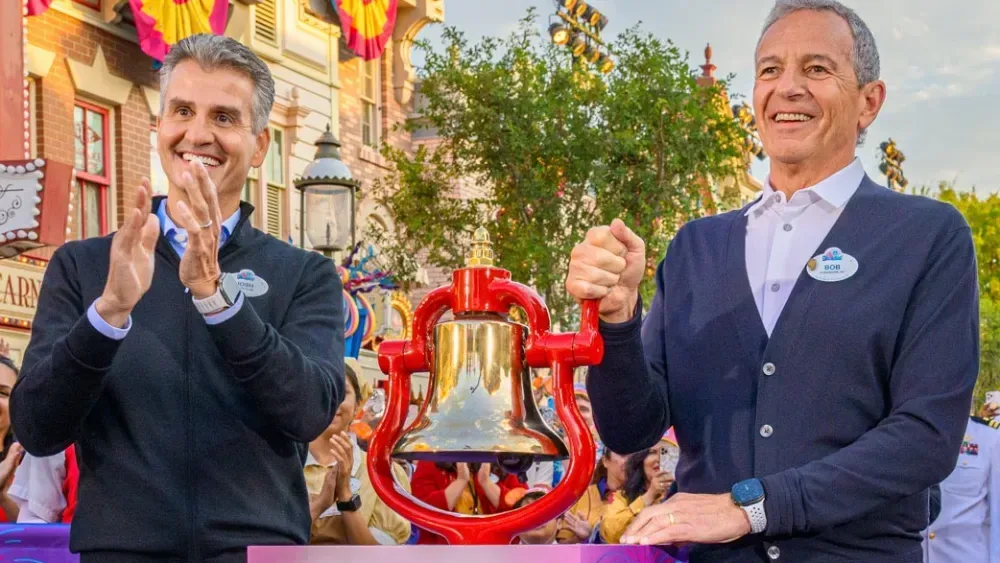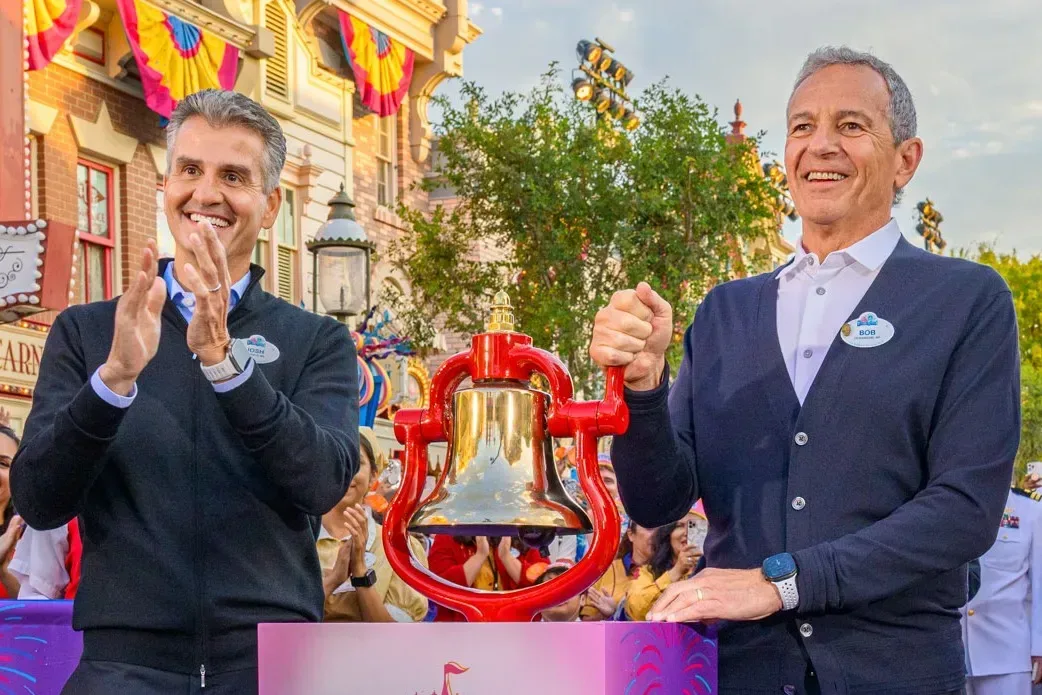
Disney’s latest CEO transition came with a rather unusual piece of post-game commentary from the departing player. Bob Iger, who returned to the company’s top job after Bob Chapek was removed in 2022, has outlined what he believes the earlier succession process missed—and the qualities Disney emphasized when it selected former parks chief Josh D’Amaro.
The short version: knowing an executive well is not the same thing as pressure-testing that person for the top job. Iger said the company’s 2019 and 2020 process was perhaps less thorough than it appeared because decision-makers believed they already knew Chapek closely. Chapek had spent a long time at Disney and worked directly for Iger. His strengths were known, Iger said, as were some weaknesses. In hindsight, familiarity did not answer every question that a CEO succession needed to answer.
That distinction matters because the CEO role is not simply the next rung on an executive ladder. It is the position responsible for setting priorities, choosing senior leadership, representing the company publicly and making decisions when conditions turn ugly. In Iger’s account, the newer process put particular weight on whether a successor could hold steady through ongoing disruption rather than merely succeed in normal operating conditions.
The first succession and the reset
Chapek, also a former parks executive, became Disney CEO in February 2020 as Iger’s chosen successor. The timing placed the handover immediately before the COVID era transformed the operating environment for companies around the world. Two years later, in November 2022, Disney’s board removed Chapek after a series of missteps and brought Iger back as CEO.
Iger remained in the job until stepping down in March, when D’Amaro took over. The sequence gave Disney a rare do-over on a task that large companies generally want to execute once, quietly and cleanly. It also supplied Iger with a highly visible contrast between the assumptions behind the first selection and the questions asked in the second.
He did not frame the lesson as finding a person who is never uncertain or emotionally untouched by events. Instead, he drew a line between fearlessness and fear. Leaders can show vulnerability, he suggested, but should not project that they are frightened. That is a subtle standard, but it gets at the public-facing burden of executive leadership: employees, investors, partners and audiences will all read behavior for signals about whether the person in charge has a workable grip on the situation.
“Leadership needs to be capable of managing an environment in perpetual crisis,” Iger said, adding that this places greater emphasis on stamina.
“Perpetual crisis” is an intentionally broad phrase. In this context, it does not mean any single event will last forever. It means the next major problem can arrive before the previous one has entirely cleared. A CEO therefore needs endurance: the ability to keep making decisions, communicating clearly and maintaining a functioning leadership team over time. Stamina, as Iger uses it, is not a slogan about working longer hours. It is a leadership capacity to remain measured and useful when pressure persists.
Related coverage includes Bob Iger Explains What Changed in Disney’s Second CEO Succession.
What Disney says it examined with Josh D’Amaro
Iger said the more recent succession process specifically asked whether D’Amaro was resilient, had stamina, chose a good team and could recognize a genuine crisis without becoming erratic. The desired response was direct but calm: call the situation what it is, then address it in a reasonable, sane, steady and mature way.
That list is revealing because it is made up of behaviors rather than a simple résumé checklist. Seniority and familiarity may establish that a candidate understands the company. They do not automatically establish how that candidate will respond when incomplete information, competing interests and intense public scrutiny arrive at the same time.
Resilience
Resilience is the ability to recover, adapt and continue operating effectively after setbacks. Iger’s comments place it at the center of a CEO evaluation. A resilient leader is not someone who avoids crises; the premise is that avoidance is not always possible. The key test is whether the executive can absorb a difficult moment, adjust and keep an organization moving without making a hard situation more chaotic.
Stamina
Stamina follows from Iger’s view that disruption is ongoing. A crisis can be managed in an afternoon by a forceful personality; a string of crises demands consistency. For a company as prominent as Disney, CEO decisions can also become public arguments. The leader must keep functioning through that attention while preserving enough clarity to make the next decision well.
Team selection
Iger’s question about whether D’Amaro chooses a good team is especially important. A CEO cannot personally manage every part of a large business. Leadership is therefore partly an exercise in building the group that will provide expertise, raise concerns, execute decisions and carry the organization through daily operations. Good team selection is not just a matter of hiring capable individuals. It also concerns whether the CEO can create a group able to tell the truth about problems before those problems become unmanageable.
Steady crisis management
To “call it what it is” means recognizing the seriousness of a problem rather than minimizing it. But Iger paired that candor with steadiness. The combination rejects two unhelpful extremes: pretending there is no crisis and responding to every crisis with visible panic. His description suggests Disney was looking for a successor who can acknowledge reality while giving people a sense that a practical response is underway.
That is the leadership version of not mistaking a flashing warning light for either a decorative sticker or a reason to throw the dashboard out the window.
Why the timing of the first process matters
Iger said these questions might have been premature during the first succession search, which occurred before COVID hit. The observation does not erase the importance of the original decision, nor does it claim a pre-pandemic process could have predicted every later event. It does explain why the company’s definition of preparedness changed.
The practical lesson is that succession planning should be built for uncertainty, not only for a company’s present conditions. A board can understand a candidate’s operating record, relationships and technical knowledge and still need to ask how that person handles an environment no one can fully map in advance. That is the difference between evaluating an executive for an established job and evaluating a CEO for a role whose next challenge is unknown.
Iger’s critique also highlights a common risk in leadership selection: confidence created by proximity. Working with someone for years can provide valuable evidence about judgment and capability. It can also lead decision-makers to believe they have already collected all the evidence they need. Iger’s comments indicate that Disney, in the second process, deliberately widened the inquiry beyond what it knew about a candidate’s past performance.
Business issues and political labels
The former CEO also discussed how corporate leaders should approach social and political issues. Iger said he tried to speak publicly on matters he considered relevant to Disney, while critics sometimes characterized those interventions as partisan or as an expression of his personal politics.
His argument was that the relevant test should be the company’s interests. He cited environmental concerns as an example: while describing himself as an environmentalist, he said his focus on the environment was connected to Disney’s ability to succeed. He made a similar argument about immigration, saying Disney is a large employer that hires people from countries around the world and seeks talent regardless of where people come from. In that view, a sound immigration policy is connected to the company’s ability to recruit.
This is not an argument that any business statement is automatically nonpolitical if an executive calls it strategic. Rather, it describes Iger’s own framework: a CEO should determine whether an issue has a meaningful connection to the company, its workforce or its ability to operate. The distinction is significant because public positions can be received politically even when a company leader sees them as business-driven.
For audiences, employees and observers, the useful takeaway is to separate two questions that often get bundled together: whether a CEO has a personal view, and whether the company has a concrete operational reason to address an issue. Iger’s comments contend that those questions can overlap without being identical.
A succession story that is still being debated
Chapek is promoting an upcoming book, Behind the Castle Walls: My Thirty Years at the Happiest Place on Earth, which is set to present his side of the unsuccessful handoff. Iger’s reflections, meanwhile, explain the changes he says Disney made before choosing D’Amaro. Together, those accounts ensure the company’s leadership transition remains more than a tidy corporate timeline.
For Disney followers, the immediate relevance is not a newly disclosed operational plan. It is a clearer statement of the standards Iger says guided the latest choice: resilience, endurance, sound judgment about teams and a composed response to real crises. Those are big expectations for any incoming CEO, and the job will inevitably be judged against them.
Disney’s entertainment output will continue to be a major public measure of the company’s direction; for one look at its near-term viewing slate, see what to stream this week. But Iger’s succession comments point to a broader idea: the person at the top is being selected not merely to oversee a familiar kingdom, but to keep it navigable when the map changes mid-journey.