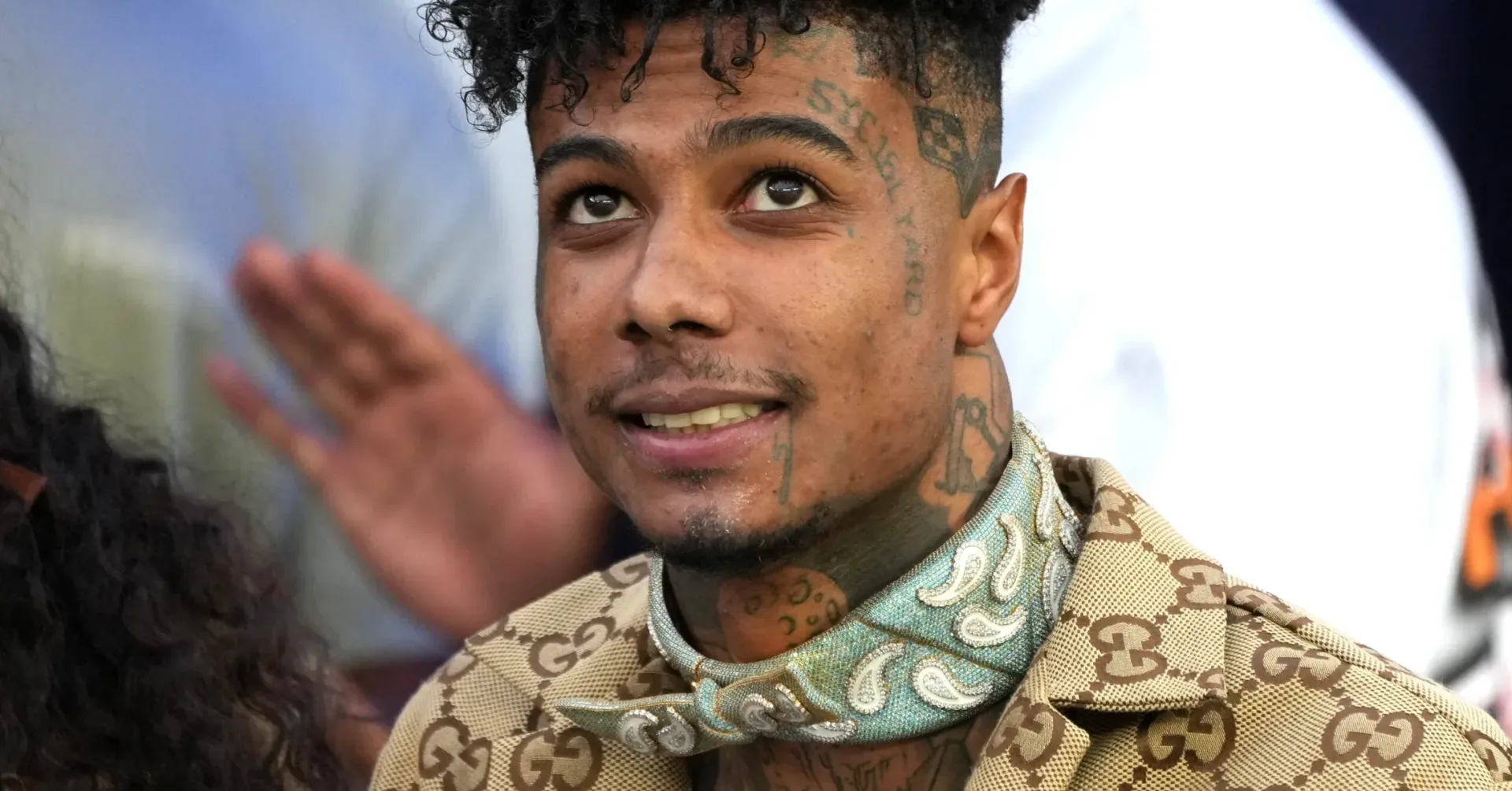
Blueface and Nevaeh Akira addressed online discussion surrounding alleged leaked intimate videos during a livestream, responding in a manner that swung between dismissive jokes, personal jabs and visible friction. The exchange did not offer a clean resolution, and key claims circulating online remain unverified. What it did show was a couple trying to speak over a rapidly expanding online conversation while their already public relationship tensions continued to surface.
Akira, who shares a child with the California rapper, pushed back on details being repeated by commenters, including claims about an OnlyFans account and the price of content allegedly associated with her. She also said that at least one person depicted in material being discussed was not her. Those denials are important: social-media identification is frequently unreliable, and reposts or commentary clips should not be treated as confirmation of either a person’s identity or the authenticity of alleged material.
Blueface initially adopted a playful, supportive posture during parts of the stream, complimenting Akira while referring to one of the videos said to involve an ex-partner. But the conversation did not stay light for long. The pair exchanged insults and brought their relationship’s wider disputes into the discussion, creating the familiar sort of livestream dynamic in which a public response can become its own new source of headlines.
A livestream response that kept changing tone
The reported exchange was not a carefully structured statement. It was a live, reactive conversation shaped by comments, allegations and interruptions. That distinction matters. Livestreams can create the impression that viewers are getting an unfiltered answer in real time, but they also encourage snap reactions, hyperbole and escalation. A joke intended as a defense can become a fresh insult minutes later; a denial can be buried beneath another argument before viewers have time to understand what was actually said.
Akira’s broad message was that she was not especially concerned by the alleged leaks, even as she objected to criticism directed at her. She said she no longer needed OnlyFans because she had other ways to earn money. She also contested claims involving the people in the purported clips and disputed aspects of the online narrative around them.
Blueface’s contributions were similarly inconsistent in tone. At points, he defended Akira or praised her. At other moments, he made disparaging remarks, prompting Akira to accuse him of hypocrisy and to point to his own conduct. Their exchange underscored the difference between projecting confidence for an audience and actually being unaffected by invasive attention. People can dismiss a rumor publicly while still navigating stress, embarrassment, anger or conflict privately.
Unverified allegations should not become a spectator sport
The central issue here is not whether a livestream generated another volatile celebrity clip. It is the circulation of alleged private sexual material and the way it can spread through social platforms before basic facts are established. Even when public figures address a subject directly, that does not turn alleged intimate media into fair game for reposting, identifying, rating or searching out.
There is a meaningful difference between reporting that someone responded to an online claim and amplifying the content of that claim. In this case, Akira disputed identity details tied to the alleged videos, while online commenters continued to make assumptions. That gap is exactly why restraint is necessary. A viral caption, a cropped clip or a confident comment section is not evidence.
Digital audiences often treat controversy like a running multiplayer match: somebody posts a fragment, spectators pick sides, and the algorithm rewards every follow-up. But intimate-media allegations carry stakes that are much higher than ordinary celebrity gossip. Misidentification, non-consensual distribution and persistent reposting can cause real harm. The fact that a topic trends does not make it trustworthy, and it certainly does not make it harmless.
- Alleged intimate material may be mislabeled, edited, old or wrongly attributed.
- A public response does not equal consent for further sharing.
- Reposts can preserve and enlarge harm even after original uploads disappear.
- Arguments about money, relationships or online personas do not establish authenticity or identity.
That is worth keeping in mind when celebrity news moves at livestream speed. The most responsible approach is to focus on the verifiable public response, acknowledge uncertainty and avoid turning alleged private material into click-through bait.
Relationship drama became part of the conversation
Blueface and Akira have had a turbulent relationship in public view, and their livestream response reflected that history. Rather than presenting a united message, they shifted between defending one another and reigniting old grievances. Akira challenged Blueface over what she viewed as a double standard, while he made comments that kept the exchange confrontational even when he was ostensibly supporting her.
Akira also referenced Jaidyn Alexis, Blueface’s ex, in the course of pushing back against critics. That expanded the dispute beyond the immediate allegation and into the larger network of public relationship conflicts that followers have come to associate with Blueface’s online presence. It is a recurring pattern in celebrity-centered discourse: a response to one claim becomes a venue for revisiting several unresolved rivalries at once.
There was also discussion of potentially releasing and selling a video after the alleged leaks began circulating. That reported remark came amid an emotional and argumentative livestream and should not be read as confirmation that anything would be released. No confirmed follow-up plan or availability was established in the material described. It is another example of why viewers should resist treating every line from a heated stream as a finalized decision.
For readers following the broader rap-media conversation, the way personalities, fan communities and commentary channels amplify conflicts remains a major part of the landscape. That feedback loop is also visible in other high-profile debates, including the disagreement involving DJ Akademiks, Joe Budden and Peter Rosenberg over Ye’s Chicago return. The specifics differ, but the mechanics are recognizable: a live remark becomes a clip, a clip invites reaction, and reaction can eclipse the original issue.
A child’s comment added another public layer
Elsewhere in the livestream, Akira’s son reportedly told Blueface not to cheat after hearing him talk about inviting multiple women over. Blueface responded by calling him a good son. The moment may have registered with viewers as a quick aside, but it also illustrated how little separation exists between family life, relationship conflict and content made for an audience when a camera is constantly on.
Children should not have to carry the emotional weight of adult disputes, particularly when those disputes play out publicly. A viral stream can flatten the distinction between an offhand family moment and entertainment, yet that distinction is crucial. Comments involving a child do not need to be endlessly clipped, mocked or weaponized as evidence in a conflict between adults.
What is actually clear at this point
The clearest public facts are limited. Blueface and Nevaeh Akira discussed online allegations during a livestream. Akira disputed some of the claims, including the identity of a woman in at least one video being discussed, and addressed criticism around alleged OnlyFans content. The two also argued, with Blueface alternating between supportive comments and insults. Beyond that, the status, origins and authenticity of the alleged material remain uncertain based on the available public discussion.
That uncertainty should guide how the story is treated. There is no need to seek out alleged videos, circulate links, repeat explicit descriptions or assume every social-media claim is factual. The most revealing part of the episode may instead be the response itself: a public couple confronting a private, invasive allegation in a forum designed to reward spectacle rather than clarity.
Whether this becomes another prolonged chapter in Blueface and Akira’s relationship drama or fades as the online cycle moves on is not yet clear. What should remain clear is that alleged leaked intimate content deserves more care than the internet’s usual reflex to turn every disputed upload into a trending event.