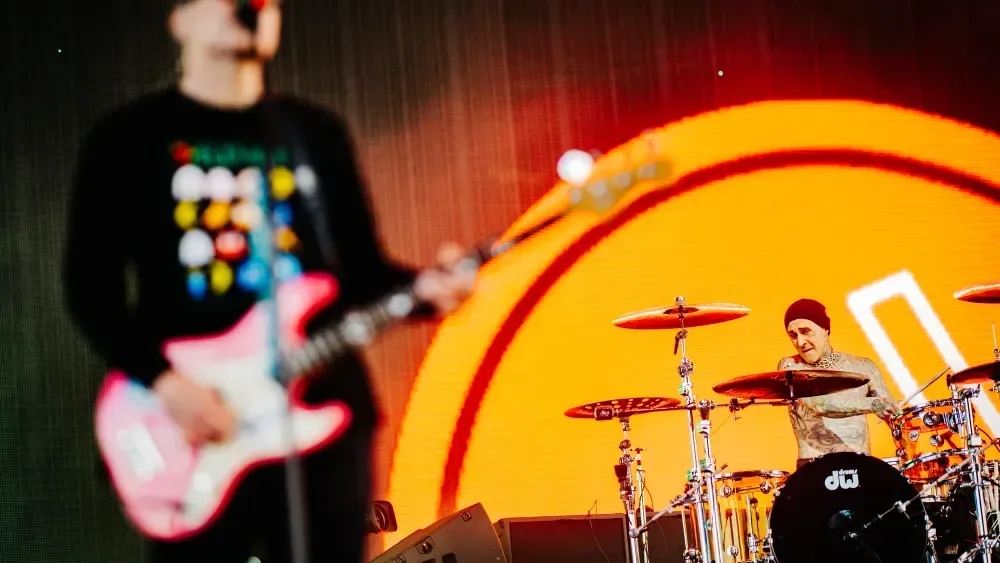
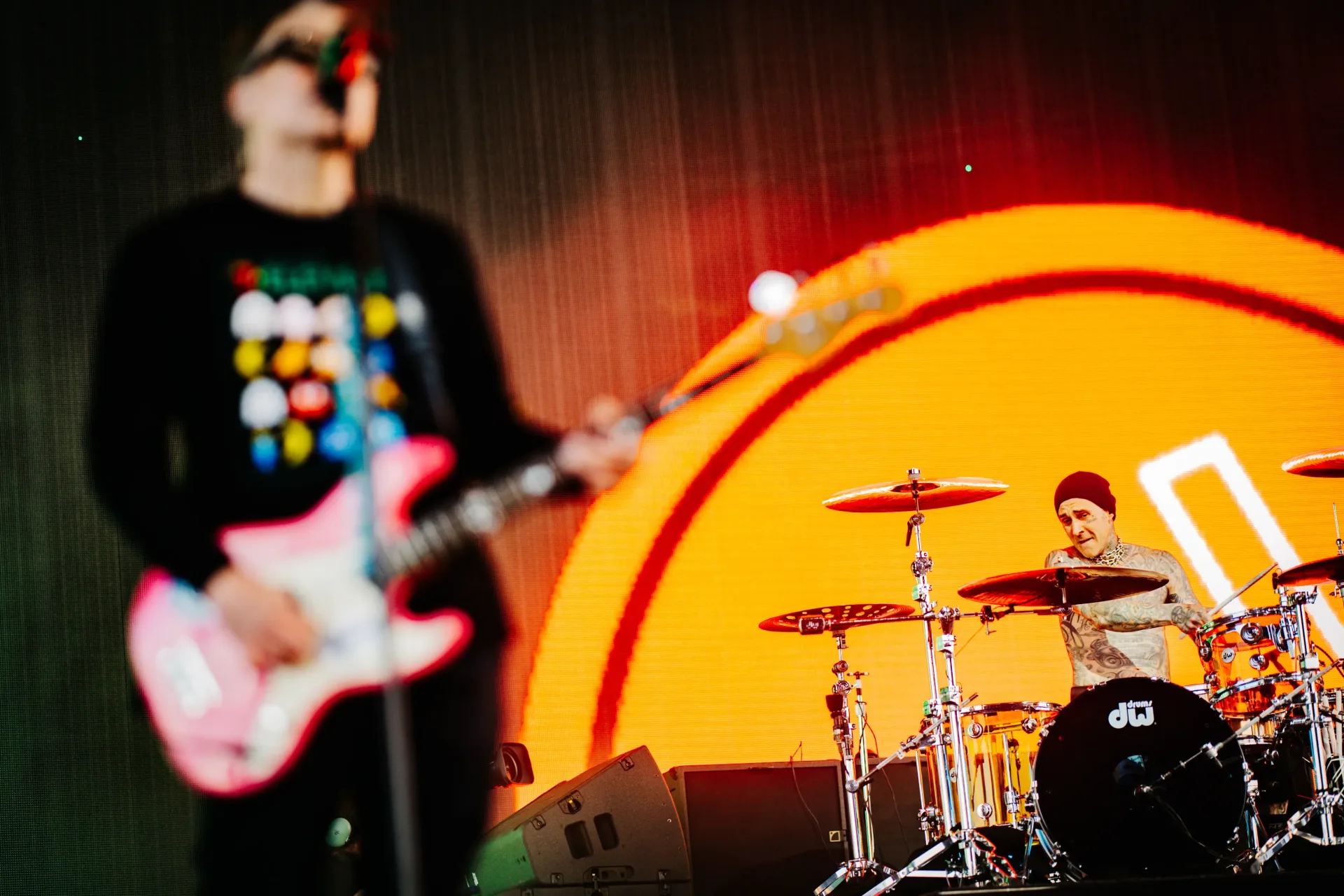
When We Were Young is scheduled to return to the Las Vegas Festival Grounds on October 16, 2027, with Blink-182 and Pierce the Veil named as headliners. The event will mark the festival’s return after organizers elected to sit out 2026, describing the break as time needed to give the next installment appropriate care.
The 2027 bill stretches across several corners of alternative rock, pop-punk, emo, post-hardcore and adjacent scenes. Beyond the two top-billed acts, the announced roster includes Limp Bizkit, Third Eye Blind, The Used, All Time Low, Simple Plan, 5 Seconds of Summer, Circa Survive, Taking Back Sunday, Sleeping With Sirens, The Psychedelic Furs, Hot Mulligan, New Found Glory, Movements, Senses Fail, Neon Trees, Cartel, Plain White T’s and Thursday, with additional artists also expected on the lineup.
A return after a planned pause
The festival’s year away was not framed as a cancellation of the event. Organizers previously said they were taking 2026 off so that what followed could feel as special as the prior Las Vegas editions. No more specific explanation for the pause was provided.
That distinction matters for attendees: this is a return rather than a newly created event or a relocation. The festival remains set for the Las Vegas Festival Grounds, its established home since its second iteration in 2022. It had previously launched at the Observatory in Santa Ana, California, then ran in Las Vegas annually through 2025.
Its past headliners have included Blink-182, Panic! at the Disco, My Chemical Romance and Paramore. Blink-182’s 2027 appearance therefore continues a relationship with the festival rather than serving as the band’s first time atop its lineup.
What the lineup says about the event’s identity
When We Were Young’s lineup construction is built around overlap, not a single narrowly defined genre. Blink-182, Simple Plan, New Found Glory and All Time Low represent major pop-punk touchstones. Pierce the Veil, Sleeping With Sirens, The Used, Thursday, Senses Fail and Circa Survive speak to the emo and post-hardcore side of the bill. Third Eye Blind, The Psychedelic Furs and Neon Trees broaden the musical range further, while Limp Bizkit adds a markedly different late-1990s and early-2000s rock presence.
For fans, that creates a festival day shaped by shared eras and communities as much as exact sonic consistency. A listener may arrive primarily for one headliner but find artists associated with different stages of their listening history on the same poster. That wide net is central to the event’s appeal, but it also means prospective ticket buyers should pay close attention as scheduling details eventually emerge. A large one-day lineup necessarily involves choices about where to be and what to miss.
The announced acts also connect multiple generations of fans. Some artists have long been associated with the formative years that give the festival its name, while others such as Hot Mulligan and Movements represent later entries in the broader alternative landscape. The result is less a museum-piece revival than a curated gathering of bands with different timelines and audiences.
Ticket timing: what has been announced
The lowest-priced general-admission tickets are set to be available during the first hour of the presale, beginning November 20 at 10 a.m. PT. A general onsale is scheduled for 11 a.m. PT, covering any tickets that remain after that first presale hour.
The announcement does not provide ticket prices, tier details, payment-plan information, set times or a full festival schedule. Those omissions are worth keeping in mind. “Lowest-priced” identifies a limited early opportunity within the general-admission offering; it does not establish what later inventory, pricing or ticket categories will look like. Fans planning around a particular artist should also avoid assuming performance order or stage placement until official scheduling information is released.
Practical planning points for prospective attendees
- Save the date and convert the announced sale times from Pacific Time if necessary.
- Distinguish the presale’s first hour from the subsequent general onsale; they are scheduled one hour apart.
- Do not treat the artist list as a timetable. The announced lineup establishes participation, not performance times.
- Watch for future information on ticket tiers, set times, entry policies and other event logistics before making plans built around unannounced details.
Why a single-day festival lineup needs a different approach
In festival terms, a lineup is the roster of performers, while a schedule or set-time grid determines when and where those performers play. The former has been announced for When We Were Young 2027; the latter has not. That difference becomes particularly important with a bill this dense.
There is no basis yet to say which acts will overlap. Still, the scale of the announced list means attendees should expect the eventual schedule to involve trade-offs. The sensible approach is to identify a small set of must-see performers rather than presume every favorite can be seen in full. That is analysis of the format, not a claim about specific stage conflicts.
Fans also have reason to view the headliners as anchors for a much bigger program, rather than the whole proposition. Blink-182 and Pierce the Veil give the 2027 edition two clear focal points, but the supporting names cover enough styles that the day’s draw will vary considerably from person to person. Someone focused on classic pop-punk may prioritize New Found Glory, Simple Plan and All Time Low; another attendee may be most interested in Thursday, The Used, Circa Survive and Senses Fail; others may see Third Eye Blind or The Psychedelic Furs as the distinctive additions.
Las Vegas remains the setting
Keeping the festival at the Las Vegas Festival Grounds preserves the destination-event model that has defined its recent run. The move to Las Vegas in 2022 gave the event a recurring location after its Santa Ana debut, and the 2027 announcement confirms that the return after the break will not involve a venue change.
That continuity is useful for fans who attended prior editions, while the long lead time gives new attendees a clear date and city around which to plan. But it is important not to fill in the blanks: the announcement establishes the venue, date, headliners, a substantial portion of the lineup and ticket-sale timing. It does not yet establish the day’s running order or the full practical details of attending.
When We Were Young’s fifth edition is therefore taking shape as a large-scale return built around familiar names and a deliberately expansive alternative-rock roster. The immediate next decision point for interested fans is November 20, when the limited lowest-price general-admission window opens before the general onsale. For more pop-culture coverage across film, music and fandom, visit Joking Joystick’s pop-culture section.