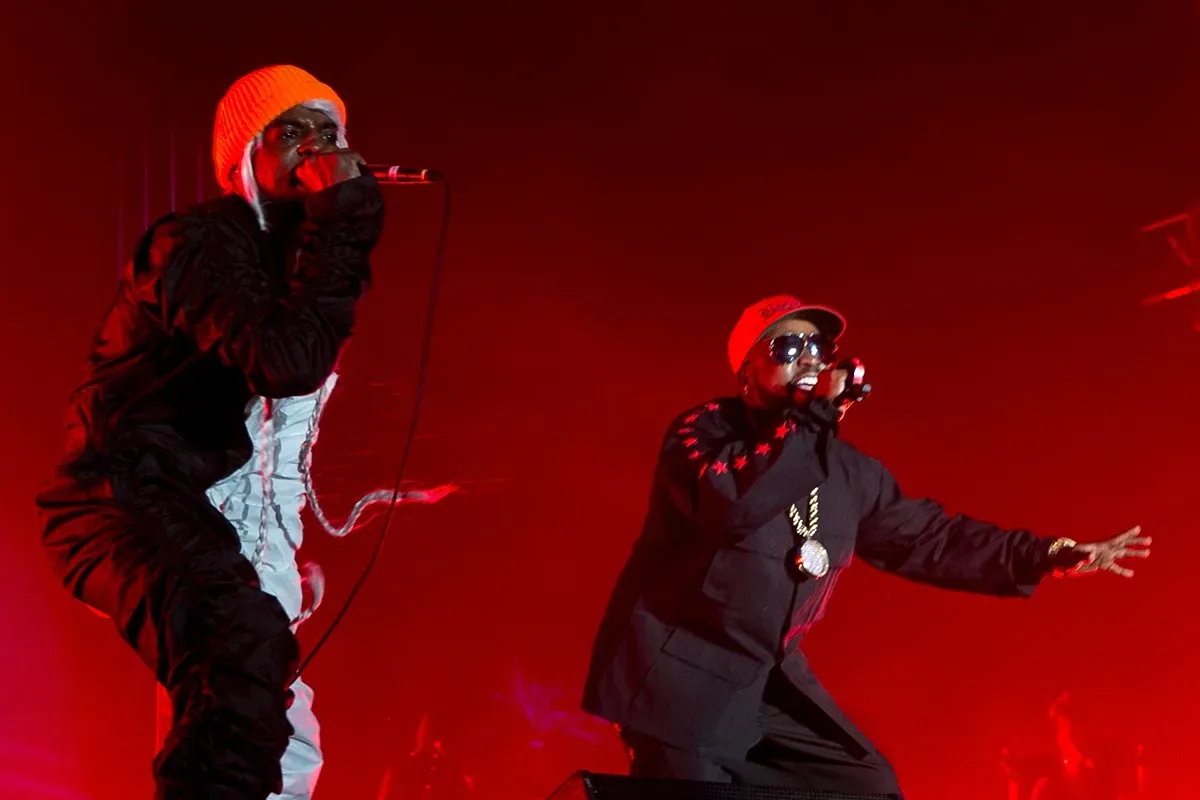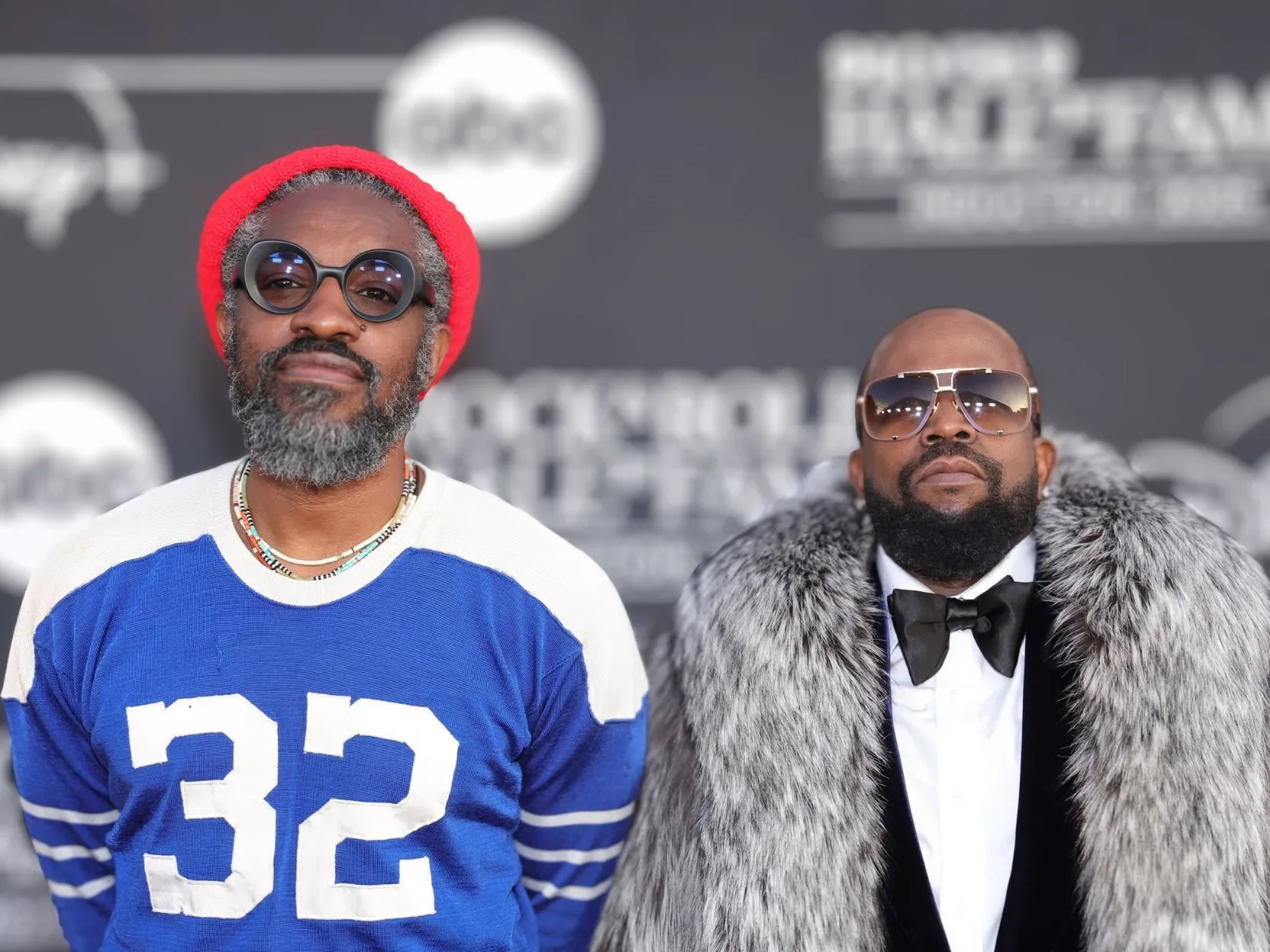
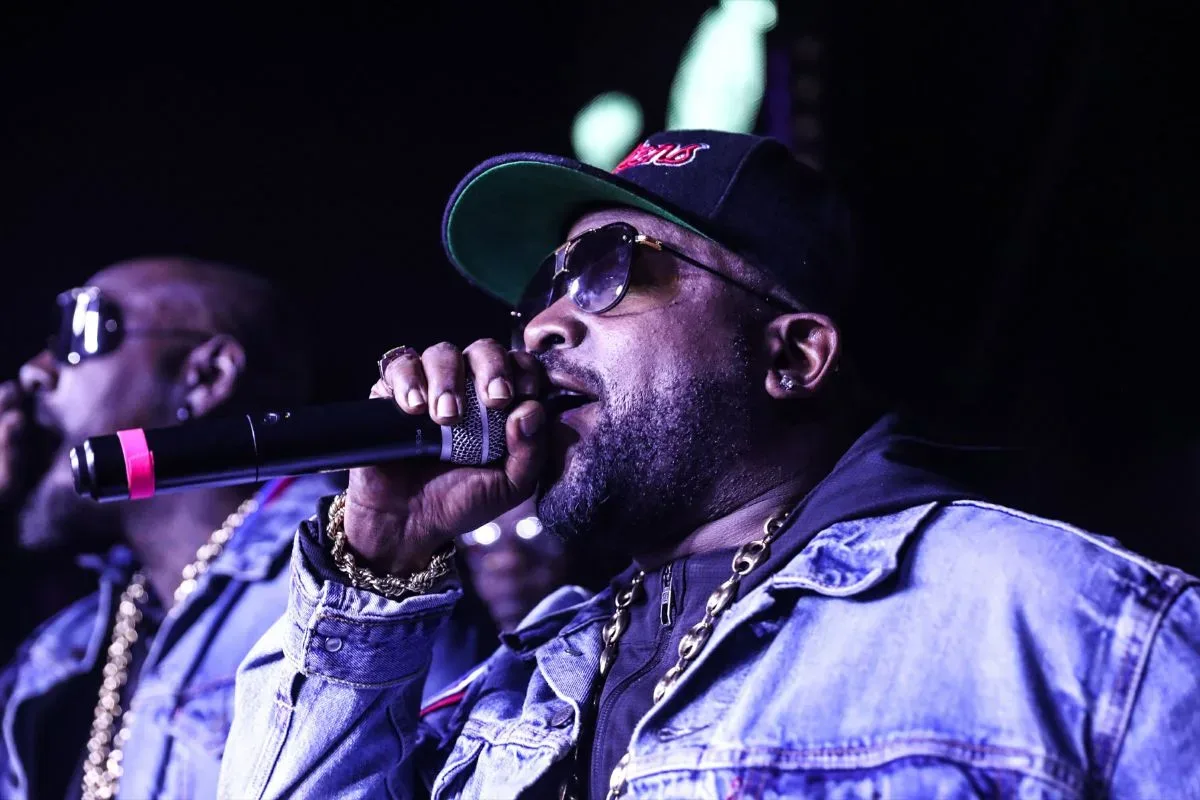
Big Boi has found the reason to start a podcast after years of being pitched the idea: make it a conversation with his sons. Big Boi’s Bloodlines & Basslines, a new series featuring Bamboo and Cross alongside their father, puts family, parenting, music and the different viewpoints of three generations at its center.
The series debuted November 11 via iHeartPodcasts, with three episodes planned each week. It is recorded in Atlanta, at either Stankonia Studios or Big Boi’s basement, and the family has already made more than 50 episodes. That production runway matters. Rather than presenting this as a one-off celebrity chat, the group has built a sizable bank of conversations that can explore a relationship over time.
For Big Boi, the concept was the key. His manager had encouraged him to enter podcasting for a decade, but a recognizable name alone did not make the format appealing. He wanted the show to have purpose. The breakthrough came after Cross interviewed his father during the Stankonia 25th-anniversary celebration at Cascade Skating Rink. That exchange pointed toward a more personal and sustainable premise: a father talking candidly with his own children.
“It’s got to be about something,” Big Boi said. “It got to mean something.”
For more context, explore Archive of Our Own Returns Online, Leading a Busy Comics-and-Pop-Culture News Cycle.
A family format rather than a standard celebrity interview
Bloodlines & Basslines is designed around conversation, not a formal interviewer-versus-guest setup. Big Boi, Bamboo and Cross can disagree, swap memories and compare what the same family experiences meant to each of them. That distinction is important to the show’s apparent identity. A typical interview often puts one person’s career at the center; this format makes the relationships around that career part of the subject.
Big Boi is widely known through music, but he has framed the podcast as an opportunity to be heard as a dad as well as an artist. His own original music is part of the production, yet the stated emphasis is what gets passed down: lessons, expectations, stories and an evolving sense of legacy.
Bamboo and Cross are not positioned simply as extensions of their father’s recording career. Bamboo is also a father, adding another layer to discussions about parenting and responsibility. Cross previously played Division I football. Both sons have interests in business and real estate, giving the conversations subjects that extend beyond the recording studio.
Related coverage includes Big Boi Launches ‘Bloodlines & Basslines’ Podcast With His Sons.
That broadens what “legacy” can mean in practice. In this context, it is not only a matter of musical influence or famous family history. It includes how parents set rules, how children interpret those rules, and how adult sons take experiences from home into their own family and professional lives.
What the opening episodes cover
The premiere, “Raised Right,” looks directly at Big Boi becoming a father at 19 and at the household expectations Bamboo and Cross grew up with. One of the clearest details from the episode is also a familiar point of family friction: schoolwork came before gaming.
It is a small rule with a larger role in the show’s framing. Big Boi’s success did not eliminate standards at home. The episode description indicates that his sons were still expected to meet educational responsibilities, a detail that shifts the premise away from a purely celebrity-family retrospective and toward the everyday mechanics of parenting.
The episode also addresses the balance between affection and discipline. That is a theme especially suited to the three-person format because the father who made the rules and the sons who lived under them are in the same conversation. The show can hold both sides at once: the intention behind a rule and the way it felt to the people receiving it.
There is room for unusually specific family lore, too. The opening installment includes a story involving a $10,000 phone bill, as well as recollections of a childhood stay at Hank Aaron’s pool house. Those anecdotes give the program a sense of place and personality, but they also appear in a wider discussion of upbringing rather than as isolated celebrity name-drops.
Music is part of the dialogue, not the whole premise
The November 13 episode, “Turn Up Tunes,” turns to the family’s musical tastes. It also covers Big Boi seeking his children’s feedback while deciding which songs should be released as singles.
A single is a track selected for focused release and promotion, often serving as a key public entry point to a larger music project. In the podcast’s family context, the detail is revealing because it describes Big Boi inviting his sons into a decision connected to his professional work. Their responses are presented as part of the creative process, not merely as an after-the-fact reaction to music already released.
That episode’s topic supports the title’s two halves. “Basslines” speaks to the obvious musical dimension: taste, recording, songs and artistic judgment. “Bloodlines” points to family continuity and the way a household’s shared experiences can shape how people hear and evaluate that music. The show’s premise works because the two ideas overlap without being identical.
Why the format has potential
Podcasting can be a particularly useful format for a family project because it leaves room for a subject to develop across episodes. A short video interview might capture a single story; a continuing audio series can return to the same question through different memories and changing perspectives. With more than 50 episodes already recorded, Bloodlines & Basslines has the capacity to move among light stories, parenting discussions, music talk and disagreements without forcing all of that material into one debut.
The Atlanta recording locations give the series a consistent home base. Stankonia Studios connects the program to Big Boi’s musical world, while the basement setup suggests a more domestic setting. The two spaces mirror the show’s central blend of public career and private family life.
There is also a meaningful generational structure built into the cast. Big Boi can discuss raising sons while having begun fatherhood at 19. Bamboo can speak as a father himself. Cross contributes a perspective shaped by Division I football and his own interests outside music. None of that guarantees agreement, and the show explicitly makes space for differing views. But it does give conversations a foundation deeper than guests simply sharing the same surname.
For listeners, the practical appeal is clarity of focus. The program is not being presented as an exhaustive chronicle of an artist’s career, nor only as a music-industry show. It is a family conversation in which music is one recurring part of the picture. People interested in parenting, intergenerational communication, discipline, work and family storytelling have a reason to listen even when an episode is not centered on a track or a studio decision.
Fatherhood supplies the purpose Big Boi was looking for
Big Boi has described the podcast as a place to talk about life, family, places the trio has been, lessons learned and what comes next. He has also emphasized that the legacy he passes to Bamboo and Cross matters as much as his music. The series puts that idea into an ongoing format rather than a single statement: the sons are not merely a topic of conversation, but co-hosts with their own histories and perspectives.
That makes the project’s starting point unusually straightforward. Podcasting was not the goal by itself. The goal was to create a recurring place for conversations that matter to the family, then invite listeners in. The earlier Cross interview at the anniversary event demonstrated that the dynamic could work; Bloodlines & Basslines expands it into a regular series.
With three installments scheduled weekly and a substantial number already recorded, the show begins with enough material to establish its voice. Its early episode descriptions suggest a mix of home rules, expensive mistakes, musical opinions and deeply personal memories. The unifying subject is not simply fame or nostalgia. It is how a father and his sons understand the same family, and what they hope to carry forward from it.